BAAEC Case Study
Primary Author:
Robert Cudd – UCLA CCSC
Factual Review, Conceptualization, and Additional Contributions:
Genaro Bugarin - TEC
Felicia Federico - TEC
Marc Costa - TEC
Executive Summary
Welcome to the BAAEC case study. This study is the product of 5 years of participant-observation of the BAAEC project and six of its scopes. This study analyzes the development of BAAEC’s interventions as sociotechnical systems, focusing on their interconnection to the grid and with the people and organizations involved in the project. The narratives and analysis presented in this study are the product of sustained ethnographic engagement with project personnel, background research into energy policy, distributed renewable technologies, relevant bodies of law and regulatory code, and the business practices of the private sector actors and organizations involved in the project as contractors.
Anticipating the concomitant decarbonization and socioenvironmental improvement of disadvantaged communities, the BAAEC project is one among many past and present demonstrations with the retrofitting and repair of the built environment in disadvantaged communities and the vital infrastructures that serve them. The purpose of the BAAEC project was to explore how various distributed renewable energy technologies and “models” for low-carbon electrical service provision could be designed to serve disadvantaged communities and advance the project of equitable decarbonization of urban infrastructure. BAAEC differs from no-money-down contracting and private fee for services models offered by private sector actors because the core nonprofit partners (The Energy Coalition, Day One, Active San Gabriel Valley, Grid Alternatives, and UCLA) and project funders (the California Energy Commission) saw residential decarbonization not simply as a means to the specific ends of revenue generation and industrial development, but also to the end of sociotechnical improvement and environmental justice. Nonprofit partners conceived of BAAEC as a “community-engaged” project, involving structured, interpersonal, and educational activities to create trust between local actors and project partners, and ensure that consequential project decisions reflected the input of the people living in the areas of Bassett and Avocado Heights and involved in the scopes of the project as local participants.
This study describes how BAAEC’s core nonprofit partners and private contractors of the BAAEC project sought to build distributed renewable energy systems and electrify homes to benefit project area residents. The chapters included in the case study trace each major scope of the project through from beginning to end, following the translation of plans into actions and the generation of results.
How to Read This Study:
Each chapter of the case study includes the following: an introduction describing the purpose and structure of each scope, the actors involved, a chronological narrative describing how implementation occurred, an analysis section highlighting major challenges, partner and participant responses. The narrative sections of each chapter detail how the project partners progressed through the stages of planning, implementation, and the evaluation of their results. Each chapter also identifies policy relevant considerations and recommendations drawn from participant-observation and discussion of project results with partner organizations. The voices of participants are also present in this report: Chapters 2 (Outreach, Education, & Enrollment) and 3 (Advanced Homes) include feedback from participants collected from interviews and author involvement in outreach activities alongside project staff.
The state’s advancement of equitable residential decarbonization draws together a multitude of people and organizations with different orientations to the problem of energy transition. BAAEC involved private firms, nonprofit organizations, community-based organizations, civic groups, representatives of local governments, and others. At the state level, the collection of organizations and institutions involved is even more diverse. Depending on how readers are oriented relative to the problem of equitable decarbonization (whether they are a developer, policymaker, community organizer, etc.), readers will naturally have different questions about BAAEC, its course, and results.
- Readers interested in the project’s implications for the development of energy services markets, regulatory rulemaking related to infrastructure, and other aspects of public policy can read this executive summary and the conclusion section for top-level and scope-specific considerations and recommendations (developed in collaboration with TEC and other project partners). Readers who are interested in the aforementioned topics may also consider reading Chapters 3 (Advanced Homes), 4 (Community Solar), and 6 (Prosumer Network) for more information on how regulatory code, the politics of electrical infrastructure, and policy changes occurring during the course of the project affected the evolution of the aforementioned scopes.
- Readers from the private sector - developers, device manufacturers, vendors, and service providers - will be most interested in the narrative and analysis sections of Chapters 4 (Community Solar), 3 (Advanced Homes), and 5 (Resiliency Center).
- Readers from social or environmental justice-oriented nonprofits, public institutions interested in the welfare aspects of decarbonization, or who are part of community-based organizations will be most interested in the narrative and analysis sections of Chapters 2 (Outreach, Education, & Enrollment), 3 (Advanced Homes), and can read the analysis section of Chapter 4 (Community Solar) to learn about the structure and functioning of consumer-facing community solar programs.
- Finally, readers involved in municipal governance and interested in energy and climate policy should read Chapters 4 and 5, as these scopes involved the greatest degree of interaction with local public institutions.
Top-Level Conclusions:
The following are general conclusions and recommendations that emerged from the study of the project and interviews (collective and individual) with project partners and participants. Analysis of interviews, field notes, policy and program documentation, press stories, and structured, extended reflection on the course and outcomes of the project with participants, and other actors involved in BAAEC yield five general conclusions regarding California’s effort to equitably decarbonize cities and the grid:
1. Equitable access to clean energy is necessary for residential decarbonization to advance, but structuring inclusive participation in electricity markets needs further development.
The participation of local homeowners, ratepayers, and other actors was essential for BAAEC’s success. Through sustained, one-on-one interaction and other forms of community outreach and engagement, the partners won the trust of local institutions and individual homeowners and met their enrollment goals. Contrary to their initial expectations about the willingness of residents to accept free home retrofit packages, outreach staff from the core nonprofit partners found that they needed to explain why the project was free to allay concerns about a possible “catch”. As information drawn from interviews with outreach staff and participants show, securing the trust of individual participants involved repeated and frank conversations about the benefits, costs, and demonstration of the public bona fides of the BAAEC project with residents. How the outreach partners (TEC, Day One, Active San Gabriel Valley, and Grid Alternatives) enrolled and maintained the engagement of individual participants are recounted in Chapter 2 and 3 of this study.
The successes of BAAEC’s outreach and enrollment efforts exposed to the partners another problematic aspect of material participation in the state’s energy transition: the formatting of homeowner and ratepayer action in markets for electricity. Because electricity and the markets in which it is exchanged are not visible to individual ratepayers, the BAAEC partners needed to equip Advanced Homes participants with technologies that made market conditions visible (by displaying the behavior of their batteries and smart inverters), their devices controllable (allowing them to adjust their battery settings and energy consumption behaviors), as well as automatable (applications and devices were configured to respond automatically to residential time-of-use tariff structures to minimize cost).
The BAAEC partners were successful in structuring said relationships between homeowners, DERs, and the grid (such that homeowners systems performed as expected) but the experience of building these relationships between people, things, and infrastructure provoked questions about how deeply individual homeowners should be involved in home-grid interactions, and whether a more price-dynamic and thoroughly automated mode of interaction between them would be superior in terms of performance.
The results of the project suggest that existing technologies could be assembled in ways that yield more efficient use of home and community-scale DER systems and existing infrastructure and create opportunities for homeowners to interact. However, the partners also found that their ability to create such assemblages was severely limited by existing structures and practices of grid governance, as well as the political power of incumbent utilities that perceive experimentation with DERs and market participation as complicating their existing operations and cost recovery activities (see the analysis and conclusion sections of Chapters 3, 4, 5, and 6 for more details and discussion of this topic). The question of how deeply to involve home or property in markets for electricity depends on i) the ability of low-income homeowners to access low to no-cost pathways to home DER installation and electrification, ii) the ability of implementers to make DERs and the grid visible objects with which customers interact and iii) whether grid governance structures allow implementers to experiment with new sociotechnical relations in pursuit of new modes of human-DER-grid interaction.
2. Distributed energy resources (DERs) need new tariff structures and market infrastructure to scale.
The nonprofit and private sector partners involved in BAAEC’s scopes intended to create model distributed renewable systems that would prove valuable and beneficial to members of the community, and be able to stand on their own economically. The partners found that while it was possible to configure their interventions so as to benefit participants, existing policy and regulation neglected the ways in which DERs (alone and in assemblage with others) can provide benefits (e.g. reliability, bill savings, resilience) to participants and owner/operators of electrical infrastructure.
By the end of the project in 2025-26, the partners involved in the Advanced Homes and Prosumer Network scopes of BAAEC found that the market infrastructure (rules, digital infrastructure, infrastructural boundaries) they believed would structure and support home and community-scale electrification had not materialized. For solar, batteries, and dynamic loads to function in coordination with one another (and with transmission-level infrastructure), ‘market spaces’, rules, and communications protocols are necessary to facilitate functioning and provide market entrants (whether they be firms, devices, or homes) with some sort of script for market participation and reasonably firm assessments of benefits, costs, and risk of doing so. But the lack of a robust framework for assessing costs, benefits, and risks, in addition to the absence of distribution-level markets for power, demand response, and grid support made the implementation of the Advanced Homes and Community Solar system more difficult than they would have otherwise been. Without these infrastructural layers (long promised and anticipated by project partners and other players involved in residential decarbonization), owners and operators of distributed energy resources (including owners and occupants of retrofitted homes) are unable to act in the ways that the partners (as well as many others outside the project) anticipated. They lacked market spaces for interaction, and their devices were locked into relatively simple time-of-use rate structures designed around grid-wide supply and demand dynamics.
Involving DER manufacturers, system installers, and their investors in decarbonization in disadvantaged communities (DACs; as well as non-DAC communities) in this way requires the state to create tariffs and market infrastructures that allow owner-operators to take full advantages of their capacities to generate power and support grid functioning, and that compensates them adequately for the forms of value they can generate.1 Chapters 3 and 6 of the case study show that the private and nonprofit sectors cannot accomplish this alone and need the cooperation and material support of the state to create this infrastructure. However, policy shifts and discursive movements that occurred during the project indicate that incumbent utilities and their regulators are not keen on this developmental direction.
3. Existing electrical infrastructure must accommodate residential decarbonization and community-scale DER development.
One of the main selling points for a more-distributed approach to residential decarbonization and energy transition is that DERs will help reduce or defer investment in expensive high-voltage transmission infrastructure: by co-locating supply and demand, it is possible to relieve stress on the bulk power system and defer investment in new transmission lines and utility-scale generation and storage. Though the results of BAAEC, notably those of the Prosumer Network, suggest that the facilitation of local markets relying on distribution-level DERs could save ratepayers and electric utilities money, creating these kinds of local exchanges (which allow for energy exchange ahead of the bulk power system) are time and resource intensive infrastructure projects in their own right.2 In addition to the costs associated with getting permission and legal authority to build such local markets, the results of Advanced Homes and the Prosumer Network show that getting all of the technical and administrative pieces in place will involve some sort of material re-configuration of distribution-level infrastructure, buildings, and other infrastructural systems. Building these systems and making them responsive to internal and external conditions will also require implementers to find ways of collecting and transmitting data to make them dynamically responsive and flexible. These interventions may be less materially intensive than other alternatives (such the construction of new, centralized generation plants, transmission lines, and substations), but their successful interoperation with the existing grid will involve some modification of how infrastructure is configured and/or operated.
4. Eliciting and sustaining private sector involvement in low-income residential decarbonization is a necessary but challenging aspect of residential decarbonization.
A stable feature of decarbonization policy discourse in California is the idea that public sector actors need to devise or discover innovative and effective ways of eliciting and sustaining private sector involvement (and investment) in the retrofitting of infrastructures, neighborhoods, cities, and buildings. According to this logic of attraction, it is the responsibility of public (and nonprofit) entities to create social and market conditions conducive to green forms of industrial development and commercial activity (such as home retrofitting, EV sales, etc.). The BAAEC partners took the problem of how to structure public/nonprofit - private partnership head-on with the sociotechnical interventions they made in the project area. The results of the Advanced Homes, Community Solar, and Resilience Center scopes show that intersectoral partnership, though absolutely necessary for the kind of change the core nonprofit partners hoped to see, is often fraught with tensions and difficulties. The scope narratives in this study (especially Advanced Homes) testify to the nonprofit partners’ struggles to identify, interest, and work with private sector actors that had the resources and expertise necessary to move the project from plan to concrete reality. State programs and incentives intended to encourage public-private collaboration were in some instances insufficient to ensure the collaboration of private sector actors, and some defected from the project because they did not want to do the difficult and risky work that retrofitting or building in DACs entailed (see Chapter 3 for more details). In other scopes (notably Community Solar), programs structuring public-private partnership worked mostly as intended. Overall, the core nonprofit partners found that private sector participation was neither easy to elicit nor the panacea that some policy advocates and thinkers consider it to be.
5. Co-development of renewable energy infrastructures with local communities is possible but challenging.
When DERs like home solar-storage systems are designed to serve as appliances and infrastructure for individual property owners, the attention of those owners is directed towards devices that make the operation of their home systems visible and manipulable and relieve homeowners and/or ratepayers of responsibility for optimizing their systems relative to grid conditions or time-of-use tariff structures. Participation made easy through mobile applications and artificial intelligence does have its advantages, but the partners learned that participation made easy also makes eliciting the kind of communal involvement the partners envisioned at the outset of the project very difficult. Technologies like home energy management systems format human interaction with electricity and energy infrastructure, and because of the nature of electricity and its relationship to money and property, most home energy technologies are intended for a single, presumably price-rational user. The project partners found that such technologies – presuming individual and financially oriented interaction – were not the right vehicle for bringing residents into contact and discourse with one another.
Though the partners met their goals of reducing energy costs for (and carbon emissions from) participating households, building new and innovative forms of distributed solar generation, and identifying ways of extending participation in the energy transition to low-income residents the results of the BAAEC project’s scopes also pose questions about whether and how it is possible to align the goals of infrastructural equity, environmental justice and the development of domestic (i.e., Californian or American) cleantech industry. At its core, BAAEC was a demonstration of how the ends of economic growth, social justice, and climate improvement could be reconciled through intersectoral partnership.
1.0 - Introduction
In the past thirty years, California has made substantial progress in responding to the exigencies of anthropogenic climate change, while also suffering the impacts thereof. The state response, emerging from an awareness of the relationship between the accumulated greenhouse gas (GHG) emissions in Earth’s atmosphere and increasing global average temperature, includes measures to abate current and future emissions, and respond to the impacts of climate change on the state itself. In California, an acceptance of climate change as an anthropogenic phenomenon, and the desire to slow its progress, extend beyond the state’s institutions and agencies. Extreme weather (flooding and heatwaves), wildfires, both within California and abroad, helped create a political consensus regarding the need to ‘decarbonize’ California’s economy via a transition to renewably generated electricity, and to ensure such a transition is equitable, environmentally just, and protects California’s people from new and climate-intensified kinds of environmental hazards.
However, despite decades of legislative and regulatory progress, changing patterns of private investment, and a growing political consensus about the nature and cause of the problem, mitigating climate change – abating GHG emissions from human economic activity – still poses considerable challenges in California. More than a century of economic growth powered by fossil fuels has expanded and continuously reorganized economic and social relations, altering the state’s physical and social geographies. Where California’s people live, the built environments they inhabit, and the systems of infrastructure that provide for their essential needs are products of a history of fossil-powered development.
Therefore, an energy transition replacing fossil energy sources with renewable ones in a manner consistent with the state’s commitment to a just, equitable, and safe transition is not an exclusively technical challenge. This is especially true regarding residential decarbonization, which - in the Californian context - refers to the electrification of all domestic end-uses of energy. In changing individuals’ domestic relationship to energy at scale, policies and programs will inevitably reshape social relations as well – changing how people meet their essential needs, how they work, how they spend their leisure time, and their vulnerability to various forms of environmental hazard. However, the social and political barriers to decarbonization are not fully knowable in advance. The long-term success of the state’s energy transition thus depends, in large part, on identifying and addressing social barriers to the electrification of the residential sector through careful, justice-oriented sociotechnical experimentation.
Acknowledging the complexity and open-ended nature of the state’s energy transition, in 2015 the California Energy Commission opened GFO-15-312, EPIC Challenge: Accelerating the Deployment of Advanced Energy Communities (AECs) to proposals.3 The AEC Solicitation fielded proposals for “pilot energy systems” designed for “target pilot communities” drawn up by “teams composed of building developers, local governments, technology developers, researchers, utilities, and other project partners”. 4, 5 Proposals for the AEC Solicitation were to advance the goals of net-zero energy consumption and greenhouse gas emissions reduction for communities of tens to hundreds of residential units (households and rental units), and increase the resiliency of proposed Advanced Energy Communities to the impacts of climate change. The solicitation consisted of two categories; projects intended for disadvantaged communities, as defined by the CalEnviroScreen scores for the census tracts corresponding to the boundaries of the ‘community’, and those not exclusively targeted for disadvantaged communities. The Bassett-Avocado Heights Advanced Energy Community Project (BAAEC) was awarded in both the first and second phases of the solicitation for the disadvantaged community category. The first (design) phase of the project was completed by UCLA’s California Center for Sustainable Communities (CCSC) in 2019, and the full report describing the community-led design process and community-specific energy systems was published by the California Energy Commission.6 The second (implementation) phase proposal was led by The Energy Coalition (TEC). This case study report documents and analyzes the history and results of the second phase (implementation) of the BAAEC project, led and administered by The Energy Coalition, while also providing some initial context on the planning phase.
The Bassett-Avocado Heights Advanced Energy Community consists of seven individual scopes that address different aspects of California’s transition to electricity as the primary source of energy for household needs and transportation. In keeping with the notion of an Advanced Energy Community, the BAAEC project’s scopes address residential building electrification, community solar generation, personal and public transportation, community resilience to extreme weather and electric service interruption, as well as the air quality impacts of household and vehicle electrification. As an AEC project funded under the disadvantaged community category of GFO-15-312, BAAEC’s scopes were tailored by TEC and project partners to address well-documented barriers to residential electrification among low-income communities in California, as well as the economic and environmental burdens disproportionately borne by them.7
This study recounts the history (progress, scope changes, and execution) of the BAAEC project’s various scopes, as well as the challenges and exigencies encountered during the course of implementation (2020-2025). It concerns the material, contractual, and financial relationships between project partners and contractors during the course of the project, and what implications the history and results of the project have for implementers of renewable energy projects, as well as energy and climate policy more generally. This report is divided between chapters describing the progress and evolution of BAAEC’s scopes and chapters discussing lessons that can be drawn from the project’s course and results regarding the implementation of electrification programs and policies targeted to low-income/ disadvantaged communities. Chapters describing the history of projects scopes are organized chronologically; each scope history is divided into a section describing the assembly of the subcontractors, funding, and work procedures necessary to complete the work planned for the scope (i.e. design and financial modeling of DER systems, the planning of outreach campaigns, etc.), and a section describing the actual implementation of the scope (i.e. the construction and operation of DER systems, the execution and results of the campaign).
The BAAEC Project Case Study is accompanied by the Evaluation, Measurement, and Verification (EM\&V) Report on the BAAEC project (also authored by UCLA’s California Center for Sustainable Communities). The BAAEC EM\&V Report analyzes the physical performance of BAAEC’s distributed renewable energy systems (Advanced Homes and Community Solar) relative to the BAAEC project goals, including the attainment of zero-net electric status and greenhouse gas emissions reductions.8
1.1 - BAAEC Phase I & Phase II Proposals
1.1.1 – BAAEC Phase I: Site Selection, Planning, and System Design
As mentioned above, the Bassett-Avocado Heights Advanced Energy Community began with AEC Phase I planning grant awarded to a team led by UCLA’s California Center for Sustainable Communities. In 2014-2015, CCSC prepared the BAAEC Phase I proposal, recruiting The Energy Coalition, community-based outreach and education organizations, and local government partners in accordance with the CEC’s proposal requirements. LA County and the Office of County Supervisor Hilda Solis assisted CCSC and The Energy Coalition in identifying the communities of Bassett and Avocado Heights as potentially suitable for the project, and put both organizations in touch with a community-based organization (DayOne) working on public health and other issues in the area. Together, CCSC, TEC, and DayOne determined that Bassett-Avocado Heights met the criteria to qualify for the AEC grant proposal under the disadvantaged community category, and that the community could potentially benefit from the installation of DER and residential electrification measures. Project area boundaries were based on the CalEnviroScreen 3.0 scores of the census tracts encompassing the community. Figure 1.1.0 shows the location and extent of the BAAEC Phase I project area.
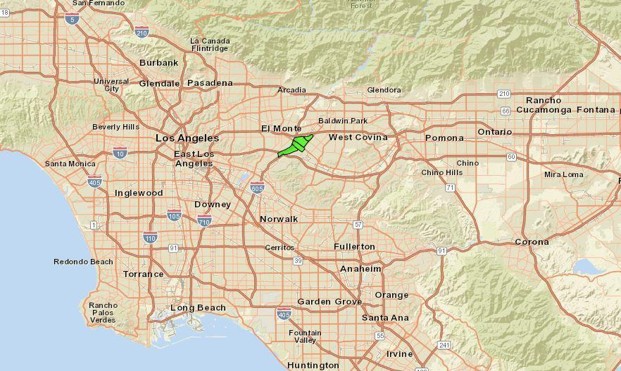
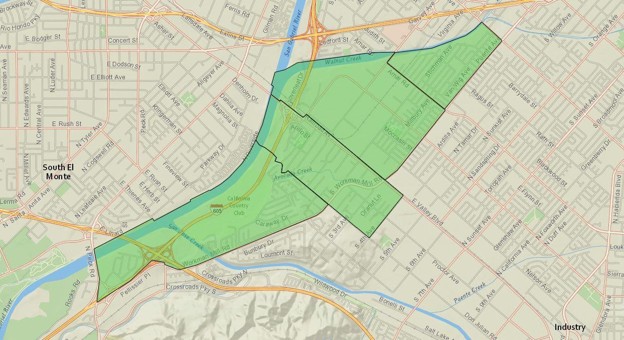
Figure 1.1.0 – (Top) Context map showing BAAEC project area. (Bottom) Location of BAAEC Project Area Census Tracts
In keeping with definition of an ‘advanced energy community’ specified in GFO-15-312, the BAAEC Phase I team adhered to several key criteria in their planning and analysis of hypothetical community energy systems9:
- Project systems and interventions should promote social equity, environmental justice, and a more livable community.
- Locally generated and stored power should be used to offset demand for grid-supplied electricity, and reduce the GHG emissions-intensity of the community.
- The project should provide a replicable and scalable way to include disadvantaged communities in the state’s transition away from fossil fuels.
- The project’s systems should be financed so as to avoid up-front costs to the homeowner, and minimize the need for supportive infrastructural investments.
- The project should focus on the retrofitting of existing residential structures.
The work of the Phase I team consisted of community outreach & engagement regarding energy consumption habits, especially the behaviors and attitudes of renters and homeowners. Phase I outreach asked homeowners and renters in and near the project area about their conservation of energy, energy costs, openness to the adoption of electrified appliances and residential renewable generation technologies, and the location, design, and purpose of hypothetical community energy systems, such as community-scale generation and microgrids. The Phase I outreach team also drew upon their contacts within the communities of Bassett and Avocado Heights to engage with members of Bassett Unified School District (BUSD), The San Gabriel Valley Conservation Corps (SGVCC) and The Clean Air Coalition of North Whittier and Avocado Heights (CAC) to identify potential sites and site-hosts for community-scale renewable energy systems.
The Phase I outreach and engagement work informed the design of Phase I’s DER systems, as well as system performance and financial modeling, guiding the selection of DER technologies (PV generation and chemical battery storage) and DER systems (community solar, residential PV-storage systems, microgrids for community resilience centers) most suitable for the project. Phase I selection of technologies and systems weighed the characteristics of the community, the preferences of its residents, and performance and cost characteristics of renewable energy technologies and electrification/energy efficiency measures against one another in creating an advanced energy community for Bassett-Avocado Heights.
BAAEC Phase I leveraged CCSC’s Energy Atlas, a geospatial database of account-level utility (electricity and gas) billing data, to study the community’s potential for meeting its energy demands and reducing its GHG emissions through the adoption distributed solar PV generation, storage, and residential energy-efficiency measures10. Based on preliminary analysis of the community’s rooftop PV generation potential, its energy consumption (gas + electricity), and capital cost calculations for DER systems and make-ready work, the Phase I team determined that zero-net electricity (rather than zero-net energy, or zero-net carbon) was the most reasonable basis for the evaluation of the proposed residential retrofits and community energy systems.11 The results of Phase I’s financial modeling showed that community attainment of zero-net energy and zero-net carbon would be prohibitively expensive for project developers, and that the attainment of community-wide zero-net electricity status would still yield considerable GHG reduction benefits, namely a 64% reduction in community GHG emissions.12
In synthesizing the results of outreach, financial and performance modeling of proposed systems, and evaluation of potential sites for renewable power generation and storage within and nearby the community, the Phase I team recommended the following as part of an advanced energy community for Bassett-Avocado Heights:
- A Community-Scale Solar PV & Battery Storage System – An ~6MW solar PV and storage system, whose physical components (panels, batteries, control mechanisms, etc.) were to be distributed across publicly-owned buildings (including BUSD campuses) within or bordering the census tracts defined as the ‘community’.
- EV Charging Infrastructure – EV charging infrastructure co-located and integrated into community-scale generation and storage systems. Publicly available EV charging stations powered by community generation and storage assets would facilitate EV adoption. A community EV car-share program was also proposed to reduce the need for private vehicle ownership among community residents.
- Virtual Net-Energy Metering for AEC Subscribers – Subscribers that could not install their own solar PV + storage systems (due to their status as renters, or the condition of their homes) would receive the benefits of 100% renewable power, and energy cost reductions through enrollment in a special, net-energy metering tariff developed in cooperation with LA County’s Clean Power Alliance (CPA).
- Integrated Demand-Side Management (IDSM) Measures – AEC subscribers (residents) and site hosts (public institutions on whose properties community solar and storage systems were to be installed) would receive packages of electrification and energy efficiency retrofits, including rooftop solar panels and batteries (where possible), electrified appliances (such as heat pumps for water and space heating), and building-level energy management systems. Energy management systems would help manage the timing and intensity of end-uses of energy so as to minimize energy costs to subscribers and hosts and assist in integrating residences and site-host buildings and DER systems into markets for electrical power and demand response. Finally, these measures were also intended to increase the resiliency of buildings to electrical service interruption and the impacts of extreme weather events (namely high heat).
The total cost for the systems and measures included in BAAEC Phase I was $26 million. Phase I analysis estimated that over a 25-year period of operation, subscribers would realize a 41% net present cost reduction in energy expenditures.13 Implementation of BAAEC Phase I would depend on the development of a virtual net-energy metering tariff, and the creation of financing mechanisms to help residents access domestic-scale DER systems, efficiency retrofits, electrified appliances, and energy management systems at low or no up-front cost.
1.1.2 – BAAEC Phase II: Changes to Solicitation and Phase I AEC Design
All advanced energy community projects awarded under GFO-15-312 also became eligible for funding in the implementation phase, which opened in 2018. However, the California Energy Commission initially declined to fund Phase II proposals from all Phase I awardees in the Disadvantaged Community category. The CEC made significant changes to funding criteria for Phase II proposals, and notified Phase I awardees that they could amend their original proposals, and reopened the solicitation on March 27, 2019.14 These changes included:
- Restricting project system siting and participation within project boundaries.
- Limits on the use of grant funds for the purchasing and installation project assets, including hardware and energy efficiency measures. Awardees should demonstrate a business case for each of the project scopes in the interest of creating scalable and replicable approaches to residential decarbonization.
- The inclusion of an air quality monitoring component for proposals in the disadvantaged community category.
The Energy Coalition amended the BAAEC Phase II proposal, and was awarded $9 million to proceed with the implementation of BAAEC in June, 2019. The changes to GFO-15-312 altered the scale and content of the BAAEC Phase II proposal. Table 1.1.1 summarizes the differences between BAAEC Phase I and II, owing to the changes made to GFO-15-312 by the CEC:
Table 1.1.1 - Comparison of BAAEC Phase I (Planning) and Phase II (Implementation) Proposals
| Phase I | Phase II |
|---|---|
| 5.6 MW of community solar w/ 450 participants (single-family and multifamily) | 1.2 MW of community solar w/ 235 participants (homeowners and renters, >50% low-income) |
| Community solar hosted across multiple Bassett Unified School District and County of Los Angeles properties | A single community site host (Evergreen Baptist Church) that will assist in community engagement, education, and enrollment |
| Virtual Energy Metering Pilot | A community solar green tariff for 100% local renewable electricity at a 20% electricity rate discount. At least 50% of recipients will be low income. |
| On-bill repayment for a portion of energy efficiency retrofit costs | No energy efficiency upgrade subsidies |
| No emergency resiliency component | Siting and construction of a publicly-accessible microgrid Resiliency Hub |
| Limited EV Charging and EV Car-Share offerings | Extensive installation of EV charging stations (Level 2 and 3), EV Micro-transit, and Vanpooling Program |
| No air quality monitoring or measurement | Street-level mapping and tailpipe emissions monitoring of pollutant concentration |
The following section describes each of the Phase II scopes and lists project partners and subcontractors participating in each.
1.2 - BAAEC Phase II
1.2.1 – BAAEC Phase II Scopes, Partners, and Subcontractors
The BAAEC Phase II project consists of seven complementary scopes addressing different aspects of the decarbonization of residential buildings and residential end-uses of energy. As mentioned previously, BAAEC Phase II implementation grant was awarded to The Energy Coalition. As project lead, TEC contracted with other organizations (private and non-profit) to plan and execute each of the project’s scopes. Each of BAAEC’s scopes is briefly summarized below. Original project partners and subcontractors listed in the BAAEC Phase II proposal are also named15:
-
Outreach, Education, & Enrollment - Non-profit, community-based organizations (CBOs) working in San Gabriel Valley region were responsible for publicizing BAAEC, educating residents about the project, conducting BAAEC-related programming at public events in and around the project area, and providing educational opportunities related to renewable energy at local schools. CBOs were also responsible for enrolling and verifying the eligibility of participants in two of the project’s scopes (Advanced Homes and Community Solar).
- Project Partners: Day One, Active San Gabriel Valley (Active SGV)
-
Advanced Homes – The Advanced Homes scope concerns the installation of solar PV and battery storage systems in up to 50 homes within the project area. Homeowners who met the project’s income and building condition criteria were to receive no-cost home retrofits including (at a minimum) a solar PV and battery storage system equipped with a home energy management system. In order to offer the Advanced Homes retrofits at no up-front cost to homeowners, The Energy Coalition planned to leverage the Disadvantaged Communities – Single Family Solar Homes (DAC-SASH) program, and enroll Advanced Homes participants in a CPA-approved net-energy metering (NEM) tariff.16 Batteries were to be financed through a combination of grant funds and revenues from a virtual power plant pilot to be developed jointly by TEC, a battery contractor, a battery installer and operator, and the Clean Power Alliance. Additionally, 20 of the Advanced Homes were to receive heat-pump water heaters, also at no cost to owners, taking advantage of rebates available through Southern California Edison, as well as manufacturer discounts and grant funds. Responsibility for the design, installation and commissioning of the Advanced Homes’ systems were to be shared by TEC with the solar and battery contractors.
- Project Partners: GRID Alternatives (Solar PV System Design, Procurement, & Installation; DAC-SASH Implementer), Sonnen (Battery Manufacturer and VPP Developer), Green Convergence (Battery Installer and Operator)
-
Prosumer Network – The Prosumer Network scope analyzes the possibilities that the installation of distributed generation on residential single-family homes presents for transactive energy exchange, the quantification and monetization of carbon emissions abatement from residential buildings, and the financial and energy efficiency benefits of household participation in existing and putative energy markets. Energy consumption, solar generation, and battery telemetry data collected from the Advanced Homes were to serve as the basis for simulations around a variety of household energy optimization and market participation scenarios, as well as the testing of a Blockchain technology as means of facilitating the purchase and/or sale of electricity and carbon abatement credits. Future prosumers would have a Prosumer Application (mobile and/or web) displaying household performance, energy costs, and the impacts of energy consumption and household generation on bill amounts. Responsibility for simulation design and Blockchain implementation were shared by TEC and a ‘community micro-utility’ start-up. The micro-utility firm was also to develop the Prosumer Application. A computing hardware firm was contracted to install data collection nodes in the Advanced Homes.
- Project Partners: Community Electricity (Household & Market Simulations, Blockchain Implementation, Prosumer App Development), SpaceAI (Provision and Installation of Data Collection Nodes, Telemetry Data Collection and Storage)
-
Community Solar System – The Community Solar scope concerns the construction and operation of 1.2 MW community solar system under the California Public Utilities Commission’s Community Solar-Green Tariff Program (CSGT).17 BAAEC’s community solar system, hosted at the Evergreen Baptist Church, was to support ground mount and rooftop PV arrays, combined with an ~3kWh battery storage system, in-front of the meter. A power purchase agreement negotiated between the solar developer and the CPA under CSGT was to cover the development costs of the project, provide a 20% electricity bill discount to the 235 subscribers (160 single-family, 75 multifamily) within a five-mile radius of the Church. TEC and the solar developer were to bid into the CPA’s competitive Community Solar-Green Tariff 2020 RFO to secure funding for the Community Solar system. Evergreen Baptist Church was to be paid a leasing fee for hosting the system.
- Project Partners: Enel X (Community Solar Developer), Evergreen Baptist Church (Site Host)
-
Community Resiliency Hub – The Evergreen Baptist Church was also to serve as the site for BAAEC’s microgrid Resiliency Hub, a publicly-accessible building designed to act as an emergency shelter and cooling center for the Bassett-Avocado Heights community. The Resiliency Hub was to consist of a 250-kW rooftop solar PV system paired with a 464-kWh battery storage system capable of providing 4 hours of electricity to its host structure in the event of an electrical service interruption. The Resiliency Hub was to be constructed as a net-metering installation, and financed through a PPA agreement between the system installer and the Evergreen Baptist Church.
- Project Partners: Enel X (Resiliency Hub Developer/ Installer), Evergreen Baptist Church (Site Host)
-
Workforce Development – The construction of BAAEC’s DER systems and single-family home retrofits will provide an opportunity for community members interested in entering the green workforce to do so. BAAEC’s workforce development scope involves pairing volunteers with experienced contractors to provide them the training and certifications required to find employment as solar installers. A portion of BAAEC grant funds are dedicated to funding the training and training volunteers through GRID Alternatives’ Workforce Development Programs.
- Project Partners: GRID Alternatives (Workforce Development Program – Training & Certification, DayOne, Active SGV (Outreach, Education, Enrollment).
1.3 - BAAEC Phase II Project Goals & Case Study Objectives
1.3.1 – BAAEC Phase II Project Goals
The Bassett-Avocado Height Advanced Energy Community is a ‘socio-technical’ demonstration project; the successful execution of its scopes depends on the establishment of personal, cooperative, institutional, and contractual relationships as much, if not more, than on the configuration and performance of the systems of power generation, storage, dispatch, and data collection that it proposes to construct.
The primary object of the BAAEC project is to figure out what it takes to implement climate retrofitting measures (distributed renewable technologies and electrification of residential buildings) in low income and disadvantaged communities, and to show how these interventions can create benefits for local participants and the range of partners involved in constructing and operating them. The success of the BAAEC project, and other socio-technical demonstration projects like it, depends equally on the receptivity, trust, and participation of the community and the ability of the project team to implement the work laid out in each scope. This involves dedicating significant portions of project time and resources to outreach, education, and planning of work, as well as the development of financing models that generate value (monetary and other forms) for project stakeholders, while not imposing cost burdens on participants. The case study addresses these aspects in the chapters dedicated to individual scopes.
The BAAEC Project Goals are as follows:
- Create a Zero Net Electric (ZNElec) community by providing local renewable electricity generation and battery storage to offset the annual electricity consumption of mostly low-income participants within a DAC.
- Generate more efficient, resilient and lower cost energy within the community.
- Enable DAC residents to access cost-effective renewable generation.
- Demonstrate that locally produced renewable energy reduces costs for the utility grid.
- Reduce GHG emissions and improve air quality in alignment with state and local goals.
- Promote social equity, environmental justice and a more livable community.
- Demonstrate a successful model of integrated decentralized energy systems that can be replicated by other DACs.
The BAAEC Case Study recounts the history of the BAAEC project’s scopes and evaluates the extent to which these goals were realized. Special attention is given to the extent to which the project’s scopes produced replicable and scalable models for the financing and adoption of DER systems and residential decarbonization measures in disadvantaged communities across the state. The BAAEC Evaluation, Measurement, and Verification (EM\&V) report provides quantitative analyses of BAAEC’s systems relative to goals 1, 2, 4, and 5.
2.0 – Outreach, Education, and Enrollment
This chapter covers the course of the BAAEC’s Outreach, Education, and Enrollment (OEE) scope as part of the Bassett-Avocado Heights Advanced Energy Community project. It concerns the relationships between the participating organizations and their individual members as understood through participant observation and the collection of project data (enrollment data, event records, contracts, and accounting data). This chapter summarizes the course of the BAAEC enrollment process, focusing on the relationships between project partners, their coordination with organizations and persons ‘outside’ the project, and their effectiveness in reaching project enrollment goals. Enrollment of persons and households outside of the project (homeowners, renters, civic organizations, public entities, etc.) was essential for the implementation and success of the Advanced Homes and Community Solar Scopes (Chapters 3 & 4). The first section of this chapter provides background on the CBOs contracted for the BAAEC project, their respective scopes of work, and the financial and contractual relationships between the project’s CBOs, the project lead (TEC) and the other organizations involved in BAAEC. The following sections recount the three-year history of BAAEC’s Outreach, Education, and Enrollment scope. In addition to the difficulties encountered in identifying and reaching potential project participants, this history includes major changes to OEE plans necessitated by the COVID-19 pandemic, the process of verifying eligibility for the Community Solar and Advanced Homes scopes, as well as other responsibilities that the project’s CBOs acquired during the course of the OEE period (Q3 2020 – Q3 2023).
This chapter also presents the results of BAAEC’s outreach, education, and enrollment process and what implications they have for future efforts to electrify disadvantaged and/or low-income communities in California. Many of the barriers to participation in DER and household electrification programs identified in other state-sponsored and academic studies of disadvantaged communities were also observed in the course of BAAEC project’ outreach phase.18, 19. 20 Despite BAAEC’s being designed to address the lack of disposable household income, low rates of home ownership, the age and condition of housing stock, and community disinterest posed serious problems for the enrollment of interested homeowners and renters. Project scope changes and additional material and financial resources were necessary to extend the OEE period and enroll residents in the Community Solar and Advanced Homes scopes. The unique and extremely challenging conditions under which OEE occurred (the phases of the COVID-19 pandemic, economic turmoil and inflationary pressures, etc.) also delayed and frustrated the process of community engagement, necessitating a search for alternative means and methods for educating the community about BAAEC, as well as the extension of the OEE period several times over. However, OEE efforts ultimately succeeded in creating queues of residents interested in the Community Solar and Advanced Homes offerings and facilitating community participation in BAAEC Phase II.
Section 2.1 provides background on the project CBOs and their general approach towards publicly funded, grant-backed projects. Section 2.1.2 describes the strategy and methods employed by the CBOs in educating the Bassett-Avocado Heights community about the project, the engagement of community members in consultative and/or informational meetings, and tactics to generate interest and enrollment in the Advanced Homes and Community Solar Scopes. Sections 2.2 and 2.3 cover the actual course of the OEE work, describing how, in partnership, the BAAEC team managed to enroll homeowners and ratepayers as participants. Section 2.4 discusses the significant challenges encountered during the OEE period, the actions taken by the BAAEC OEE team in response to them, and the effectiveness of these measures. Section 2.5 concerns what lessons BAAEC have for prospective future state-sponsored residential electrification and decarbonization efforts.
2.1 Outreach, Education, and Enrollment Partners & Scopes of Work
2.1.1 – BAAEC Phase II Outreach, Education, and Enrollment Partners
The outreach, education, and enrollment work for the BAAEC project was to be accomplished by two community- based nonprofit (501c3) organizations: Day One and Active San Gabriel Valley (Active SGV). TEC contracted Day One and Active SGV to serve as liaisons between the community (i.e. its individual residents, local civic organizations, private associations, businesses, and local public institutions), and project subcontractors (private firms and nonprofit organizations involved in the BAAEC project). The responsibilities for the two CBOs included making the community aware of the project, educating residents about the project and its offerings, creating marketing and informational materials, creating spaces and events for community engagement and participation, and assisting with the enrollment of project participants in the Advanced Homes and Community Solar scopes.
Day One – Advanced Homes
Founded in 1987, Day One emerged from a coalition of Pasadena and Altadena residents concerned about community health issues, notably the youth drug-use epidemic in the area during the 1980s and 90s. During its 30-year existence, Day One has developed numerous youth advocacy and community health programs in the San Gabriel Valley, often in partnership with community organizations, schools, and municipal governments. In addition to implementing grant-backed community health projects, Day One has also participated in a variety of urban planning and public policy development processes related to public health, transportation, and sustainability.21 Before joining BAAEC, Day One had participated in the preparation of the LA County Sustainability Plan, the San Gabriel Valley Regional Bicycle Master Plan, and the Puente Hills Landfill Park Master Plan, and other infrastructure projects.
Day One was tasked by TEC with outreach, engagement, and enrollment for the Advanced Homes scope. Through its OEE work, Day One was to engage the community regarding BAAEC Advanced homes, develop a queue of eligible households in the project area that were interested in receiving a solar PV and storage system and other electric appliances (heat-pump water heaters, and later, induction stoves), and to assist in guiding participants through the eligibility screening and installation processes. Day One was also responsible for the translation of BAAEC Phase II project and promotional materials into Spanish.22
Active San Gabriel Valley – BAAEC Community Solar
Active San Gabriel Valley is a nonprofit organization founded by San Gabriel Valley residents interested in promoting active transportation and “people-friendly” streets.23 The organization grew out of a Facebook page dedicated to cycling, and was originally all-volunteer. Since incorporating as a 501c3 organization in 2010, Active SGV has worked with local and regional partners on transportation policy, urban planning, environmental health issues in the San Gabriel Valley. The organization also promotes active transportation and public infrastructure projects supportive of it, such as bicycle parks, E-bike rebate programs, and creation of new bicycle paths and lanes.
Active SGV was tasked with outreach, education, and enrollment for the Community Solar Scope. Active SGC was responsible for publicizing the offering, verifying the eligibility of interested residents (renters and homeowners), and enrolling subscribers for the BAAEC Community Solar system (later the Clean Power Alliance’s PowerShare program). Active SGV was to help guide participants through the Community Solar screening and enrollment process, and to provide Spanish-language assistance for residents requiring it.
2.1.2 - BAAEC Phase II & CBO Commitments to Social and Environmental Justice
Day One and Active SGV have long worked towards alleviating the social and environmental problems affecting communities in the San Gabriel Valley region. Their participation in Phase I and II of BAAEC depended on the project aligning with their organizational commitments to social and environmental justice. These commitments, outlined in their organizational mission statements, and articulated in interviews for the BAAEC Phase II Case Study, include:
- Improve local environmental conditions/ diminish environmental hazards for the communities they serve – Bassett and Avocado Heights residents live with the cumulative impacts of uneven and racialized urbanization. Improvement of environmental conditions within minority/ low-income/ disadvantaged communities is a key aspect of the broader movement for social and environmental justice. The “energy transition” in response to climate change is an opportunity to put social justice imaginaries into practice.
- Ensure the communities they serve are justly and equitably included in any transition away from fossil fuels/ towards a renewable, electrified future – Disadvantaged communities should not be burdened with the socio-ecological costs of the state’s renewable energy transition. The past and current costs borne by “frontline” or “environmental justice” communities should be taken into consideration by state and local policy relating to climate and energy. The progressive decarbonization of environmentally disadvantaged areas will improve the health and safety of people living in disadvantaged communities and decrease GHG emissions over time.
- Collective Action, Amplification of Community Voices, Community Empowerment – Disadvantaged and environmental justice communities should be participants in policy and planning processes that affect them. Formal political participation by community groups and members in socio-environmental decision making should be expanded. The legitimacy of any “just” transition rests on its ability to benefit everyone involved. BAAEC is an opportunity for community members and civic organizations to take part in a “first of its kind” transformational project. Participants and project staff would learn from one another, and help to find ways of scaling the energy transition.
BAAEC’s Advanced Homes and Community Solar scopes would come at no monetary cost to the local residents. As we will see throughout this chapter and others, commitment to these normative ethical positions helped to structure local participation in BAAEC and were the reason why the project lead chose certain private partners over others.
In interviews, CBO directors and staff said that they were supportive of BAAEC’s community-centric approach to the energy transition and designed their OEE scopes of work around a community participatory model of engagement. CBO directors and staff said that climate change was an issue of increasing concern for them and the communities they serve, and that electrification and distributed renewable energy systems could help alleviate local climate impacts and air quality issues if adopted at scale. CBO interviewees mentioned that the local impacts of climate change (namely heatwaves and electric service interruptions) and increasing energy costs threatened the livelihoods, health, and safety of those living in the San Gabriel Valley and Bassett-Avocado Heights. In interviews conducted at the beginning of the project, CBO members said they were supportive of BAAEC’s approach to addressing these problems through the community-led construction and operation of distributed renewable energy systems and electrified infrastructure. Interviewees who had participated in BAAEC Phase I reflected positively on its outcomes, and generally felt comfortable moving towards implementation. Despite the potentially modest social environmental benefits resulting from a pilot project like BAAEC Phase II, CBO members felt as though participating residents, non-participating residents, and other communities like Bassett and Avocado Heights stood to benefit from the project.
Project CBOs made it clear that “community participation” would not (and should not) consist of simply spreading the word about BAAEC and its benefits to people in the project area. Making area residents aware of the project was, in their view, only an initial step towards deeper and more meaningful forms of community participation in BAAEC Phase II. According to directors and staff, the object of their outreach and education work – also referred to as the ‘community engagement’ portion of the OEE scope – was to provide the community with information about the project, its systems, what these systems promise to do, and to create venues for the community’s active participation in the development of an “advanced energy community”. “Active participation” in this instance meant that community members, individually and/or collectively, become project partners – with the agency to change the design, location, and configuration of project interventions based on their knowledge and desires. In interviews, CBOs staff and directors stressed that facilitating active participation meant going beyond merely informational or consultative forms of engagement. The project partners wanted to create space for decision-making and deliberation between themselves and representatives of the community. Outreach staff wanted to help homeowners make materially consequential decisions about the technical, economic, and political aspects of retrofits. The active participation of the Bassett-Avocado Heights community in BAAEC Phase II would mean the difference between community engagement and “community leadership”. Accordingly, the Phase II Outreach Plan proposed the creation of several venues and activities to invite the active participation of the community. These included a voluntary standing body of 10-15 community members – the Community Advisory Committee - who would meet regularly with project staff and offer feedback on BAAEC scopes and progress, as well as a number of public workshops, community meetings, and focus groups (See Table 2.1.3.1).
Community participatory models CBO directors and staff also mentioned that the environmental hazards, economic precarity, and underinvestment in public infrastructure that made Bassett-Avocado Heights a “disadvantaged community” reflect legacies of racist dispossession and exclusion. One CBO staff member said that the BAAEC project would almost certainly would fail had it consisted of well-meaning outsiders (“white saviors”) looking to treat the community as a testbed for new technologies, and that a “community-centric” approach was absolutely necessary for BAAEC Phase II’s success. The project had to demonstrate tangible benefits for “the community”, and the community was the only legitimate judge of putative benefits.
Day One and Active SGV authored their BAAEC Phase II Outreach Plan with these issues and concerns in mind. The Phase II Outreach Plan identified potential community partners, methods for generating community engagement, venues for eliciting the views, criticisms, and preferences of community members, programs to educate residents about the project and distributed renewable technologies, and approaches to generating enrollment. The Phase II outreach plan also included performance metrics and goals for OEE, as well as a history of the area spanning the sale of the land by the state of Alta California in 1842 to the present.24
2.1.3 – Outreach, Education, and Enrollment Strategy and Methods for BAAEC Phase II
The BAAEC Phase II Outreach Plan describes the actions and goals planned for the OEE scope of the project. The first draft of this plan was published by Day One and Active SGV in October 2020, and a final version published in June of 2021. Tables 2.1.3.1 – 2.1.3.2 depict the OEE activities planned for BAAEC Phase II.
Table 2.1.3.a – Planned BAACE Phase II Community Outreach Methods, Activities, & Objectives
| Methods | Objectives |
|---|---|
| Community-facing website in English and Spanish | Primary web presence & information source; online enrollment form |
| Printed outreach materials in Spanish and English | 15 publications |
| Community Surveys | 500 survey responses |
| Community Testimonials | 25 resident testimonials |
| Focus Groups | 3 focus groups |
| Social Media | Minimum 250K impressions |
| Community Mural | 1 |
| Phone and Text Banking | Minimum 500 |
| Local Media Coverage | TBD |
| Community Tours | Minimum 6 |
| Community Events | 17 community forums, 25 community/ school workshops, 12 public booths/ “pop-ups”, 2 large-scale events, 2 virtual events (minimum of 60 total events) |
| Door-to-Door Canvassing | TBD |
| Community Advisory Committee | Minimum of 10-15 participants from project area |
| Youth Advocacy Program for Bassett Unified School District | Minimum of 10 students |
| Stewardship/ Leadership Academy Program for Adult Residents | Minimum of 10-15 participants from project area |
Table 2.1.3.b – Enrollment Goals for Advanced Homes and Community Solar Scopes
| Scope | CBO | Objectives |
|---|---|---|
| Advanced Homes | Day One | 50 single-family households; subset of 20 to receive optional offerings (HPWH, Induction Stove) |
| Community Solar | Active San Gabriel Valley | ~250 residential ratepayers (50% on CARE/FERA)25 |
Tables 2.1.3a lays out the methods that Day One and Active SGV hoped to use to drive enrollment for their respective scopes. Table 2.1.3b shows the enrollment targets for the Advanced Homes and Community Solar Scopes. While many of these methods (and others) were used during the OEE period, the COVID-19 pandemic and social distancing regulations meant that OEE project staff could not hold or attend in-person events or visit the homes of residents interested in either program offering. Thus, between August 2020 and May 2021, outreach was limited to virtual information sessions.
However, the gradual easing of social distancing restrictions (starting in Q3 of 2021) meant that Active SGV and Day One could begin holding in-person events and attending those undertaken by other organizations, such as vaccination and resource drives held by LA County, and meetings of civic groups in and near the BAAEC project area. These included:
Table 2.3.2 Advanced Homes and Community Solar Outreach, Education, and Enrollment Activities by Type (Q3 2021- Q4 2023)
| BAACE Scope | Activity Type | Count |
|---|---|---|
| Advanced Homes | In-Person Appearance (community event, public or civic group meeting) | 54 |
| Canvassing | 2 | |
| Direct Mail | 4 | |
| Virtual | 5 | |
| Cold-Calling/ Text Banking | 2 | |
| Community Solar | In Person Appearance (community event, public or civic group meeting) | 28 |
| Canvassing | 15 | |
| Direct Mail | 1 | |
| Virtual | 3 | |
| Cold-Calling/ Text Banking | 2 |
- In-Person Appearances - The primary means by which the community was to be informed and engaged were through public appearances of Day One and Active SGV staff at community events and high traffic areas where residents gathered in large numbers in person. At these events, residents of the project area could be engaged in conversation (in Spanish and English) and provided with information about the BAAEC project (verbally, through informational flyers, and digitally). These events were to be the primary means of generating interactions between community members and project partners and generating queues of interested residents. Interaction at these events was unscripted and casual. CBO staff members would speak with people who approached the project displays or tables, offering literature for adults, activities for children, small gifts for survey participation, etc. In-person events were often held in conjunction with community partners, including school districts, LA County Parks, community colleges, and farmers markets.
- Canvassing – Door-to-door canvassing in the project area was undertaken to spread awareness of the BAAEC project, and recruit participants for the Advanced Homes and Community Solar Scopes. Canvassing sessions were coordinated using digital maps of the BAAEC project area and a California state funded voter information database (PDI). Groups of two or more canvassers would walk along predetermined routes knocking on doors, introducing themselves in the appropriate language (usually Spanish or English), and offering a description of their affiliation, the project offering, and the benefits of participation. Many homeowners asked questions about the program and its benefits, but oftentimes could not confirm their eligibility at the door. In this case, contact information was taken by Active SGV for a follow-up call. Homeowners were free to disengage at any time and to refuse to answer questions. Canvassing routes in eligible areas were planned by Active SGV using a mobile canvassing app from the California Campaign Center, and Google Maps. Active Staff created maps of the project area reflecting where they had canvassed, where they had yet to canvas, and the boundaries of the project census tracts..
- Direct Mail – Direct mail campaigns were undertaken later in the OEE period to drive enrollment for BAAEC Advanced Homes and Community Solar. At various times, direct mailers were sent by Day One, Active SGV, CPA, and Grid Alternatives to households based on one of several mailing lists maintained or acquired by the BAAEC team, the Clean Power Alliance, and Southern California Edison.26 Households predicted to qualify for Advanced Homes (DAC-SASH) and Community Solar (PowerShare) in the BAAEC project area (~2,800) were sent BAAEC informational mailers.
- Public or Civic Group Meeting Presentation – In addition to outreach, education, and enrollment activities focused on individuals or households in the project area, staff members from Day One, Active SGV, and TEC also joined meetings held by civic groups and public institutions. At these meetings, BAAEC partners (typically one of the CBOs or TEC) gave presentations on the project, discussed the rationale for the project and its goals, and asked attendees for feedback on the project plans. TEC and the CBOs also hoped that these meetings would lead to regular and substantial cooperative engagement, even if cooperation was purely consultative or informal. Other times, staff from TEC and the CBOs would give presentations to assembled groups of community stakeholders in which possibilities for more formal kinds of collaboration between BAAEC and existing community groups were explored. The BAAEC team held a series of Community Advisory Meetings, where a selected group of public, non-profit, and civic organizations in and around the project area were invited. CAC members and organizations are listed in Appendix 2A.
- Virtual – Zoom-based, outreach, education, and enrollment sessions were conducted during the COVID-19 pandemic in lieu of in-person events. Virtual events held by Day One and Active SGV were, however, sparsely attended by residents interested in the project (<5 attendees per session). When it once again became possible to host in-person events, the CBOs ceased holding public-facing virtual outreach meetings.
- Cold-Calling/ Text Banking/ Social Media – Active SGV and Day One undertook cold-calling and text banking campaigns during and after the COVID-19 pandemic to drive interest and enrollment in the Advanced Homes and Community Solar scopes. The CBOs, in cooperation with TEC, helped to maintain the project website, create social media content, and send text communications to area residents.
The following sections provide a narrative of the project scope, broken into pre-implementation and implementation periods. The pre-implementation period concerns the planning and preparatory work necessary for project activities or systems as part of a project scope. The implementation period concerns the execution and completion of the scope.
The final sections of this chapter analyze the results of the OEE scope, in terms of BAAEC project value criteria (economic benefits for participants, local environmental benefits, GHG emissions reduction) and equity commitments (no-cost interventions, bill reductions, local environmental benefits).
2.2 – BAAEC Outreach, Education, and Enrollment: Pre-Implementation Period (Q3 2020 – Q2 2021)
Because Outreach, Education, and Enrollment was planned to begin after project kickoff in the summer of 2020, the organizations involved in OEE were already under contract, and a division of work for the Advanced Homes and Community Solar systems had been established. However, the social distancing restrictions imposed by the COVID-10 pandemic meant that the bulk of OEE activities occurred after the summer of 2021. Bassett, Avocado Heights, and the surrounding communities were also severely affected by the pandemic; public officials and CBO staff members mentioned that many community members had died or become ill since the beginning of the pandemic, and that many individuals and households were suffering from the economic turmoil caused by the spillover effects of the Pandemic. In response to such public health restrictions, and concern for resident safety, TEC, Day One, and Active SGV suspended most OEE efforts until it was safe to visit the community for events in person, holding a small number of virtual outreach sessions in the meantime. Virtual outreach efforts were, however, sparsely attended by area residents, and were liable to be disrupted by “zoom bombers”, as happened once during the height of COVID restrictions.
2.2.1 – Q3 2020 – Q2 2021: COVID-19 Pandemic Restrictions, OEE Planning, Establishment of Eligibility Criteria for Advanced Homes and Community Solar
Much of the OEE work accomplished during OEE pre-implementation concerned language translation (specifically, the translation of the project website, enrollment page, and other promotional materials into Spanish) and the completion of a draft OEE plan for the BAAEC project.27 Responsibility for Spanish translation was borne primarily by Day One, with support from TEC.
The BAAEC Draft Outreach Plan, completed by Day One and Active SGV in October of 2020, emphasizes the importance of in-person outreach and education for the project. Based on their experience with other grant-backed projects in the San Gabriel Valley, Active SGV and Day One felt as though a stable, in-person presence and consistent contact with potential participants was the best way to overcome their suspicion of “free” solar offerings and gain a measure of trust in the community. In interviews, Day One and Active SGV also anticipated having to reserve time and resources to assist participants with the logistics of enrolling in project programs and facilitating communication with other project partners – especially Grid Alternatives and the Clean Power Alliance.28 Day One and Active SGV planned to resume in-person OEE work as soon as public health conditions permitted. In-person community outreach efforts were put on hold until infection and hospitalization rates diminished in the third quarter of 2021.
In the meantime, TEC, Active SGV, and Day One began outreach to public and civic organizations in Bassett-Avocado Heights, inviting a handful of groups to the project’s Community Advisory Committee (CAC). The Community Advisory Committee included representatives from the County Supervisor’s office (1st District – Los Angeles County), the superintendents of Bassett Unified School District and Hacienda Heights Unified School District, the San Gabriel Valley Chamber of Commerce, and the Clean Air Coalition of North Whittier-Avocado Heights (Appendix 2A). This body was selected by the CBOs with approval from TEC. Meetings between the Community Advisory Committee and TEC were hosted by the BAAEC team to elicit engagement and guidance from local stakeholders regarding BAAEC’s various scopes. The CAC was to meet quarterly during the project. The organization was convened via email, with the first (online) meeting of the BAAEC CAC occurring in April, 2021.29
Finally, eligibility criteria for Community Solar and Advanced Homes were established with assistance from the Clean Power Alliance and GRID Alternatives. In 2021, the CPA informed the project that BAAEC Community Solar enrollments would occur under its PowerShare Tariff program for disadvantaged communities, using the CPUC’s thresholds for low-income status (CARE/FERA).30 GRID Alternatives confirmed that all Advanced Home participants needed to meet the household income and occupancy requirements for DAC-SASH, which were also based on CARE/FERA. The fact that these programs shared the same household income and occupancy thresholds (CARE/FERA eligibility) and geographic criteria (residency in a disadvantaged census tract), helped to simplify the task of identifying potential participants in Community Solar and Advanced Homes.31, 32
For Advanced Homes, residents would have to reside within the BAAEC project census tracts, as well as meet CARE/FERA requirements and DAC-SASH building condition and permitting requirements to participate (Fig 2.2.1.1.).
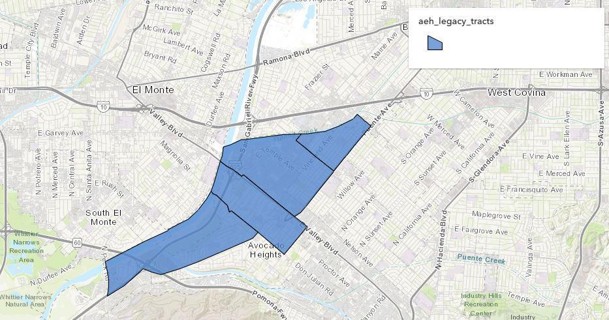
Figure 2.2.1.1 – Original BAAEC Project Area (2021)
For Community Solar, potential participants had to live within the intersection of three distinct administrative geographies (Figure 2.2.1.2). Potential Community Solar enrollees needed to live within 5 miles of the BAAEC Community Solar system, within CPA territory, and within the BAAEC project area.33 As Figure 2.2.1.2 shows, locating the Community Solar system anywhere within the BAAEC census tracts would have yielded a larger eligible area for PowerShare enrollment, and a less complicated intersection of eligibility geographies. However, the choice of the original community solar site host, the Evergreen Baptist Church, to leave the project in 2020 meant that the BAAEC Community Solar system had to be moved to the rooftops of a personal storage business outside of the original project area - several miles to the South and West (see Ch. 4). This change complicated the planning of OEE for Community Solar and made it more difficult to verify the geographic eligibility of residents interested in BAAEC Community Solar. In response, the Clean Power Alliance took on the responsibility of allocating PowerShare enrollees to the BAAEC Community Solar System. Using their own customer data, the CPA said it would allocate geographically eligible PowerShare enrollees to the BAAEC system once the system was operational. The division of labor between CPA and Active SGV meant that Active SGV could concentrate on enrolling as many residents from the project area as possible in CPA’s PowerShare program. In turn, the CPA would eventually allocate residents in the Community Solar eligibility area to the BAAEC Community Solar system in keeping with their Community Solar – Green Tariff solicitation for community solar systems (Ch. 4).
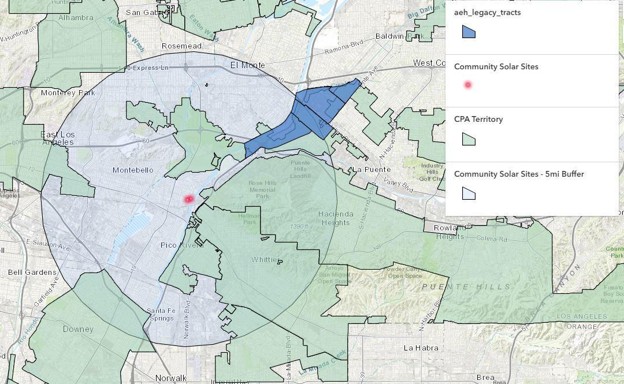
Figure 2.2.1.2 – BAAEC Community Solar Eligibility Area
By the end of 2021, Day One and Active SGV had established the basic geographic and household criteria for Advanced Homes and Community Solar eligibility (Table 2.2.1.1.), and had begun to ask residents to sign up for PowerShare or begin the enrollment screening process for Advanced Homes.
Table 2.2.1.1 – Household Eligibility Criteria for Advanced Homes and Community Solar
| Advanced Homes – Disadvantaged Communities – Single Family Solar Homes (DAC-SASH) | ||
|---|---|---|
| Income & Property Ownership Requirements | Income-qualified (CARE/FERA)* ratepayers who own Single-Family Homes | |
| Geographic Requirements | Homeowners in BAAEC (DAC) Census Tracts | |
| Ratepayers must be in IOU territories (SCE, PG\&E, SDG\&E) | ||
| Community Solar – Clean Power Alliance’s PowerShare & CPUC’s Community Solar – Green Tariff (CSGT) | ||
| Income & Property Ownership Requirements | Income-qualified (CARE/FERA)* homeowners and renters | |
| Geographic Requirements | Renters and homeowners in CPA territory | |
| Renters and homeowners in BAAEC (DAC) Census Tracts | ||
| Renters and homeowners within a 5-mi. radius of BAAEC Community Solar System |
* CARE/FERA are subsidized retail rate programs for low-income utility customers. DAC-SASH uses the same household income and occupancy criteria as the CARE and FERA programs to determine eligibility for direct solar PV installs.
2.3 – BAAEC Outreach, Education, and Enrollment: Implementation Period (Q3 2021 – Q4 2023)
On May 29th, 2021, BAAEC was introduced to the residents and potential participants at a vaccination drive. Over the next two years and three months, Active SGV and Day One undertook 108 in-person OEE activities in and around the project area including door-to-door canvassing, appearances at school events, meetings with community stakeholders, and maintaining a considerable web presence for BAAEC, among other OEE activities (movie nights, local bike tours, community holiday events, etc.). However, major changes were made to the OEE scope during the post-implementation period.
2.3.1 – Q3, Q4 2021: Beginning of in-person outreach, Debate between Partners over direction of OEE scopes
One of the first major changes to OEE came during the summer of 2021, when Active SGV, Day One, and TEC experienced challenges around how to organize OEE work now that COVID-19 restrictions had eased.
The first of these challenges concerned the issue of branding project materials, including flyers, social media posts, and other forms of project content. TEC favored consistent visual branding across the materials, and wanted Day One to adhere to these guidelines. In practice, Day One found that maintaining consistent visual branding meant submitting content they had made to TEC for approval, which added labor hours and extended timelines. Day One also felt that strict adherence to branding guidelines made project materials look too repetitive in social media posts, and that the way work was being organized didn’t respect their good judgement. Eventually, staff from TEC and Day One met to discuss the division of labor for outreach, and TEC agreed to give Day One greater latitude in publicizing Advanced Homes.
The second issue had to do with the still-developing technical side of the project, and the degree of specificity with which OEE staff could discuss the Advanced Homes. In interviews, Day One explained that TEC had provided them with fact sheets that described the Advanced Homes in general terms (as a set of interventions), but were short on technical information, including what technologies would finally be included, where they would go in the Advanced Homes, and what homeowners could expect during the installation process (how long installation would take, how many contractors would be involved, etc.). Staff from Day One also said they felt somewhat uncomfortable offering a program about which they themselves had little specific information to share with interested residents, and worried that promising benefits while being vague about technical details might arouse the suspicion of residents already wary of “scams” (i.e., of predatory rooftop solar installers). To justify their concerns, they cited the fact that Active SGV’s text-banking (>4400 texts) and cold-calling (>100 calls) for the Community Solar scope had already resulted in some recipients accusing the nonprofit of “scamming”, or making predatory offerings to low-income residents. While the OEE implementation plan prepared by Day One and Active SGV anticipated the skepticism of free offerings, indeterminacy on the “technical” side of Advanced Homes (resulting from the search for suitable private-sector battery partners) meant that technical specifications and performance projections were not available. Quoting GRID’s guarantee of 50% bill savings, Day One had to hope for the best and try to make up for the lack of information. Staff knew that the inclusion of the battery and electrification measures would change benefit projections, but they could not say by how much or in what direction.34 Outreach staff struggled to describe how Advanced Homes’ devices would interact with one another. Eventually, these concerns were shared with TEC and GRID. Though neither organization could offer precise estimates of household savings, TEC and Grid told Day One that they were safe to continue quoting DAC-SASH (solar only) savings estimates to residents, and assured them that retrofits could be engineered to provide “significant” bill savings. TEC also eventually provided Day One with illustrations displaying Advanced Homes’ different interventions and their functions, and outreach staff were given more detailed technical descriptions of each retrofit measure as the engineering side of Advanced Homes took on more definite form.
TEC also acknowledged that the lack of detail on the Advanced Homes scope was a potential stumbling block for OEE, but the departure of battery partner Sonnen from Advanced Homes meant that questions about the configuration and performance of the Advanced Home solar PV and storage systems could not be answered with technical specifications/ a model number until a new battery partner was found. Until Swell Energy came under contract as the battery provider, Advanced Homes staff could not provide them any additional details.35 This meant Day One to exercise caution when answering resident’s questions about the material impacts of retrofit measures, as well as their projected bill savings or economic impacts.36 Working through these challenges and taking a “case-by-case” approach to enrollment helped to create trust and reciprocity between Day One and TEC.37
After the relaxation of public health restrictions, and the cooperative resolution of the OEE scope challenges mentioned above, Day One and Active SGV began planning and hosting events in and near the BAAEC project area. During 2021, Day One and Active SGV made 18 appearances at local parks, schools, and vaccination drives (Fig. 1), canvassed door-to-door in the project area 8 times, and texted and called thousands of potentially eligible homeowners and renters in the BAAEC census tracts.
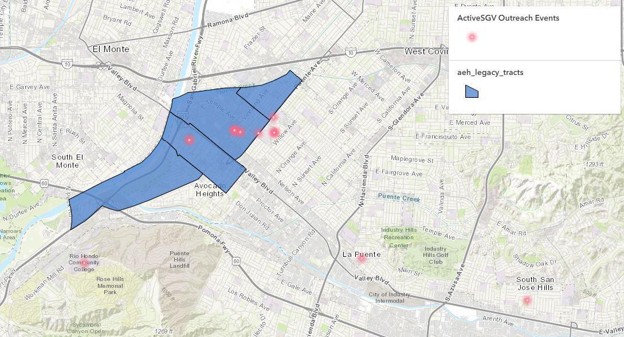
Figure 2.3.1.1 - BAAEC Outreach Events for 2021
However, enrollment in both scopes was slow. By the end of 2021, Day One had approximately five leads for Advanced Homes, and ActivebSGV confirmed 10 enrollments for the CPA’s PowerShare Tariff program.38 Various strategies for driving enrollment, including expanding the BAAEC project area, were considered in response, but no scope changes were requested from the CEC at this time. Instead, several methods were adopted by the BAAEC team to better identify eligible residents in the original BAAEC area. These included several technological and administrative changes.
In order to store and share the personal information of interested residents, and track the progress of OEE work, Day One, TEC, and Active SGV created a shared CRM platform for recordkeeping and prioritizing OEE tasks. Pre-classified household location and characteristics data from third-party data provider Faraday was also included in this database for targeting direct mail and electronic communications for Advanced Homes. Advanced Homes and Community Solar’s CRM databases (and many other shared spreadsheets and reports) later became the digital basis for the organization of OEE work. Information was centralized and updates on the status of contacted “leads” could be created independently by staff alone or in team meetings. These records were also combined with CRM reports generated by Swell Energy and other private battery parters to keep track of Advanced Home construction and invoicing activities (See Ch. 3). Active SGV and TEC were not as reliant on database technology for Community Solar outreach, but reported outreach statistics, and combined these with CPA GSGT/ Power Share enrollment numbers to track progress towards allocation of Community Solar’s capacity. Both scopes used web maps of the project area created and hosted by UCLA to plan canvassing activities. Project databases and maps were used to check the geographic eligibility of residents and organize the work of outreach, education, and enrollment.
The first six months of BAAEC OEE also saw changes to how the CBOs introduced and spoke about the project to residents. Staff from Active SGV said that explaining the Community Solar project and the PowerShare program in the limited time afforded with residents was awkward and confusing, and that it was typically more effective to mention PowerShare’s 20% bill discount first and then field questions about the program. Active SGV also found that while many residents enrolled themselves in the Power Share program, others needed help, guidance, or were uninterested in the offering. Day One staff began refining their presentation of the scope and its offerings at in-person events. Day One also began cultivating lists of potential leads who needed to be confirmed as eligible for Advanced Homes. This process took place remotely, through a series of phone calls and emails. By the end of 2021, they had generated a short list (~5) of “prescreened” leads who would be contacted for an Advanced Homes eligibility check once the project was ready to begin retrofitting the homes of participants.
2.3.2 – Q1, Q2 2022: Additional Grant Funding for OEE, Involvement of Clean Power Alliance and GRID Alternatives in OEE, Expansion of Advanced Homes eligibility area.
The first two quarters of 2022 were the most active period for BAAEC OEE. Day One and Active SGV held more events in 2022 than in any other year of the project. Both CBOs made regular in-person appearances at community events, as well as movie nights and resource fairs at LA County Parks, and created new marketing materials and social media content. The CBOs, as well as TEC, also cultivated closer relationships with public and civic organizations in the project area. Important community partners for 2022 OEE included the administrative staffs of local high and middle schools, the 1st District County Supervisor’s Office, Los Angeles County Parks & Recreation, and the Clean Air Coalition. Many outreach events were held as part of other events occurring at schools (grad nights, PTA meetings) or at regularly scheduled LA County Parks events (resource fairs, movie screenings, holiday events). Figure 2.3.2.1 shows the locations of in-person outreach events held or attended by Day One and Active SGV during the first half of 2022.
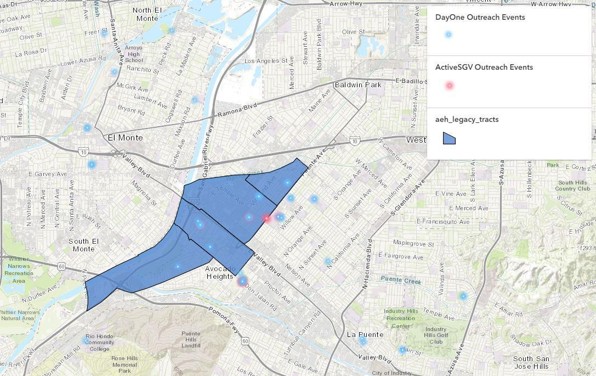
Figure 2.3.2.1 – BAAEC Outreach Events (Q1-Q4 2022)
The easing of social distancing restrictions and falling infection rates meant that the CBOs could now pursue the vision they originally had for BAAEC OEE, but the nearly year-long delay caused by COVID-19 meant that both organizations needed additional funding to continue their OEE work for Advanced Homes and Community Solar.
In 2022, TEC applied for and received funding from the TECH Clean California program to install 20 heat-pump water heaters (HPWHs) in a subset of the Advanced Homes. Part of the $245,000 award was used to publicize the offering as part of the Advanced Homes Scope, providing Day One additional funds to find interested residents and verify their eligibility for home retrofits.39 Another similar grant (~$183,000) from the LA Clean Tech Incubator (LACI) provided approximately $183k for the installation of 20 induction stoves in BAAEC homes. This founding would help extend Advanced Homes OEE over the course of the next year and a half. Outreach staff would offer HPWHs and stoves to homeowners as optional electrification measures (to be installed at no cost). Additional time and resources for Advanced Homes OEE appeared increasingly necessary given the slow pace of enrollment: twenty-one potential leads had been turned away by the end of 2021, and five prescreened leads remained on a waitlist maintained by Day One.
The growing number of disqualified homeowners had either failed to meet geographic or DAC-SASH criteria (Table 2.2.1.1) necessary for participation. Eligibility screens included household income, occupancy, and property inspection requirements. Consistent with Grid Alternatives’ DAC-SASH experience, many homes were older, some had unpermitted modifications, and most needed a re-roof and service panel upgrade to participate. Interest was also another key issue. Many homeowners contacted by Day One were indifferent or had become unresponsive after initial communications. The BAAEC team hoped that the additional funding for Advanced Homes OEE would give Day One time to “re-introduce” themselves to residents and create a “pipeline” of leads from which 50 willing and eligible households could be selected.
By comparison, Active SGV was now having a measure of success in finding and enrolling eligible customers in and near the BAAEC project area. However, the organization also needed additional financial support to prolong OEE for the Community Solar scope and meet its PowerShare enrollment targets. Active SGV’s enrollment drive for BAAEC Community Solar/ PowerShare was extended in 2022 with funding from the CPA. Early in 2022, the CPA, having noted Active SGV’s effectiveness in monthly PowerShare enrollment counts, approached Active SGV and encouraged them to apply for a CPA Non-Profit Outreach & Engagement grant, with the hopes that Active SGV’s OEE efforts would help the CPA towards meet its total enrollment cap of 6,500 ratepayers. In Q2 2022, Active SGV was awarded an $8,000 grant to extend Community Solar OEE to the end of Q3. Active SGV and the CPA also collaborated on a direct mailer (in Spanish and English) advertising the PowerShare program and its 20% bill discount to income-qualified residents in San Gabriel Valley DAC census tracts. In interviews, Active SGV staff members reported that the combination of in-person outreach (including canvassing) and direct mailers had been effective in generating enrollments for PowerShare. Active SGV planned to complete their OEE work for BAAEC Community Solar/ PowerShare once CPA confirmed that the organization had reached or exceeded its enrollment goal for the BAAEC census tracts.
Meanwhile, in the interest of moving the Advanced Homes scope forward, Day One, TEC, and GRID Alternatives began holding weekly meetings in Q2 of 2022 to coordinate Advanced Homes OEE, DAC-SASH application, and installation of rooftop solar PV arrays. In order to begin preparing DAC-SASH applications for BAAEC Advanced Homes leads, GRID Alternatives needed to be put in contact with leads generated by Day One to collect proof of income, energy usage data, billing metadata, building permit histories, and to schedule a home inspection prior to applying for funding under DAC-SASH.40 To organize this effort, Day One, TEC, and GRID Alternatives linked their CRM platforms through a series of shared tables and reports. The sharing of CRM software facilitated the tracking of interested homeowners, the progressive verification of their eligibility, and the collection of data relevant to the installation of solar PV panels under DAC-SASH for use by GRID Alternatives and other subcontractors. Shared tables containing lead status information were often updated during weekly meetings (held on zoom) attended by GRID Alternatives, TEC, Day One, and UCLA CCSC.
During weekly check-in meetings, staff from GRID Alternatives also offered their strategic approach to DAC-SASH outreach and discussed difficulties they encountered in finding and enrolling low-income homeowners. Specifically, GRID noted that the building condition and income criteria for the DAC-SASH program tended to “pull in opposite directions”. GRID staff explained that, historically speaking, it had been difficult to find income qualified households with structurally sound roofs, and that many low-income homeowners were disqualified for DAC-SASH because of the condition of their roofs during GRID’s initial building inspection.41 GRID said that structural deficiencies found during home inspections were largely responsible for the 60-75% attrition rate for DAC-SASH they had calculated for Los Angeles County. GRID staff members noted that most income-qualified families living in DACs had roofs that were either old or structurally deficient, and that low-income households were almost always unable or unwilling to pay for roof repairs (>$10,000) in order to participate in DAC-SASH.42 The presence of unpermitted structures or major improvements to properties also disqualified a number of interested homeowners. Together, the requirements of DAC-SASH produced a relatively narrow pool of potentially eligible homeowners.
GRID suggested several strategies for finding pools of eligible residents, such as partnerships with electric service providers and weatherization contractors, who might be able to offer lists of potentially qualified homeowners and to spread the word about BAAEC Advanced Homes. Additionally, as an organization with its own OEE capacities, GRID also promised to refer eligible homeowners it had identified in the project area to BAAEC Advanced Homes. GRID also made it known during BAAEC Advanced Homes meetings that it had already independently identified several DAC-SASH eligible households outside the BAAEC Advanced Homes census tracts and suggested that an expansion of the Advanced Homes project area might be necessary in order to overcome the problems with DAC-SASH’s eligibility criteria.
In March of 2022, based on GRID’s experience with DAC-SASH enrollment in LA County, and under the pressure of the project timetable, TEC requested a scope change from the CEC, expanding the extent of the BAAEC Advanced Homes project area to include the neighboring DAC census tracts within a 1-mile radius (Figure 2.3.2.2).43 In the scope change request to the CEC, TEC cited GRID’s DAC-SASH’s program limitations and attrition rate for LA County as significant barriers to implementation. GRID’s identification of multiple, potentially eligible participants outside of the Advanced Homes census tracts was provided as one of the justifications for the expansion of the Advanced Homes eligibility area. The BAAEC Community Advisory Committee was also presented with the Advanced Homes expansion scenario and approved of the plan to expand the project’s definition of the “community” for the purposes of the scope. The Advanced Homes eligibility area expansion was approved by the CEC in April, 2022. The expansion increased the size of the Advanced Homes eligibility area from 4 to 34 census tracts, and included tracts in neighboring cities (La Puente, El Monte, Hacienda Heights, Baldwin Park, West Covina, and the City of Industry).
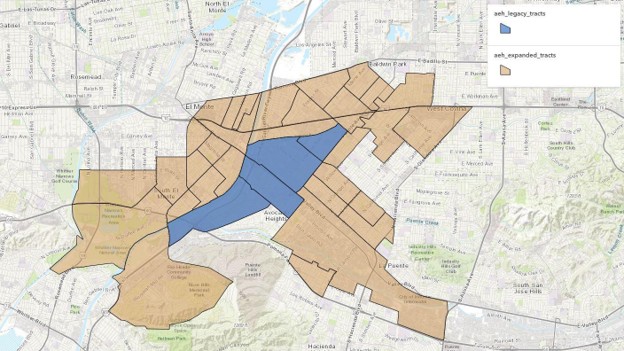
Figure 2.3.2.2 – BAAEC Advanced Homes Original and Expanded Boundaries
Day One was also strongly in favor of expanding the Advanced Homes area boundaries from an OEE standpoint. In attempting to generate a pipeline of potentially eligible households, Day One encountered difficulties similar to those GRID had experienced in enrolling homeowners in DAC-SASH. Day One came to a parallel conclusion regarding the original project area; they were frustrated with having to turn away otherwise excited and potentially eligible homeowners because of geographic ineligibility, and considered it a hindrance to their objectives. By the end of Q2 2022, Day One had told TEC that the original project area was too small for the timely enrollment goal of 50 homes, and that expanding the project area was necessary to overcome the problems with attrition of potentially eligible homeowners. Staff at Day One asserted that a larger project area would allow Day One to conduct outreach in a greater number of locations, find additional community partners for OEE, and turn away fewer homeowners based on geographic constraints.44 The expansion of the Advanced Homes eligibility area also made it possible for Day One to re-contact homeowners who had previously expressed interest in participating but were disqualified because they lived outside of the original eligibility area.
After the expansion of the Advanced Homes eligibility area, TEC, Day One, and GRID Alternatives continued to refine their approach to Advanced Homes OEE. In April-May of 2022, Day One and TEC sought to change GRID Alternatives’ handling of homeowners that were disqualified in the course of pre-screening for DAC-SASH. Day One staff members, as the primary points of contact between homeowners and the BAAEC Advanced Homes project, had self-consciously embraced the roles of “case workers” who handled the questions and concerns of project participants, advocated for their needs and desires, and facilitated communication between the homeowners, project subcontractors (equipment vendors and installers), municipal inspectors (building inspectors, fire departments), and research teams (UCLA CCSC, UC Riverside) involved in the project. Day One staff members developed relationships with interested homeowners while answering their questions about the project, assembling the documentation (electrical bills, proof of income, proof of home ownership, etc.) necessary for DAC-SASH applications, and scheduling home inspections.45 Day One’s “case work” approach to guiding residents through the Advanced Homes pre-screening process was intended to simplify enrollment and prevent miscommunication between the various actors involved in the Advanced Homes scope. GRID Alternatives, however, was concerned with the efficiency of the DAC-SASH/Advanced Homes screening process; homeowners who were disqualified (for income, building condition, or building permit reasons) were merely notified by GRID that they were not eligible for Advanced Homes/DAC-SASH, after which GRID terminated communication. Day One felt that GRID’s handling of disqualified homeowners, while saving staff time and resources, damaged the rapport they had built with community members, and threatened to leave homeowners confused about their eligibility status. In April of 2022, TEC required GRID to refer disqualified homeowners back to Day One for “exit interviews” wherein the reasons for their ineligibility explained, and other forms of participation (such as PowerShare enrollment, or other optional project services) were offered to them.
2.3.3 – Q3, Q4 2022: Continuation of Advanced Homes OEE, End of Community Solar OEE, Onboarding of Swell Energy
After the approval of the Advanced Homes area expansion in April 2022, Day One and GRID Alternatives undertook another round of OEE activities for Advanced Homes. During Q3 and Q4 of 2022 Day One made appearances at events held by LA County Parks, the 1st District Supervisor’s office, school districts (Bassett Unified, El Monte, La Puente, and Hacienda Heights), and other civic groups.46 LA County parks and a senior center also hosted BAAEC-related events. Between April and December of 2022, Day One made 33 in-person appearances and sent two direct mailers to homeowners in the expanded Advanced Homes eligibility area.47 Day One relied on household address and characteristics data from Faraday to target its direct mail campaigns. GRID Alternatives also sent out the first of several direct mailers advertising DAC-SASH to residents in the expanded Advanced Homes area in Q2 of 2022.48 GRID’s mailers were targeted using address and customer information databases maintained by Southern California Edison.49 SCE customers in zip codes intersecting with the expanded BAAEC project area were sent DAC-SASH mailers created by GRID Alternatives.50 During Q2 of 2022 Grid Alternatives also began to refer a significant number of customers identified as DAC-SASH (and thus Advanced Homes) eligible to the BAAEC team for pre-screening and enrollment. This process took advantage of GRID’s existing outreach and enrollment teams and the process that the organization had already built. Referrals from Grid Alternatives, responses to direct mailers, and in-person events generated approximately ~340 Advanced Home leads by the end of 2022 (Table 2.3.3.1). However, the number of homeowners that were approved for solar installation under DAC-SASH were small relative to the total number of interested contacts generated by interactions with residents, with less than 10% of leads advancing to one of the stages of pre-screening (Table 2.3.3.2). Many potential enrollees either became unresponsive to communications from project staff, or were found to be ineligible (due most often to building condition or the presence of unpermitted structures (~280)). A smaller number refused participation or expressed no interest (37).
Table 2.3.3.1 – Advanced Homes Leads by OEE Source (2022)
| Category | Count |
|---|---|
| Advertisement | 1 |
| AEC - Web Lead | 41 |
| Direct Mailer | 44 |
| Direct Mailer Jan 2023 | 6 |
| Direct Mailer Sept 2022 | 16 |
| Event | 59 |
| GRID Alternatives referrals | 166 |
| Other Referral | 2 |
| Referral - Quality Conservation Services | 1 |
| Website | 5 |
| Unclassified | 3 |
| Total | 344 |
Table 2.3.3.2 – Status of BAAEC Advanced Homes Leads (2022)
| Category | Count |
|---|---|
| Ineligible | 117 |
| Not Interested | 37 |
| Screening for Income/ Residency Qualifications | 2 |
| Site Assessment for Construction (Solar PV, Water Heater, Electrical Upgrades) | 1 |
| Site Assessment for Roof Repair | 9 |
| DAC-SASH Application | 1 |
| Solar Install | 1 |
| Battery Install | 9 |
| Eligible -Unresponsive | 167 |
| Total | 344 |
During the second half of 2022 it became apparent that in order to reach 50 home retrofits within the project timeline, funds for roof repairs would have to be made available to a subset of homeowners. The prevalence of poor roof conditions (i.e., roofs structurally unfit to bear the weight of solar panels, racking, and other components) among low-income homeowners in the area threatened to prolong the search for interested homeowners beyond the time window TEC had envisioned for enrollment, installation, and permitting of the Advanced Homes after the COVID delay (2022-2023). In response, TEC requested a budget amendment from the CEC, revising the Advanced Homes budget to include dedicated funds for roof repairs, and placed homeowners in need of them in a queue for review at weekly meetings. A third-party roofing contractor, approved by GRID Alternatives, would complete partial or full re-roofs, and then refer the homeowners back to GRID Alternatives for rooftop solar installation.51 While re-roofing proved to be essential for Advanced Homes implementation, it also created a greater administrative burden for Day One, GRID Alternatives, and TEC, requiring additional communication (with each other and the roofing contractor), new invoicing procedures and accounting work. Involving another contractor in the construction process also necessarily extended the timelines for completion and increased per-project cost. Despite that challenges that the project had encountered thus far, OEE for Advanced Homes (contacts with leads, screening, in-person events, etc.) continued onward; new leads were generated by Day One and GRID Alternatives, and roofing funds were offered to 20-30 previously disqualified for the condition of their roofs. During this time, it also became apparent to TEC, GRID Alternatives, and Day One that the OEE period for Advanced Homes would extend into 2024, and that a BAAEC project extension would most likely be necessary.
By the end of August 2022, CPA had confirmed that Active SGV had surpassed their initial enrollment target of 250 participants and could cease outreach activities for PowerShare and BAAEC Community Solar.52 Figure 2.3.1.2 shows a map of PowerShare enrollments for the Bassett-Avocado Heights area. Enrollments in PowerShare were clustered around the original BAAEC census tracts, potentially reflecting Active SGV’s focus on the project area for in-person events, community solar canvassing, and direct mail campaigns. In addition to completing enrollment for BAAEC community solar, CPA stated that Active SGV’s community solar OEE had contributed significantly to meeting PowerShare’s 6,500 customer enrollment cap (~400 counted by CPA).
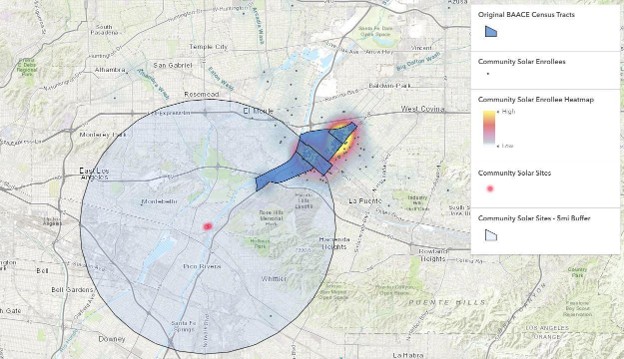
Figure 2.3.3.1 – CPA PowerShare Enrollments for BAAEC and neighboring DAC Census Tracts (Q3 2022)
Sonnen’s complete departure from the project by Q2 of 2022 set off a search for another private partner or partners interested in providing no-cost battery installations and operating a virtual power plant system in cooperation with BAAEC Advanced Homes. In Q1 of 2022, Swell Energy, referred to TEC through a GRID employee, expressed interest in Advanced Homes, and representatives of the firm had joined a small number of project meetings attended by Day One, GRID Alternatives, and TEC. Despite expressing willingness and interest, Swell did not sign-on to BAAEC as a subcontracted partner until December 2022, and the further delay caused additional problems for outreach efforts and TEC’s partnership with GRID Alternatives.
From Q1 2021 - Q4 2022, the absence of a battery contractor and VPP operator did not prevent GRID and other contractors from proceeding forward with rooftop PV installations under DAC-SASH, but inconsistent communication from Swell Energy over the course of 2022 undermined GRID’s confidence that the BAAEC Advanced Homes would be completed on schedule, and as described in the project narrative. GRID was concerned about whether Swell would finally agree to partnership and did not feel comfortable referring leads to the project until they knew that batteries would be coming. In September 2022, GRID warned that it might have to change its relationship to Advanced Homes. In November 2022, decided to stop referring leads to TEC and Day One until Swell Energy and GRID signed a participation agreement. A little more than a month later, on December 29th, 2022, Swell and GRID signed a BAAEC participation agreement, completing the suite of contractors and technical components needed for the construction of the Advanced Homes. The inclusion of Swell Energy into the BAAEC Advanced Homes team meant that, going forward, Advanced Homes OEE could continue to rely on GRID Alternatives as a source of BAAEC Advanced Homes leads. GRID Alternatives also promised to continue working to coordinate and install rooftop solar arrays as part of ongoing Advanced Homes efforts.
Swell Energy, as per their BAAEC scope of work, would take over from GRID Alternatives once solar PV arrays had been installed and permitted. Swell Energy would design and install a home battery storage system consisting of two 13.5kWh Tesla PowerWall battery units and a Tesla system control “gateway” for controlling the system.53 As a battery installation and operation business, Swell Energy was to play no direct role in Advanced Homes OEE, but would, over the course of their participation in BAAEC, coordinate regularly with Day One and TEC in order to facilitate the signing of battery-related contracts, completion of a brief customer training and education session about the home battery system (mobile application and hardware), and the homeowner’s request for a utility rate change. Battery installation would also require TEC (and a member of Day One hired by TEC) to remain in contact with homeowners to facilitate communication and records-keeping.
2.3.4 – Q1 2023 – Q4 2023: Development of Advanced Homes Enrollment Pipeline, End of Advanced Homes OEE
Advanced Homes OEE continued through the calendar year 2023, with TEC and Day One drawing down grant funding to conduct in-person events, send out direct mailers, and coordinate the processing of leads. Due to the administrative workload associated with pre-screening Advanced Homes leads, and the apparent efficaciousness of mailers in generating new ones, Day One shifted their remaining budget away from in-person appearances, holding only 8 during the course of the year. While the majority of Advanced Home leads continued to come from GRID, mailers sent out by Day One during the first two quarters of 2023 also generated a considerable response. Self-referral through the project’s website also generated more leads than referrals from project contractors installing the optional Advanced Homes offerings.
Table 2.3.4.1 – Advanced Homes Leads by Source (2023)
| Lead Source | Count | Description |
|---|---|---|
| Advertisement | 7 | Print, social media, and physical media (banners) |
| AEC - Web Lead | 90 | Self-referral through BAAEC Website |
| Direct Mailer | 45 | Self-referred after receiving mailer |
| Direct Mailer Jan 2023 | 33 | |
| Direct Mailer Sept 2022 | 21 | |
| Event | 69 | In-person event |
| Grid | 206 | Referral from GRID Alternatives |
| LACI Mailer 2023 | 7 | Separate mailer for Induction stove installation under LACI QGS |
| Referral – Subcontractor | 5 | Referred through other project subcontractor (water heater, energy efficiency, and stove installation contractors) |
| Unclassified | 28 | No classification entered |
| Total | 511 |
Table 2.3.4.2 – Status of Advanced Homes Leads (2023)
| Status | Count |
|---|---|
| Ineligible | 184 |
| Not Interested | 44 |
| Screening for Income/ Residency Qualifications | 6 |
| Site Assessment for Construction (Solar PV, Water Heater, Electrical Upgrades) | 1 |
| Site Assessment for Roof Repair | 22 |
| DAC-SASH Application | 6 |
| Solar Install | 2 |
| Battery Install | 9 |
| Eligible -Unresponsive | 237 |
| Total | 511 |
During 2023 TEC and Day One continued to advertise the optional features of the BAAEC Advanced Homes – heat-pump water heaters and induction stoves - to Advanced Homes participants and the community at large. In addition to mailers and in person events, Day One began offering free water heater “tune-ups” (preventative maintenance visits) as part of the outreach drive for the LACI HPWH installation grant. During the first half of 2022, Day One began advertising 100 free water heater tune-ups in partnership with Water Heater Warehouse, a third-party vendor and installer operating in the San Gabriel Valley. The tune-ups were intended to provide homeowners with free maintenance services for their gas-powered water heaters. Tune-ups would also provide an occasion to discuss electric alternatives to gas-fired water heaters and advertise Advanced Homes participation to homeowners receiving the free service. Similarly, LACI’s Induction Stove grant provided funds for another round of direct mailers sent to homeowners identified as potentially eligible for free induction stove installations, generating 7 leads. As part of the induction stove grant, LACI also donated an induction stove to a local senior center, at which Day One later held a public cooking demonstration. Numerically speaking, however, referrals from outside contractors (water heater installers, roofers) were not a significant source of contacts with interested and eligible residents.
By April 2023, BAAEC OEE team (TEC, Day One, and GRID Alternatives) felt that the project had finally developed a suitably large “pipeline” of homeowners progressing through the installation of solar under DAC-SASH, and that the time had arrived to begin winding down outreach for Advanced Homes, as well as the Outreach, Education, and Enrollment scope. By the summer of 2023, Day One stopped planning events related to Advanced Homes, focusing instead on completing their scopes of work for the LACI grants, and fulfilling BAAEC project reporting requirements, and processing existing leads awaiting solar, battery, and optional appliance installation. GRID Alternatives also recommended that enrollments from DAC-SASH be stopped. GRID staff argued that given the project’s finite timeline and budget, taking new enrollments would divert limited resources from managing the existing queue of installation projects. TEC largely concurred with this reasoning, revising the Advanced Homes implementation target to the 35 homes already in one or more stages of enrollment or installation. In August of 2023, GRID Alternatives stopped referring potential leads to BAAEC Advanced Homes. The remaining OEE work, which stretched into 2024, consisted of staying in contact with homeowners proceeding through solar PV, battery, stove, and HPWH installation process, and updating CRM records to reflect status changes, coordinate construction, and schedule inspections and installations.
2.4 - Analysis of BAAEC Outreach, Education, & Enrollment Results
In total, staff involved in BAAEC Advanced Homes and Community Solar had contact with thousands of residents within and outside of the project area during the OEE period (Q1 2021 – Q3 2023).
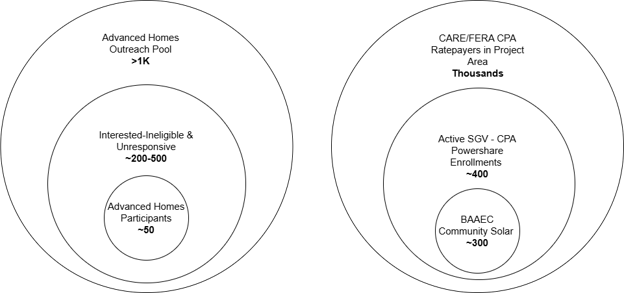
Figure 2.4.1 – Scales of Participation for Advanced Homes and Community Solar.
Over the course of the project, meeting enrollment goals meant processing a large volume of contacts to create “pools” and “pipelines” of enrollees. Processing leads - locating them socially and spatially, and maintaining their interest, demanded time and energy.
2.4.1 – Social Distancing Restrictions, Budget Constraints, and Effects on Project Area Households
In Q2 of 2020, rising infection and hospitalization rates led the state and municipal governments to impose social distancing measures to control the spread of the COVID-19. As discussed in Section 2.2, restrictions on in-person communication (visits to households) and public assembly meant that Day One and Active SGV had to delay in-person events and programming until the severity of the pandemic had diminished (in mid-2021). The delay meant that the project needed to secure additional funding from TECH Clean California, LACI, the CEC, and the CPA to extend the OEE periods for the Advanced Homes and Community Solar scopes. Without the additional funding for OEE, it is doubtful whether the project would have met its enrollment goals for either scope.
In addition to delaying in-person outreach, the low-income and disadvantaged communities in the San Gabriel Valley region were severely impacted by the pandemic and its economic effects. In interviews, CBO employees and County Supervisorial staff spoke of the health, mortality, and socioeconomic impacts of the COVID pandemic and the damage it had wrought in low-income communities (acute and chronic illness, deaths, job losses, economic hardship, etc.). CBO and County Supervisorial staff mentioned that mortality rates had been high in and around the project area, and that attendance at resource and food distribution events had increased measurably since the beginning of the pandemic. During the OEE period, the community of Bassett Avocado Heights, as well as staff members of the CBOs, suffered from the pandemic itself (death, bereavement, acute and chronic illness, changes to household composition), as well as the near-term economic impacts (job losses, furloughs, changes in business activity). Project partners involved in construction felt its longer-term effects in the form of inflationary pressure on commodity and labor prices.
When it became possible to pursue OEE through the full range of methods (in-person, mailers, physical advertisements, etc.) enrollment rates and totals for the Advanced Homes and Community Solar scopes initially remained below what the BAAEC team had anticipated prior to project kick-off. In-person outreach yielded a number of leads, but it did not provide the kind of enrollment throughput required to find the needles in the community haystack. Referrals from Grid Alternatives complemented mailers, and digital communications. Successful enrollment meant contacting the greatest number of potentially eligible residents and rapidly assessing their eligibility so as to move them to a construction queue..
While the COVID-19 Pandemic significantly altered the administrative dimensions of BAAEC OEE (the conduct between staff), it is difficult to say how the pandemic altered the process of enrollment. The pandemic certainly changed how the project project partners governed themselves, creating a highly virtual work environment where close collaborators who spent far more time online with each other. In-person collaboration was sporadic. The project CBOs and outreach staff from GRID Alternatives were the public face of the project for participating ratepayers and homeowners.
Sustaining their labor over the course of the project was essential to success. Over the course of Advanced Homes and Community Solar, we will see how sustaining enrollment over the course of construction depended on demanding time, input, and the consent of participants. Advanced Homes and Community Solar systems, described in the two chapters that follow, detail how participants interacted with the engineering halves of the scopes.
The pandemic was an inconvenience and shock to BAAEC, but repeated adaptation and the careful management of grant resources (and the acquisition of additional funding) helped to extend and diversify Advanced Homes retrofits, and outreach for Community Solar.
How COVID altered the partners’ interactions with homeowners and community solar enrollees is more difficult to understand. Interviews with participating Advanced Homes participants, project staff, and the author’s attendance of several of outreach events suggests that COVID both delayed and narrowed the kinds of interaction that outreach staff had with homeowners. Day One staff said that the pandemic made it necessary to “reintroduce ourselves” to civic partners, and that digital forms of individual outreach during COVID’s delay were no substitute for a personal presence and interaction. Starting this process nearly a year later than the partners had initially planned meant that there was less time to cultivate partnerships with other local (civic-level) organizations, and fewer chances to enroll individual residents in either Community Solar or Advanced Homes.
2.4.2 – The Framing Power of DAC-SASH and Community Solar-Green Tariff Programs
The OEE partners also found that the eligibility requirements of DAC-SASH and CSGT created significant obstacles to meeting enrollment goals. DAC-SASH and CSGT required that homeowners and CPA ratepayers (respectively) meet certain income, location, household composition, and building condition requirements to participate. DAC-SASH and CSGT (Power Share) required that homeowners earned incomes below CARE/FERA thresholds and resided in census tracts designated as “disadvantaged” by CalEnviroScreen. As we have seen, reaching BAAEC’s outreach goals meant creating an in-community presence for the two scopes along with individual enrollments.
Early in the project, TEC and the CBOs anticipated finding “local champions” who would help drive enrollment outside of official Community Solar and Advanced Homes participants. The educational component of the project was intended in part to help identify and equip local people who would help communicate the vision and intention of BAAEC to others and engender the self-enrollment of community members. Ideally, they would benefit from either Advanced Homes or Community solar participation themselves, and they would help perform the labor of spreading the word about BAAEC and its benefits.
The course of the project shows that “local championship” did not really materialize, and that formal educational components were displaced by the demands of meeting the goals they had set for themselves. DAC-SASH and Power Share/ CSGT demanded a high volume of individual interaction with residents over extended periods of enrollment to create two cohorts of participants who were known to the project staff, but more or less unknown to one another.
The individual, programmatic, and remote character of BAAEC Community Solar meant that local interaction consisted mostly of notifying CPA ratepayers of their eligibility for a discount. While the narrative above attests to Active’s success in meeting Community Solar enrollment goals, it also shows how the structure of CSGT individualized the process of enrollment. To publicize the project, Active SGV emphasized the energy cost savings benefits of participation over the local character of Community Solar. Outreach staff said it was very difficult to explain the BAAEC project or virtual allocation to residents, and they found it much easier to advertise the PowerShare program, its discount, and discuss the mechanism of enrollment.54 Though Active staff maintained a consistent presence in the community, frequently canvassing and tabling, the interactions they had with individual residents was usually brief, on the order of minutes. In some cases, residents needing help navigating the enrollment process were assisted over the phone by outreach staff members, but these were a minority of enrollments. As an equity-oriented offering by the CPA, the receipt of benefits was automatic, and many ratepayers apparently enrolled themselves after learning about Power Share from Active’s presence or the CPA’s advertisements for the program. Overall, the BAAEC Community Solar participants were integrated into an eligible pool of applicants by the CPA, and Active did not maintain connection with individual participants after the process of enrollment was complete.
Interaction between “leads”, participating homeowners, and project partners proceeded in a much more extended and complex manner in the Advanced Homes Scope. Participation was voluntary, and involved extended conversations about eligibility, willingness to continue, and individual needs and desires of participants relative to the project. As we will see in the next chapter, Advanced Homes participants remained in periodic contact with dedicated outreach staff at TEC, Day One, and GRID for years, and the reciprocity between staff and participants helped the other project partners get the permission and access they needed to retrofit homes and collect data from the installed systems. Outreach and enrollment was not an end state or a one time verification, but an ongoing process of eliciting interaction, collecting information, and fulfilling promises.
As we saw in this Chapter, and as will see in Chapter 3, existing residential decarbonization programs and their eligibility criteria come to shape energy communities in powerful ways. Projects such as BAACE must rely on them to defray the costs of urban infrastructural renewal and accelerate the process of residential decarbonization. Doing so hinges on private-sector investment - “taking advantage” of DAC-SASH, SGIP, and RFO’s for “equity-focused” community solar projects is necessary to get sympathetic private sector actors involved in projects and reduce the overall cost of these interventions to the parties involved. This is easiest when the technological specifications of the proposed projects are known and their design resembles other well-understood and financially viable models of implementation. Basing Advanced Homes and Community Solar on existing, market-ready models of home and community-scale implementation also meant formatting the kinds of interaction partners would have with participants. As we will see in the following chapters, home retrofits and community solar were largely assembled prior to the project’s introduction to residents and community-level organizations. Tied to DAC-SASH, CSGT, and electrification measures, BAAEC’s outreach, education, and enrollment efforts were concerned with the economic benefits of these programs to individual homeowners and ratepayers. BAAEC did not intend to create a “community-level” body that would engage in some sort of collective decision making regarding local energy consumption or infrastructural management. Individual (household and ratepayers) participation was framed in terms of environmental justice and a just transition, but the interactions between outreach staff and participants involved a series of negotiations over a set of household interventions (in Advanced Homes) or enrollment in a low-income rate relief program (Community Solar). In both instances, the community was individuated, and participation involved remote interaction with project partners.
Intensive, in-person campaigns and extended, individual interactions with project staff were necessary to engender trust and help drive enrollment, but enrollment meant getting enough people interested to overcome the attrition rates of DAC-SASH and CSGT. Households and ratepayers either made too much money, did not live in the project area, or the physical condition of their homes precluded participation. Compromised roofs, and the presence of unpermitted changes or additions to residential properties were the primary material reasons for disqualification of interested homeowners by GRID Alternatives.55 Roof condition was such a hindrance to enrollment that grant funding was reallocated so that the project could reach its implementation goal (30-50 homes). As GRID Alternatives had communicated in weekly meetings, DAC-SASH’s household occupancy and income qualification criteria were at odds with program requirements relating to the legal status and condition of single-family homes in disadvantaged census tracts. GRID explained that relative scarcity of homeowners meeting DAC-SASH income and building condition requirements was a problem endemic to the population their program was intended to serve (“disadvantaged communities”), and that the only way to meet the Advanced Homes goal of 50 enrollments (without paying for re-roofing) was to budget both time and resources with the program’s historical attrition rate in mind. GRID also explained the 60-70% attrition rate they had observed for DAC-SASH applicants in LA County in terms of the relative scarcity of homeowners meeting the program’s eligibility criteria.
BAAEC Advanced Homes partners undertook two measures to increase the number contacts partners had with potentially receptive and qualified homeowners. First, GRID promised to refer homeowners they had identified as potentially qualified to Advanced Homes. This was highly beneficial for Advanced Homes, since GRID eventually became the single greatest source of leads processed by Day One and TEC.
As the nonprofit implementer of DAC-SASH, GRID had dedicated funding and resources to create an outreach and enrollment operation and were always in the process of identifying people who might benefit from the program. GRID outreach staff cultivated relationships with homeowners prior to a hand off to BAAEC, which was introduced to homeowners as an additional offering. The second measure that GRID undertook to drive enrollment was mailer campaigns. As we saw, these campaigns helped to create a list of interested and potentially eligible leads. GRID was able to send mailers through Southern California Edison to customers who SCE knew to be CARE/FERA eligible and located in the project’s zip codes. GRID’s existing (but more impersonal) outreach capacities were key resources for creating the volume of enrollment throughput that the project needed to overcome the (known) problems with DAC-SASH. .
Leads from GRID Alternatives provided a lifeline to BAAEC Advanced Homes, but reliance on the DAC-SASH program, and its narrow eligibility criteria, made driving enrollment a time and labor-intensive process. The partners saw that the income and property condition requirements of DAC-SASH were at odds with each other, and that this turned outreach and enrollment into a process of screening as many potential eligible applicants as possible.
While the in-person presence of Day One in the project area certainly helped to legitimize the project, and partnership with other local governmental entities helped to demonstrate its public provenance to residents (through seals, the CAC meetings, appearances at schools, canvassing etc.), it was more impersonal forms of outreach (mailers, signage, self-enrollment, referrals from GRID) that generated most of the leads for BAAEC.
2.4.3 – Eligibility Criteria & the Complexity of the Enrollment Processes
The experience of BAAEC OEE suggests that any comprehensive “one-stop shop” for home climate retrofits will require significant changes to existing programs. As the partners observed, separate state programs treat weatherization, end-use efficiency, air quality, and DER installation individually, and have their own geographies and demographic criteria for participation. While it was in theory possible to combine these programs, it was also true that many homeowners who were eligible for one program were not eligible for another, and that public money for structural remediation in low-income areas was in short supply.
In the case of Community Solar, the decision of the Evergreen Baptist Church to forgo participation in BAAEC Community Solar shifted the location of the community solar system to a self-storage business. This change diminished the size of the Community Solar scope’s eligibility area and made Active SGV responsible for determining whether enrollees were within it. To relieve Active SGV of responsibility for the precise geolocation of homeowner properties, CPA offered to verify the locations of enrollees when it finally allocated PowerShare customers to the BAAEC Community Solar system. The CPA’s acceptance of responsibility for providing final enrollment totals for BAAEC EM\&V allowed Active SGV to focus on promoting PowerShare participation and helping residents sign up for the program. For the purposes of Community Solar enrollment and allocation, BAAEC partners had to account for the CPA’s operational territory, the 5-mi. radius requirement of the Community Solar-Green Tariff program, and the original BAAEC project area.
In 2022, BAAEC Advanced Homes partners (TEC, Day One, and GRID Alternatives) decided that the original project extent was limiting contact with interested and potentially qualified homeowners and expanded the Advanced Homes eligibility area significantly. Expansion allowed the Advanced Homes team to screen a greater number of GRID-referred homeowners for participation, and to conduct outreach activities in DAC census tracts near the original project area. GRID Alternatives’ insights concerning the attrition rate of DAC-SASH and the reasons for it, along with Day One’s own experience with OEE, were decisive in expanding the Advanced Homes area.
Facilitating the exchange of eligibility information, the signing of contracts, the scheduling of installations and inspections required time, labor, and financial resources, and made numerous unanticipated demands on the BAAEC OEE team. The task of facilitating enrollment was much larger in the case of Advanced Homes, where regular communication with homeowners in various stages of the retrofit process would continue for years. Keeping households enrolled was considerably more involved that signing up ratepayers up for a bill discount, and required dedicated staff to manage a process that included visits from several sets of inspectors, installers, and other project contractors (See Chapter 3).
2.4.4 – Dividing Labor for Outreach, Education, and Enrollment
The course of the BAAEC OEE scope illustrates the advantages and disadvantages of strategic partnership for outreach, education, and enrollment. During the OEE period, TEC, Day One, and GRID Alternatives each exercised a degree of control over the way that BAAEC OEE was to proceed, since each organization possessed resources and competencies the others lacked. TEC and OEE subcontractors (aided by videoconferencing technology) created workflows, records-keeping, and communication processes that were necessary for coordinating and executing project tasks and tracking the progress of enrollment.
Strategic partnership allowed TEC to draw on the competencies and resources of the various organizations. Partnership meant sustained, reciprocal interaction across organizations, regular interaction in virtual check-in meetings, and the documentation and sharing of information that was required for other contractors.
Day One, Active SGV, and GRID Alternatives made certain demands of each other and the project. These partners were aligned through the grant, their scopes of work, and their division of labor, but the partners engaged in a substantial reorganization to deal with. The core nonprofit partners worked well together, learned from one another, but there were struggles and disagreements about how OEE should proceed. As we noted above, the most serious of these conflicts had to do with providing participants and other partners with details about Advanced Home’s battery offering. Without information about the battery storage system and its capabilities, Day One and GRID Alternatives could only offer vague answers to residents inquiring about battery storage. The lack of a battery partner put Day One and GRID Alternatives in an awkward position; the indeterminacy of the project put the reputations of both organizations at risk of being damaged by major project changes, or the failures of the projects to materialize. This was the only time one of the four core partners threatened to withdraw from the project.
In assembling the OEE team, TEC chose partners to fully leverage the support available from the state, and to bridge the remaining gap by involving private sector partners. What they found was that inter-organizational, intersectoral collaboration rendered the core nonprofit partners dependent on one another and an array of private sector partners for success, and that stabilizing all of these interactions required quite a lot of administrative and records keeping work in addition to planned events and outreach activities.
2.4.5 - Community Engagement & Consumer Engagement
In approaching OEE for BAACE, TEC, Active SGV, and Day One relied on a theory of sociotechnical change shared by their project partners and the project’s funders. To enroll local participants in the Community Solar and Advanced Homes Scopes, the BAAEC OEE team planned to appeal to both the community and individuals, reasoning that community interest and participation would generate individual enrollments, and that excited participants would tell other, potentially eligible residents about BAAEC. The testimony and, presumably, satisfaction of participants would help to engender trust between the partners and the community, and help create queues of residents eager to join.
The BAAEC OEE team envisioned a positive feedback relationship between community interest and individual enrollment. In practice, OEE for both Community Solar and Advanced Homes involved the simultaneous discussion of residential decarbonization’s community and individual benefits; the making conceptual linkages between economic and environmental conditions (local and extra-local) and the transformative potential of distributed renewable energy technologies. Individual participation was presented by the BAAEC team, and (sometimes) understood by participants, to reduce energy costs, diminish emissions, and help, in some small way, in the process of energy transition. The BAAEC OEE team sought to make these connections during public appearances, presentations given at community and public events, and communications with individual residents. Educational programming was also planned to draw these connections more clearly for adults and children interested in learning about renewable energy technology, the energy transition, and the phenomenon of climate change.
To address “the community”, TEC and the CBOs sought to include potentially receptive public and civic organizations in non-compensated, consultative roles through the Community Advisory Committee. One of the early objectives of BAAEC OEE was to assemble a Community Advisory Committee. Day One, and Active SGV drew upon their own personal and professional networks in creating the CAC and making presentations to member organizations. The CBOs, whose staff had connections to people and civic organizations operating in the area, played a pivotal role in connecting TEC with local organizations who could represent the considered opinion of the community.
As we saw, however, the depth of BAAEC’s engagement with community stakeholders was limited by the exigencies of the BAAEC project, especially the COVID-19 delay and the struggle to find individual homeowners and renters willing and eligible to participate. Funding for educational programming for children and adults was repurposed when it became clear that additional efforts were needed to identify and screen potentially eligible residents. CAC member organizations, while interested in helping the community participate in the energy transition, often had little in the way of specific feedback regarding BAAEC project scopes. They had little in the way of practical advice to offer, and could only publicize the offering to their memberships.
Presentations given to local public institutions and civic groups was another route for BAAEC’s addressing of “the community” and the socio-political aspects of the energy transition. Presentations like the ones given to the Clean Air Coalition and PTA meetings advertised the offerings, gave residents the chances to ask questions, and provided openings for in-person contact with interested homeowners.
Ultimately, some combination of community and consumer OEE is necessary to drive voluntary enrollment for residential decarbonization programs. Private decisions to enroll, as we have seen, are not reducible to either social pressures or individual economic calculations. This theme will be discussed further in Chapters 3 and 4
2.4.6 – Residential Decarbonization & Outreach to Low-Income/ Disadvantaged Homeowners
If plans for equitable residential decarbonization are to materialize, state and utility rebates and program offerings for disadvantaged homeowners must, to some extent, defray the upfront costs of capital improvements. Homeowners must trust the organizations offering these services, and, as the experience of BAAEC OEE shows, the promise of no-cost services did not overawe single-family homeowners in Bassett, Avocado Heights, and the people in neighboring cities. The project was not no-cost - it involved efforts to understand contract language, contextualize risk, and provide their informed consent,
As interviews with participating homeowners and OEE staff members showed, trust in the program and the people implementing it is crucial if homeowners with limited savings or fixed incomes are to accept the risks that decarbonization retrofits entail. DAC homeowners and residents in the project area were initially wary of BAAEC Advanced Homes. Several of the Advanced Homes participants said they were initially skeptical about receiving retrofits because a) were unsure if the contractors involved had the funds to cover other problems they might discover, and b) they did not think that the program was actually “free” – i.e., they would be contractually obliged to pay some percentage of the capital cost going forward. Only after frank conversations about the costs and nature of the project did skeptical homeowners and other local actors become willing to participate. The language skills of OEE staff were also essential for communicating with monolingual Spanish households and the translation of English program materials, as was the honesty, transparency, and cultivation of relationships between project partners and participants.
All OEE partner organizations and Advanced Homes participants interviewed for this study stressed the absolutely vital importance of 1) the ability of project implementers to show the public provenance of decarbonization programs, funding sources, and the financial particulars of enrollment (including discussion of outside risks, such as damage to homes during installation) and 2) the centralization of project scheduling/ communication through a single point of contact known to the homeowner, and available for communication via a number of different media (phone, email, text, etc.). The personal nature of this relationship was key – project staff needed to know how to communicate with homeowners, and homeowners needed a personal contact who had, or could obtain, any information about the project they desired.
2.5 - Policy Considerations & Recommendations
Outreach, education, and enrollment are central to endeavors that aim to solve local, social problems via technological means. Power and knowledge asymmetries between the partners (those doing the project) and the community (the people who the project is for) make miscommunication about needs, desires, and intentions between the two sides likely unless there is some sort of structured interaction between representatives of the community and the partners about the purposes of the project itself. In BAAEC and other developmental energy communities around the world, responsibility for structuring interaction between implementers and ‘the community’ often falls to nonprofit organizations.
With the global turn towards ‘communities’ as places where answers about how to sustainably re-configure forms of modern life might be found, nonprofit organizations have found themselves called upon to perform specialized, communicative, and non-technical forms of labor in service of the energy transition. Able to speak the language of management but socially and physically connected to the communities they serve, they are akin to civic organizations but distinct from them because they are professionalized and developmentally oriented. They put local people in contact with extra local actors, and bring external resources to bear on local problems. However, because their labor is nontechnical it is sometimes not considered “expert”. More than occasionally, this perception translates into shoestring budgets and demands from funders and grant officers to do more with less, while other forms of more highly valorized work, such as engineering or policy consultation, are compensated at a premium. As this case and others show, the knowledge, capabilities, and labor of these groups is vital for non-local organizations looking to build energy systems that serve them.
2.5.1 – Policy Considerations
Consideration 1 - The Choice of Technology Frames Outreach and Engagement
- As will become clearer in Chapters 3 and 4 of this report, distributed renewable technologies frame the kind and content of interaction that outreach staff have with community members. Individuated offerings like Advanced Homes and Community Solar format participation as an individual or household-level activity. The partners involved in the project, especially TEC and the community based organizations wanted to engender a level of community involvement and support for BAAEC, but because the technologies they offered to residents involved them agreeing to participate in a home retrofit process, or signing up for a bill discount associated with a remote front-of-the meter system located somewhere nearby, there was little for members of the community to do. Community-level involvement is easier to engender when the technological intervention in question is somehow collectively owned and operated. But in a socio-geographic context where space is divided into individual properties that cannot share grid-connected distributed renewable systems, there is little opportunity for DERs to bring people together into new relations.
- BAAEC, in choosing to attack the problem of building community with existing technologies and programs, found that their outreach budget needed to go towards finding those residents who were eligible and interested in participation. With a different kind of technological device, they could have approached residents about becoming part of a local organization that manages it. However, because they relied on technologies and programs fitted to the existing property ownership regime and suitable for interconnection to the grid, any effort to create a community-wide engagement would reduce to a drive for more individual enrollments.
Consideration 2 – Clear Communication and Trust Take Time & Effort
- At the beginning of the project, outreach staff from Active SGV and Day One both said that BAAEC was their first foray into energy as an issue area. Staff from both organizations said that moving into this area involved quite a bit of learning about the “business” of climate tech, the landscape of decarbonization policy, the capabilities and orientations of the other project partners involved, and what the technologies they were offering actually did. This process of learning about the project of residential decarbonization and the governance of energy infrastructure was necessary for them to effectively translate the offerings into plain English and Spanish, and for staff members to deliver a confident and fluid pitch to residents who were interested. But this process took months, and as we saw, at some points outreach staff struggled to understand what exactly was being offered, why, how BAAEC’s technological interventions would deliver benefits, and what the likely magnitude of these benefits would be. These questions were more acute in Advanced Homes, since the technical details of the offering were somewhat more fluid than Community Solar’s early in the project.
- Non-technical community outreach organizations need to know what they are offering in order to publicize it effectively and ethically. Since honesty and forthrightness about the upsides and risks of offerings like Advanced Homes are important aspects of building trust with residents, outreach staff need to be equipped with all of the information they need before heading out to try to enroll people in an initiative like one or more of BAAEC’s scopes. Transfer of information between organizations does not happen effectively by osmosis, and outreach workers who cannot answer specific questions about the performance of technologies, the risks that residential retrofits involve cannot come across as credible and knowledgeable. Time, resources, and structured communications between partners are necessary to equip outreach staff with the information needed to do their work well.
Consideration 3 - The Gender Politics of Community Engagement Work
- As mentioned above, community engagement work and community organizing are often not thought of as “expert” forms of labor like computer programming, electrical engineering, or financial management. However, these forms of work have their own bodies of theory and genealogies of research and practice, and doing engagement work effectively requires that individuals learn and acquire skills in a manner that parallels other kinds of professionalized work. The perception that anyone can do community organizing or engagement effectively if they try has led to a situation in which community engagement is often “feminized” - deemed less important, less complicated, less consequential than other forms of work (Tulli-Shah et al, 2024). The feminization of community engagement work has very tangible effects on the people who do it - they are expected to be satisfied with small budgets, donate uncompensated time and emotional labor, and accept low pay and precarity as simply the conditions of doing this kind of work. Feminization is a problem across the “third sector”, and its dynamics are intensified in periods of fiscal restraint and economic downturn. The BAAEC project did compensate its nonprofit partners appropriately, and found additional grants (connected to the stove and water heater) to extend their engagement with it. However, the CBOs also found it necessary to scrap their plans for educational programming to pay interns and other junior staff to assist them over the course of outreach. These junior staff members aided with in-person and media outreach, but they cycled in and out of the project as funding was available. It is also unknown whether these junior staff members were able to leverage their experience with the project to land jobs at other organizations once their grant funding was depleted, as was the case with some other people involved in engineering the Advanced Homes and Community Solar offerings.
- Without community engagement projects there would be no participants, and without participants there is no energy community or findings. Thus, community engagement work should be recognized as the kind of specialized and professional labor that it is. When people burn out or cannot be retained by their organizations, expertise leaves the field, making it harder for developers, firms, implementers, and other kinds of actors who need the engagement of communities to find people to properly and ethically structure interaction between them and representatives of communities. For every positive example like BAAEC, there are others where developers consider community engagement to be perfunctory or simply a cost of doing business.
2.5.2 – Policy Recommendations
Recommendation 1 - Flexible Eligibility Requirements for Residential Decarbonization Retrofit Programs
- Low-income energy efficiency and climate retrofitting programs are tied to geographies of disadvantaged to define certain populations of people as deserving of assistance to direct the resources of the state (and by extension, industry) to them. The ‘targeting’ of specific ‘communities’ for improvement is useful and has a long history, but it also can create problems for communities and the organizations tasked with carrying out the work of improvement. Time and resources may be eaten up verifying the eligibility or deserving status of people, thresholds for participation do not map onto social or geographic distinctions that local populations acknowledge, and eligibility criteria themselves may be at cross purposes to one another (as was the case with DAC-SASH). Furthermore, policymakers frequently act to limit the scope of welfare programs to protect state budgets; creating criteria of deservingness that are tantamount to complete destitution is a time-honored technique for limiting spending on social programs and ignoring poverty.
- California’s residential decarbonization programs do not ignore poverty, but the socio-spatial bounding of the problem results in a very long list of eligibility criteria applying to people and buildings. As we saw, the filtering down of people who were interested and eligible required contact with thousands of residents whose identities needed to be verified. More flexible geographic and demographic eligibility requirements would allow outreach staff to turn fewer people away, and would have spared them the effort of figuring out exactly where everyone lived and what their incomes were. Rather than finding needles in bounded haystacks, outreach organizations working for projects like BAAEC could adopt a first-come-first serve approach.
2.6 - Conclusion
The enrollment of interested residents for the Community Solar and Advanced Homes scopes was a foundational component of the BAAEC Project; without participants, distributed renewable systems could not be constructed, and the performance of these systems could not be measured. The voluntary nature of participation in Community Solar and Advanced Homes reflects the voluntary nature of residential electrification in California: all residential electrification programs have conceived of and treated household participation as a voluntary activity motivated by the personal and economic calculations of individual ratepayers and property owners. Because participation in California’s energy transition is voluntary, and because changing one’s relationship to energy means moving to a new and less-understood risk landscape, outreach staff involved in Advanced Homes and Community Solar needed to explain how the process of retrofit would happen, describe the benefits and costs of participation, and provide homeowners all the information they needed to know they were risking very little, and stood to gain substantially. Over the course of the project, outreach efforts were divided between finding and screening eligible residents and developing a social presence for BAAEC in the form of meetings, events, mailers, and an extensive digital presence.
Without the project CBOs, BAAEC would not have been possible. Their work finding connections with local civic organizations was especially important in the context of BAAEC, since municipal governance was the responsibility of the County in these areas. Day One and Active SGV members made hundreds of appearances, co-hosted events with CAC members, and collaborated with Bassett Unified School district to advertise participation. Active SGV’s collaboration helped to drive enrollment of Community Solar in the project area through the CPA’s PowerShare program.
BAAEC OEE’s results suggest that new and more effective residential decarbonization programs for disadvantaged communities in California should address the social, political, and economic aspects of energy transition honestly if they are to be seen as credible and desirable. The results of BAAEC OEE (interviews with staff, participants, and participant observation of OEE activities) suggest that eliciting participation was about more than providing bill savings and resilience benefits, especially in the case of Advanced Homes. Participants interviewed for this study said they needed to be assured that the project was “real”, and that their participation depended on the willingness of outreach staff to talk with them about the costs, benefits, and risks of participation.
Appendix 2A: BAAEC Community Advisory Committee Member Organizations
| Community Organization | CAC Member Title |
|---|---|
| Bassett Unified School District | Superintendent |
| Supervisor Hilda Solis County Office | Senior Field Deputy |
| TRAC Neighborhood Group Watch | Coordinator |
| Don Julian Elementary School | Principal |
| Whittier College, Clean Air Coalition of North Whittier & Avocado Heights | Associate Professor, Dept. of Sociology |
| Regional Chamber of Commerce SGV | CEO |
| Hacienda La Puente Unified School District | Member |
| Mt. San Antonio College | Board of Trustees |
Appendix 2B: Expansion of Advanced Homes Eligibility Area
The Energy Coalition and UCLA CCSC developed several scenarios for expanding the BAAEC Advanced Homes eligibility area.
Scenario 1: Contiguous Qualifying DAC Tracts (16 Tracts, Total Eligible Population: 61,366)
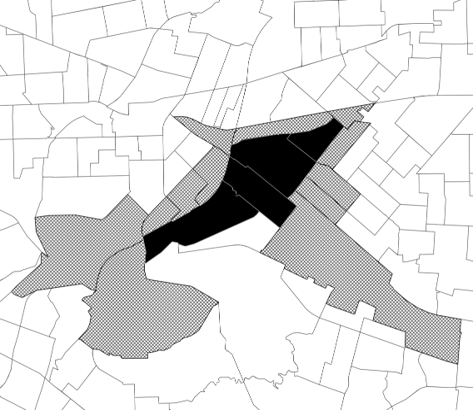
Scenario 2: Multiple Contiguous Qualifying DAC Tracts within 5-mi. Buffer (Green) of Original Area (133 Tracts, Total Eligible Population: 597,932)
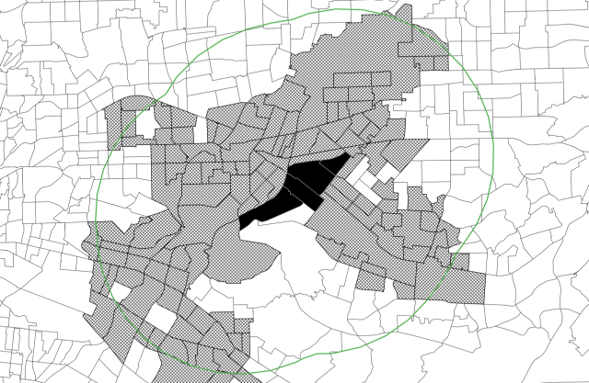
Scenario 3: Qualifying DAC Tracts Contained Within 1-mile Buffer (Blue) of Original Territory (12 Tracts, Total Eligible Population: 50,799)
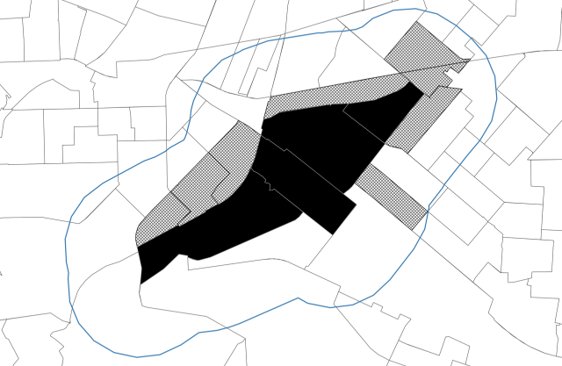
Scenario 4: Qualifying DAC Tracts Intersecting 1 mi Buffer (Blue) of Original Territory (36 Tracts, Total Eligible Population: 158,156)
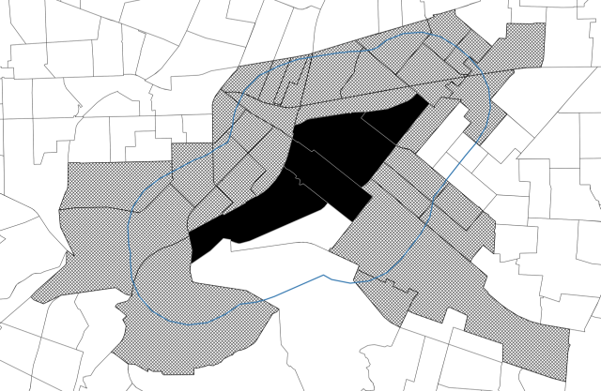
All expansion scenarios were prepared using SB 535 feature layers and population data from the US Census. TEC, GRID Alternatives, and Day One selected Scenario 4 (Figure 2.3.2.2) and all subsequent maps of the “expanded Advanced Homes area” correspond to the geography shown in scenario 4.
3.0 – Advanced Homes
3.1 - Introduction
This chapter describes the planning, design, implementation, and results of BAAEC’s pilot of comprehensive climate retrofitting of single-family homes for low-income homeowners. As such, the Advanced Homes scope was a sophisticated sociotechnical experiment, one involving careful planning, administrative coordination, and the expert labor of people with skills, desires and sectoral positions. Among the most ambitious scopes in the project, BAAEC’s Advanced homes sought to demonstrate that the comprehensive retrofitting of single-family homes could be a profitable and socially beneficial undertaking – generating measurable benefits for homeowners and revenue for the private and nonprofit entities involved in the project.
California’s commitment to the equitable decarbonization of residential housing has inspired much debate about how to integrate equity, environmental justice, and a policy of green industrial growth into residential decarbonization programs. In the past decade, concern for the distributional effects of decarbonization via electrification, and recognition of the unequal character of technological adoption rates between non-disadvantaged and disadvantaged communities has inspired new iterations of existing state programs designed to address equity through affordability. Many of these programs, including utility-administered programs such as DAC-SASH and SGIP, aid low-income Californians who are interested in adopting DERs. But these financial incentives have (on their own) not been sufficient to close the gap between disadvantaged and non-disadvantaged communities with respect to DER adoption and household electrification. These programs are the latest additions to a collection of energy efficiency, home weatherization, and low-income rate relief programs offered by the state and federal government to protect and improve the lives of disadvantaged property owners and environmental conditions in disadvantaged communities. California’s project of residential decarbonization also reflects a broader trend in the theory and practice of climate and energy governance away from the individual or household level, and towards the community as a politically contested scale of infrastructural planning and governance. Cognizant of the fact that any solution will have to be “scaled” or “replicated” to make progress towards the decarbonization of cities or electrical Grids, and that sociotechnical arrangements suitable in one place may be unsuitable in another because of differences between them, policy professionals, public-sector administrators, jurists, engineering professionals, and others have sought a supra-local, more-than-individual subject of governance. Since the late 1980s, “community” has come to stand in for this subject of governance and scale of planning as suitable but sometimes troublesome placeholder for both or either.56 More recently, the concept of community has been taken up by actors within and outside of state-led energy transitions as a scale for experimentation with new configurations of electrical infrastructure.
The BAAEC partners sought to build a community-based and community-engaged model of implementation around these programs by finding, gaining the interest of, and enrolling homeowners in the Bassett and Avocado Heights neighborhoods. Homeowners were told that Advanced Homes would reduce their energy costs, improve indoor (in certain cases) and outdoor air quality, and provide them with a measure of household resilience to anticipated local climate impacts (e.g., high heat and more frequent outages). Advanced Homes would also help to reduce emissions and would ensure homeowners a degree of energy autonomy (resilience) through the installation of on-site solar generation and onsite battery storage. The project partners, a coalition of nonprofit, private, and public partners, sought to retrofit homes at no financial cost to the homeowner-participants. In its design, the primary authors of the project (The Energy Coalition, Day One, Grid Alternatives, UCLA CCSC and the CEC) sought to model commercially viable and socioenvironmental responsible forms of “low-income residential decarbonization.”
Coming together under the leadership of The Energy Coalition, the project partners involved in the scope planned to comprehensively retrofit 50 single-family homes with rooftop solar, battery storage, and other optional end-use electrification measures. The purpose of Advanced Homes was to examine to what extent existing state policies and programs supporting low-income electrification could be leveraged to comprehensively retrofit low-income homes at no up-front monetary cost to the homeowner. To this end, TEC and the other partner organizations sought to build a replicable and scalable model for low-income single family climate retrofits in Bassett and Avocado Heights.57 Under TEC’s leadership, the partner organizations worked between 2020-2025 to ensure that participating homeowners received their systems and enjoyed the benefits of their proper and efficient operation. While the creation of benefits for homeowner participants was the most important measure of project success, TEC was also intent on demonstrating that Advanced Homes’ approach to low-income retrofits was financially sustainable (if not profitable) for the private sector partners involved. But as we will see, creating benefits for all parties involved while committing to a “no-cost” approach to retrofits proved to be a difficult and demanding balancing act, requiring considerable time, effort, flexibility, and creativity on behalf of TEC and the Advanced Homes partners (sub-contractors). Designing and coordinating the actors involved entailed a complex division of labor: managing the project, engineering BAAEC’s retrofits and document results drew on the capacities of many organizations and persons arrayed around a shared and sophisticated problematization58 of residential decarbonization.
In keeping with the CEC’s suggestion to overcome barriers to electrification through intersectoral partnership, the Energy Coalition enrolled a team of private and non-profit subcontractors to identify and screen potentially eligible homeowners in the project area, interest them in participation, verify their eligibility, and coordinate the permitting and construction of each retrofitted home. Whereas Chapter 2 describes how project partners located potentially eligible residents and enrolled participants, this chapter describes what happened after homeowners agreed to participate, and how the partners assembled an implementation “pipeline” for Advanced Homes. Section 3.2 of this chapter identifies the actors involved in the Advanced Homes, summarizes policy logic of California’s push for equitable residential decarbonization, and identifies political questions that observers and participants of the state’s efforts have raised in the decade since its official inception.
The narrative sections of this chapter focus on the development and implementation of a process for installing rooftop solar, battery storage, and other optional technological interventions, and draws on the perspectives of the actors involved regarding the value, difficulty, and generalizability of the BAAEC model for comprehensive, low-income household decarbonization. Sections 3.3 and 3.4 describe how the network of actors involved in Advanced Homes came together through the grant, and how they dealt with the messiness, complexity, and uncertainty they encountered in moving from planning to action. The scope narrative related in these sections (drawn from the author’s observation of meetings and interviews with project partners) provides a detailed, chronological description of the development of the Advanced Homes’ scope. Due to the technical and regulatory complexity of single-family home decarbonization retrofits, the number and diversity of the actors (both human and non-human) involved, the experimental nature of the project, and exogenous factors such as COVID, the evolution of Advanced Homes from a plan into a more-or-less streamlined, replicable process required years of concentrated effort and careful day-to-day stewardship. The completion and commercial operation of the first solar-storage retrofit in Q2 of 2023 divides the narrative into pre-implementation (participant enrollment, planning, capacity-building) and post-implementation (construction, operation, evaluation) periods. During the pre- and post-implementation periods of Advanced Homes, TEC and the other partner organizations struggled with the complexity of their shared experiment and the difficult conditions under which they attempted it.
Sections 3.4 analyzes the course and evolution of the project using a process vs. outcome framework. In this section the perspectives of both the implementers and participants are included in a discussion of whether the project provided the benefits it promised, the challenges the project encountered, and how partners met these challenges. These sections also address how the concept of community was understood, interpreted, and ultimately given material form through Advanced Homes’ retrofits. Section 3.5 identifies a set of policy-relevant conclusions for future efforts to catalyze the decarbonization of urban low-income urban communities, identifying questions about the ends of California’s efforts to decarbonize low-income communities, and the means employed by the people and institutions involved.
3.2 Advanced Homes Partners, Participants & California’s Problematization of Low-Income Residential Decarbonization
3.2.1 – BAAEC Advanced Homes Partners
Relative to the other scopes of BAAEC, Advanced Homes involved the coordination of many more actors and the installation of several different technologies, all of which needed to be integrated into existing and inhabited homes in an area of Los Angeles County afflicted by multiple and intersecting types of disadvantage. These efforts were sustained over the scheduled course of the project (2020-2025). The implementation of Advanced Homes suffered numerous delays, owing in part to factors beyond the project’s control. The COVID-19 pandemic, the knock-on effects of the crisis, changes to state policy, and the defection of project partners at key junctures all imposed serious challenges for the project.
During the project, the grant awardee and BAAEC project lead The Energy Coalition (TEC) found itself coordinating the actions of a large, diverse, and shifting set of actors to complete a targeted 50 comprehensive decarbonization retrofits. Because TEC did not have the capacity to undertake this task alone, Advanced Homes evolved as a coalition of partnerships between TEC and an array of other private and nonprofit entities who signed subcontracts for specific scopes of work under the plan for the CEC grant (Table 3.2.1.1).59 The terms and conditions of partnership agreements and customer contracts also served to define the roles of human actors and technological objects included in the BAAEC Advanced Homes. The translation of the project’s planned interventions into completed, operational retrofits required the sustained and coordinated involvement of actors in “the community” (homeowners and local nonprofit and civic groups), and of organizational actors considered to be outside of the community and project (Table 3.2.1.1). These included municipal inspectors, fire departments, utilities, Grid operators, and other actors tasked with enforcing adherence to public and municipal code standards. Table 3.2.1.1 lists the actors directly involved in the Advanced Homes scope, the benefits/ compensation they were to receive through BAAEC, and other actors implicated in the assembly of the Advanced Homes.
Table 3.2.1.1. – BAAEC Solar and Storage Retrofit Project Partners, Participants, & Associated Organizations
| Actor | Description | Roles | Benefits/ Compensation |
|---|---|---|---|
| BAAEC Project Member Organizations | |||
| The Energy Coalition | Project Lead | Oversight and support of partners coordinating homeowner enrollment and construction of solar, storage, and electrification upgrades in project area homes. Administer grant funds and document findings for CEC reporting requirements. | CEC Project Grant Awardee; meet implementation targets, demonstrate the benefits of BAAEC’s approach to home solar+storage retrofits for under-resourced residents |
| Grid Alternatives | Nonprofit Solar PV and battery storage Installer | Install rooftop panels on BAAEC Homes under CPUC’s Disadvantaged Communities - Single Family Solar Homes (DAC-SASH) Program. Complete preparatory work (panel upgrades, electrical labor.) | Grant funds for labor, project expenses, and workforce training programs. |
| Day One | Community-based Nonprofit | Community outreach, education, and enrollment of homeowners | Grant funds for labor and project expenses |
| Swell Energy | Private Battery Company | Install battery storage systems and enroll them in a VPP Pilot Demonstration | Grant funds for labor and project expenses |
| Haven Energy | Private Battery Company | Install battery storage systems and, operate batteries installed in Advanced Homes | Grant compensation for labor, contracts for battery operation and maintenance |
| Pearl Street | Financial Technology Company | Advise TEC on bridge loan financing structure and support meet lender requirements | Grant funds for consultative services |
| Urban US Capital | Institutionally-Backed Credit Fund | Credit Investor; lend TEC funds for battery bridge-loan | Debt repayment with interest for battery bridge-loan |
| Professional Services Contractors | Hercules Roofing, Positive Electric, Eduardo & Sons Electric, Quality Conservation Services, Water Heater Warehouse | Preparatory roof replacements, main electrical service panel upgrades, electrification of appliance upgrades for homes. | Compensated by TEC and Indirectly compensated by Grid Alternatives, Swell Energy, and Haven Energy |
| UCLA California Center for Sustainable Communities | Academic Research Group | Support project data-gathering, case study, and the creation of geospatial tools for outreach and project evaluation. | Grant funds for labor and project expenses |
| “External” Actors | |||
| Building, Fire, and Electrical Code Compliance Offices | Municipal and county building, fire, and electrical code inspection offices for BAAEC project area | Inspect and issue permits for building repairs, main service panel upgrades, and installation of solar arrays and batteries; ensure code compliance | Indirectly compensated through permit fees |
| Southern California Edison | Investor-Owned Electric Utility | Review solar+storage system interconnection requests and approve system interconnection to distribution-level circuits. | Indirectly compensated through interconnection fees |
| SoCal Gas | Investor-Owned Gas Utility, lead IOU for the SGIP program administration | Take funding reservations for batteries under Self-Generation Incentive (SGIP) Equity Program | Indirectly compensated through Swell Energy and/or Haven Energy for SGIP application fees |
| utilityAPI | Private Utility Data Provider | Provide access to homeowner billing data for system design and project evaluation. | Compensated by TEC for database requests. |
| “Community” Participants | |||
| Homeowners | Income and building-condition qualified homeowners in the BAAEC Project Area | Provide the project with household consumption data, enter into contracts with Grid Alternatives, Swell Energy, and Haven Energy, grant access to the home and spend time with various inspections and upgrades, request a retail rate change after system installation and permission to operate. | Utility bill reductions through onsite generation and storage, and resiliency benefits (backup power), participation in program activities (interviews, testimonials) |
| Local Public and Civic Organizations | School Districts, 1st District County Supervisor’s Office, LA County Parks, environmental and activist groups | Provide input and community perspectives on the installation of systems, endorsements of the project, and the needs of the community | Collaboration with successful community energy pilot, influence over the direction and shape of the BAAEC project |
3.2.2 - California’s Evolving Problematization of Residential Decarbonization
The decarbonization of domestic existence and/or “urban life” is among the most politically (if not fiscally) significant aspects of state-funded climate mitigation efforts in many nation-states. Although the emissions intensities of domestic existence vary considerably between and within national contexts, emissions from residential buildings (and from the activities taking place within them) have come to be included in state emissions inventories and climate mitigation plans. California’s regime of energy and climate governance has, in the relatively recent past, come to include substantive and formal commitments to the just and equitable decarbonization of residential housing stock.
The state of California has welcomed the challenge of residential decarbonization, embracing the notion that the state should aspire to global leadership in the struggle against climate change and experiment with climate mitigation policies and renewable energy technologies within its borders. The impetus to mitigate emissions and address the impacts of climate change (codified and formalized in acts of legislation and public administrative rulemaking) has enrolled public institutions, non-profit organizations, private firms, and civic groups in networks of climate response. Furthermore, the absence of comprehensive U.S. federal climate legislation, anxieties about the costs of inaction, and a fragile consensus regarding the necessity of a renewable energy transition have spurred California’s state and local governments to develop their own climate policy frameworks and response plans. This movement is part of a more general trend towards local and unilateral experimentation with climate and energy policy by state, regional, and municipal governments in the US.
State-backed residential decarbonization efforts were spawned in 2018 through a pair of legislative commitments. In that year Governor Jerry Brown signed into law Senate Bill 1477 and Assembly Bill 3232, which directed the California Public Utilities Commission (CPUC) and California Energy Commission (CEC) to measure GHG emissions from buildings, and explore the techno-economic potential of “building decarbonization” as a means for abating greenhouse gas emissions.60, 61 SB 1477 and AB 3232 also directed the CPUC and CEC (respectively) to develop programs to accelerate the decarbonization of California’s built environment.62
In the same year, the Integrated Energy Policy Report (IEPR), the biennial assessment of energy supply and demand trends developed by the California Energy Commission, estimated that 25% of the state’s greenhouse gas emissions arose from the commercial and residential building sectors.63, 64 In response to this finding, and the direction of AB 3232 to “assess the potential … to reduce the emissions of greenhouse gasses in… residential and commercial building stock by at least 40 percent below 1990 levels by January 1, 2030”, the CEC began to develop a strategic plan for the decarbonization of residential housing as part of broader building decarbonization efforts being pursued by the CEC and CPUC.65 The CEC’s Building Decarbonization Assessment, developed in consultation with the public and other state agencies (CPUC, California Air Resources Board (CARB)), articulated a strategic vision for accomplishing the emissions abatement objectives defined in AB 3232.66, 67 The CEC’s Building Decarbonization Assessment set forth seven complementary strategies for reducing GHG emissions from California’s residential building sector. The CEC’s Assessment conceptualized residential decarbonization in terms of a technological transformation (end-use electrification, growth in on-site PV generation and battery storage) and the creation of demand flexibility incentives for building owners and occupants.
Table 3.2.2.1. California’s State-Level Residential Decarbonization Strategy68
| AB 3232 - CEC Building Decarbonization Assessment Strategies |
|---|
| 1. Replace gas-fueled appliances with electrical alternatives |
| 2. Continue decarbonizing electricity by growing the low-carbon share of the generation portfolio. |
| 3. Foster energy efficiency through incentive programs, appliance standards, building standards, research, and financing. |
| 4. Transition to using better refrigerants and reduce associated leakage |
| 5. Grow distributed energy resources such as rooftop solar photovoltaic (PV) and onsite battery storage. |
| 6. Decarbonize the gas system by displacing natural gas with renewable gas produced from carbon-free electricity or existing waste streams. |
| 7. Give building owners and occupants incentives to shift their electricity use in response to the timing of energy costs, GHG emissions intensity, or electricity Grid emergencies. |
The CEC’s strategy represented a first step towards a political economy of residential building decarbonization for California. Since then, California has come to include environmental and social justice considerations into its policy regime through programs, rebates, and energy cost discounts for low-income and disadvantaged customers.
In addition to more efficient appliances, more sophisticated distributed renewable generation and storage systems, and a more flexible Grid infrastructure, “decarbonization” has also come to be about recognizing and redressing the inequalities between wealthy and poorer areas or “communities”, variously defined by geography and demography for the purposes of program administration (California Energy Commission, 2021). The purpose of the BAAEC project and other DAC-focused projects is to accelerate the equitable decarbonization of disadvantaged communities as part of a broader sociopolitical project, one that must involve equitable collaboration between public, private, nonprofit entities.
In California, competitive grantmaking programs administered by state planning agencies, public and investor-owned utilities, firms, and municipal governments have drawn together coalitions of organizations looking to build abundant energy futures and healthier cities for low-income Californians. Grant programs like the one funding this project are intended to generate value in the form of financial and other tangible benefits for their local participants, and knowledge, organizational capacity, human capital, and potentially revenue for the organizations involved in implementation. Consequently, networks of private, public, and nonprofit actors have assembled to attempt to demonstrate, measure, or “unlock” these values in the interest of accelerating a profitable, scalable, and socio-ecologically just means of decarbonizing existing residential buildings in the state. In these networks however, resources and knowledge to act are not evenly distributed, and inter-sectoral collaboration (i.e. public-private, public-nonprofit, private-nonprofit) can be, and often is, fraught with difficulties. As we will see in the narrative of the scope, differences in organizational culture and ethics, as well as desires for different ends made inter-sectoral collaboration a difficult but ultimately worthwhile undertaking.
Nonprofit organizations, public institutions, and private firms engage in state and utility funded decarbonization projects to accomplish specific implementation goals, develop organizational competencies, create new products and services, and advance theories of the public good. Since 2018, additional funding for residential decarbonization in low-income and disadvantaged communities, along with new incentive offerings for solar generation, battery storage, and electric vehicles, have increased interest in the state’s residential decarbonization efforts, attracting the attention of a range of domestic and international actors. Within the last two years, however, policy changes reversing or sunsetting programs incentivizing residential decarbonization have seriously challenged the construction of new, more sustainable energy infrastructure and socio-environmental conditions for the citizens of California and US more broadly. These policy changes have also diminished the value proposition of decarbonization retrofits for low-income homeowners and would-be implementers alike.
During the previous decade, various actors from public, private, and nonprofit sectors have sought to find ways of attracting private and nonprofit organizations to the task of low-income decarbonization. Hoping to “crowd-in”69 private-sector investment through public spending on decarbonization, the CEC’s creation of “disadvantaged” and non-disadvantaged funding categories for residential decarbonization projects and its inclusion of “equity” among its energy planning objectives reflects a turn towards environmental justice as important planning concepts within the broader sweep of California’s renewable energy transition (California Energy Commission, 2021). State planning documents acknowledge differences in social and economic conditions between disadvantaged and non-disadvantaged communities and the reasons for economic and socioenvironmental disparities between them. Official geographies of disadvantage (CalEnviroScreen) have come to be associated with more generous or comprehensive program offerings, as well as enriched incentive payments for energy retrofits. However, the question of whether distributed energy systems can be both mechanisms for poverty alleviation and a steady source of revenue for their developers remains to be answered. Sections 3.4 and 3.5 of this chapter address the question of whether the interests or needs of “disadvantaged communities” and the private sector can be served through the installation of distributed renewable systems like those installed in the Advanced Homes.
TEC and other project partners sought to demonstrate how to comprehensively retrofit low-income single-family homes with existing state programs and the participation of private and non-profit partners. Advanced Homes’ “no-cost” requirement for retrofits also reflected BAAEC’s identification of the primary barrier to the retrofitting of existing homes; the inability of disadvantaged homeowners to pay the up-front capital costs for the systems. In exchange for their participation and access to their data, homeowners would receive substantial benefits (in the form of bill reductions and backup power) and would bear no cost other than their time and patience with project staff. Simultaneously, BAAEC project partners would learn from the implementation process and benefit financially as well as reputationally from their participation in the project.
3.3 Advanced Homes – Pre-Implementation Period (Q3 2020 – Q2 2023)
3.3.1 – Q3 2020 – Q4 2021: Assembly of Advanced Homes Implementation Team, COVID-19 Pandemic Delays Outreach, Education, and Enrollment, Grid Alternatives Subcontracts for Advanced Homes, First Contact with Area Homeowners, Sonnen departs Advanced Homes
As with the other scopes in the BAAEC project, the assembly of Advanced Homes began well in advance of the official project start in Q3 of 2020. In the year prior to its official start, The Energy Coalition had been steadily working to contract with a core set of private and nonprofit organizations who would be responsible for the no-cost retrofitting of single-family homes in the project area. Aware of the CEC’s desire to decarbonize residential buildings through public-private and private-nonprofit partnership, and to avoid using grant funds to defray the capital costs of distributed renewable systems, TEC had to find corporate and non-profit partner organizations who would be willing and able to bear such costs for the purposes of the pilot project. To find an implementation team, TEC staff set to work identifying potential partners based on what they knew about the socio-geographic characteristics of the project area and the kinds of organizational capabilities the project would need to reach implementation.
Prior to the official start of the project, senior staff from the Energy Coalition engaged various people employed by the nonprofit solar installer Grid Alternatives, as well several private battery companies, looking for suitable partners for the Advanced Homes.70 Personnel from Grid Alternatives contacted by TEC were receptive to the project, approved of its intention to comprehensively retrofit existing low-income homes, and were confident in their ability to meet the program’s 50 home implementation goal with the help of a private battery partner (Interview w/ Grid Alternatives Director of Community Engagement & Partnerships, 2021). In Q4 of 2020, meetings between Grid and TEC staff yielded a sub-contract between them for the no-cost installation of rooftop solar arrays with the incentive support of the Disadvantaged Communities – Single-family Solar Homes (DAC-SASH) program. Under the terms of the BAAEC sub-contract, TEC would compensate Grid Alternatives for some of the labor and capital costs associated with the Advanced Homes, and to provide funding for workforce development scholarships.71
In exchange for financial and organizational support, TEC was able to leverage Grid Alternative’s organizational capabilities, namely its existing DAC-SASH implementation process, the organization’s third-party ownership model with the private solar developer Sunrun, as well as its reputation as an efficient, ethical, and institutionally established nonprofit installer. By Q4 of 2020, Grid Alternatives and TEC were meeting weekly over Zoom to discuss the project and nail down answers to questions about what existing state decarbonization programs would allow, and how the process of retrofitting residents’ homes would proceed in practice. Although Grid Alternatives had completed DAC-SASH solar retrofits for other homeowners in the San Gabriel Valley, the organization had (at the beginning of the BAAEC project) limited experience with solar-storage installations. Consequently, Grid staff (outreach, project management, and construction) needed to answer a raft of basic questions about how the BAAEC partnership would work (legally, financially, procedurally), including verifying whether DAC-SASH participants could also participate in the CPUC’s Self-Generation Incentive Program (SGIP), and whether Grid’s third-party ownership model with Sunrun would allow SGIP participation (Q4 2020 All-Partners Meeting). This question, among many others, concerned Grid and TEC in their weekly calls during this time. Towards the end of 2020, with outreach paused, there was little to do but wait for the public health emergency to subside, and to study how to best proceed.
During the second two quarters of 2020, TEC began reaching out to private battery firms to gauge their interest in Advanced Homes and recruit a willing private battery installer and virtual power plant operator. Finding a battery partner to work with TEC, Day One, and Grid Alternatives proved to be challenging, but during the first two quarters of 2021 TEC made progress in talks with representatives from the multinational battery storage firm Sonnen for the installation of home storage units and the potential operation of the pilot virtual power plant (VPP).72 Though Sonnen had been in contact with TEC since 2020, and by Q2 of 2021 they were actively engaged in planning battery financing and installation, the company had not (as of Q2 2021) signed a subcontract or agreed to a specific scope of work. Sonnen, however, was interested in the equity angle of the Advanced Homes and saw the value in a “no cost” model for solar-storage installation for low-income customers. Representatives from Sonnen also mentioned that the company was interested in breaking into the nascent California markets for domestic battery storage systems and Grid services (Interview w/ Sonnen VPP Project Engineer, 2021).
TEC and Sonnen saw Advanced Homes as an opportunity to demonstrate that battery storage and VPP technology could deliver financial and environmental benefits to disadvantaged homeowners and revenues for the corporate partners involved, but cementing a partnership between BAAEC and Sonnen for Advanced Homes presented a series of practical problems. First, TEC and Sonnen were unsure how to finance the no-cost installation of Sonnen’s battery systems since they were larger and more expensive than comparable models available from other firms. Second, TEC, Grid, and Sonnen were not sure how batteries would be physically installed in participants’ homes, since Sonnen’s batteries were not rated for outdoor installation, and needed to be sheltered in something like an attached garage or outdoor shed. Grid representatives maintained that Sonnen’s batteries’ need for sheltered but not interior space would make it harder to enroll participants. Third, the partners did not know exactly how the batteries Sonnen installed would be operated in utility-made markets for demand response (DR) and other Grid services (frequency support, power export, resource adequacy, etc.). Resolving these challenges would be necessary to move forward with Sonnen as a private battery partner.
In working meetings, representatives from TEC and Sonnen constructed parallel financial models of the battery systems and discussed ways of reconfiguring these models to meet the project’s no-cost equity criterion (Interview w/ TEC Advanced Homes Project Manager, 2021). During the first half of 2021, TEC and Sonnen made relatively little progress towards modeling a no-cost scenario for the installation and operation of Sonnen’s battery systems. Lack of progress was due to the cost of Sonnen’s systems (which ranged between $10-30K depending on model type and capacity) and uncertainty as to whether revenues from demand response or Grid services would be enough to close the gap. TEC and Sonnen also struggled to grasp the mechanics of emerging markets for Grid services and to predict the magnitude and timing of revenues from Advanced Homes VPP operations. Sonnen and Shell Energy North America also declined to share the parameters that went into their VPP and battery revenue models, frustrating efforts to find a way forward (Interview w/ TEC Advanced Homes Project Manager, 2021). As a result, no consensus cost model emerged in these first few months of meeting and working together. Despite these issues, representatives from Sonnen remained engaged and responsive, and continued to explore options with TEC and, much less frequently, Grid Alternatives.
By Q2 of 2021 TEC was having regularly scheduled meetings with representatives from Day One, Grid, and Sonnen to discuss issues related to project administration, grant reporting, and financing of the project. The intensification of the COVID-19 pandemic over the summer and fall of 2020 had put a hold on in-person outreach, but that did not delay the development of relationships between what would become the core partners of BAAEC’s Advanced Homes (Day One, TEC, Grid Alternatives). By the end of Q2 2021, staff from the partner organizations had begun attending regular ‘check-in’ video conference meetings about the installation of solar and storage in the Advanced Homes would proceed once a critical mass of interested residents were in contact with the core partners. That said, without any homeowners to begin processing (in-person outreach was paused; cold-calling and texting had proven ineffective, even counter-productive – see Chapter 2), these meetings mostly included discussions of the project and its goals, with participants posing and answering of questions about how recruitment and process should go, as well as other topics related to administration and invoicing. The core Advanced Homes partners hoped to hit the ground running once social distancing protocols were relaxed and in-person outreach/ home inspections were once again possible.
Regarding the question of when to begin in-person outreach, leadership and staff from Day One and the members of the BAAEC Community Advisory Committee expressed concern and dismay regarding the impacts of COVID-19 on the residents of Bassett and Avocado Heights, but felt that they would be able to effectively publicize the project, drive enrollment, and facilitate communication between the homeowners and the other project contractors once social distancing practices were relaxed (Interviews with Day One Executive Director and Staff, 2020; BAAEC-UCLA Check-in Minutes, April 6 2021).
Grid Alternatives also felt confident about reaching the goal of 50 retrofitted homes. As the CPUC-designated implementer of the DAC-SASH program, Grid Alternatives had already built an internal process for identifying pre-qualified homeowners, advertising the DAC-SASH program to people they thought might be interested or qualified, and ushering them through a no-cost rooftop solar retrofit (Interview with Grid Alternatives Director of Engagement & Partnerships, 2020). A nonprofit with national reach, Grid Alternatives had considerable resources and organizational experience with low-cost, low-income retrofits. Leveraging the abilities of all three organizations, Day One, TEC, and Grid proceeded to plan how to interest homeowners in the Advanced Homes program and move them through the many steps of the retrofit process.
During this time, negotiations and planning for battery installations came to an impasse. The two points of contact from Sonnen assigned to the project remained optimistic about finding a path to implementation, but it was becoming apparent to TEC and Grid Alternatives that Sonnen might not be the right implementation partner for Advanced Homes. In interviews and virtual meetings, representatives from Sonnen reiterated that BAAEC’s no-cost model for low-income decarbonization aligned with the company’s corporate ethics but acknowledged that there were challenges in finding a path towards meeting BAAEC’s no-cost requirement. The single most pressing issue was engineering a financial model for home battery installation that did not require a monthly contribution from participating homeowners. Staff from TEC were emphatic about the no-cost requirement for Advanced Homes, telling Sonnen that they would not be willing to surprise participants with additional subscription costs or fees after they had promised a free battery installation along with a rooftop solar system in their outreach communications and advertisements. TEC was not willing to compromise on this point, even if that cost was “low” or “one-time”, such a move ran counter to the ethos of the project. The free nature of the offering was one of the key experimental constraints on BAAEC, and surprising residents with hidden fees would violate the trust of participants and reduce it to a morally disinterested exercise in market research.
TEC and Sonnen met frequently over the course of 2021, primarily via Zoom. During these meetings TEC and Sonnen staff attempted to devise ways of “stacking” state and utility incentive program credits to “buy-down” the price of Sonnen’s batteries. Sonnen also floated the idea of creating a “special purpose vehicle” – a one-off legal and financial container for Advanced Homes, but this idea was rejected because it did little to address the fundamental problem of covering project costs. During 2021, Representatives from TEC and Sonnen continued to model the financial behavior of battery systems under different sets of assumptions and parameterizations, but the emerging nature of markets for battery services and the unwillingness of Sonnen’s parent company (Shell Energy North America) to share their market research data with TEC remained a sticking point. TEC’s cost-benefit analyses continued to show that state incentives alone would be insufficient to cover the cost of the battery installation with Sonnen. Sonne and TEC agreed that the only possible source of revenue to cover the remaining costs of the battery systems would be demand response or other Grid services. However, despite hours of research, neither organization was sure about how regular or how large these payments would be in future (Interview with TEC Staff, 2021). The mechanics of these utility-run markets were rather opaque to both parties (TEC more so than Sonnen), and TEC continued to reject Sonnen’s suggestions that participants pay a monthly fee for their batteries, or that TEC decrease the amount of battery capacity reserved for home backup.73
Representatives from the company were, however, enthusiastic about participating in BAAEC and collaborating with Clean Power Alliance and TEC to build a 50-home low-income virtual power plant with the batteries it installed (Interview with Sonnen VPP Project Manager, 2021). At BAAEC’s fourth quarterly meeting in Q2 2021, the representative from Sonnen spoke about the project’s potential to demonstrate that battery systems like Sonnen’s could provide financial benefits for utilities as well as climate resilience for low-income homeowners.74 Sonnen and TEC were also optimistic about their ability to finance the installation of Sonnen’s Core battery system with funds from the CPUC’s Self-Generation Incentive (SGIP) program and revenues from their operation in markets for Grid services. Together with the publicly funded DAC-SASH program, Sonnen’s financing of the Advanced Homes’ battery systems would help to ensure that the solar-storage retrofits would impose no financial burden on participating homeowners and generate revenue for the owners, operators, and site host for each asset. The price of Sonnen’s battery and the complexity of the enrollment and permitting processes were, at this point in the scope, the main obstacles to implementation, aside from the moratorium on in-person outreach due to the pandemic.
By the summer of 2021 TEC, Grid, and Day One had produced more detailed plans for how to handle the tasks of interesting homeowners and moving them through the DAC-SASH rooftop solar installation process. Day One had begun to promote BAAEC and the Advanced Homes in person at resource fairs and vaccination drives. This period saw the first sustained contact with “the community” (e.g. homeowners in the census tracts shown in Figure 3.2.1.1) through canvassing and tabling at events in and near the project area (see Chapter 2). This period also saw the first rooftop solar installation completed for a participant under DAC-SASH by Grid Alternatives. This was a major success for the project, and spurred hope that more participants would be forthcoming.
At this point in the project, DAC-SASH rooftop solar and preparatory electrical work (paid for through a mixture of state cap-and-trade and BAAEC grant funds) would leave each of the participant’s homes ready for the subsequent installation of battery storage by Sonnen (Figure 3.2.1.2). Grid Alternatives, leveraging its third-party ownership model with the private solar installer Sunrun, would complete each of the rooftop solar installations and transfer ownership of each array to Sunrun, who would capture the tax equity credits associated with the systems and (in exchange) cover the operations & maintenance costs of participants’ rooftop solar arrays.75 Some unspecified time after the installation of the DAC-SASH solar array, Sonnen and an installation contractor would revisit the participants’ homes, design a battery system for each (based on household load history and the capacity of rooftop solar arrays), install the batteries, and begin operating them in markets for power export (CAISO wholesale) or utility-made markets for Grid services. Figure 3.2.1.2 illustrates the financial and contractual relationships between each of the project partners that were (or would be) involved in the implementation of Advanced Homes as of 2020-2021.
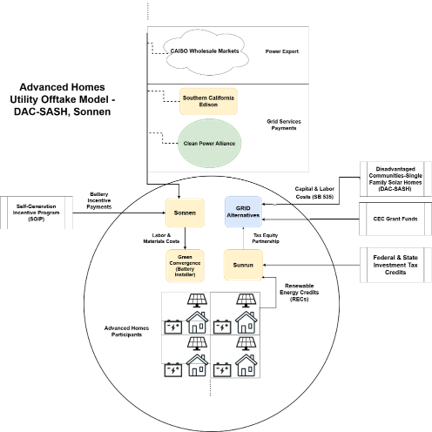
Figure 3.2.1.2 – Draft Utility Offtake Model for Advanced Homes (2020-2021).
However, by Q4 of 2021 it was becoming clear to TEC and Grid Alternatives that Sonnen was not going to be a suitable battery partner for Advanced Homes. By this time TEC, Sonnen, and Shell Energy North America had come to an impasse regarding the financial model for no-cost home battery installations. According to TEC staff, representatives from Shell’s energy trading desk “did not like” the risk profile of the Advanced Homes and had proposed a monthly flat fee ($15) be paid by homeowners as a hedge against uncertainty about the timing of demand response events and the price of this service (Interview w/ TEC Staff, October 2021). TEC rejected this financing plan on ethical grounds, but there were also other reasons for ending their association with Sonnen. First was the fact that Sonnen did not have the ability to operate the Advanced Home’s batteries in markets for electricity or Grid supportive services. The firm, unlike some of its competitors, was not registered as a Scheduling Coordinator with CAISO. As a battery manufacturer and control software provider, Sonnen needed to hand over operational control to some third party (in theory, the Clean Power Alliance) who would bear responsibility for dispatching the Advanced Homes’ batteries in markets for power and Grid services. Second, TEC staff explained that Sonnen “kept giving us business models that didn’t make sense” – i.e. simulation results and scenario analyses that either did not show savings, or that were based on unrealistic assumptions about revenues from battery dispatch (Interview w/ TEC Advanced Homes Project Manager, Dec 2021). In interviews, TEC also raised questions about whether Sonnen would ever be able to share Grid services revenues with participating homeowners and expressed frustration about Shell Energy North America’s refusal to share their internal assumptions about the risk structure of VPP markets. This made the modeling efforts of the organizations competitive, rather than complementary. Second, it became apparent to TEC Sonnen’s batteries were not a “right-sized” solution for the population the project was intended to serve. Sonnen’s batteries were more expensive and had a larger per-unit capacity than others on the market, making it more difficult to finance and install in low-income homes. Third, it was evident to Sonnen and TEC in Q4 of 2021 that they had misjudged CPA’s desire for VPP assets, noting that the community choice aggregator had awarded a joint VPP project to two private storage firms, Sunova and AutoGrid, who would manage and dispatch 6 MW of battery storage installed in CPA’s territory.76 Advanced Homes’ 50 or so home batteries (with a total capacity of less than 1 MW) were considerably smaller than the CPA’s chosen VPP pilot, and, because of Sonnen’s inability to serve as an Scheduling Coordinator in CA, the firm could not deliver the services the CPA desired. Advanced Homes was mismatched with respect to the scale of the CPA’s VPP request for offers, and BAAEC project partners were somewhat surprised by CPA’s decision to outsource the management of these assets rather than operate VPP systems themselves. Finally, TEC staff also noted that the period of non-communication between CPA required for BAAEC Community Solar made it nearly impossible to coordinate on the CPA’s battery management RFO, since this could have given the appearance of improper contact between parties involved in Community Solar’s PPA negotiations (Chapter 4).
With the close of 2021, TEC reconsidered their options and began a search for a more suitable battery partner for Advanced Homes, one who would be able and willing to provide batteries at no cost and offer to operate them as part of a low-income VPP demonstration pilot. The core partners, now much delayed in finding participants due to the COVID-19 pandemic, continued to advertise Advanced Homes and DAC-SASH through outreach activities.
3.3.2 – Q1 2022 – Q2 2022: Assembly of Advanced Homes Lead Pipeline, Courting Partnership with Swell Energy, Grant Applications for Heat-Pump Water Heaters and Induction Stoves, Swell Energy joins Advanced Homes
With Sonnen out of Advanced Homes, the core partners in the scope continued to publicize BAAEC Advanced Homes to people in the project area and to evaluate interested and qualified residents for participation in no-cost home retrofits. Advanced Homes enrollment numbers remained low (<10 leads in progress) despite a return to in-person outreach, and Day One’s work to rekindle relationships between BAAEC and local institutions (Basset Unified School District, the member organizations of the Community Advisory Committee, and the 1st District County Supervisor’s office). As mentioned in Chapter 2, TEC and Day One struggled to differentiate the project from home solar enrollment campaigns that had come through the project area previously. The area, in Grid’s estimation, was a “saturated market” for rooftop solar for early adopters; many private salespeople had been looking to sign contracts with locals in the recent past, and the “low-hanging fruit had been picked” and more work would be needed to find participants in a place/population where stories of experiences with predatory solar installers and hard sellers circulated widely. In addition to managing the mistrust of the solar industry created by the aggressive sales tactics in the area, Grid also explained that because Advanced Homes facing a physical environment of fragility and disrepair (many homes needed structural and electrical improvements for decarbonization retrofits), it would also have to overcome residents’ rightful skepticism of promises to give away thousands of dollars of work in exchange for project data and participation (Interviews w/ Advanced Homes Participants, May-Jun 2024). One of the solutions to the problem of “trust” was to engage community representatives and residents collectively and individually in hopes of explaining BAAEC’s aims and origins, thus differentiating the program from private sales campaigns that had come through the San Gabriel Valley in the past. To do this, Day One and TEC outreach staff spent hours planning and organizing meetings between themselves and organizations representing the interests of the community, asking for permission to use county supervisorial seals on official literature and flyers, meeting with school administrators, speaking to parents, and coordinating with civic groups and LA County Parks to hold events at resource fairs (Outreach Fieldwork, 2021-2022). Day One and TEC also held luncheons with representatives from the Community Advisory Committee and other local groups unaffiliated with the project. Anticipating further relaxation of social distancing measures and a general decrease in the severity of the public health crisis, Day One and TEC also expanded their outreach activities for Advanced homes to LA County Parks’ “Parks After Dark” event series (held during summer months), resource fairs, and farmer’s markets in cities bordering the project area. As mentioned in Chapter 2 and 3, having relationships with public community representatives (1st Supervisorial District, BUSD especially) certainly benefitted the BAAEC project. In the case of the Advanced Homes, staff from Day One and TEC said that the presence of BUSD and 1st District seals on official project literature and mailers made it possible for them to invoke the presence and involvement of “the state” when describing the project to residents. This ability, according to Day One staff, helped them “show” potential participants that Advanced Homes was not an attempt to lock them into a power purchase agreements and/or debt obligations, but was instead a publicly funded research project that intended to find ways of including low-income communities in California’s energy transition through home retrofits. The purpose of the project, and the reason for their participation, was to help the project implementers make these opportunities possible for other people elsewhere in California. As a TEC outreach staff member said: “we explain[ed] that their participation, time, and patience are what we are asking for – what we are interested in - and that the purpose of the project is to show the state that this is a good program, and that it should be expanded.” (Interview w/ TEC Outreach Staff, September 2024).
By Q1 of 2022, the re-introduction of Advanced Homes to project area residents was underway, but finding and interesting home-owning residents remained challenging. At this time, only about 5 homeowners were in the process of being evaluated for eligibility or were on their way to having rooftop solar systems installed under DAC-SASH by Grid Alternatives. As mentioned in Chapter 2, representatives from Grid Alternatives explained to TEC and Day One that Advanced Homes faced many of the same program design issues that had dogged DAC-SASH since its inception. These included the age and structural condition of many low-income homes (70-80% of DAC-SASH applicants are disqualified for roof or building condition issues), the lack of public funding for structural remediation work, the “saturated” nature of the low-income market for rooftop solar (these areas had, in Grid’s estimation, probably already been visited by private installers), as well as the geographic and demographic requirements for eligibility (Grid BAAEC Check-In Meeting, February 2022). Project Leads and Outreach Coordinators from Grid Alternatives cautioned TEC and Day One that, public health crises and inflationary trends notwithstanding, the outreach partners would have to identify, interest, and screen many more residents than they had initially expected to reach the 50-home implementation target.
The first few Advanced Homes participants enrolled in the project helped the core partners to begin developing a workflow for comprehensive home retrofits that would include free rooftop solar, battery storage, and major appliance electrification offerings. However, without a battery partner, it was not yet possible to plan the battery installation process completely. Figure 3.2.2.1 illustrates the installation process as early 2022:
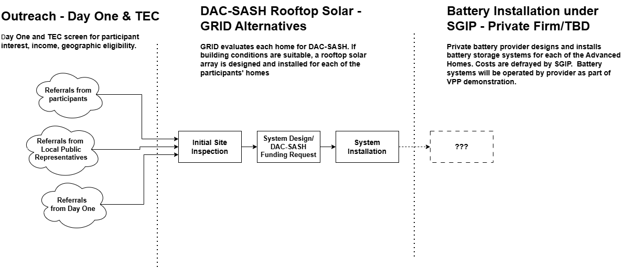
Figure 3.2.2.1 - Draft Process Flow for BAAEC Advanced Homes cr. Q2 2022
The DAC-SASH Program – made available to BAAEC through partnership with Grid Alternatives, was of enormous assistance to the Advanced Homes project. Created by the CPUC in 2018 as a low-income version of the Single family Affordable Solar Home (SASH). DAC-SASH, with a budget of ~$10 million per year, offers subsidized rooftop solar to people meeting CARE/FERA income requirements and living in census tracts within the top quartile of the CalEnviroScreen. In 2017, the CPUC designated Grid Alternatives as the “state-wide implementer” of the DAC-SASH program, allowing the organization to draw on Cap-and-Trade funds to finance the installation of no-cost rooftop solar for low-income Californians. The figures below, taken from E3’s 2023 evaluation of DAC-SASH, show a comparison between SASH and DAC-SASH, and the solar system ownership models developed by Grid Alternatives, private-sector partners, and the CPUC:
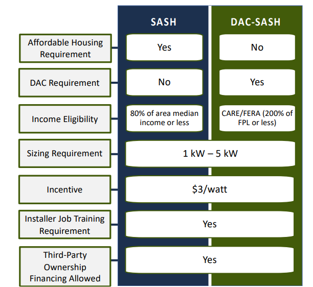
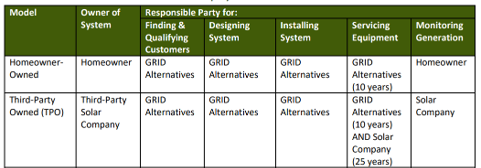
Figure 3.2.2.2 – DAC-SASH vs. SASH Programs & Implementation Models for DAC-SASH (from 2023 Evergreen Economics DAC-SASH Evaluation Study77).
At this point, with a few homeowners moving through the pipeline, the BAAEC retrofit process began to take on a more definite form. After initial conversations with outreach staff, eligible homeowners interested in the project would be screened (Chapter 2), and those with incomes and household occupancies below DAC-SASH (CARE/FERA) thresholds would be referred to Grid Alternatives, who would move each of the Advanced Homes participants through the DAC-SASH installation process. Following Day One’s initial screening, participants would be referred to Grid Alternatives, who would schedule an initial site inspection with the homeowner. During these visits, Grid employees would visually inspect the residents’ homes and collect information about the building from the homeowner (vintage of the building and the history of its construction). If homes and homeowners passed these initial screening procedures, Grid Alternatives would “pull permits” from municipal building inspection offices and proceed with the design and installation of the rooftop solar array. This process, corresponding to the second step in Grid’s portion of the process flow shown above, consisted of several sub-tasks, including the design and engineering of the rooftop solar system, the preparation of an application for DAC-SASH funding, as well as communication with SCE’s interconnection offices and local building code enforcement agencies. Under the DAC-SASH program, once the install process was completed, homeowners would be referred to the battery installer, who would plan, permit, and schedule the installation of the battery system with the help of a private contractor. However, in the absence of a subcontract with the battery installer and a model for financing the installation and operation of the Advanced Homes batteries, there were, as of Q1 2022, few specifics about how the battery installation process would proceed.
By Q1 of 2022, Grid Alternatives and TEC had dedicated additional staff to the Advanced Homes solar installation process, and these staff members met weekly to discuss outreach strategies and assign responsibility for administrative and communicative forms of work required (collecting information, representing information digitally, maintaining channels and clarity of communication, etc.). To this end, TEC and Day One also created the first in a series of cloud-based spreadsheets for collecting and tracking contacts with residents, as well as a Customer Relationship Management (CRM) database for storing lead and outreach data. Grid Alternatives and Day One also began constructing eligibility maps of the BAAEC project area based on geospatial layers maintained by UCLA CCSC and “a wide array of consumer data” collected by third-party data aggregator Faraday. Faraday’s identification data, licensed by Grid Alternatives, provided a list of potentially eligible homeowners in the project area. This information, displayed spatially, could be used to “target” in-person outreach and enrollment activities geographically (see Chapter 2 for maps and further details). Communication between the homeowners and the various project partners would intersect with TEC and Day One, who would be responsible for reviewing the progress of each Advanced Home retrofit and managing the process of scheduling contractor visits, inspections, and construction with homeowners.
3.3.3 – Q2 2022 – Q4 2022: Courting Partnership with Swell Energy, Sluggish Enrollment, More DAC-SASH Retrofits Completed, Grants Awards for Heat-Pump Water Heaters and Induction Stoves, Grid halts Work over Swell’s Participation, Swell Joins Advanced Homes.
Even as LA County continued to ease social distancing restrictions, Day One struggled to cultivate interest among area homeowners. By Q2 2022, only ~5 “leads” (eligible and interested homeowners in the original project area) had emerged from hundreds of individual contacts. The small number of initial leads were moving through the DAC-SASH installation portion of the Advanced Homes process flow. In-person opportunities for outreach were still limited at this time, and the events that did occur generated many contacts and conversations among homeowners who, when recontacted later to confirm their interest and enroll them in the program, often became unresponsive, refused participation, or were deemed ineligible because of geographic and programmatic constraints (see Chapter 2). Few, at this point, were willing to commit to a free comprehensive decarbonization retrofit. At this time, Day One representatives said they were still “in the process of re-introducing themselves” to residents and local groups (i.e. members of the Community Advisory Committee and others) (Interview with Day One Staff, 2022).
While trouble with finding and enrolling project area homeowners remained the biggest challenge for the project, by Q1-Q2 of 2022 it seemed that Advanced Homes would soon be able to “onboard” a private battery partner. Soon after Sonnen’s departure from the project in 2021, the Grid Project Lead assigned to BAAEC introduced TEC staff to representatives from Swell Energy, a private battery installer and VPP operator.78 In interviews, the Project Lead explained that Grid Alternatives was supportive of TEC’s desire to “figure out” how to bring “equity into the battery and VPP space” as part of the wider buildout of distributed renewable energy infrastructure. Grid Alternatives, he explained, had partnered with Swell on battery storage projects in San Diego County in the recent past, and suggested partnership to TEC as a way to move the Advanced Homes forward. The Project Lead from Grid, seeing the relationship with Sonnen wither, took it upon himself to introduce TEC to Swell and initiate a conversation about partnership. Grid’s BAAEC Project Lead explained that Swell’s preferred battery model (at that time, the Tesla Powerwall 2) was broadly compatible with the solar and electrical components the nonprofit used for DAC-SASH retrofits, that the Tesla batteries were outdoor rated (a significant advantage over Sonnen’s Core battery system), and that Swell Energy, unlike Sonnen, had developed its own Distributed Energy Resource Management (DERMS) software, meaning that it would be able to charge and discharge its batteries in markets for electrical power and Grid services. Initial meetings between TEC and representatives from Swell Energy, brokered by Grid’s Advanced Homes Project Lead, led to an alignment between the TEC, Grid, and Swell Energy, but as of the beginning of Q3 2022, Swell had not asked for a scope of work or agreed to sign a subcontract.
The core partners of Advanced Homes continued to outreach and publicize the project in Bassett and Avocado Heights. TEC, Day One, and Grid Alternatives continued to struggle with the task of identifying homeowners in the project area who were both potentially eligible and interested. By this time, TEC and Day One, having spent the better part of a year pursuing participants, were now able to say why it was so difficult to give away free home decarbonization retrofits to low-income homeowners.
Low-income retrofits came at a premium, and many homeowners knew this. Many homeowners were suspicious of the free nature of BAAEC’s offerings and were convinced that the costs of each retrofit (~50k per home) would somehow be passed on to them. One Advanced Homes participant compared the project to LA County’s Property-Assessed Clean Energy program, a failed low-income decarbonization initiative that left many participants with home improvement loans for energy retrofits. Some participants mentioned how the installation of home retrofits by contractors did not function as advertised and stated that they had many questions and concerns about how these new devices would work to benefit them. Several homeowners also mentioned how they appreciated the willingness of Day One and TEC staff to speak honestly and knowledgeably about the financial mechanics of the retrofits and the higher purposes of its interventions, as well as their willingness to speak with homeowners about their concerns and schedule (i.e. the advancement of a “just transition”). The continued presence of Day One at public events in Bassett and Avocado Heights and honesty about the source and purpose of Advanced Homes helped, according to outreach staff members, to chip away at the mistrust between project partners and area homeowners.
Meanwhile, homes themselves were presenting problems. Confirming Grid’s initial assessment that approximately 70-80% of low-income homeowners would need new roofs, many of the people screened for Advanced Homes were disqualified because their roofs could not safely support the weight of a solar array. Home inspections conducted by Grid for BAAEC revealed just how difficult it would be to reach the implementation goal of 50 homes by 2025 without additional funding to repair or replace structurally deficient roofs. To address this problem, TEC, encouraged by Day One and Grid Alternatives, requested a scope change and a budget amendment from the CEC. To counter the problems with DAC-SASH’s eligibility requirements, TEC would ask the CEC to enlarge the project area to include neighboring census tracts, and to allow TEC to reallocate grant funds for roofers.
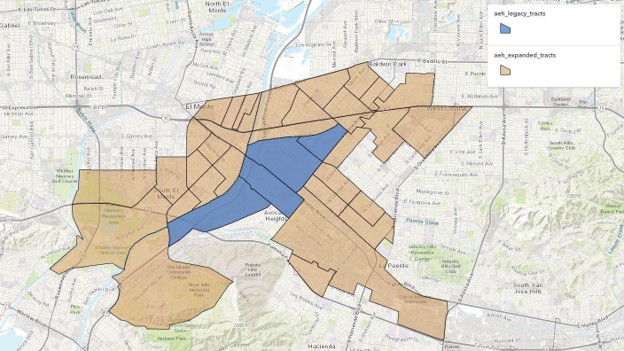
Figure 3.2.3.1 – Advanced Homes Project Area Expansion, Q3 2022.
Expansion of the project area also allowed Day One and Grid to follow up with homeowners living near but outside the original project area (growing the pool of potentially eligible homeowners). A larger project area also made it easier for both organizations to plan direct mailing campaigns administered by Day One (advertising BAAEC) and Grid Alternatives (through existing relationships with Southern California Edison, for DAC-SASH) to reach potentially eligible homeowners.
By June of 2022, TEC had begun a request to amend Advanced Homes’ budget with the CEC, reallocating $150k of grant funds for professional roofing services (TEC-Grid Check-In Meeting, Jun 2022). Grid Alternatives also provided two options for roofers, both of which had contracted with Grid Alternatives during past DAC-SASH projects. In Q3 of 2022, this request was approved by the CEC, prompting Day One and Grid Alternatives to recontact interested homeowners who were disqualified because of the quality of their roofs, and to try to recruit new leads in census tracts that had been added to the project area. Eventually TEC and Grid decided to contract with Hercules Roofing, a private contractor based in Huntington Beach. Grid staff would be responsible for monitoring the progress of each roof repair, paying Hercules for their work, and returning homeowners to the DAC-SASH queue once repairs or re-roofs were completed.
Between Q3-Q4 2022, Advanced Homes also expanded its offerings to include two free electric appliances to complement its solar-storage systems. In addition to solar and storage, each participant could also now choose to install a free heat-pump water heater and/or induction stove as part of the Advanced Homes retrofit package. In late 2021, TEC had submitted proposals for two additional residential decarbonization grants offered by the Los Angeles Clean Tech Incubator (LACI) and the CPUC’s TECH Quick Start Grant Program to offer electrification measures as a part of Advanced Homes. TEC was awarded both grants, and by Q3 2022, Day One, TEC, and third-party contractors were now offering these amenities to the 6-8 leads in the BAAEC “pipeline”, as well as advertising these offerings at appearances at public events and in-person meetings with residents. LACI’s Single Family Home Cookstove Retrofit Pilot provided $240,000 for the installation of 20 220V induction stoves, along with the removal of old stoves, the capping of gas lines, and TEC’s reporting on the process. The CPUC’s Quick Start Grant was similar, providing $183,000 for the installation of heat-pump water heaters and 100 free water heater “tune-ups” to be given out to area residents. The funding these grants provided would pay for the devices and their installation, and helped Day One and TEC to have additional conversations with project area homeowners about the environmental and public health benefits of residential decarbonization.
The summer of 2022 saw the Advanced Homes project re-grouping and expanding, but the addition of re-roofing, electrical professional services, and electrical appliances also complicated the sequencing of the overall retrofit process. Homeowners now could expect to be visited by Grid Alternatives, contractors installing electrification measures, and the municipal inspectors who had to permit the repair of roofs and the installation of solar arrays. To manage the complexity of Advanced Homes, the core partners met weekly to discuss finding new participants, advancing the ones they had, and planning the “warm hand-off” to Swell Energy, who was expected to sign a subcontract agreement with TEC in the coming months. In anticipation of partnership with Swell Energy, TEC and Grid discussed how the up-front cost of battery installations under SGIP could be financed through a bridge loan from a third party, the Golden State Finance Authority.79 Most of the time, however, immediate concerns kept them busy during check-in meetings. By August of 2022 Grid’s recommended roofer had been approved by the CEC, and the project began to revisit homeowners with offers to pay for roof remediation. During this time, it also became clear that low-income homeowners often needed main service panel upgrades to safely accommodate solar and storage into home electrical systems. TEC favored the installation of a smart panel offered by SPAN, which would capture “circuit level” consumption and production data, and possibly enable Swell Energy to remotely access the Advanced Homes’ Tesla batteries. Grid was opposed to the use of the more expensive smart panel, arguing that they increased the cost of contract labor and were unnecessary because Swell could already connect independently to the Advanced Homes batteries.80 Using CRM database software, cloud-based spreadsheets, digital documents, and GIS software, the core partners also devoted time during their meetings to reviewing each lead in the BAAEC install pipeline and orchestrating communication between the homeowners, project staff, and external contractors.
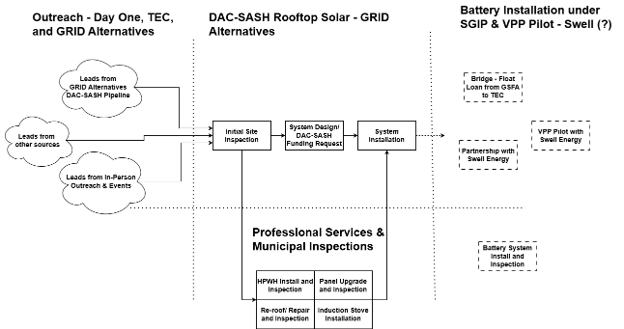
Figure 3.2.3.2 – Draft Advanced Homes Process Flow cr. Q3-Q4 2022
Staff from TEC, nervous about the timeline of the project, asked Grid staff to push Swell Energy towards signing an agreement. TEC periodically attempted to engage Swell Energy during the fall and winter of 2022, and representatives from Swell Energy remained “interested” but formally uncommitted to Advanced Homes. From Q2-Q4 2024, TEC and Grid would periodically attempt to make digital contact with representatives (a vice president), but often found that their attempts, in most instances, went unreciprocated. During a 2022 Q4 check-in call, TEC explained that the organization had given Swell an end of the year ultimatum; if they did not sign a contract by December 31st, the project would look elsewhere for battery partnership or consider the idea of using grant funds to equip completed DAC-SASH projects with home battery systems. Previously, Grid had promised to help drive enrollment by referring people it had identified as DAC-SASH eligible to the Advanced Homes project. The nonprofit had agreed to direct its outreach coordinators (employees who managed relationships with homeowners and community groups) to offer participation in Advanced Homes as an additional option for DAC-SASH customers interested in further clean energy retrofits. However, Grid Alternatives was not willing to have its outreach coordinators talk about Advanced Homes or the benefits of its interventions until Swell was under contract to hedge against Swell’s failure to meet the deadline. Grid had also, in light of Swell’s confusing behavior, paused the referral of DAC-SASH leads to Day One and Advanced Homes. The project, in the words of the Grid project manager, was “stuck in a holding pattern” until Swell decided to join (Grid – TEC Check-in Meeting, Dec 2022, see also Chapter 2). Through the last half of 2022, Swell’s behavior caused tensions to rise between the core partners, but staff at all three organizations remained committed to completing the retrofits in process and managing the uncertainty and frustration of the moment with honesty and professionalism. Conversations never broke down along organizational lines or degenerated into recrimination. TEC, Grid, and Day One staff remained committed to completing the retrofits currently in progress and agreed that the no-cost residential decarbonization model they were attempting to build through partnership was a worthwhile endeavor.
3.4 Advanced Homes – Post-Implementation Period (Q4 2022 – Q4 2024)
3.4.1 – Q4 2022 – Q4 2023: Swell Agrees to Partnership, Perl Street helps Structure SGIP Bridge Loan, Problems with NEM Transition, Lead Pipeline Grows, Battery Installs Begin/ First Advanced Home, External and Internal Delays
On December 28th, 2022, TEC and Swell Energy signed subcontract agreements, formally bringing Swell onboard as the battery installer and VPP operator for Advanced Homes. This was a major success for the project; the battery would provide additional savings to homeowners and help carry off the demonstration of Advanced Homes’ intersectoral, low-income retrofit model. Individual homeowners would enjoy greater energy savings with batteries and solar than they would with solar alone. Battery systems could be programmed to respond to the time of use rates, allowing home batteries to align their charging and discharging profiles with Grid conditions and rooftop solar production. Each customer would be transitioned to Southern California Edison’s TOU-D-Prime tariff when the battery installations were completed. Storing solar power during the daylight hours of high insolation and low demand, the battery would dispatch in late afternoon/ early evening to offset the home’s consumption of Grid-supplied energy when it was most expensive, and rooftop generation is waning. Wired into Tesla’s gateway, Swell’s batteries would also provide homeowners with resilience benefits in the form of backup power, automatically backing up home loads when Grid outages were detected. The batteries also enabled TEC and Day One to follow through on promises made to existing leads, some of whom had been waiting for a battery since the summer of 2021 and had grown concerned about lengthy delays. The core nonprofit partners of the project could now answer their questions about the battery offering in good faith and in greater technical detail.
Swell’s partnership was doubly beneficial for TEC. Swell’s last-minute decision on BAAEC partnership meant that Grid would continue referring leads to Advanced Homes and offering the BAAEC participation form to DAC-SASH leads, which was necessary to “unlock” CEC funds for their home retrofits. Grid Alternatives was pleased that Swell had agreed to join Advanced Homes and resumed referring to new leads to the project. Swell’s installation of Tesla’s Powerwall 2 batteries would also make it possible for TEC and Swell to experiment with small-scale, low-income VPP systems consisting of homeowner’s batteries, and for TEC to research how VPP operations could best benefit low-income homeowners.
Outreach tactics for Advanced Homes also shifted early in 2023. From this point forward, Day One would continue to attend some public events but would instead devote most of its in-person efforts to publicizing the optional offerings (stove and water heater). Day One, who had anticipated doing most of the outreach and enrollment work in 2020-21 also had the smallest budget of the three core partners and needed to shift over to the supplementary grants to continue their work. Though Day One and TEC agreed that having staff presence in and near the project area (as well as street-visible signage) helped to create a local awareness of Advanced Homes and trust in the project, in person outreach efforts also did not seem to be yielding the volume of contacts needed to overcome DAC-SASH’s attrition rate. In 2022 and again in 2023, Grid Alternatives and Day One collaborated on a series of mailers to remedy this problem, targeted CARE/FERA qualified customers of Southern California Edison. Several thousand mailers were sent to addresses in zip codes that roughly overlapped the 34 project census tracts. These mailers advertised Advanced Homes, identified the core project partners, the public provenance of the project, and contained contact information for project staff. As related in greater detail in Chapter 2, these rounds of mailers were surprisingly successful at generating new contacts with homeowners, helping to build a pool of potentially eligible leads that could be recontacted and screened for interest and eligibility.81 TEC and Day One also worked with Quality Conservation Services, who had emerged as the preferred professional services contractor for BAAEC, to help them offer Advanced Homes participation to homeowners interested in the optional electrification offerings. TEC and Day One also instructed Water Heater Warehouse employees to offer Advanced Homes participation to homeowners who were receiving free water heater “tune ups” as part of the TECH Quick Start Grant.
As the pool or “pipeline” of leads grew during Q1-Q2 of 2023, the core partners felt a degree of relief and accomplishment; they had managed to pique the interest of many homeowners residing in the project area, they had signed a contract with Swell, and were in a much better position to achieve their goal of 50 home solar-storage retrofits than they were the year before. By February of 2023, Swell had made plans to reserve SGIP Equity funds from Southern California Edison for the Advanced Homes’ batteries. With these pieces in place, the core partners focused their attention on the completion of a “pilot home” (a completed retrofit). The core partners remained in close contact during weekly check-in meetings, monitoring the progress of each lead through the Advanced Homes retrofit process and strategizing about how to sequence each of the steps of an increasingly complex process flow.
The addition of Swell and battery systems to the Advanced Homes was a major success but, because of other concerns, plans for financing the battery installations had not advanced beyond the idea of relying on SGIP Equity funding to cover the costs of the no-cost installation model that the core partners, and now Swell Energy, were building. TEC staff had extensive engineering and project management between them, but only basic knowledge about the process of finding a suitable lender for a “battery bridge loan”, or how to safely structure a terms sheet for a loan from such a lender. Now that Swell had joined the project, it was necessary for TEC to devise a financing mechanism that would see Swell Energy made whole immediately after installation (within 30 days) and allow TEC to carry the debt until SGIP incentive payments were received from the CPUC.
The Golden State Financing Authority had been previously mentioned as a lender known to Swell Energy and Grid Alternatives, but by Q1 of 2023 the conversation had changed thanks to the increasingly important role of Perl Street.82 Late in 2022, anticipating that TEC would need to cover “the float” (the period between the beginning and completion of install) for no-cost battery installations, staff at TEC reached out to Perl Street to get expert advice on how to approach structuring such an agreement.83 TEC and Swell knew that the SGIP process, under ideal conditions, could take between several months to one year from start to finish. Installing, documenting, and completing the SGIP In weekly meetings, TEC and Perl Street representatives discussed the financial model in detail, what kind of legal review any agreement would require, and what TEC would need from Swell Energy to claim the incentive payments and assure completion of the installations (TEC-Pearl Street Meeting, Feb 2023).
TEC and Pearl Street agreed that the structure of the CPUC’s Self Generation Incentive Program was not designed for low-income homeowners. Though it was helpful that the CPUC’s SGIP Equity funding program, offered through the state’s investor-owned utilities, provided a higher dollar per kWh incentive for installed battery capacity, the problem with the SGIP program’s design was the fact that system owners had to show proof of project completion and wait through a “Performance Based Incentive Period” before they could receive their incentive payments from the pool of program funding “reserved” by each utility. DAC utility customers could not afford to pay Swell Energy upfront or wait to be reimbursed by the state.
Table 3.4.1.1 - Homeowner Eligibility Criteria, Incentive, and Budget for Self-Generation Incentive Program - Equity Category 84, 85
| Eligible Customers | Single-family homeowners w/ resale restrictions, single-family homeowners having participated in, or reserved funds for DAC-SASH, single family homeowners in California Indian Country |
|---|---|
| Incentive | $850/kWh for installation of the approved battery storage system ($100-300/ kWh for non-DAC applicants). |
| Geographic Constraints | Qualified homeowners in Investor-Owned Utility Territories (SCE, PG\&E, SDG\&E) & SB 535 Disadvantaged Communities Census Tracts (2018). |
| Program Budget | $1 billion to 2024 (allocated amongst California IOUs by CPUC) – 15% of funding reserved for residential projects. |
“Capturing” SGIP Equity funding was essential for battery installs “to pencil”. The results of financial models developed by TEC and Perl Street indicated that it would be financially feasible for TEC to act as “the bank” for the purposes of capturing the SGIP Incentive. In addition to financial advice, Perl Street also helped introduce representatives from TEC to potentially suitable lenders. TEC had to find a lender willing to trust the nonprofit and run the risk that Advanced Homes would fail to meet its implementation goals. It was a measured risk that would allow Advanced Homes to complete a long-awaited pilot and a way to ensure that participants who wanted batteries would get them. Moreover, recent decisions by the CPUC changing the way that customers were credited for electricity they sent back to the Grid promised to reduce the value of solar-only systems for all new ones installed after April 2023.
Luckily, TEC and Perl street were able to structure the terms of the battery bridge-loan agreement, and Perl Street introduced TEC to credit lender Urban US Capital.86 The introduction of TEC to Urban US by Perl Street, and the assistance Perl Street provided to TEC in preparing the loan contract helped to generate trust between TEC and the credit lender.87 In summer of 2023, Urban US Capital and TEC executed the loan agreement, allowing TEC to make a series of payments to Swell Energy during the course of battery installation. The financing facility acted as a line of credit and allowed TEC to draw down funds representing an advance of the SGIP incentive. These funds would allow for the work to move forward - TEC would pay Swell for installing the batteries - while the lender would wait to get paid via the SGIP incentive. TEC and Swell Energy agreed to structure payments in three steps: 50% for equipment procurement and installation, 40% when building and fire permits were approved, and the remaining 10% when an Incentive Claim Form had been submitted by Swell Energy to the SGIP Program (to either SoCal Gas or Southern California Edison).
In parallel meetings with Swell Energy, TEC explained the structure of the financing mechanism, and TEC and Swell Energy project managers and outreach coordinators began working out a system for exchanging the information necessary to track the progress of the Advanced Homes leads, schedule work and contact with homeowners, and how TEC’s payment for the work completed by Swell would be structured around the preparation and submittal of SGIP documentation. TEC and representatives from Swells VPP operations staff also had conversations about the possibility of a low-income VPP pilot.
During Q1-Q2 2023, TEC, Grid, and Day One had continued the work of developing leads from different sources and were now deep into the process of deciding how to sequence the installation of each of the retrofit interventions. Some, like induction stoves and HPWHs, were relatively simple to incorporate into electrical system designs prepared by Grid Alternatives. Although Grid worried about stoves and water heaters eating into participant’s bill savings (Grid estimates ~50% electricity bill reduction), Grid’s design engineers included them in the load calculations for home service panel upgrades. TEC was also worried that they would be unable to capture disaggregated household load data for other portions of the BAAEC project (Chapter 7) and asked Grid whether they would be able to collect solar generation data from the smart inverters they included in the Advanced Homes’ arrays. Grid responded that it was, in theory, possible to do this, but that it did not retain the data in-house, and that it used inverters from two different companies (with two different databases). Getting this information would require TEC to go back to each homeowner, ask them for their mobile application login credentials, which would allow TEC to download historical performance data for the solar arrays. Unable to change how Grid operated, and unwilling to ask the homeowners for more of their time and attention, TEC and UCLA CCSC refocused their efforts on acquiring Advanced Homes system telemetry data from the home’s batteries through Swell Energy. Despite the presence of many challenges and the looming NEM 3.0 deadline, the core partners were relatively confident that the project could retrofit at least 30 homes with solar and storage, but were resigned to the fact that some of the participating homeowners would be interconnected under the new net metering tariff, eating into the savings they could expect from behind-the-meter solar and storage.
Their enthusiasm was also driven by another major project success; the installation of the first set of Tesla Powerwall batteries in one of the participants’ homes in April of 2023. This was the first completed retrofit and was tangible proof that the process developed by the core partners could be “scaled up” to serve more homeowners, or potentially “copy and pasted” to other grant offerings and programs (Meeting with TEC, Day One, and Grid Alternatives Staff, April 2023).88 Figure 3.3.1.2 shows the monetary flows between the entities involved in Advanced Homes as of Q2 2023:
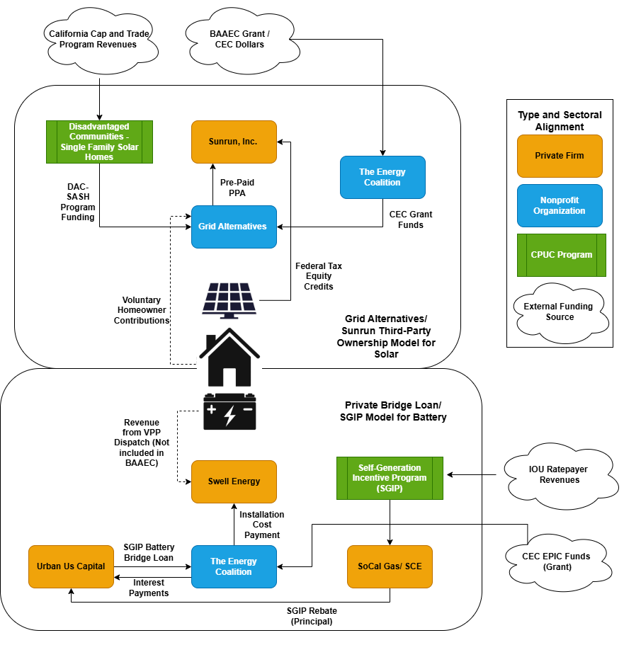
Figure 3.4.1.2 – BAAEC Advanced Homes Implementation Model
The completion of the first home was a major milestone, but it was also supposed to be the first of the anticipated 50. With a stable group of leads moving through the stages of professional services retrofits, the core partners would have to prioritize completing solar and storage retrofits in progress while also allowing in new customers. Enrolling additional homeowners, while still technically possible, would become from this point forward a secondary consideration for the core partners due to the demands placed on them by the leads currently moving through the retrofit queues. During April of 2023, the core partners turned their attention to the additional leads that had just passed the initial income and home condition screens, others that needed roof repairs, and leads that were in the various steps of construction. This was a complicated process, mediated through a series of phone calls, emails, and in-person interactions between project and external actors. TEC’s attempt to make it more efficient revealed some of the limits of the core partners’ power to control the course and pace of each retrofit.
The core partners now agreed that making significant alterations to low-income, existing single-family homes and electrical infrastructure was a very complicated proposition, and that there were many factors beyond the project’s control. Delays often occurred at key permitting stages. Installing solar and storage systems (and electrification measures) required formal interaction with municipal and infrastructural entities who had to permit their addition to the Grid and buildings. Wait times for inspections could fluctuate, and the requirements of building and fire inspection offices could (and did) change.89 With third-party contractors, their incentives for participation in the project were primarily financial – without the promise of steady work, they would shift their attention elsewhere. Homeowners could also be difficult to reach. Each had their own preferred styles of communication, and events in their lives affected their availability over the course of Advanced Homes (Interview w/ TEC Outreach Staff, Mar 2024). Getting everyone to coordinate required aligning many different actors around the installation of project offerings, and this process, to be effective, had to honor the prerogatives and “capacities” of each, and this took time and effort.
The core partners also agreed that they faced several program design challenges as well. Grid had an existing institutional model for solar installations in California under DAC-SASH, but the public, no-cost nature of the program limited its potential for expansion. For Advanced Homes, TEC and Day One relied on Grid Alternatives third-party ownership model, developed in cooperation with private residential solar installer Sunrun. The Grid TPO model, shown in Figure 3.3.1.3 made no financial demands of DAC-SASH recipients, but transferred system ownership, and thus tax equity benefits, to Sunrun. In exchange, Sunrun agreed to maintain solar arrays for TPO-enrolled homeowners for the period of the contract (20 years).90 With respect to the long-term sustainability and scalability of this model, E3’s report concluded that:
“Grid offers systems at no cost to customers, combining DAC-SASH program funds with external funding that they obtain by tapping additional resources. It is challenging to assess the appropriateness of the current program incentive level without a full picture of project costs, such as how much staff time is dedicated to fundraising activities. Additionally, with rising costs of materials and labor, total project costs are likely to increase such that the gap between the incentive and the actual cost of the project may be more challenging to overcome in the future. If the CPUC’s goal is to grow the program by increasing the number of installations, Grid may not be able to scale up its fundraising efforts to meet growth targets if the incentive level is kept at the current level.”91
The free nature of the offering, in the eyes of Evergreen Economics’ analysts, threatened the survival of the organization, and limited its potential to scale its offerings independently (i.e., without additional public, private, or philanthropic fundraising). TEC, concerned very much about scalability, largely agreed with this assessment as a result of their experience with implementing Advanced Homes, and their review of the report led them to reexamine the question of whether a universal no-cost model for low-income communities was the best or only way to approach retrofits. Though TEC believed that offering retrofits at no cost was the best and most ethically sound way of proceeding with their pilot project, it was also apparent to TEC that models including low or sliding-scale homeowner cost sharing might be more attractive to private sector investors, and, barring any expansion of state funding for direct installs, more scalable. However, TEC’s research and experience to this point had shown them that there would always be a certain proportion of homeowners who could not share any portion of the capital cost of retrofits. For this population, even a small monthly increase in energy costs could be destabilizing or cause them to forgo other necessities to avoid the consequences of nonpayment. TEC staff had questioned whether a set of contracting and financing models differentiated according to households’ ability to pay for their retrofits might be more sustainable or scalable in the long-term. But, given the time remaining for Advanced Homes and the structure of Grid’s TPO model, it was not possible for the partners to develop new models involving financial contributions for the homeowners from scratch at this point in the project. The exploration of other models involving low or sliding-scale homeowner cost sharing would have to wait for another project.
Parallel meetings between TEC and Swell Energy concerned how to include the company in the existing project implementation workflow (Figure 3.3.1.4). To design, permit, and install the batteries, Swell Energy needed to interact with each of the core partners and the homeowners at different stages of the install. A breakdown in communication could lead to delays or botched installation. As with the DAC-SASH installation process, communication with the homeowners and other subcontractors would be routed through TEC for the purposes of project administration and data collection. Swell Energy agreed to follow TEC’s direction and dedicated staff to Advanced Homes. In check-in meetings in Q3 of 2023, TEC and Swell staff discussed how to prepare and exchange the documents needed for SGIP incentive payments as part of the “battery bridge loan” from Urban US Capital. From Swell, TEC also learned more about the hardware each homeowner would be getting: one or two 13.5 kWh Tesla Powerwall(s) and a digital control gateway. This gateway, also manufactured by Tesla, was home to a computer that controlled the battery hardware, and allowed Swell to remotely operate the battery and collect telemetry data (including solar generation, battery charge state, and home load on a 15-minute basis). This was a major success for Advanced Homes, since this data would make possible an accurate ex post evaluation of customer bill savings and GHG emissions impacts.
Each Advanced Home battery system would be designed by Swell according to historical household load data collected by Grid and TEC. Grid’s single-line diagrams for home service panels and rooftop solar systems, permit applications, and photographs of each job would be transferred to Swell by TEC, obviating the need for another round of home inspections. Swell’s batteries would be mounted to each home in compliance with municipal electrical and fire code, and Swell would handle scheduling and payment with Quality Conservation Services (QCS) for physical installation. Quality Conservation Services, who performed the pilot home installation, would install the batteries, and connect the systems to main service panels (in some instances, these panels had also been installed by QCS). By the end of Q2 2023, Swell Energy was attending regular zoom meetings and had met Grid Alternatives and Day One staff virtually.
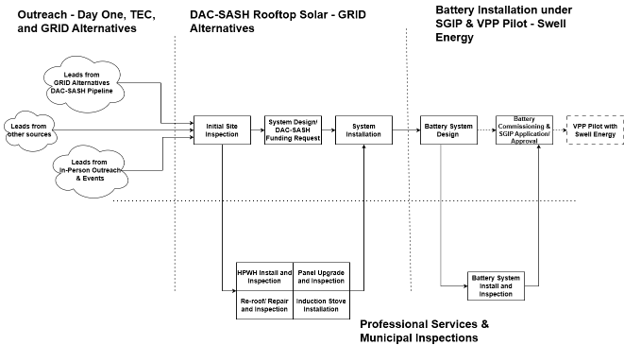
Figure 3.4.1.3 – Advanced Homes Process Flow, cr. Q2 2023
By the summer of 2023, the challenges and delays with the project had set back progress considerably, forcing the revision of the Advanced Homes’ implementation goal (~30 retrofits, rather than 50). In conversations between UCLA CCSC and TEC, TEC estimated that 30 was a more reasonable implementation target, given the limitations of DAC-SASH, the delays caused by the shift back to “normal” after the pandemic, and other factors that were beyond the core partner’s control. Due to the changeover between NEM 2.0 and 3.0, necessary meter spot checks and NEM application processing were taking longer than usual as well. The partners agreed that the flood of applications around the changeover date was potentially to blame for these delays in getting the necessary documentation for each solar install from Southern California Edison. Re-roofing, necessary for nearly all the participating homeowners, also severely limited the pace at which retrofit work could proceed. By July of 2023, TEC made $128K available for roof repairs to help accelerate the process of re-roofing, but keeping roofers engaged with the project meant giving them steady work, and not sending them out on inspections that turn up only minor repairs. Here, TEC and Hercules saw their interests diverge. TEC now had money on hand to begin re-roofs, but wished to stretch the funding as far as it would go, preferring to take on homeowners needing relatively minor roof repairs. To make sure that as many residents as possible could participate, TEC asked Grid Alternatives to ask Hercules to do batched inspections (several at one time) and identify the homes that needed only minor repairs. Grid declined to make this argument to Hercules. Grid explained that this ran counter to most contractor’s manner of doing business. To survive, contractors needed to prioritize trusted, regular clients, and were not willing to divert crews to do roof inspections on behalf of Advanced Homes unless they could be sure that a significant fraction of these inspections would involve further contracts for roof repair. They preferred to discover big jobs, rather than little ones, and would not be willing to do a bunch of inspections so that TEC could stretch its dollar. In other words, TEC’s desire to prioritize homes needing the cheapest and least-invasive roof repairs was at odds with Hercules’s need for a steady stream of contracts; it would be nearly impossible to ask them to prioritize Advanced Homes roof inspections and retrofits unless TEC was willing to pay them a premium from delaying work in progress or diverting resources (mostly labor time) to the project. TEC could not force them to take on the opportunity cost involved in helping Advanced homes advance. TEC and Grid discussed the possibility of bringing on a second roofer periodically during this time, but the effort involved in getting a competitive quote and CEC approval of another roofer seemed to be more trouble than trying to work through the leads in the re-roof pipeline with the approved contractor (Hercules).
Over the summer of 2023, Grid also had trouble reporting the kinds of project cost statistics that TEC needed for its invoicing with the CEC, since they did not account for DAC-SASH program costs on a per project basis, and were not going to begin calculating project-cost estimates for Advanced Homes. TEC, however, needed this information for its grant reporting and invoicing, and Grid had to send off to their headquarters in Oakland for a letter to the CEC offering project cost estimates for BAAEC, and a justification for these costs. Representatives from Grid defended their organization-level accounting practices, but made internal changes to track Advanced Homes installs more closely. Grid staff, however, did not see the purpose in devoting much staff time to documentation, arguing that “all of this internal work will go down the drain if professional services quotes come back higher than expected”, resulting in Grid dropping the project (Grid-TEC Check-in, Q2 2023). Grid, on behalf of Hercules, also emphasized the fact that once re-roofs began, there was no way of really knowing how much the job would eventually cost, since it was only after “opening the roof” did it really become clear how expensive the job would be. In the meantime, TEC worried about meeting project deadlines, and did what it could to help facilitate the exchange of information and tracking of project progress. Having completed 8 solar installations and the pilot home up to this point, the core partners came to further appreciate the difficulty of providing no-cost, low-income retrofits that satisfied the requirements of participants and contractors.
In June of 2023, Swell Energy began a series of meetings with TEC to review the leads that were ready to be “transferred” for battery installs, and to organize the exchange documentation and the tracking of each battery install. Luckily, this process was simplified by the fact that Swell Energy could rely on Grid Alternative’s documentation, obviating the need for an additional home inspection. To engage Swell, TEC and Grid would transfer electrical plans, address and contact information, photographs, historical consumption, and load calculation data produced by the core partners to the company, who would then add the Advanced Homes installs to Swell’s existing design, engineering, and construction queue. Based on this information, Swell Energy would design a battery system for the home, procure the necessary hardware, and then contract with Quality Conservation Services for installation (Swell – TEC Check-in Meetings, Q2-Q3 2023). During early meetings TEC also discussed with Swell Energy the system of payment “milestones” it had worked out with Perl Street. Swell Energy and TEC also attended to the particulars of transferring documentation between the actors involved in battery installs, and how money would move between the lender, TEC, Swell Energy, and the project’s approved third-party contractors. Swell Energy staff, led by a project manager and supported by outreach coordinators, worked to set up Salesforce integration with TEC, and agreed to a schedule of regular meetings with TEC outreach staff about leads that were ready to receive batteries, and “to work through case by case challenges” with the core project partners (Interview w/ TEC Project Manager, August 2023). By August of 2023, TEC and Grid Alternatives had referred 9 leads with completed DAC-SASH retrofits and/or electrification measures (HPWH, induction stove) to Swell Energy for battery installation. Figure 3.3.1.5 shows the sequencing of Swell’s battery installation process:
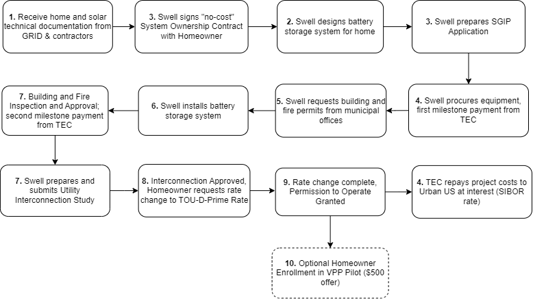
Figure 3.3.1.4 – Process Flow for Swell Battery Installation w/ Battery Bridge Loan from Urban US Capital.
TEC and Grid’s preparatory work and assembly of energy use and structural data for each home greatly simplified the process of battery install. Grid had collected the necessary records for Swell to begin at the engineering design stage of implementation (rather than the outreach stage of project development). Swell was also able to rely on site photos and single-line diagrams collected by Grid to design homeowner’s battery systems, obviating the need for another round of home inspections.
While Swell’s engagements with each participant home were simpler than Grid, TEC had to rely on Swell to provide the documentation needed for the SGIP Equity incentive, and at first this process was slow and unwieldy. Considerable effort went into developing a protocol for collecting and transferring information between TEC and Swell, necessitating the creation of a shared spreadsheet to track the progress of each lead. There were also delays in setting up payments between the lender, Swell Energy, and TEC. As the borrower, TEC was also at risk if Swell Energy did not complete their work under the scope of the project, a risk that TEC and Perl Street had tried to minimize in crafting the language of the loan’s terms sheet and selecting an appropriate lender. Despite the care that TEC and Pearl Street had taken in creating a financial apparatus that would “fail gracefully” if anything happened, TEC still bore some risk if Swell failed to complete their scope of work. TEC also spent many hours attempting to extract a promise from Swell to provide battery telemetry data for project measurement & verification purposes. After some initial back and forth, Swell VPP staff eventually confirmed that it could collect the necessary telemetry data (solar generation, home consumption, and discharge schedule) for Advanced Homes’ quantitative performance evaluation. By and large, Swell staff did their best to understand the peculiarities of Advanced Homes and complete their scope of work under the grant as quickly as possible, in recognition of the fact that TEC was engineering a financial solution to the up-front cost barrier imposed by SGIP. During check-in meetings, Swell employees, especially the Advanced Homes project manager, praised “the work” of Advanced Homes as worthy and pragmatic. Swell’s project managers said that getting low-income customers access to solar and storage was a worthwhile pursuit, and that Swell Energy was, as a firm, “dedicated” to helping everyone benefit from battery storage technology. By August of 2023, the pilot home had received permission to operate, and Swell was working through the “case by case challenges” in weekly check-in calls. These included getting hold of the participants, collecting documentation, and interacting with utility and municipal inspection offices. By Q3 of 2023 Swell received 9 leads for Advanced Homes batteries and had completed 3 installs. TEC anticipated more “lead transfers” and “warm hand-offs” to Swell Energy once the battery install process had begun moving faster.
On the other side of the process flow, Grid and TEC were considering when to stop signing new roofing contracts. At this point, the project had been delayed considerably, and there would soon come a moment when it was no longer possible to take on new roofing contracts. It had taken almost three years to get a cohort of 34 disadvantaged homes to the point of solar installation, and with about two years left, the core partners had to be realistic about how much time and effort should be spent starting new retrofits from scratch. This decision was controversial, since it meant ending certain kinds of outreach activities (notably referrals to existing Grid homeowners), and considering the Advanced Homes “closed” to new contacts who needed roof retrofits. The core partners had to be careful about how they would use the remaining grant time to retrofit at many homes as possible. Circumstances beyond the project’s control were also making implementation more difficult; wood, electrical equipment, and labor were all more expensive now than they had been at the beginning of the project, Edison was slow processing interconnection and spot check requests, and municipal and County fire and building inspectors took time to complete their work, often more time than the core partners wished (Grid-BAAEC Check-In, Aug 2023). The handoff between Grid Alternatives and Swell Energy was also a sensitive and time-consuming procedure. Day One, Grid, and TEC staff needed to make sure homeowners knew what was coming next, and that clear lines of communication between Swell and the homeowner were established. Since communication involved so many different project partners, “homeowners” (individual residents, couples, or home-owning parents and their adult children) were liable to get lost during “lead transfer”. Many older participants did not correspond with the project directly, and Swell had to make sure not to try to re-establish contact with homeowners directly in instances where communication was facilitated through a third person. In Advanced Homes’s case, many of these third persons were spouses or adult children, who bore responsibility for day-to-day communication with the project partners. Furthermore, each of these people were different, and keeping in contact with them required maintaining their interest and trust. As Day One and TEC outreach staff explained in interviews, homeowners also had preferences for specific kinds of communication (email, telephone, postal), many required or preferred written and verbal communication in Spanish. Swell needed the personal relationships TEC had forged with homeowners for them to sign contracts, configure their systems, and request the retail rate change required for the batteries’ permission to operate connected to the Grid.
Swell would also need to coordinate with Grid on the application for interconnection because of the unique, public-private model of solar, then storage. Grid mentioned how parallel applications for interconnection of rooftop arrays and batteries for the same address might prompt Southern California Edison to reject both applications and demand a single interconnection application be prepared for Advanced Homes’ solar-storage systems. Staggering the solar and battery installation requests was therefore necessary. Swell needed to wait until the municipal/ county solar permit was approved and the solar interconnection permit was submitted to begin the process of applying for municipal and fire permits and a battery interconnection application. To make matters more difficult, LA County had recently updated its fire code requirements for home batteries. These changes translated into delays, as both inspectors and contractors tried to adjust to the new code. During their Q2-Q3 TEC, Grid, and Day One weighed the pros and cons of ending enrollment, eventually deciding that any new leads would be processed through a new iteration of Advanced Homes.
Meanwhile, Swell and TEC were working to complete battery and electrification installations, but it was proving difficult to involve homeowners in the installation and permitting process in a timely manner. Both Swell and TEC (who had, by this time, hired a Day One employee to assist as an outreach coordinator for Advanced Homes) need to have homeowners sign contracts, help schedule installations and inspections, and, near the end of the process flow, request a rate change to Edison’s TOU-D-Prime rate. Swell’s battery firmware would be programmed around this rate, which would help participating homeowners avoid buying Grid-supplied power in the evening, when it was most expensive. Evidence of permission to operate was also necessary for TEC to eventually collect SGIP incentive payments and pay back Urban US Capital for the battery bridge loan. Throughout Q3-Q4 2023, TEC and Swell continued to try to advance the leads they had, and to see each of the projects in the battery install queue to completion as quickly as possible. TEC and Swell began reaching out to homeowners about coming work, rate changes, and the provision of additional information (electrical bills, customer training, Tesla mobile application registration, tech support packets, etc.).
3.4.2 – Q1 2024 – Q3 2024: Completion of DAC-SASH Retrofits, End of Outreach for “Advanced Homes 1.0”, Conversations about BAAEC VPP Pilot, Swell’s Bankruptcy, Haven Energy Steps In.
With the close of 2023, the project shifted again, ending outreach activities for Advanced Homes, and relying on the grants for the stove and HPWH to carry the staff responsible for project outreach forward. There was also little appetite at this time to accept new leads, given the difficulties the core partners and Swell were having completing retrofits. By Q1 2024, several of the 38 leads in one or more stages of development had also dropped off, bringing the total to 34. Though TEC still wanted to bring on more homeowners and reach the implementation target of 50 homes, TEC and Grid both agreed that the priority would be working through the remaining queue, and that any new leads would be “under a different process” than the ones already in progress (Grid-TEC Check-in Meeting, Jan 2024). They also worried about whether Hercules Roofing would be able to complete their work in a timely manner. Roofers could only provide full and precise estimates of cost and labor time once they had, in the words of a Grid install supervisor, “opened” the roof, thereby committing Hercules to completing the job. This made it difficult for the core partners to triage homes needing roof repairs and to control remediation costs. On Swell’s side, hard to reach homeowners and permitting delays had meant that it had taken 9 months for the pilot home to reach permission to operate, and that installs were happening at a pace that would see the cohort of Advanced Homes fully retrofitted in 2025-26. Regardless of these issues, Advanced Homes was indeed working. By early 2024, all the necessary actors had been assembled, and several homes were reaching completion. However, TEC, Grid, and Swell Energy had to find ways of keeping the existing process flow working by coordinating the actions of the actors involved, and stepping outside the process (i.e, visiting homeowners, calling contractors, scheduling ad-hoc meetings with staff) to address day to day challenges.
Outreach for what the core partners began calling “Advanced Homes 1.0” tailed off during the first quarter of 2024, and the core nonprofit partners and Swell Energy concentrated their efforts on the 34 leads that had passed initial screening, had signed a BAAEC participation form (if coming from Grid Alternatives), and remained engaged with outreach staff. From the outset of the project, outreach staff thought it was incumbent upon them to be honest about the time, patience, and the trust that the homeowners needed to place in the project, and not to aggressively upsell homeowners on the benefits of decarbonization, or pressure them to decide immediately (Interview w/ TEC Outreach Coordinator, Mar 2024). By this point, many of the leads had been in contact with the Advanced Homes and Grid outreach staff for more than a year, and outreach coordinators at TEC and Grid came to know the individual participants very well. According to outreach staff from TEC, Day One, and Grid Alternatives, homeowners appreciated having 1-2 points of contact for retrofits that involved a large and shifting set of contractors, and reported that their knowledge of participants’ communication styles, their schedules, and what was happening in their lives outside the project helped them create a participatory experience that was comprehensible, transparent, and did not feel like an obligation or imposition to participants. The trust built between outreach workers and participants during initial conversations about the nature and scope of participation (involving explanations of why the project was happening, what would be required of participants, how retrofits were financed, etc.) helped Advanced Homes to weather the multiple (and separate) set of challenges encountered in the process of assembling the necessary device providers, contract laborers, and private sector partners for implementation. The ongoing maintenance of relationships between participant-homeowners and outreach staff were absolutely vital for the physical portion of each retrofit (Interview w/ TEC Outreach Coordinator, Mar. 2024; Interview w/ Advanced Homes Participant, Aug. 2024).
Maintaining relationships and meeting the expectations set by the outreach staff was also necessary for the project to collect testimonials and other information about the experiences homeowner-participants had with the technologies installed in their homes. As part of grant reporting and publicization of the Advanced Homes, TEC and Day One sought to draw on outreach staff-homeowner relationships to create these materials. TEC also needed these materials for their grant reporting processes with LACI and the CPUC. Interviews, photographs, and text from participant interviews and testimonials were collected with the cooperation of a set of homeowners who agreed to sit down for interviews and release their information to the public. As with other “asks” made of participants, Outreach staff from TEC, Grid and Day One offered exit interviews/ testimonials to participants and did not attempt to pressure them into participating (Interview w/ TEC Outreach Coordinator, Mar. 2024; Interview w/ Advanced Homes Participant, Aug. 2024).
In April of 2024, the Advanced Homes core partners completed the final solar installs of the first version of the scope. In Q1 that year, Grid completed the remaining 9 solar installations after professional services contractors had finished their work repairing roofs, replacing main services panels, and preparing homes for the installation of rooftop arrays. However, with some uncertainty about whether homeowners would drop out, and a steady trickle of new leads coming to Advanced Homes, Grid and TEC continued to meet bi-weekly, managing the relationships between the actors involved in the project and ensuring that each of the existing leads were successfully transferred to Swell Energy.
The remaining 9 of 34 leads were transferred to Swell Energy during Q1-Q2 2024. As Advanced Homes moved from solar and to battery installation, the weekly review of leads and discussions about SGIP payments with Swell grew longer as meetings with Grid Alternatives grew shorter. However, the door to further collaboration on additional Advanced Homes did not fully close. The CEC had allowed TEC to repurpose funds from the Resilience Center (Chapter 5) for additional Advanced Homes retrofits (TEC’s goal was to maximize the benefits of these funds, rather than returning them to the CEC). Any additional leads, TEC cautioned, would have to be completed by the end of 2025, but with the funding from the other scope, it was possible to extend the Advanced Homes offering to other interested and qualified homeowners. Grid was supportive of TEC’s idea for “making lemonade out of lemons”, and using the remaining time and resources allotted under the grant to do things differently. While Grid staff were supportive, they also voiced concern about getting too ambitious, given all pace of the retrofits and the amount of work left to complete.
There were also new problems to solve. During this time, Grid and TEC began fielding complaints from homeowners about disappointing or nonexistent savings. Several participant-homeowners mentioned to project staff that they were not seeing the bill savings they had expected, and one (contacted for the purposes of this report) said that her bill had increased after the installation of solar PV. One participant also reported that they had been contacted by Sunrun for a mandatory inspection of his battery that would cost him $350 (eventually this was resolved without any inspection or payment of a fee). Under the terms of the solar TPO contracts, TEC and Grid had limited capability/ responsibility to solve each of these problems, and had to refer participants to Sunrun for service and repair. Although most of these problems were resolved to participant satisfaction (sometimes with the help of Sunrun), managing the participants even after installations were complete was proving to be more demanding of staff time and resources than had initially been anticipated. This was also becoming increasingly true of Swell’s batteries. Shuttling information back and forth to satisfy the lender’s needs for documentation, SGIP application and reporting requirements, and the requirements of other actors (contractors, inspectors, and Southern California Edison) was demanding, and if contractors were late or indisposed, or if participants did not interact with project staff, weeks could pass without any forward progress. Despite this, SCE and SoCal Gas continued to approve SGIP reservation forms, and Swell continued to make progress on the leads that Grid had given them.
As TEC and Swell’s project management team worked to complete the Advanced Homes retrofits, TEC also began meeting with Swell Energy’s VPP team to discuss the possibility of a BAAEC VPP pilot. In the intervening months, conversations between Swell staff and TEC had resulted in a plan to enroll homeowners in a ‘low-income” virtual power plant pilot that would alter battery programming, discharging them along at different 2 hours windows during demand response period (4-9 PM) of the TOU-D-Prime rate. Advanced Homes’ VPP would be an experiment to determine if the project’s batteries could be aligned with local peak demand, which, according to the Clean Power Alliance, tended to happen later in the TOU window.92 Showing that BAAEC’s batteries could be programmed to respond to “local” (instead of Grid-wide) conditions, TEC thought it was possible to demonstrate the value of battery storage to low-income customers and Grid operators (utilities, CAISO). TEC was also eager to collaborate with Swell on a VPP project because revenues from VPP operation were a promising means of recovering value from decarbonization retrofits. Payments for demand response or resource adequacy might be a way of recovering value faster, potentially returning value to homeowners with solar-storage systems. Thus, VPPs might help to scale or accelerate decarbonization of low-income homes and housing stock (Meeting w/ TEC Staff, December 2023). TEC also wanted to know about the financial impacts of VPP operation on low-income homeowners, and whether and how battery systems could be programmed to balance bill savings, GHG emissions reductions, resilience benefits, and how Swell operated its batteries in markets for power and Grid services.
Representatives from Swell were less enthusiastic about the potential of VPPs to serve all ends at once. In meetings about a possible VPP pilot demonstration, Swell agreed that VPPs were a promising new class of distributed system. The VP that spoke to TEC said that the hardware installed in each home was relatively simple, and that telemetry was limited to “the inverter, the meter, and the home load”. But the VP said that battery telemetry data collected from the project was not going to be suitable for the kind of “econometric” questions that TEC wanted to try to answer. To measure the trade-offs between various operational modes of solar-storage systems and the effects of different optimization objectives, more information and resources than were available would be needed (TEC- Swell VPP Meeting, Jul 2024). The VP also discussed the limits of the company’s hardware, saying it would only be possible to discharge batteries at different times within the 4-9 TOU window, and it would be difficult to collect all the information needed to “back out” the economic impacts of different modes of battery operation for the different stakeholders involved. Demonstrating that the batteries could be tuned to account for local peak load periods was possible, the VP said, but he doubted that it would be possible to say anything about the impact, positive or negative, about such an intervention. In Swell’s estimation, taking control of the batteries and discharging them at different 2-hour periods during the window would likely have no discernable impact on household energy costs, and that a $500 participation incentive would cover more than any cost incurred due to the change in battery programming (TEC-Swell VPP Meeting, Jul 2024). Swell staff also mentioned that VPP systems were poorly understood even by people who were enthusiastic about distributed renewable energy technologies and cautioned that Swell’s previous experience showed that it was often impossible within the control space of the individual battery to optimize the system for 1) maximum savings, 2) avoided GHG emissions, and 3) Grid services simultaneously (TEC-Swell VPP Meeting, Jul 2024).
In Q3 of 2024 Swell and TEC agreed to explore the VPP pilot idea further, and Swell promised to make telemetry data collected from Advanced Homes’ batteries available to the project. The partners were optimistic about timely installation of Swell’s batteries, assisted greatly by the battery bridge loan from Urban US. TEC directed the remaining outreach staff to begin by offering participants a $500 bonus for inclusion in the VPP pilot.
Unfortunately, plans for an Advanced Homes VPP pilot collapsed along with Swell Energy. In July of 2024, the project manager for Advanced Homes at Swell announced in a check-in meeting that the company was going bankrupt, and that the remaining battery installations would have to be completed by another firm. This came as an unpleasant surprise to the core project partners, who had worked long and hard to bring Swell into Advanced Homes. Apologetic, Swell’s project manager undertook to explain the recent history of the company and possible reasons for the bankruptcy, which, he said, was a surprise to him as well. The PM stated that after a successful 2022 series B funding round ($120 million) the company had been hopeful about its future; talk of an IPO or an acquisition target were in the air at the firm. At that time (November 2022) leadership was confident that Swell would be able to raise another couple hundred million through similar asks if need arose. This year, he confided, things changed, mentioning that “investors [were] spooked” (Swell-TEC Check-in, August 2024). He acknowledged that he didn’t have all the details but said that the rapid “wind-down” of Swell’s direct install business was imminent, and that the core BAAEC partners would have to find another contractor to complete the retrofits. He offered assurances that he and his team would transfer all project documentation to the new contractor, and that he had some ideas of who might be a suitable replacement for Swell Energy.
Swell’s bankruptcy was extremely inconvenient for Advanced Homes and for TEC specifically.93 As mentioned earlier in this section, TEC had waited nearly a year for Swell’s answer regarding partnership. In that time, it had built an anchoring partnership with Grid Alternatives, a financial mechanism for bridging SGIP payments, and found external resources to compensate Swell upfront for its work. Swell had reciprocated to a large degree, dedicating staff and resources to Advanced Homes and working through the difficulties that low-income home retrofits entailed. Swell’s project manager continued to work on the project for some time after his announcement that the company was going out of business, promising to provide TEC with all the documentation needed to give the projects to other contractors, and to transfer all of the leads to QCS (now renamed Free Energy) in the SGIP digital registry. TEC welcomed these efforts during the latter part of Q3 2024, and managed, with Swell’s help, to freeze the installation process for the homes in the battery install stage of retrofit. Swell also notified all participants via email that they would no longer be installing Advanced Homes batteries and prompted them to approve of the transfer of the contract to QCS. Throughout the second half of August 2024, as Swell’s VPP business was separated from its direct install operations, Swell’s project manager worked to develop a plan and documentation for the transfer of leads. Swell energy granted QCS access to the SGIP documentation collection platform (managed by the IOUs). This helped solve the problem of who would and could install the batteries with existing SGIP applications, but the loss of Swell’s partnership also posed other problems. The project suddenly needed to find batteries – prompting TEC to contract with Haven Energy, another private battery provider, for enough Tesla Powerwall II batteries to complete the project. By the end of August 2024, contact with representatives from Swell had ceased.
3.4.3 – Q3 2024 – Q2 2025: Advanced Homes 2.0 split from Advanced Homes 1.0, Haven Completes Advanced Homes 1.0 Retrofits, Extension for Advanced Homes 2.0.
On September 13th of 2024, TEC, Grid Alternatives, and Day One held a celebration of the project completion at the Jeff Seymour Family Center in the city of El Monte. Participating homeowners, their families, and staff from the core partners attended the event, along with representatives from other organizations. The occasion was to mark the end of the first iteration of the Advanced Homes scope, to celebrate the accomplishments of the project, and to announce an expanded “Advanced Homes 2.0” program that involved additional amenities to participants. The outreach staff from TEC, who presented Advanced Homes 2.0 also addressed the elephant in the room; Swell had indeed gone out of business, but Haven Energy was taking over their retrofits and would complete them; they had no need to worry. Work would proceed as it had before, and the outreach staff from each organization were going to walk them through the process. The speakers also described the new offerings that would be part of Advanced Homes 2.0, and mentioned that there was a $300 referral bonus for anyone who recruited their friends or neighbors to the project. As outreach staff from TEC explained, the Advanced Homes offering had expanded in version 2.0 to include electric heat-pump space heaters/ coolers, an electric clothes dryer, and, for those interested in the BAAEC Car Share Pilot (Chapter 8), potentially a Level 2 home car charger and EV rental. Advanced Homes 2.0 would offer these amenities as a complete package to new leads, and Advanced Homes 1.0 participants would also be eligible for new amenities (car chargers, electric dryers, HPSCs) (Figure 3.3.3.1). After the presentation, staff, homeowners, and other attendees began to have dinner (provided by a taco cart vendor), converse, and to watch the induction stove demonstration taking place on the electric range installed in the center by BAAEC.
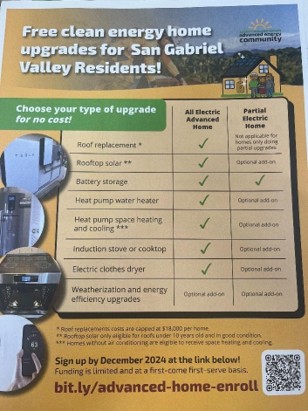
Figure 3.4.3.1 – Bassett Avocado Heights Advanced Energy Community – Advanced Homes 2.0 Flyer (Sept 2024)
Several of the original 34 leads were in the audience, and all of them had been notified, by Q4 2024, of Swell’s bankruptcy. Though some of the participating households present (in addition to others) had complained about the lengthy and complex nature of the Advanced Homes retrofit processes and were concerned about Swell’s exit, none decided to end their participation in the project because of Swell’s bankruptcy. Several 1.0 leads also decided to add some optional features now being offered under Advanced Homes 2.0. The durability and duration of their involvement spoke to the strength and quality of the relationships they had built with the project staff, especially the project outreach team, including members of Day One, Grid Alternatives, and TEC.
The splitting of Advanced Homes 1.0 from 2.0 was motivated by a parallel development in the Resiliency Center Scope (Chapter 5). In Q2 of 2024, TEC and Pivot’s plans for a microGrid at a local park ended due to lengthy delays and the failure to capture SGIP funding. With funds left over from these efforts, TEC had asked the CEC for permission to reallocate funds to Advanced Homes to expand its offerings and complete as many retrofits as possible in the remaining years of the grant. The CEC granted TEC’s request for budget reallocation late in Q3 of 2024. According to TEC’s calculations, the leftover funding for the cancelled Resiliency Center would make it possible to complete 20 more retrofits. TEC also explained how this new effort would try to build on what the project partners had learned during the development of the 1.0 process. Rather than have two contractors complete all the work, Grid Alternatives would handle Advanced Homes 2.0 solar and battery installations. This would cut down the amount of administrative work the partners would have to do and simplify the process of scheduling the retrofits. The remaining 1.0 leads would have their batteries installed by Haven Energy, who would step in to the role vacated by Swell. Haven’s partnership would allow Grid, TEC, Day One, and sometime later, Active SGV, to focus their efforts on the new projects with additional amenities.
The result of these reorganizations was that core partners would use the Resilience Center funds to extend Advanced Homes for another year. These “2.0” projects would be under, as TEC had proposed previously, “a different process” that drew on additional funds from the grant to make further retrofits possible. This was a deft administrative reaction to an unfavorable set of circumstances and ultimately helped to bring new homeowners into the Advanced Homes. As of this report, Advanced 2.0 Homes is ongoing between Grid, TEC, and Day One, and is scheduled to complete in June 2026.
As of Q4 2024, much work remained to be done on the 1.0 retrofits. Many of these leads had been with the project for years and were still awaiting battery installations. From Q4 2024 to Q2 2025, TEC and Haven proceeded to complete each of the battery installations in the Advanced Homes 1.0 queue. Before leaving the project in Q3 2024, Swell had completed 18 battery installations out of 34, and during this period Haven Energy and TEC completed the remaining 16 of the 1.0 retrofits. TEC, Grid, and Day One also kept in contact with homeowners during and after the process of installation, as several had questions and concerns about how their solar and storage systems were performing. Table 3.3.3.1 summarizes the number of retrofits accomplished with each of the implementation partners. Overall, Advanced Homes installed DER and/or electrification measures in 47 homes.
Table 3.4.3.2 – Implementation Pathways and Totals for Advanced Homes (cr. Jan 2026)
| Advanced Homes 1.0 | ||
|---|---|---|
| Installation Partners | Retrofits Closed | Pending Closure (Early 2026) |
| Grid Alternatives (Solar) | 34 | N/A |
| Swell Energy (Battery) | 19 | N/A |
| Haven Energy (Battery) | 0 | 1 pending install, 13 installed and pending administrative closeout |
| Water Heater Warehouse and Quality Conservation Services (HPWHs via TECH Clean CA Quickstart Grant and Induction Stoves via LACI Grant) | 20 HPWHs 19 Induction Stoves | N/A |
| Advanced Homes 2.0 | ||
| Installation Partners | Retrofits Closed | Pending Closure (Early 2026) |
| Grid Alternatives (Solar & Storage) | 5 | 4 installed and pending administrative closeout |
| Haven Energy (Solar & Storage) | 0 | 2 pending install and 1 installed and pending administrative closeout |
| Quality Conservation Services (Electrification) | 13 | 5 pending install |
3.5 Analysis of Advanced Homes Process & Outcomes
In an influential 2008 Energy Policy article entitled “Community renewable energy: what should it mean?”, Gordon Walker and Patrick Devine-Wright asked what made “community” renewable energy systems different from other kinds of renewable systems. Motivated by their interest in the flexibility of the term “community” and its application to many renewable energy projects claiming to represent or benefit certain communities, the authors asked whether “community” had any stable meaning across cases.
Walker and Devine-Wright analyzed a set of community renewable energy projects undertaken in the UK during the early Aughts to compare how “community” was understood within each and between them. The authors found that there was little agreement across cases, and that operative definitions varied depending on the identity and sectoral alignment of the persons or organizations leading such projects.94 Subsequent studies of energy communities (and related labels) have probed this question further. Cross-case comparisons conducted within and between other national contexts show that while certain kinds of sociotechnical assemblages (solar, wind, virtual net metering, microgrids, etc.) are frequently replicated or redeployed around the world, the ways that people involved in building these assemblages use or understand the word community can (and often does) differ markedly between cases. Furthermore, the very diversity of terms for “community energy” systems, such as “community renewables”, “energy communities” or “renewable energy communities”, as well as other labels, is indicative of the diversity of understandings and interpretations of “community” held or developed by those authoring and participating in such projects.95
To help sort through the diversity of meanings Walker & Devine-Wright documented in their initial study, the researchers developed the process vs. outcome framework for analyzing energy communities. In their framework, process refers to the doing of the project. Process concerns the actions of the most influential actors, the distribution of decision-making power within the project, as well as what and who are involved in its assembly (who it is by). Outcome refers to the sociospatial distribution of effects (positive or negative) of community renewable energy systems, as well as what was accomplished or learned during its course (who (or what) it is for). Figure 3.4.1 shows a visual representation of the framework:
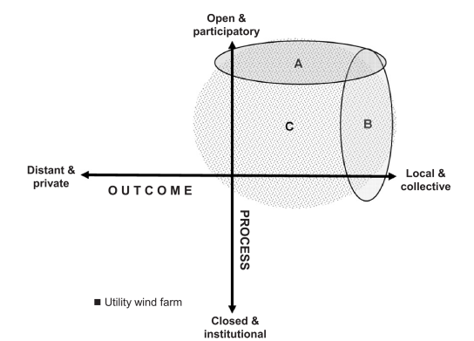
Figure 3.5.1 – Process vs. Outcome for Community Renewable Energy Projects (from Walker & Devine-Wright, 2008)
In the figure above, Areas A, B, and C correspond to different possible perspectives on what counts as a “community” renewable energy initiative. Area A is a view of energy community that prizes participation, engagement, and capacity building; such projects are often funded by state governments, international NGOs, and nonprofit organizations with the intention of improving the “material conditions” of populations suffering intersecting kinds of disadvantage. Area B, by contrast, represents a view that is more concerned with the socio-spatial distribution of local benefits, and is less focused on whether “the community” had or has any active role in the planning, implementation, or governance of a renewable energy system. Area B’s view is characteristic of some actors (such as developers and energy service providers) involved in building “front-of-the-meter” renewable generating assets, since these assets are first and foremost business ventures that provide co-benefits (like lower electricity bills or resilience) to some spatially distinct community (a village, neighborhood, etc.). Area C represents a very flexible view of community renewable energy that does not equate the term community with any specific approach to community participation, mode of governance, or concern for locality, but is instead attuned to the capacity, size, or location of the system’s physical plant.96
The process vs. outcome framework, and the distinction between for and by, are useful for analyzing the course and results of community renewable energy projects like Advanced Homes. In the sections that follow, we analyze the course of Advanced Homes in terms of this framework, identifying process and outcome considerations or issues of relevance to the project’s goal of creating an equitable and scalable model for low-income residential decarbonization. We also address Advanced Homes’ particular definition of community, as well as how factors such as the project’s choice of community engagement technique, renewable energy technologies, and the requirements of existing energy policy and regulatory code shaped its evolution and outcomes.
3.5.1 - Process– Framings in Tension: Community Development and Industrial Policy
In their study, Walker and Devine-Wright observe that viewpoint associated with Area A is common among people involved in “community development” or “development” work. “Development” constitutes a vast and extensively studied field of purpose-driven social activity. In the broadest possible terms, the aim of developmental work, whether undertaken intra- or internationally, is to improve the lives of people who have been excluded from forms of social and economic progress enjoyed by others. Over the course of its history, various forms of developmental activity have come to include a wide array of devices and interventions, including forms of healthcare provision (such as vaccines and contraceptive devices), educational programming, workforce training, and the extension of “essential” infrastructural services like electricity, water, telecommunications, and banking to populations who (in the perception of developmental organizations). Renewable energy technologies are a relatively recent but significant addition to the diverse array of developmental devices.
As Walker & Devine-Wright note, a developmental definition of energy community is common amongst people and organizations involved in developmental activity. These include nonprofits, international NGOs, and state institutions, but also philanthropic organizations and private firms. For those interested in “energy community” as a tool of development, renewable energy technologies are a way to improve conditions in communities (making electricity cheaper, or cleaner) and devices for engendering local participation in sociotechnical change and socioecological improvement (through education, system ownership and management, and workforce development). To foment “deep” or “meaningful” forms of engagement or participation, developmental projects bring to bear techniques and strategies for eliciting and structuring intercourse with the community. The pursuit and creation of an actively engaged local public, the tailoring of technological systems to local needs and desires, and efforts to build “local capacity” to manage and benefit from renewable energy technologies are the hallmarks of a developmental approach to building energy communities.
Emphasis on the active/ meaningful/ deep participation of community members or organizations in constructing energy communities is due in part to an awareness, on behalf of project implementers, that power and knowledge asymmetries exist between project staff and local residents. As bearers of expertise and resources, implementers must discover what it is that local people need and want through engagement with legitimate and honest representatives of community interests. Local residents, who are defined in part by their deserving or disadvantaged status, are vulnerable, and embedded in a socio-material milieu that is only partially known (at best) to the implementers. Representatives must at the very least communicate their preferences and desires vis-a-vis energy to implementers, and since no community is politically monolithic or socially uniform, and the affordances of particular technologies are limited, this process of establishing the best way forward is never particularly straightforward. Determining what should be done is a deliberative process that is bounded by the capabilities and intentions of the human actors and technological objects at play in any one instance. To their great credit, the core nonprofit partners of Advanced Homes took very seriously the practical importance and ethical necessity of determining what was best in consultation with individual homeowners, local civic organizations, and public representatives of the communities of Bassett and Avocado Heights. The voluntary and extended nature of implementation afforded homeowners the ability to decide whether they wanted to aid in a publicly funded experiment, let them determine how far they wanted to go in retrofitting their homes, and allowed project partners to meet and consult a wide range of local public and civic representatives about how and where to pursue enrollment. Advanced Homes’ core partners also framed their efforts in ethical terms: a community approach to residential decarbonization was the correct one given what they and others knew to be true about the negative effects of fossil-dependency and the vulnerability of disadvantaged communities to more intense and frequent extreme weather events and electric service interruptions. Finding a way for low-income homeowners to participate in the state’s push to decarbonize residential buildings meant giving them equal access to technological interventions that would diminish energy cost burdens, improve indoor air quality, and afford parity with non-disadvantaged property owners enjoying lower barriers to adoption.
However, technical expertise and the desire to engineer systems that encode ethical precepts or conceptions of environmental justice is not enough to ensure that domestic renewable energy systems serve community interests all the time and everywhere. As noted in Section 3.3 and 3.4, whether a low-income homeowner benefits from the addition of solar, storage, and electrification measures is largely determined by the details of regulatory proceedings and policy development processes that are sometimes subject to sudden change: changes to NEM and SGIP had effects on the short-term economics for participants and the long term viability of a no-cost retrofit model. (It is notable that these decisions were taken by the CPUC to protect the long-term financial integrity of California’s investor-owned utilities, and to encourage the installation of storage capacity, respectively.) Without Grid’s special purpose TPO contract and the DAC-SASH program, TEC would have had to devise another pathway to implementation, likely one involving some sort of ongoing payment from homeowners. In light of Sonnen’s behavior towards the project, it also appears that low-income homeowners might have to accept some sort of flat monthly fee in exchange for the resilience and TOU arbitrage benefits of high performance batteries. All of these dilemmas arise from the tension mentioned in the heading of this sub-section: the tension between the use of these devices as community development interventions, and their involvement in the stabilization of existing infrastructure and the growth of California’s cleantech industrial sector.
3.5.2 - Process - How are we for “Community”? / Who Represents “the Community”?
Readers of this report are likely aware of the pervasive and “flexible” use of the term community in governmental as well as popular discourses. The term functions in several different ways. Community evokes visions of social harmony; it is “warmly persuasive”, evocative of goodness and/or naturalness, and is thus frequently deployed for performative effect rather than descriptive precision.97 Used in this way, community conjures images of pre-modern authenticity, of civic-minded or altruistic conduct, and is often made to stand in opposition to instrumental, impersonal, or global forms of activity, such as “business” or “capitalism”. Community is also used to indicate geographic relationality (the local community, “neighboring communities”) and to make sociological distinctions between groups based on shared identity, interest, or demographics (the Chicano community, the home brewing community, etc.). Multifaceted and contested, community is an indispensable concept that resists attempts by social scientists and development professionals to tender an exhaustive and stable definition of the term.
From the narrative related in Section 3.3, we can see that the project partners used community as a descriptor of scale, geographic proximity, and sociological distinction. Scalar definitions of community were used for the purposes of assembling (planning and budgeting) the project and bounding the project area.98 The official definition of “disadvantaged community” elaborated by the developers of CalEnviroScreen provided a socio-spatial definition and a reference geography (census tracts) tied to BAAEC-relevant programs such as DAC-SASH. The existence of these maps, indices, and their linkages to incentive programs greatly aided in concretizing “the community” for the project partners, but these original boundaries and delimitations also proved to be limiting for the partners later. As mentioned in Section 3.3, the boundaries of Advanced Homes needed to be expanded (and were). Additional demographic and property-related factors also went into determining who could be part of the community; the aforementioned maps and programs, the subjective determinations of outreach and engineering staff, and thresholds for building conditions set by DAC-SASH were all involved in enrollment screening of participants. Socio-spatial definitions and scalarizations of community were required to bring Advanced Homes into existence, quantify time and resources necessary for implementation, as well as devise eligibility criteria for outreach and enrollment.
Very relevant as well were notions of community as a state of being and a mode of activity that is something other than instrumental or purely end-oriented. One of the objectives of BAAEC was to improve the socio-material conditions within communities subject to intersecting and compounding forms of social, economic, and environmental “disadvantage”, and to create a model for implementation that could benefit other, similar communities elsewhere in the future. Demonstrating the generality of the Advanced Homes model was, as we saw, a key consideration in demonstrating scalability. Aware that they had chosen work in and with a community that imposed certain challenges, TEC chose partners based on their willingness and ability to work within “this type of community” and invest their time and energy in solving the problems that low-income retrofits presented. The core nonprofit partners made decisions about how to pursue their goals with the vulnerabilities of low-income homeowners in mind and were at pains to ensure that they used their limited resources in a way that generated the greatest benefit for the greatest number of eligible residents. In this way, their behavior was consistent with a kind of “being for” community in the grandest sense of the term. But as we saw, this “being for” community, when enacted through the deployment distributed renewable systems and the repurposing of existing infrastructure, demanded that the partners engage in the practice of ‘business’ under more trying conditions and with more ethical scrupulousness than many private contractors offering “no money down” deals for install. TEC staff repeatedly noted how “hard” being for community (writ large) is. Their work for the community involved differentiating Advanced Homes from superficially similar “scam” offerings, conducting more financial engineering on the project back-end than is normally required of comparable private operations, in addition to assembling all the functionalities of a solar developer through external partnership (rather than simply hiring workers and managing operations in-house).
This being “for community” in the largest sense (i.e. a just and equitable transition, environmental justice, etc.) and acting on behalf of the welfare of a specific community (the homeowners, Bassett and Avocado Heights), was not possible without extensive community engagement and outreach. Community development projects must involve “the community” in some capacity or form to rightly qualify as such. History is littered with examples of well-intentioned developmental projects that ended up doing harm because they misapprehended community needs or confused the desires of the partners with those of the community or participants. Engagement, particularly participatory engagement in project planning, is a kind of prophylaxis against such negative contingencies.99 As we discussed above, the perennial objective of community development (or developmental) projects is the health and wealth of some group of persons who lack the means, resources, or knowledge they need to improve the sociomaterial conditions themselves. What sets community development apart from “aid”, welfare programs, or charitable and philanthropic giving is the nature of the interaction between those providing resources and direction and the community receiving them. Community development seeks through its interventions, to ‘build capacity’, engender autonomy, and to equip “the community” with the knowledge, resources, and guidance they need to solve longstanding problems and improve their collective situation.
Advanced Homes partners knew that their particular kind of community would consist of a set of participating homeowners, but they also needed representatives who could speak on behalf of the community at large. TEC and Day One had a need for individual participants and representatives of the community’s collective interests, problems, and desires. As we saw, the project partners took a two-pronged approach to engagement: approaching representatives of the local public (schools, EJ groups, civic groups) to learn about the community as a whole and outreaching to residents to interest them in participation. In practical terms, this involved attending school board meetings, identifying and interviewing people involved in local government, and traveling to the project area to meet individual members of the community. This process was prolonged and complicated by the fact that Bassett and Avocado Heights do not have municipal governments of their own, which made it necessary for outreach staff to cultivate relationships with multiple organizations and people.100
To learn how to best serve the people of Bassett and Avocado Heights, and to gather information about what the community wanted out of a retrofit program, Day One and TEC undertook nearly one hundred separate outreach, education, and engagement activities in and near the project area, logged thousands of interactions with individual residents, and convened a Community Advisory Committee including local civic and public organizations (see Chapter 2 for more information). Outreach partners created literature and signage advertising the project in English and Spanish and appeared at a range of events hosted by these same civic and public organizations, including Clean Air Coalition, the Workman Mill Association, LA County Parks, and the Bassett Unified School District.
The results of the Community Advisory Committee meetings were a necessary step, but the deliberations and conversations that transpired during them were less than consequential for Advanced Homes. Committee members were supportive of the project’s goals, approved of their interventions, and offered some direction about how to best encounter and enroll individual homeowners, but nothing the project partners were told in these meetings changed the design of Advanced Home’s technical interventions or their approach to individual outreach. The main reason for this was that BAAEC’s technological interventions were already close to ‘fully baked” when they were introduced to members of the CAC: members were engaged in a consultative rather than a planning capacity. Regardless, developmental energy projects like BAAEC should engage local representatives of the public: as relative outsiders, implementers should take a cautious and exhaustive approach to learning about the community they are trying to help. Communities are always multiple in that they are sociopolitically heterogeneous (they have internal politics), and because in any given community there exist many representatives who can legitimately speak on its behalf. Speaking with multiple representatives, creating consultative bodies, and keeping the multiple nature of community in mind is an essential part of developmental practice, one that helps implementers act in the interest of the community they have chosen to serve.
3.5.3 - Process - Which Comes First - Society or Technology?
Energy transitions are processes of sociotechnical transformation: they propose to change relations between people and technological objects. However, initiatives typically prioritize either the social or the technical in their efforts to act upon the whole. We can observe the tendency to start with either end of the problem and work towards the other by comparing BAAEC (a “technology first” project) to other developmental projects building community through renewable energy systems.
In “society first” community energy projects, the market readiness of distributed renewable systems is secondary to the creation of a local body with governmental powers over an energy system. In instances where social relations, rather than human-device relations are the focus, technological devices are the merely material third term that help to facilitate the emergence of local capacity to operate, own, and plan local energy resources. Whether they really function as infrastructure is a secondary consideration, to be addressed in subsequent iterations or expansions of the same or similar project types. In “society first” projects, technology is called upon to play a socializing role; its construction is supposed to bring people into contact with one another, to cause them to examine their material and social entanglements, or to draw them into new kinds of formal governmental activities. The objective of “society first” developmental energy communities is to create local energy systems that either complement existing large infrastructural systems or serve an infrastructural function for communities that are beyond the reach of infrastructure. Whether they are scalable or replicable is a relevant question, but not one that “society first” projects seek to answer immediately or definitively.
BAAEC took a ‘technology first’ approach to the problem. Residents participating in BAAEC were not asked to join a local organization to govern renewable energy systems with the help of the project partners, but rather to participate as providers of time, information, and energy to a project concerned with rendering solutions to supra-local problems. Homeowners were presented with a binary choice between receiving a package of retrofit measures and nonparticipation, those who did went on to negotiate the process of installation as individuals rather than some kind of local corporate body (corporate in the sense of having shared material investment) or collective, deliberative entity (such as a neighborhood council or home owner’s association responsible for the management of a shared system).
Advanced Homes’ focus on technology as a way to change social conditions is the reason why the project’s authors were moved to develop critiques of device-centered programs and existing practices of infrastructural governance, and explains their enduring interest in policy reforms that would favor DERs over centralized, remote, and utility scale renewable energy infrastructure (see Section 5.6 below for the set of critiques and recommendations). BAAEC Advanced Homes was not expressly concerned with the building of a local organization to manage local systems; the purpose of the project was to create a retrofit process that was scalable because it created value for the parties involved. Finding a pragmatic, equitable way of electrifying disadvantaged communities depended on taking full advantage of the incentives available and cultivating relationships with ethical and politically sympathetic representatives of private industry. Such an effort could build momentum, attract capital, and substantially remedy existing energy and environmental inequalities as a product of its growth and maturation. However, one of the consequences of this pragmatic, forward-looking, technology-first approach to residential decarbonization is that it had the effect of strongly individuating participation. Rather than build a local governmental body, the program assembled and processed a set of participants who were personally equipped with the information and technologies they needed to govern themselves.
BAAEC’s techno-social approach to urban energy transition contrasts with projects like Oakland’s Ecoblock and the La Estrecha energy community in Medellín, Colombia.101 The object of these projects was the assembly of distributed renewable systems and a local governmental body capable of independently managing energy systems governed by co-owners of the systems. Projects like EcoBlock and La Estrecha are experiments with the local, formal governance of energy systems, and the potential of such implementation models to improve conditions within and beyond the community.102 In BAAEC’s case, technology came first, and local participants became enrolled in the partner’s efforts to ethically test the business case for low-income retrofits. Advanced Homes was a demonstration of a scalable, intersectoral model that could attract private capital and firms to disadvantaged communities. The process of designing systems to meet community needs consisted of a set of consultations between outreach staff and homeowners about what the project was, what it would do for them, what they would need to provide in return, and to sign off on a series of contracts for work. Rather than attempting to change people’s relationships to each other and electricity by creating infrastructures of local, formal governance, Advanced Homes created new relations between people, distributed renewable devices, and the grid.
Technology-first approaches to sociotechnical change are in several respects more closely aligned with California’s problematization of residential decarbonization. As we saw in Section 3.2, California’s political economy of residential decarbonization takes devices, buildings, and infrastructure as its primary objects. Focusing on devices allows policymakers and implementers to think about the circulation of electrical power and money, which simplifies the task of figuring out how to make new arrangements work in economic terms. A technological focus also clarifies the possible roles to be played by actors from different sectors (public, private, nonprofit), and how particularly generative or beneficial arrangements of people and things might be scaled, made attractive to investors, or standardized by governmental action. There are, however, downsides to this way of seeing and planning energy transitions. Opportunities for ‘local’ or informal kinds of experimentation are limited when participants encounter distributed renewable technologies or electrified appliances a black boxes that they do not fully own, control, or understand. It may also create a kind of highly individuated, technologically mediated participation in energy transitions that frame communities as uniform ‘market segments’; as consumers of technology and services rather than political subjects active in the planning, design, and governance of energy systems. This is not to say that a society-first, collective approach to community energy development is somehow inherently superior to BAAEC pragmatic technology-first approach.103 Creating local governmental bodies that effectively and efficiently manage energy systems, and sustaining participation in such bodies (especially when communities do not rely on these systems as their primary source of energy) presents a distinct set of challenges and questions related to scaling and replicability that is beyond the scope of the present analysis. The point is that the choice of starting point for the development of energy communities or residential decarbonization programs is consequential, and neither approach appears to be a clear winner.
For Advanced Homes, embracing commercial viability meant settling on the home as the economic unit of management in a larger network of energy transactions, such as markets for demand response and potentially other forms of grid support. To empower participants to optimally configure their household systems, they were provided with the computational support (software and data) necessary to “see” the state of their homes and adjust them according to their preferences. Homeowner interaction was oriented towards conditions in existing and emerging markets for electricity, but home energy management software would lighten the cognitive burden for homeowners. While the project’s interventions represented a pragmatic way of engineering energy autonomy and security for disadvantaged homeowners, they did not encourage the socialization of homeowners as a cohort, and focused on the household as the minimum effective scale at which the problem of optimal use of resources might be solved.
3.5.3 – Process – The Effect of Outreach Settings and Tactics on Participant Enrollment
One aspect of the enrollment process not discussed elsewhere in this report is the interplay between the settings where outreach is conducted, the tactics used to interest and enroll participants, and implementers’ ideas about the identities of potential participants. The struggle to find homeowners willing to participate in BAAEC Advanced Homes illustrates the trial-and-error nature of outreach work.
The choice of setting for outreach is a consequential decision. Different settings draw different sorts of people, and settings themselves influence the behavior of people within them. Day One’s choice of “public” resource fairs, parks events, schools, as well as other gatherings such farmer’s markets reflected an eagerness to cast a wide net and engage local people in brief “low-pressure” interactions. Day One staff also made sure to have small toys and activities for children (such as chalk and easels) and pens, stickers, and flyers for adults. The choice of settings for outreach was also partially determined in part by the connections that Day One was able to forge with local public and civic organizations. Time and energy were spent getting the approval of school and parks department staff so that outreach staff could present the project and the benefits of participation to parents informally (at after-school events, pick-up and drop-offs) and formally (in presentations created for PTA and English Learner Advisory Committee (ELAC) groups).
Outreach in these settings did yield many contacts with local people (some of whom went on to participate) the choice of schools, parks, and other local public gatherings (as well as early promotional materials for Advanced Homes) reveal an implicit assumption regarding who the ideal public was: young families with children. However, most of the participants who eventually signed up to participate were older homeowners with adult children, and relatively few of these participants were engaged via in-person contact in the settings chosen for outreach. While in-person outreach in the settings mentioned did help differentiate Advanced Homes from other free solar retrofit offerings,104 The disjunction between who the outreach staff thought of as the ideal participant, who actually ended up participating shows how the choice of settings and outreach tactics may be subtly influenced by assumptions about who the appropriate public is and where they might be encountered.
The change in tactics needed to overcome DAC-SASH’s attrition rate led to the project’s discovery that homeowners in the project area tended to skew older. As TEC and Day One learned, many homes in the area were intergenerational, and that settings such as schools, LAC Parks Dept. events were not the best places to find older people with adult children.105 Ultimately, it was more efficient and effective to interest and enroll the homeowning public in the project area through mailing campaigns and follow-up calls, rather than trying to find them in public settings. Outreach staff from TEC and Day One found that with time and repeated explanations of the project’s origins and finances, many homeowners eventually came around to participate in the program, and a small number of participants tried to enroll their neighbors (see the next section). In several instances adult children helped to sell their parents on the benefits of participation and served as the main or alternate points of contact for project staff. All-in-all, however, the population of participants that became involved in Advanced Homes was quite different from the one the partners had in mind at the outset of the project.
There are three general lessons to take from Advanced Home’s search for participants. First is that assumptions about who can and should participate (who is the ideal public) are necessary to develop structured outreach campaigns and choose appropriate engagement tactics, but such assumptions must be made explicitly and reexamined upon actually going to the project area and interacting with the people living there. As we saw in this Chapter and Chapter 2, Day One, TEC, and Grid Alternatives successfully altered their outreach and enrollment strategy after realizing that in-person outreach in the settings open to them was not generating enough contact with homeowners to overcome the factors contributing to DAC-SASH’s attrition rate.106 The second general lesson is that the choice of outreach settings is influential, since (as interviews outreach staff and civic organization showed) events occurring “in public” (such as holiday celebrations, First Fridays, or farmers’ markets) and those sponsored by public entities (school events/ meetings, parks events) do not draw representative cross-sections of the general public: they attract people who know about the events and have a desire or reason to attend.107 Since there is no one public setting in which to encounter the general public, outreach staff should, if the need arises, attempt to use other outreach tactics to find people who are eligible and potentially interested. The third general lesson is that in-person outreach and other tactics (such as mailers) should tell a consistent story about the project to have synergistic effects. In BAAEC’s case, the mailer sent to eligible homeowners was more of a letter than a mailer: it was prepared with the endorsement of the school district, the 1st District County Supervisorial office, included their logos, and explained the public provenance and higher purposes of Advanced Homes. Its length, language, and association with trusted local public institutions were essential for differentiating it from other, superficially similar offerings for free solar.
The choice of outreach tactics and setting is consequential and should be considered carefully, and outreach campaigns for projects like Advanced Homes should be subject to periodic re-examination of assumptions about who should or could participate should be undertaken in cases where chosen tactics and settings are not working as anticipated.
3.5.4 – Process – The Struggle to Create “Local Champions”
Early in the outreach and planning stages of Advanced Homes, project staff at TEC and Day One expressed their interest in identifying and supporting a set of “local champions” who would help build support for the project and refer other homeowners interested in retrofits to the project. Enthusiastic first-adopters, local champions would help legitimize the project and drive enrollment through word-of-mouth contact with other homeowners. As the narrative in this Chapter and Chapter 2 indicates, local champions of the kind imagined by project staff did not materialize, and it is not clear exactly why they did not.
Interviews with outreach staff and homeowner-participants suggest some reasons why homeowners did not act in this capacity. As mentioned previously, the local homeowning public was clearly skeptical about free solar and storage, and many participants needed several conversations with project staff to trust that the project was going to deliver what it was offering. Though several homeowners said they had talked to their neighbors and friends about solar, storage, and electrification retrofits, these same homeowners said that they were not particularly successful in interesting the people they contacted, and that they gave up trying after several attempts.
The reasons why local champions did not appear are unclear. Based on interviews with outreach staff and participants, skepticism of the offering was clearly an issue, but it is also possible that homeowner-participants were not adequately “equipped” to act in this capacity. It may have been that homeowners lacked the information they needed to convince their neighbors or friends to join: they might have been unable to explain, or felt they could not adequately explain, how solar and batteries worked to provide benefits over and above solar alone, and how on-site generation and storage made electrification of end-uses less expensive that it would otherwise be. Alternatively, homeowners might not have felt much motivation to labor on behalf of the project: most of the homeowners involved saw their retrofits completed in the last two years of the project. Being in this position may have made it difficult for them to attest convincingly to the benefits of participation, since they had yet to see them fully materialize themselves. Finally, there is the simple fact that geographic proximity does not necessarily entail friendliness or familiarity - neighbors are not necessarily always friends, and the opportunity to talk to them about the project might never have come up.
Local champions are potentially valuable for implementers, but the results of Advanced Homes’ outreach suggests that not everyone is able or inclined to be one. The question of how to engender local championship and word-of-mouth recruitment is a topic for future research into community engagement practice. Future projects might consider dedicating funding to train and compensate local people to help with outreach rather than relying on them to donate their time and energy to the project out of an abundance of enthusiasm for it.
3.5.5 – Process – “Why is it Free?”: The Nexus of Outreach and Financing
Outreach staff from TEC interviewed for this study mentioned on several different occasions that the free nature of the offering was originally thought to be an inducement to participate, but that this theory was not borne out by experience. Upon resuming outreach after the height of the COVID-19 pandemic, TEC and Day One found that they had to prove their public bona fides and materiality of the project to gain the trust and commitment of local homeowners. As discussed above, the negative perception of “free” rooftop solar was attributable in large part to the saturated nature of the domestic solar market in Southern California. For-profit installers offering no money down deals on installation had been through the area prior to BAAEC, and, according to participants, partners, and others interviewed for this chapter, some of them had taken advantage of people who did not know what they were getting into, did not have the language skills to interpret the fine print or ask the right questions, or were unable (or unwilling) to say no.
This kind of “hard selling” of the energy transition left damage in its wake, and was the opposite of what BAAEC was about. But the fact that the project resembled other commercial offers that had been made previously meant that a great deal of in-person outreach and individual “case work” went into enrolling participants, gaining a degree of trust and reciprocity, and guiding them through the process of retrofit. The process of making the project known to the community and individual residents needed to differentiate it from “scam” offerings, and, as Chapter 2 and this chapter show, Day One, TEC, and Grid Alternatives succeeded in making the distinction in many cases. In-person outreach and community presence were necessary to legitimate the project, but these activities, as we saw in Chapter 2, were not the major source of enrollment for Advanced Homes. As a result, finding a suitably large number of leads meant having thousands of interactions with local people in addition to conducting mailing campaigns and getting lead referrals from Grid Alternatives. Physical media (flyers, cards, etc.) and the postal system ended up being vital avenues for the creation of the lead pipeline. Core partners chalked this up to the preferences of the older, home-owning public for non-digital forms of communication.
Several homeowners interviewed for this study mentioned that they did not quite understand how or why all of this was free, and several others said they were initially quite skeptical given their perception of the risks that participation would entail. After all, solar, storage, and electrification measures were “major” forms of home improvement, contractors could be flaky, and homeowners could be left in the lurch if something went seriously wrong. Advanced Homes participants were won over and kept engaged on a case-by-case basis through repeated conversations about what would be happening, why, and where the funds from this work were coming from. Retrofits were major additions to homes, and participants were understandably concerned with the impacts that these interventions would have on their lives. Honesty and repeated contact with project staff and frank discussions about what project partners would need from participants (time, attention, legal consent, records) were essential to creating the cohort of Advanced Homes. In other words, answering the questions of why it was free, and what risks were involved were an important part of the work of cultivating leads. In many cases it was only after the quandary of “free-ness” was put to rest that leads became participants.
Demonstrable associations with state and local public institutions, and repeated explanations of the developmental purposes of Advanced Homes (“to show the state that it was a good program, and needed to be expanded”) were, according to staff and participants, sufficient to differentiate it from other superficially similar private offers. Over the course of years, the core partners of Advanced Homes built a pipeline of leads who were willing to tolerate the delays and difficulties that arose during retrofits. The incremental fulfillment of promises and the availability of outreach staff built trust over time. The fact that few residents who passed the eligibility screens for Advanced Homes defected from the project speaks to the strength of the relationships between partners and participants.
Somewhat ironically, the state, who was supposed to recognize the value of BAAEC’s efforts, was also implicated in the weakening of the bonds that the partners built with participants. Estimates of the cost savings benefits that would accrue to homeowners from retrofits became hazier during the project. Between 2022 and 2024, changes to NEM and SGIP changed the economic parameters of household benefit calculations, reducing export credits during peak PV generation houses and the downsizing of home battery capacity. Project partners knew these changes reduced the value of distributed energy resources and would most certainly diminish the financial benefits of solar-storage and electrification to homeowners. Ultimately, project partners decided that their interventions would still provide perceptible, measurable benefits, and went through with the project, even if the magnitude of energy cost savings would not be as large as they would have been prior to NEM and SGIP revisions.
The free nature of the offering created unexpected challenges, but if the project required up-front or monthly payments from participants there would have been almost nothing (from the homeowners’ perspectives) to differentiate it from other private sector offerings, aside from perhaps additional transparency about financing and more generous financing terms. Alternatively, however, it is also possible that a nominal up front payment, or low monthly payment, might have reduced suspicion and obviated the need to explain that the project was a state-funded experiment that needed to collect data about how to include low-income homeowners in the energy transition. However, this might have left the project with no participants, given the economic challenges faced by residents of the BAAEC project area and the risks involved with the upgrades.
While difficult to finance and sensitive to changes in policy and macroeconomic conditions, free retrofits did afford Advanced Homes partners the ability to pursue retrofits in the confidence that they would be doing no harm to a vulnerable population struggling with economic precarity and an ongoing dynamics of environmental injustice. Asking people to pay would have also defeated the stated developmental purpose of Advanced Homes, which was to include everyone in the state’s drive to decarbonize the residential building sector, and to prioritize communities that are the most disadvantaged and vulnerable.
The experience of the Advanced Homes partners and the limitations of existing programs suggests that a gradient of offerings (no-cost, low-cost, sliding scale) might be a more effective way of including low to middle-income homeowners in the energy transition. However, the risk environment these populations face are not uniform across space, time, or demographics. Further research is needed to find ways of making distributed renewable systems return value without placing undue economic strain on homeowners who already struggle to make ends meet.
3.5.6 – Process - “Building a Plane as you are Flying it”
BAAEC’s Advanced Homes Scope differs from the other scopes in terms of its size and complexity. Advanced Homes tried to insert multiple DER systems into an existing urban-infrastructural fabric, and to engineer a retrofit process that was beneficial to all parties involved. As the course of the project shows, the building of a multi-stage, intersectoral process for no-cost retrofits was an enormously complicated and somewhat risky undertaking. Several staff members from Grid and TEC compared their experience to “building an airplane while you are flying it”, a phrase often invoked to describe the experience of the early phases of business development, where failure and reorganization are to be expected if not welcomed.
Advanced Homes partners faced a changing landscape and a challenging urban-infrastructural environment. The installation of many similar, but not identical, systems at many similar, but not identical homes meant that the core project partners had to track thousands of individual interactions with interested homeowners, participants, and subcontractors. Managing this complexity and struggling with the heterogeneity of the built environment, Advanced Homes demanded from the partners both flexibility108 and precision. The narrative of the project shows that the core partners performed spectacularly in this regard. Project partners sought constantly to improve their process flow and make their resources stretch as far as possible. The process of installation also had several distinct iterations, and lessons learned about organizational efficiency, the stacking of state incentive programs, and the sequencing of retrofits were brought to bear on the second run of Advanced Homes. However, project partners found that there was much beyond their control, and that their situation was analogous to that of an early-phase startup.
External factors made building the plane in midair more of a challenge. The presence of grant funding, the DAC-SASH program, and SGIP were all foundational pieces of the Advanced Homes experiment. But changes to NEM and SGIP changed the estimation of participant benefits and the revenue-generating potential of its interventions. The shift to NEM 3.0 reduced the benefits of solar-storage systems to homeowners and undercut the economic case for retrofits. Similarly, the modifications and pause to the SGIP program that occurred during the project’s course diminished the battery capacity of future SGIP Equity projects. Both changes, criticized by project staff, threatened to reduce the impacts of the program and eat away at the benefits that homeowners would enjoy. Overall, these changes, combined with upward pressure on electrical rates during the course of the project, made guaranteeing benefits more difficult and diminished the case for replicability. Project partners desired both consistency and generosity on behalf of the state, noting that it was difficult enough to do “this sort of work” under normal conditions.
But why was the work so hard? Up to this point, we have cataloged a number of very concrete reasons why it was hard to move from plan to action which implicate the mercurial desires of state regulators, the prerogatives of the incumbent owners and operators of infrastructure, public perceptions of renewable technology firms, as well as the difficulties of getting all of the technological pieces in place and working in concert. The combination of these material and social factors was more than enough to make the work of partners ‘hard’. But considering why the work was hard, we should also direct our attention to the very specific character of the situation the partners entered when they began Advanced Homes in 2020.
In its call for proposals, the CEC communicated its desire for low-income, intersectoral, and scalable implementation models that could serve as a template for future projects. Applicants were encouraged to experiment with new ways of accelerating residential decarbonization, to incorporate emerging technologies in their plans, to experiment with techniques of community engagement so that systems could meet the needs and satisfy the desires of local participants. All of these injunctions are good and fine on their own, but the CEC’s demands to include them together was tantamount to asking applicants to work magic - to solve the problems that beset DAC communities and those that afflict the cleantech industry simultaneously. Such a formulation assumes that the interests of particular communities (defined in terms of their sociogeographic characteristics) and the interests of industry can be made to align through the careful design and construction of specific technological assemblages such as distributed energy systems. Requiring that applicants create investable, scalable models for technological deployment while also solving problems with well-known social antecedents (such as uneven and racialized urbanization) is to ask rather a lot of technology and the people and organizations backing said technology. Though incremental improvement through sociotechnical change can be accomplished through projects like BAAEC, the growth of green industrial capacity and scaling of renewable generation and storage assets does prompt questions about whether communities previously designated as sacrifice zones or marked as expendable will be forced to accept the risks and costs of an energy transition in the future. Actors attempting to bring about energy transition through industrial and infrastructural reconfiguration might discover that the interests of specific industries and communities do not align, cannot be made to align through technological interventions, and that the socioecological costs of the transition must fall somewhere. TEC mitigated the risk of misalignment by selecting technological forms that would almost certainly make homeowners better off while simultaneously working to ensure that private sector actors benefitted from participation as well. In Sections 3.3 and 3.4 we observed just how much effort went into engineering alignment between the community and the project’s private sector partners by way of a no-cost home retrofit model. This work of satisfying desires, creating alignment, and re-configuring social and technical relations is a contested, highly political process of trial and error.
Another reason TEC found the work of Advanced Homes arduous was their intention to act sociotechnically in a context where many people and institutions insist on the separation between the technical and the social. As discussed earlier, the distinction between social and technical is useful. It is employed in a variety of ways to simplify the world and make problems amenable to a range of analytical and . The distinction helps to simplify situations because labeling a problem, quandary, or issue a technical one effectively moves the issue from the realm of preference, opinion, and perspective (the social) to the realm of the technical, where facts are facts and physical law reigns supreme. Likewise, agreeing that something is a social issue can move it back across the divide, and reintroduce history, culture, aesthetics, and other ‘social’ concepts into discourse or deliberation about what to do. Moreover, this distinction has played an important role in the development of the forms of governance that co-evolved with socially modern (and Western) forms of life. “Society” and “technology” are the two poles around which liberal governance has traditionally operated, and most tools of statecraft (what we commonly call “policy) assume the fixity of one pole while manipulating the other (think for example of the supposedly infinite plasticity of market forms and the uniformity of the homo economici that populate them). TEC found that although there was quite a lot of talk about approaching residential decarbonization from both poles at once, there were relatively few actors who had the technical capabilities and social orientation (i.e., willingness to do hard developmental work) that being sociotechnical required. Likewise, many of the state programs that TEC used as the foundation for the Advanced Homes retrofit process did not adequately consider the social. Home retrofit programs did not include funds for roof remediation; SGIP needed homeowners to wait for reimbursement; changes to NEM and SGIP put retrofits further out of reach for low-income ratepayers. The exigencies of the climate crisis give us occasion to see the distinction between social as technical as problematic in and of itself: it is now commonly accepted that a strictly technological or social approach to resolving the crisis is unworkable. But being “sociotechnical” is hard. Acting upong poles at once creates uncertainty and makes it difficult to know what the outcome of any action to improve the situation is going to be: the interactions between people and technological objects are unpredictable, as we have seen, often not easily governed. Advanced Homes needed households, local institutions, DERs, and the grid to act together for benefits to accrue: aligning all of these actors was an immense work of translating plans into reality: of forging connections, finding compromises, and identifying what was within and outside of the partner’s control. But rather than blame the authors of the project for not being able to transcend the very real and consequential distinction between social and technical, critical attention might be better paid to the “tools” we have available (technologies, organizational forms, discourses, concepts) and consider whether they are suited for the task of effectuating what, in the final analysis, amounts to a totalizing transformation of the relationships between people and “energy” (i.e., “the energy transition”). Much more remains to be said about the topic of finding the right tools and concepts for creating deep and “good” forms of sociotechnical change, as well as the virtues and vices of different ways of relating to communities, the climate, or infrastructures. But it suffices to say here that the organizational form of the firm, statistical methods for defining “disadvantage”, welfare programs for delivering “benefits” to the disadvantaged, the (quite historically recent) commodification of electricity, the markets within which electricity and energy services are bought and sold, and the centralization of infrastructural management all present themselves as good places to begin a critical examination of existing tools and concepts for transformative sociotechnical change.
The CEC was correct in asking applicants to consider both society and technology as objects of development, since the problem of energy transition is indeed sociotechnical. But the CEC’s demands that AEC project teams address both poles of governance at the same time placed conflicting imperatives on TEC staff in particular. As the project lead, the organization had to engage two distinct kinds of activity which are usually taken on separately - technological development and community development. The situation faced by the core BAAEC partners and other organizers of energy community projects is distinct from actors who have the dubious luxury of concentrating on the social or technical to the exclusion of the other. Private technology firms are concerned with the commercial viability of their products and community organizers are concerned with shaping political subjectivity and motivating particular forms of collective action. The work of building an energy community is hard because it bridges these typically separate forms of activity: project partners needed to empower participants, thoughtfully engage civic representatives, and engineer systems subject to very long and complicated lists of regulatory constraints. They needed to integrate emerging technologies like VPPs, but needed to be sure that these technologies would not expose participants to undue risks. They had to assure savings from solar-storage retrofits while encouraging homeowners to electrify major appliances. The problems and perplexity that arise when trying to encourage directed sociotechnical change is the reason why developmental energy communities typically settle on society (i.e., the community in question) or technology (DER systems) as the primary subject of intervention and development. In sum, the feeling of building the plane while flying it is due not only to the laundry list of concrete factors mentioned earlier, but also because of the demands the solicitation placed on applicants to address the sociotechnical in a world that is understood (and structured) according to distinctions between the social and the technical.
3.5.7 – Process – Struggles with Intersectoral Partnership
Advanced Homes was conceived of as an intersectoral (public-private-nonprofit) project from its inception. The core partners needed the investment and voluntary participation of a range of private actors for retrofits to materialize. Nonprofit partners, cognizant of the state’s concern for the growth of domestic industry and the need to “unlock” private investment in decarbonization, saw private partnership as a challenge to be met within certain ethical boundaries, and they imposed ethical tests on would-be private partners (which some of them, such as Sonnen, failed). Generally speaking, core nonprofit partners found that attracting and maintaining private partnerships was demanding and entailed certain forms of risk, and was not nearly as simple as some advocates of public-private partnership make it out to be.
The results of Advanced Homes show that attracting and retaining the cooperation of firms, large and small, to state-funded, community-oriented projects posed several practical challenges and political dilemmas. Core partners’ staff needed to engage in a considerable amount of work to identify and approach battery, roofing, and general construction partners, bring them under contract, and direct their work. As we have seen, Grid Alternatives helped TEC to find Swell Energy and other third-party contractors, and TEC developed a financing mechanism to bridge the SGIP reimbursement delay for contractors. But even with the assistance of Grid Alternatives and Perl Street, TEC found that identifying politically and ethically aligned private sector partners, and creating contracting and financing arrangements that satisfied their needs, required years of planning and effort.
While many of the private partners involved in the projects were responsive and professional, the behavior of Swell Energy was a source of trouble both at the beginning and end of their relationship with Advanced Homes. Swell Energy had given the project a soft yes in 2021, but took a long time for Swell to formally commit, generating tension between TEC and Grid Alternatives. The core partners tolerated the indecision of Swell Energy during 2022 and were relieved when they sent word in December 2022 that they were ready to partner. But this period of delay cost Advanced Homes time and frustrated core partners. Once under contract, Swell performed amiably and efficiently until the company went bankrupt in Q3 of 2023, causing another major delay for the project, and a scramble to find another battery provider. Interestingly, the second iteration of Advanced Homes did away with a trilateral relationship in favor of partnership with Grid Alternatives, who had since acquired the ability and expertise to install batteries as part of their offerings. For the core partners, this simplified communication and financing and saved them time and effort.
Advanced Homes partners discovered that delivering benefits to homeowner-participants and private sector partners via comprehensive home decarbonization retrofits was a delicate balancing act, involving the careful assembly and management of a three-way intersectoral partnership. The experience of balancing these objectives highlighted more than a few socioeconomic and socioenvironmental tensions. Turning planned retrofits into actual retrofits required the shared capacities of the core nonprofit partners, as well as a cast of private contractors at one or more degrees of separation from the project lead TEC. Even with TEC’s careful selection of project partners and its struggle to ask nothing up-front from participants, they could not control changes to energy policy that altered the economics of their interventions, and could not always get private partners to behave in ways that were predictable and productive. Advanced Home’s challenges with finding a battery partnership illustrate the political and ethical texture of the core partnership: TEC rejected Sonnen’s offers as a violation of participant trust, Grid Alternatives ceased referrals over Swell’s continued refusal to formally partner with BAAEC. Swell’s VPP representative also surprised TEC with his unenthusiastic assessment of the technology’s ability to create much in the way of benefits for low-income, less energy intensive homes. In the first instance, TEC’s rejection of partnership was justified as a defense of the community and TEC’s commitment to honoring participants’ trust that they would not be stuck with hidden costs. In the second, the risk Swell’s behavior posed caused Grid Alternatives to set a condition on its own participation based on a concern for the fate of the homeowners involved in the project and their organization’s reputation as a reliable and ethical operator. In the third, TEC was unwilling to simply accept the assessment of Swell’s VPP representative based on their own understanding of the technology, and their belief that access to these revenue streams was essential to making no-cost installations a scalable reality.
A shared commitment to bettering the lives of low-income homeowners was not enough to convince some private sector partners to do business differently. As we have seen, Sonnen and Swell Energy stated that they were aligned with respect to the political objectives of the project, and invoked their desire to be a part of a just and equitable energy transition as their rationale for supporting BAAEC Advanced Homes. Representatives from these organizations said that finding models for low-income retrofits that worked for business and communities was key to progressing towards a better future. But as for-profit, existing commercial concerns, Sonnen and Swell also stipulated that their partnership came with requirements for (and designs on) Advanced Homes. These companies wanted to grow their business in California, and begin operating networks of batteries in markets for grid services: lower-income homeowners were an underserved market segment and represented a new line of business for both firms. Advanced Homes would be an ethical demonstration of the commercial opportunities present in this market segment, would benefit them reputationally and financially, and ultimately, would help advance a wider technopolitical effort to break fossil dependency and engineer energy and environmental justice for disadvantaged communities. However, the demands that private sector battery partners placed on Advanced Homes were considerable. Swell had to be paid up-front for their batteries, necessitating the bridge loan mechanism developed by TEC, Pearl Street, and Urban US capital. This was an innovative approach to bridging the reimbursement delay of the SGIP program, requiring TEC to act as the conduit for SGIP funding and a holder of debt. This was the price of private battery partnership, and TEC, as a large and financially stable nonprofit organization was positioned to act as financial intermediary. Taking on a reasonable amount of debt to ensure timely no cost retrofits was consistent with the core nonprofit partners’ ethical understanding of decarbonization, but the demands of Sonnen, who asked that costs be imposed on homeowners, was rejected.
While private participation in the state’s energy transition is sometimes extolled as a sign of progress, Advanced Home partners discovered how vulnerable their efforts were to the unpredictable conduct and desires of private partners. Many climate tech and renewable energy firms, even established ones, are “policy-dependent” in the sense that the profitability of their products or services depends heavily on the rates at which they can sell electricity, the presence of price supports for certain kinds of systems or technologies, and the presence of tax incentives that can be collected and transferred by developers for a profit. If conditions change, they may succumb to outside pressures, engage in restructuring, or decide to cease any activity that does not immediately and directly benefit them.
Politically, Advanced Homes partners took a pragmatic view of private involvement in equitable residential decarbonization, but the course of the project did prompt them to return frequently to the distinctions between business and community, and how these two different modes of activity could or should fit with one another. From conversations with TEC, the observation of working meetings, and interviews with other people involved in residential decarbonization it is apparent that the project partners and other practitioners feel that intersectoral partnership is essential for success, since each sector has capabilities and resources that the others lack. But the project’s struggles to make way for and accommodate private sector partners testifies to the difficulty of building and maintaining intersectoral partnerships. In stark contrast to depictions of the private sector as the first among equals, Swell Energy’s fate reveals how firms are themselves vulnerable to changing conditions and how sensitive emerging industry can be to sudden changes in political leadership and investor sentiment.
The question of how to best combine the capabilities of the different sectors remains open. How to create long-lasting intersectoral partnerships or other organizational forms that can do the work of residential decarbonization in disadvantaged communities? Clearly, the existence and stability of intersectoral collaborations depend on internal factors (e.g., inter-organizational politics) and external conditions (e.g., ‘exogenous’ policy, political, economic conditions), and each of the sectors is vulnerable to different kinds of pressures. One possible solution is experimentation with new organizational forms. During the course of the project, Grid Alternatives and TEC staff hit independently on the idea of allowing existing nonprofit organizations to earn a modest return on investment from their activities. Such organizations would have a different relationship to their activities than strictly commercial enterprises, practicing a form of ‘patient’, ethical capital management consonant with the needs and vulnerabilities of the populations they intend to serve. Such an organization could theoretically draw together public funds and their own revenue to finance operations, allowing the organization to be less “extractive” than private sector developers who must scale rapidly to grow their revenues and/or attract additional private investment to survive. Another approach explored by TEC involved the creation of a one-stop home retrofit firm backed by a loan loss reserve to de-risk private investment in the low-income residential decarbonization. Like the former option, such a firm would need to find investors that are ethically aligned with the organization’s mission, content with modest returns over longer time horizons, and that are willing to accept the risk of nonpayment.
In conversations about the analysis of the Advanced Homes scope, TEC staff said that they needed to assess “the intentions” of potential sector partners and contractors. One of the reasons the project cycled though different private sector partners was that while several of the firms they contacted for Advanced Homes and other scopes liked the idea of participating in the project, they later showed by (dint of their actions) that they were “mission-aligned”. Reasons for their leaving BAAEC varied. In some instances, private sector firms were not willing to do the “hard” work of building an energy community in a place like Bassett/ Avocado Heights, and were content to pursue opportunities in “easier”, non-disadvantaged places. Some contractors found it difficult to work within the CEC’s requirements: contractors had to pay prevailing wage, and they could not earn more than 10% profit from their activities. Others, however, believed that their participation in the project was good for their businesses in addition to being “the right thing to do” for low-income homeowners and the environment. TEC staff mentioned Water Heater Warehouse as an example of “mission-aligned” conduct, praising their patience, willingness to wait for reimbursement, and their belief that their participation in BAAEC was good for their business in the long term.
Clearly, organizational form and intention are important factors to consider with respect to how to equitably retrofit residential buildings in disadvantaged communities. Depending on the context, it may be easier for implementers to organize themselves as an intersectoral coalition of mission-aligned actors, or create a firm-like organization practicing patient and ethical capitalism. In either case ethics and intentionality matter a great deal, and this is true regardless of sectoral identity. The fact that organizational intentionality and ethics are subject to change over time presents a challenge going forward. Changes to the composition of organizations and political environments change their intentions and desires. We need look no further than Sunrun’s ending of its partnership with Grid Alternatives over its “mission” to see how changes in organizational posture and politics can occur quite rapidly.109 How to ensure the mission and the bottom line are aligned with each other is the relevant question.
3.5.8 – Outcome – Satisfying Homeowner and Private Sector Needs
The distinctions between business and community brings us to the first of the outcome considerations for Advanced Homes. As we have explained at length, a key objective of Advanced Homes was showing that the needs of disadvantaged homeowners could be satisfied along with the need of private partners to realize benefits from participation in Advanced Homes (or some analogous, intersectoral arrangement for low-income retrofits). The salient question for the partners was how to configure relationships between the participants, partners, home-level devices, and electrical infrastructures so as to create an arrangement that delivered benefits to participants and “penciled” for private sector contractors.
Part of the Advanced Homes scope was to measure the benefits of home retrofits for each homeowner and across the cohort. The analysis of homeowner benefits were complicated by the facts that no two homes are the same, and interventions were not identical across homes (some received solar, most received batteries, a good fraction received HPWHs, a few installed stoves). Of primary interest was whether homeowners realized energy cost savings over time, whether homeowners managed to net-out their electricity consumption through rooftop generation, and what effects differences between retrofit packages had on the aforementioned independent variables. The analysis110 found that: “the typical household experienced a $25.55 reduction in average monthly electricity bills (-32%) and a $12.90 reduction in average monthly gas bills (-41%) as a result of their participation in the AH program. When combined, this equates to an overall savings of $38.45, on average, in total monthly energy expenditures (-35%).” In the majority of cases, the interventions resulted in significant reductions in household energy burden. These results are clear indications of success, and are cause to examine further how distributed renewable systems can be made to produce still larger benefits for low-income homeowners. The operational and economic affordances of homes with solar and storage have not been exhausted by BAAEC, and the results of the EM\&V analysis suggest that changing the regulations that delimit their configuration and capacity might be the easiest way to wring additional value from them (see Chapter 6 - Prosumer Network for more on the aggregation of retrofitted homes).
Some of the homeowners interviewed for this study did perceive reductions in energy cost, but as mentioned in Section 3.4 of this Chapter, not all of them experienced positive net savings all the time, and some participants complained that retrofits did not meet their expectations. A small group of homeowners reported that they were confused by their energy bills post-installation: savings were less than they had expected, and it was not always possible for project partners to understand exactly why things were not working as intended in each case. Others had small issues with equipment, or failed to respond to notifications to switch on their batteries. One homeowner double booked installations from Sunrun and BAAEC, not knowing that they were two different programs. There was confusion when both crews arrived to install solar at the same residence. The problems and disappointing performance reported by some participants does not mean that solar, storage, and electrification retrofits simply fail to work as advertised, or that retrofits pose too much of a risk for poor people. The more reasonable conclusion, supported by the observations and interviews conducted for this study, is that no technological intervention is “innocent” or riskless, some amount of troubleshooting or malfunction is to be expected, and that negative contingencies, to the extent that they are knowable in advance, should be expected (‘what can go wrong will go wrong’). Resources must be on hand to make sure that homeowners are not responsible for fixing mistakes made by contractors, devices manufacturers, or utilities.
Ensuring that homeowners got what they expected was challenging, but demonstrating scalability and commercial potential of a comprehensive retrofit model proved to be even more difficult. As discussed in 3.3 and 3.4, any scalable model would have to make use of all potential revenue streams aside from monthly payments from the homeowners. The partners anticipated that VPPs and markets for grid services would be an avenue for increasing the pace of cost recovery and eventually returning additional value to homeowners, but factors outside the partner’s control put an abrupt end to this line of inquiry. Regardless, the climate tech industry continues to be sanguine about the commercial potential of virtual power plants and other networked, aggregated modes of solar-storage system operation to create value for themselves, their customers, and managers/owners of infrastructure. With respect to payment for service, Swell and Haven energy were able to receive upfront payment for their services thanks to the line of credit Urban US Capital made available to the project. But whether this financing model is a long term solution is harder to assess. From the standpoint of the partners, a battery incentive program that does not require homeowners or implementers to wait months for repayment is preferable. Finally, the other inspection, construction, and device-install firms hired by the project received payment for services rendered and were happy to participate. Water Heater Warehouse, Quality Conservation Services, and Hercules Roofing had much simpler interactions with the project, but their relatively smooth interaction with Advanced Homes shows how a hybrid model in the future can support employment in the building trades sector.
3.5.9 – Outcome – Remote Ownership and Control Relations
As with the development of solar and storage systems at larger scales, the for-profit installation of domestic scale solar-storage systems is a complex process, and firms must seek returns on their investments through the full variety of value streams such systems generate.
As the narrative above shows, making retrofits “pencil” meant entering relationships that abstracted ownership rights and reserved certain forms of control over the Advanced Homes retrofits. The retention of tax equity benefits by Sunrun, as part of Grid Alternative’s DAC-SASH TPO model, and the reservation of control over the battery (to be enjoyed by Swell) and its telemetry records (Swell and Tesla) were concessions that were baked into DAC-SASH and SGIP programs. Low-income homeowners had little ability to use the tax credits associated with their systems, and the transfer of these credits to Sunrun for O\&M relieved homeowners of the need to find a contractor for regular maintenance, pay for repairs, or clean their rooftop arrays. However, this abstraction of ownership rights, necessary to make the Grid-Sunrun TPO model function financially for low-income, is not a feature of all contracting arrangements. In private installations initiated by homeowners, homeowners may sometimes retain tax equity credits rather than transferring them to installers.
With respect to control, Swell, Sonnen, and other battery companies hoping to recoup investments in markets for demand response and grid services needed permission to cycle Advanced Homes batteries over the course of the day and dispatch them in response to changes in grid conditions. A percentage of battery capacity, charged by the homes’ rooftop solar panels, would be reserved for economic dispatch in grid services markets, helping make the fullest and most efficient use of the assets over their lifespans. As the negotiations over the VPP show, exactly what financial benefits these systems would yield for operators, the rules governing markets they would operate in, and how revenues would be shared amongst the actors involved were matters of some uncertainty. Somewhat fortunately perhaps, Advanced Homes did not involve a low-income VPP pilot due to Swell’s bankruptcy and the scramble to find a replacement battery installer to take over their work. In retrospect, Sonnen’s demands for a flat fee for VPP participation to hedge risk, and Swell’s pessimism about the ability of VPPs to benefit homeowners, infrastructural systems, and the environment simultaneously suggests that VPPs are not quite the proven technical solutions their supporters make them out to be, at least for low-income homes where energy use is lower than average.
While the abstraction of ownership and remote forms of control are features that can help attract private-sector participation to the task of low-income residential decarbonization, Advanced Homes shows that going with what currently works means enmeshing homeowners in new market relations that are opaque to them, granting control capabilities to algorithms and private installers, and surrendering certain ownership rights in exchange for energy cost savings.
3.5.10 – Outcome – Residential Decarbonization and Environmental Justice
In Section 3.2 we discussed the origins of residential decarbonization as a climate mitigation and adaptation strategy, as well as how environmental justice and equity came (somewhat belatedly) to be incorporated as the outcomes of the state’s residential decarbonization efforts. We briefly addressed some of the criticisms and concerns EJ and community advocacy groups have raised concerning the kind of comprehensive sociotechnical transformation anticipated by the state of California and other governments the world. The first criticism concerned whether low-income or ‘disadvantaged’ communities will be afforded opportunities to participate in the state’s energy transition (often discussed in terms of ‘access’ to DERs), and whether the process of retrofitting would have unintended negative consequences, such as accelerating processes of displacement and gentrification, or leaving behind populations who cannot pay anything towards retrofitting their homes. These criticisms are entirely legitimate given that the technologies that Advanced Homes experimented with are costly, and that early iterations of device-centered rebate programs have resulted, once again, in uneven development. As it stands, the wealthy enjoy the latest in climate technology, while the poorest, who consume the least electricity, do not have the means to obtain the technological devices the rich use to protect and “green” their way of life. The second criticism addresses a more pernicious, and (for a host of reasons) less politically salient problem: the uneven distribution of socioecological impacts that arise from the production of commodified distributed renewable technologies. Environmental justice communities recognize themselves (or are recognized) as such because of their proximity to inherently harmful activities at the two ends of the commodity production cycle. Examples of such activities include mining, heavy industry, waste handling, and others. EJ communities’ proximity to and/or involvement in these activities is no mere historical accident; it is the result of social dynamics that mark people and places as disposable and exploitable and that naturalize or ignore the consequences of these dynamics. The two criticisms very briefly sketched here are by no means the only criticisms made of residential decarbonization (and energy transition more broadly). But they are two that have suffused (to different extents) energy and climate discourse and processes in California in recent decades, and that are reflected (differentially) in the design and purpose of the project under consideration
In light of the preceding analysis and discussion, it is abundantly clear that Advanced Homes and BAAEC were deeply informed by the first criticism listed above. The entire purpose of the project was to find a way to get low-income homeowners access to distributed renewable technologies, and to “domesticate” these technologies, making their adoption and use relatively riskless for low-income households. So much of what the partners did revolved around ensuring that domestic decarbonization retrofits would be available to everyone, and that retrofits would be beneficial to homeowners in the short and long terms. On this count, BAAEC Advanced Homes succeeded, creating systems that generated measurable benefits for homeowners and yielding a community of users that (in the main) is pleased with what they received. The partners showed that the developmental devices that they assembled did indeed have the potential to make life better for people, and that the social benefits of the decarbonization model they assembled could scale over time with additional resources and personnel.
On the second count, the picture that emerges is somewhat murkier. Residential decarbonization, if realized at scale, would improve sociomaterial conditions for populations afflicted by intersecting forms of disadvantage and vulnerable to climate impacts. But the widespread adoption of batteries and solar panels would not solve many of the specific environmental justice problems facing Bassett and Avocado Heights or, for that matter, other environmental justice communities elsewhere. Vehicle electrification will improve air quality and reduce noise pollution, but it will not move the freeways or displace the large warehouses that have cropped up in the area, and will likely do little to alleviate congestion. The lithium-ion batteries powering cars and homes are not currently recycled in the area, but lead acid batteries are in vast quantities. Though the project partners were aware of the local effort to close the Quemetco / Ecobat plant and partnered with these groups for outreach and educational events related to BAAEC, the partners could do little to support local group efforts, since this would expose them to legal retaliation from Ecobat. And while the project supported Grid Alternative’s workforce development programs and a set of local construction contractors, the socioecological impacts of the production of the technological commodities it used to build more sustainable urban communities could not be reversed or ameliorated by the project partners.
How to improve going forward? Questions about access and affordability are more tractable, progress on this front seems attainable, and within the scope of this project and future scaling of these approaches. The creation of a world where the problem of uneven and racialized developmental and economic processes have been reformed is unfortunately far less certain, and outside of the scope of this project.
3.5.11 – Outcome – Virtual Power Plants & Competing Optimization Criteria
In Section 3.3.3 we learned how Swell’s sudden bankruptcy put an end to TEC’s low-income VPP initiative, but TEC staff learned much about the emerging technology from researching the technology and meeting with representatives from Swell’s VPP division before the initiative ended. As discussed in Section 3.3.2, TEC was surprised by Swell’s bearishness about the potential of VPPs to serve as poverty alleviation devices or to satisfy multiple optimization objectives at all times and in all places. Swell’s vice president in charge of VPP operations explained that VPPs were no silver bullet, and that operators required some cardinality with respect to different optimization objectives to create coherent control logics.
As the partners found, smart (networked and grid-aware) batteries dangled the possibility of simultaneously lowering energy costs and carbon emissions, and more efficient utilization of existing electrical infrastructure, but the reality was that optimization objectives for grid, home, and planet were often at odds with one another. The technical complexity of the devices themselves, the opaque, proprietary nature of the control logics animating them, and the indeterminacy/incompleteness of the rules governing their behavior in markets for grid services outstripped TEC’s ability to answer the questions of what existing VPPs were doing and how VPPs could help low-income homeowners. Because they were still relatively new and the rules governing their use were still under development, TEC could find no firm answer about what their value was or could be. The workings of individual batteries were also somewhat mysterious. TEC staff with solar and storage installed in their own homes admitted that they did not fully understand the control logic and behavior of their systems. To make matters more confusing and uncertain, exactly what batteries and VPPs could do, and what benefits they could produce, would probably change in short order. As mentioned in Section 3.3, incentive-funded battery sizing and export tariff regulations changed during the project’s course, and might change again as more battery capacity was added to distribution circuits in residential areas.
Complicating matters further was just how far extant solar-battery-grid relations were from the flexible, price-dynamic, decentralized infrastructural imaginary elaborated by boosters of VPPs and other distributed renewable power systems. Under the regulatory conditions that prevailed during the project implementation period, homeowners and private firms responsible for operating and optimizing home battery systems in still-emerging markets faced a relatively un-dynamic control space bounded by time-of-use windows, daily rooftop generation profiles, and the relatively inflexible and predictable electricity demand schedules of households. Making behind the meter systems aware of the situation in front of the meter appeared to be easy enough, but this alone would not solve the puzzle of how to apportion decision making power between the parties.
The architects of VPP systems have certainly shown that networked batteries charged from distributed solar arrays can produce value by alleviating grid congestion, and that they can ferry quantities of electrical potential energy between times when renewable generation is possible and times when it is not. Their material affordances in this respect are obvious. But the correct order between people, things, and the environment is one that still has yet to really congeal. Utilities see VPPs as solutions to the problems of congestion and providers of demand response, but they are also wary of VPPs. If VPPs come to play an indispensable role in the operation of grid infrastructure, utilities will be forced to share operational responsibility with the firms that own and operate them. The people installing home batteries and participating in VPPs face the question of whether the commodities they purchased are appliances or infrastructure: if 50% of their battery is reserved for economic or grid-supportive forms of dispatch, what did they really buy, and where does their valuation of backup power and resilience fit in to the calculation of their interests versus those of the other parties? The situation is simplest for firms offering VPP participation. Enrolling homeowners in VPPs helps them earn the greatest possible return on their investments, and because VPP operators have a one-to-many relationship with their customers, they are in a position to determine whether and how homeowners share in the benefits of their economic dispatch. However, the long-term pathway to profitability for VPP operators is also hazy. Markets for the full range of grid services do not yet exist, and markets for demand response are highly seasonal and geographically variable. Finally, the question of how GHG mitigation fits in with the other interests entangled in VPPs is perhaps the least clear of all. When and under what conditions do any of the three parties yield to the imperative to ensure the minimization of GHG emissions? These are important questions for further consideration and study.
3.6 - Advanced Homes’ Implications for Equitable and Environmentally Just Residential Decarbonization Policy
The experience and results of Advanced Homes leads us to several policy-related considerations and a few somewhat provisional recommendations regarding the planning of an equitable energy transition in urban, disadvantaged communities.
First, the built environment in disadvantaged urban areas does not easily lend itself to comprehensive retrofits. Homeowners, in many instances, do not have the capital or inclination to participate, and their homes tend to be older, feature less efficient appliances, and require substantial remediation prior to installation. As we have seen, retrofitting existing homes at no-cost requires substantial investment on behalf of partners, and the willing and informed cooperation of the homeowner-participants. Scaling the process of residential decarbonization in disadvantaged communities will involve either the dedication of additional public resources, or the further “unlocking” of the value inherent in the demand flexibility and Grid support that solar-storage systems afford their operators.
Second, the rationalization of energy use behaviors at the building level, mediated by digital market devices and spaces, can deliver economic forms of benefit to homeowners. However, the relationships with software, devices, and the grid itself represent a very particular kind of energy citizenship, one governed by household-level price rationality and still evolving rules of interaction between small domestic and large infrastructural systems. An individualized approach to residential decarbonization and energy transition takes advantage of the stability afforded by existing property relations, but it does not encourage the formation of local governance bodies, place-based relationships with electricity, or fully political kinds of agency. In the context of Advanced Homes, the kind of individual, algorithmically assisted control on offer was thought to remove the cognitive load associated with decision making and would free homeowners from having to engage in the hour-to-hour operation of their systems.
Below is a list of policy considerations drawn from the narrative and analysis sections above. Each pertains to different aspects of the state’s current approach to effectuating an equitable and environmentally just transformation of low-income/ disadvantaged communities. They arise from the critiques articulated by partners and participants during the course of the project, and conversations between the authors of this report, project partners, participants, and other persons involved in residential decarbonization in California and the US.
Consideration 1 - Tension between Green Growth & a Developmental Approach to Residential Decarbonization in DACs
- Creating an accessible and safe implementation model for low-income residential decarbonization is challenging because the programs and policies developed to encourage residential decarbonization have been subject to frequent revision. If residential export tariffs and system sizing criteria are subject to rapid change or drastic revision, it is nearly impossible for implementers (regardless of sectoral identity) to guarantee that solar-storage systems and electrification measures will result in energy cost reductions for low-income households. The developmental approach to building community through energy technology requires that distributed renewable technologies benefit local community members first and foremost. State actions that reduce these benefits in the service of other objectives, such as incentivizing battery installation or aligning net metering tariffs with grid-wide changes in the price of delivering power, makes a developmental approach to residential decarbonization - one intended to improve sociomaterial conditions in disadvantaged communities - much harder for implementers, as well as less attractive to homeowners and private firms alike.
- Related to the stability of residential decarbonization programs and policies is whether and how these measures prioritize individual vs. systemic (grid) benefits. As we discussed at length in the previous section, how the question of whether domestic-solar storage systems are infrastructure or appliances is answered has far-reaching implications for how distributed energy resources are engineered, and how their interactions with people and infrastructure are governed. Engineering systems to benefit the grid subordinates the prerogatives of users/ owners of DERs to those of the owners/ managers of grid infrastructure. Alternatively, engineering domestic-solar storage systems so as to maximize customers’ benefit means reducing the systems’ sensitivity to grid conditions, and allowing users to make decisions about whether to dispatch their systems for the benefit of owners/ managers of grid infrastructure. Clarifying who (or what) should come first in the rank order of design and operation of DERs will help decision makers avoid a situation where these trade-offs are either unacknowledged or are papered over by parties with undue faith in the capacity of domestic DER systems to satisfy all demands simultaneously.
Consideration 2 - Pricing Electricity at the Center vs. Pricing Electricity at the Edge
- Recent years have seen the supporters of a distributed renewable future squaring off against those who are committed to a more centralized approach to electrical service provision in regulatory proceedings, the legislature, the press, and in many other venues where the future of the grid is being debated. Utilities, their supporters, and the CPUC have consistently ignored or rejected arguments that electricity from distributed renewable sources at the edges of the grid should be priced to reflect avoided investment in transmission and distribution infrastructure (since these sources are located nearer demand). Given the age, expense, and vulnerabilities of high-voltage transmission infrastructure, there are legitimate reasons to consider paying producers who co-locate supply with demand more for the electricity they produce. Co-location of supply and demand may help reduce the material intensity of the energy transition (by reducing the need for high voltage transmission lines), help to preserve open land, and - depending on how distributed generation is built out - result in a more resilient electrical infrastructure. Whether these benefits materialize depends on how and whether these benefits are monetized, and how they are folded into electricity prices.
Consideration 3 - Individual vs. Community Participation in Residential Decarbonization
- Including disadvantaged communities in the energy transition is not simply a matter of engineering free home retrofit offerings that are guaranteed to provide some set of benefits, and then making these offerings available to everyone geographically and demographically qualified. ‘Free-ness’ is not a very powerful inducement to take up the offer, and a purely economic case for participation in a retrofit program will attract some but not all who are qualified. Additionally, individual participation is not merely an on-the-margin, economic calculation. Homeowners do not tote up the costs and benefits in dollar terms and make their decision based on net present value. Participants have to trust that these programs will deliver what they promise, and they are much more likely to follow through with retrofits if people and organizations can explain why the offer is being made, answer their questions about the nature of process and likely outcomes, the risks of participation, and if participants know they get help if problems crop up during the process. This mode of engagement cannot be done on the cheap - it requires staff, organizational capacity, and time. Sustained, personal engagement with individual participants was the key to getting and keeping homeowners involved. Texting, calling, and electronic forms of outreach yielded a very small number of contacts with local homeowners.
- There is also the question of how to translate individual participation into community participation, or how to create a collective form of engagement out of individual participation in energy community projects. Translating enthusiasm for or satisfaction with individual retrofits into a sort of local social movement for residential decarbonization is likely to be difficult; “local championship” did not occur spontaneously in BAAEC’s case, and it is reasonable to assume that local organizers or evangelists for the energy transition would need resources to initiate or sustain such efforts. Community or collective participation is also difficult to achieve when the technological systems being offered are tailored to fit with existing regimes of private property ownership, and designed to serve the needs of individual homes. Without some type of collective vision or purpose, community participation will consist of raising awareness of retrofit offerings and their benefits, or of pitching individual offerings to eligible property owners. One potentially effective way of engendering a sense of purpose at a community level is the engineering of locally (if not collectively) owned and managed distributed energy systems, enrolling individuals as members of a larger body with a range of functions and responsibilities.
Consideration 4 - Intersectoral Collaboration for DAC Residential Decarbonization
- BAAEC attempted to build a retrofit model that would benefit homeowners and any private sector actors involved. Their specific approach to the problem of underinvestment in low-income residential decarbonization took advantage of the DAC-SASH program, SGIP, and a third-party ownership contracting arrangements developed by Grid Alternatives and Sunrun. However, the weakest links in the process of retrofitting were the private battery firms that project partners TEC and Grid involved in Advanced Homes. The results of the project indicate that unlocking private investment or making way for the participation of cleantech firms in low-income residential decarbonization is not the silver bullet that supporters of the approach of “attracting” private sector participation have made it out to be. Private capital is often impatient, their attention may be divided across many projects, and, and they are subject to a host of pressures that nonprofit or public organizations are not. Fostering partnership between sectors is time-consuming and labor intensive, organizational cultures and work styles differ, and the stability of public-private, or nonprofit-private partnerships are sensitive to changes in state spending patterns, investor sentiment, and the outcomes of policymaking processes.
- How to create the kind of durable and stable organizational forms that can work with residents and communities, improve the conditions of buildings and infrastructure in disadvantaged areas, and decarbonize buildings? Multi-sided, intersectoral partnerships like BAAEC need to find and enroll private sector actors that are aligned with the goals of equity and social justice, and are willing to accept modest returns over longer timescales. Alternatively, it is possible to allow nonprofits involved in retrofitting to earn modest returns on their activities to help extend their reach and sustain their efforts.
Consideration 5 - The Unknown and Unrealized Promises of Virtual Power Plants for Customers
- Virtual power plants promise a number of things: more efficient use of distributed energy resources, revenues for the makers and users, GHG emissions reductions, and a smarter, more flexible electrical grid. BAAEC’s attempt to create a VPP using the solar-storage systems revealed that making these new technological forms serve all of these ends simultaneously is not possible at all times in all places. How to make these devices serve the interests of low income customers was a question that outstripped the capacities of the partners and the authors of this report. Although they might eventually prove to be powerful and useful devices, VPPs are also private networks of great technical complexity, and they are owned and operated by private firms whose interests might diverge from those of their customers and regulators at some time in the future. We should consider more comprehensively how VPPs can serve low-income electricity consumers, especially the trade-offs between economic dispatch and household resilience, and the trade-offs between legal/contract terminology and the need for transparency and clear communication to participants.
Consideration 6 - Residential Decarbonization and Environmental Justice
- California’s political economy of energy transition anticipates the development of a broad and deep domestic cleantech and energy services sector: Lithium extraction, the “onshoring” of industrial capacity, recycling and recovery, technological research & development etc. Two important aspects of the state’s strategy are providing economic support for the growth of these activities and opening existing energy infrastructures to a progressive re-configuration/ decarbonization consonant with the state’s climate goals, which have recently come to include equity and environmental justice. Historically, low-income, minority communities have borne the brunt of industrial development because they lacked the political power to push back, were knowingly deceived, or were excluded from decision-making processes. Similarly, members of “disadvantaged communities” have (and are) also marked as cheap and disposable workforces for these same projects. We may think at certain times that these dynamics are a thing of the past, but they are reproduced in the present. We would do well to remember this history in the headlong rush to solve socioecological problems through the further expansion of industrial capacity and technological retrofitting. The production of renewable energy technologies is not costless, and the cumulative effects of activities like waste processing cannot be known in advance. That said, many of these issues are beyond the scope of the project analyzed in this study, but should not be minimized or ignored if the state is to take sustainability (urban or otherwise) seriously.
3.5.2 – Policy Recommendations
The following are a set of practical recommendations derived from the observation and analysis of the BAAEC project.
Recommendation 1 - Create No-Cost and Low-Cost Options for Residential Retrofits
- The income thresholds that define “low-income” household status crudely characterize people living in a multitude of different situations, facing different pressures. Some homeowners will not be able to pay anything for retrofits because they are trying to meet their basic needs, or because they subsist on a fixed income. If they are to receive retrofits, there can be no expectation that they will return even a portion of the capital cost over time, in some cases due to the fact that they aren’t currently using all the energy they need to keep their home at a safe temperature. Others with greater incomes may be able to pay something towards retrofits, and, as our study shows, might even feel that a low monthly payment for retrofits and the benefits they provide is a fair exchange. Therefore, we find that the state should consider creating a graduated set of retrofit models, from no-cost to low-cost, for those meeting certain criteria. We would also recommend that the determination of whether people are assigned to a no-cost or low-cost category not be exclusively programmatic. The composition and incomes of households change over time, and it can be very hard to judge whether the members of a household are “truly poor” based on income data or demographic criteria alone. Instead of relying on sharp thresholds for eligibility, it might be better for local, trusted outreach staff, who see and speak with low-income homeowners, determine who should pay something or nothing towards their retrofits.
- Whether low-income homeowners benefit from decarbonization retrofits depends on the terms of the contracts embedding them in electrical and financial relations. Making retrofits “safe” for people who are in economically precarious situations or living on fixed incomes means making the terms of contracting arrangements transparent, comprehensible, and predictable in the long term regardless of whether they are paying anything towards the capital cost of their systems.
Recommendation 2 - Valuing Local Generation and Storage of Electricity
- The fate of private sector-led, market-based approaches to decarbonizing low-income homes rests on whether the savings from the operation of solar-storage systems are large enough to induce firms to engage in retrofitting. We have observed how policy changes that occurred during Advanced Homes actually diminished the savings realized by customers and private sector firms participating in low-income residential decarbonization, undercutting the very political-economic approach endorsed by the state. One way of increasing the amount of savings (that is, the value) produced by decarbonization retrofits is to change how we value electricity from distributed renewable energy systems. Local generation and storage of electricity does have certain advantages over long-distance, bulk transmission of electrical power, and it is possible to measure the magnitude of these benefits and fold them into dynamic or static calculations of the dollar value of electricity. A re-valuation including the full spectrum of benefits afforded by local generation and storage would help to attract private capital to the end of residential decarbonization and stabilize the business environment for interested and capable firms.
Recommendation 3 - Develop Organizational Capacity for Low-Income Retrofits with Public Funds
- Private sector firms will not engage in the work of low-income residential decarbonization if they are not confident that they will be able to realize a return on investment. Nonprofit organizations do not have to earn a return on investment, but they can only fund their operations through grants, special arrangements to implement public programs (like DAC-SASH), or the receipt of funds from philanthropic donors, large and small. Though defenders of an energy transition led by private capital are convinced that the state should play as small a role as possible so as to minimize deficit spending and let private industry innovate, the comprehensive transformation of poor and ‘middle-class’ communities will not happen without some form of public support. As we saw, many people are distrustful of free home retrofit offers, and community-based organizations needed to spend time legitimizing and differentiating Advanced Homes to enroll participants. These processes occurred through a combination of public and one-on-one interactions over time that could not be scripted; honesty, repeated conversations, staff availability, and the fulfillment of promises helped to enroll and retain homeowner-participants.
- The CPUC’s inconsistent support for DAC-SASH program is precisely the opposite of what is needed to encourage more low-income homeowners to electrify and decarbonize.111 Advertising free offerings at a distance is not enough to get low-income and DAC communities involved in the energy transition, and more distant and less personal forms of outreach are less effective if they are not paired with in-person outreach.
Recommendation 4 - Create Organizations Capable of Doing the “Hard Work” of DAC Residential Decarbonization
- Developers of domestic solar and storage systems have largely avoided “low-income” market segments because it is easier to do business in areas where households have savings and housing stock is newer (or better maintained). We have addressed several ways that policymakers might better attract private investment in low-income decarbonization efforts, but even if retrofits are made more attractive to developers, many will still prefer to do business in places where work is easier. Thus, the hard work (high-risk, lower-reward) of low-income retrofitting falls to nonprofit organizations like Grid Alternatives, who rely on a mix of public and philanthropic dollars to provide no-cost retrofits to homeowners. However, models like Grid’s are difficult to scale, and their ability to endure when budgets are tight or giving dries up is limited. One way of transcending the issues with private and nonprofit models of retrofitting is to create hybrid organizations that can earn modest returns while receiving state funding and philanthropic gifts.
Recommendation 5 - Fund Research into VPPs Development in DAC/ Low-Income Communities
- In the previous two sections we saw that while virtual power plants promise to generate various forms of value for their owners, households, and the managers of the grid, their promise is still partially unrealized. Representatives from the private battery firms involved in BAAEC could not unequivocally state that VPPS were a good solution to the problems of energy cost burden, and said that further experimentation and technological development was necessary to answer the question of whether they could be in the future. Therefore, we recommend that the state provide additional funding for research into virtual power plants as potential solutions to the problems of energy cost burden and others facing low-income and DAC communities. As with solar and storage, organizations doing work with vulnerable people and households need to be sure that the technological interventions they are offering as solutions will actually have tangible (or even perceptible) benefits.
Recommendation 6 - Fund Research into the Impacts of Renewable Energy Development on DAC Communities
- Uneven development and the racialized, gendered differential valuation of persons and places are at the core of the dynamics that create “environmental justice” or “disadvantaged communities”. California’s prioritization these communities for sustainable re-development is a step in the right direction, but we must be cognizant of the fact that the onshoring or ‘domestic’ development of cleantech industry, as well as throughgoing reconfiguration of infrastructures and the built environment will incur environmental costs and create new geographies of risk.
- Currently, EPIC 5’s priorities do not include anything related to the recycling of lithium ion batteries or the management/ disposal of other technological devices. Also absent from these priorities is research into the other end of the commodity production chain, such as the effects of lithium mining on communities in the state. We recommend that the state remedy these omissions by including funding for research into the birth, life, and death of renewable energy commodities to identify the ways that their expanded production, use, and disposal may impact people living near (and involved in) these activities.
3.6 – Conclusion
In this chapter we have documented the translation of Advanced Homes from idea to concrete reality, and the manner in which the project partners dealt with the complexity and difficulty of engineering the material and social aspects of low-income residential decarbonization retrofits. Taking a technology-first approach to the construction of an advanced energy community, the project partners brought technologies to Bassett and Avocado Heights that they thought had the potential to solve certain problems for people living there (and potentially elsewhere). Foremost among these problems was energy cost burden, but the project partners were confident that their technological devices could provide resilience to blackouts, high heat, and improve indoor air quality as well. Their goal was to demonstrate success locally as a prelude to the extension of the model to other disadvantaged communities. In this way, the project was for the people of Bassett and Avocado Heights, but also those residing in disadvantaged communities across the state. Local success hinged on eliciting the participation of individual homeowners as well as local civic and public organizations who could help legitimize Advanced Homes via association and spread the word about the project. With the help of local community-based organizations, Advanced Homes needed to encounter and interest residents through a set of outreach and engagement activities involving local organizations when and where possible.
But Advanced Homes’ model also had to elicit the participation of a different (but equally critical) set of actors for the project to succeed. The CEC’s request for proposals had stressed that AEC projects should not use grant funds to directly retrofit homes: applicants were supposed to use their awards to overcome barriers to the participation of private firms in residential decarbonization, reflecting California’s growth-forward, green capitalist approach to energy transition. As much as the project was for homeowners, the project was also for climate tech firms and investors: the partners needed to demonstrate that residential decarbonization in disadvantaged communities was a business opportunity in addition to being the right thing to do. To demonstrate the interests of DAC communities and industry could be made to align, TEC planned to leverage the full range of public programs and benefits incentivizing low-income retrofits - both to lower the barriers for private sector participation in the project and make it so homeowners did not have to pay anything towards them. Partnership with DAC-SASH implementer Grid Alternatives for free solar and the use of SGIP funds to buy down the cost of batteries would help get them most of the way there, but the partners eventually discovered that more funding was needed to secure the participation of a private battery partner. Though the capital necessary was eventually obtained through a novel financing arrangement between TEC and a lender, the nonprofit partners found that private battery partners were the weakest node in the network of actors they assembled to carry the project off.
The narrative sections above describe how TEC and the other core nonprofit partners engaged in a tremendous amount of work interesting and enrolling homeowners and private sector contractors in Advanced Homes. The partners found that in acting on behalf of the community, they needed to do almost exactly what any other private solar and battery contractor does, but under more difficult conditions and with greater ethical scrupulousness. They found that the free nature of the offering - key to ensuring that no economic harm was done to homeowners - put them in a series of binds: free-ness did not decrease homeowner skepticism, but it was necessary to protect homeowners and guarantee their enjoyment of financial benefits; financially and legally, free-ness needed to be engineered through a series of special contracts and TEC’s creation of a novel financing mechanism to compensate battery installers upfront for materials and labor; free-ness also depended on a set of programs and regulatory parameters that were subject to change over time - if these changed or went away (as they did during the course of the project), they would discourage the participation of homeowners and private sector actors. The partners found that even though technological solutions for home retrofits were “mature” in the sense that they were highly commodified, the results of their experiment depended on factors over which they had little control, and that no amount of effort on their part could shield homeowners from changes that altered the economics of owning and operating distributed renewable systems.
That being said, the project did meet with success - ultimately, many homeowners realized financial benefits from participation, and many perceived their participation as beneficial. Despite the headwinds the partners faced, they were able to show that home retrofits do relieve energy cost burdens, with the proviso that if net energy metering tariffs had not changed to align more closely with the marginal price of generating power at the center of the grid, the magnitude of this relief would have been greater. The process of interesting and enrolling homeowners showed that honesty about the intentions of such efforts, forthrightness concerning the time and attention demands that participation such an effort entails, and the association of the project with the state, can reduce homeowner skepticism. Distributed renewable systems and home retrofits can indeed improve material conditions, but their ability to do so depends on their being embedded in a network of relationships that support their functioning as such.
The hypothesis that private sector participation is the key co-factor in catalyzing a self-perpetuating process of residential decarbonization is not supported by the results of Advanced Homes. If anything, the behavior of Sonnen and Swell Energy, the two private battery partners who engaged longest with BAAEC, suggests that private firms concerned with rapid scaling are not well suited for “this type of hard work”. Representatives of both firms spoke frequently about the importance of serving low-income customers and the mission of BAAEC, but did not quite seem to appreciate the fact that the core nonprofit partners had essentially teed-up an opportunity for them to demonstrate their stated commitments to social and environmental justice. Neither firm could ultimately follow through. Swell, more so than Sonnen, was willing to play ball with Advanced Homes, but the firm’s bankruptcy in 2024 (due in part to their overextension and changes in investor confidence) left the nonprofit partners with a serious mess on their hands, which Grid Alternatives and Haven Energy cleaned up. Ultimately, TEC and Grid did away with private partnership altogether once funds from the Resilience Center Scope (Chapter 5) were reallocated for another run of homes. All in all, the metaphor of “unlocking” private sector investment does not at all characterize the slow, deliberate, and frustrating process of getting firms to engage in an intersectoral effort to retrofit homes in disadvantaged communities.
In conclusion, Advanced Homes shows that while the engineering of free home retrofits is possible, it is only likely to be scalable if the state continues to invest in the effort because it is the right thing to do, and because without this investment, one-third of California households will simply not be decarbonized within the needed timeframe to meet the state’s goals.112 Conventional policy thinking holds that investment supports and incentive programs should disappear once capital markets and firms have gotten the message and found ways of making socially beneficial activities profitable. But as the results of this project clearly show, profitability is in large part a product of public and nonprofit involvement.
4.0 – Community Solar
This chapter covers the planning, design, and implementation of BAAEC’s Community Solar System from its beginnings in July 2020 to its completion June 2024. The inclusion of a community solar system in the plans for BAAEC Phase II implementation stemmed from Phase I findings regarding the need for additional solar PV generating capacity to offset domestic consumption, as well as political-economic and equity considerations included in the CEC’s grant solicitation. The BAAEC Phase I study analyzed the impact of hypothetical, “front of the meter” (FTM) community-scale solar photovoltaic generation assets in the scope of its analysis. BAAEC Phase I included a list of siting and design considerations for community solar systems, an analysis of project costs and benefits (contributed by The Energy Coalition), and a Solar Prioritization Tool (developed by UCLA CCSC) for locating urban, rooftop sites suitable for community solar systems. Findings from the Phase I study regarding the feasibility and necessity of a community solar system for the achievement of the project’s net-zero electricity and GHG abatement goals, as well as initial meetings with private sector solar developers and community organizations led project partners to include a community solar system in the second phase of BAAEC.
During the period between the drafting of BAAEC Phase I report (2018) and re-submittal of the BAAEC Phase II proposal (2019), The Energy Coalition developed plans for a community solar system as part of the Bassett-Avocado Heights Advanced Energy Community. The partners had two main reasons for including community solar as part of the project. First, the construction and operation of a community solar system would allow BAAEC-area residents who could not participate in the Advanced Homes scope (either because of the condition of their homes, or because of their status as renters) to receive low-cost, renewable electricity from a local source. Secondly, the process of siting, installing, permitting, and interconnecting such a system in an urban, disadvantaged setting would yield information about how the state could better support a future, decarbonization-oriented buildout of community solar systems. The information gathered during BAAEC’s Community Solar scope would help make rooftop community solar (FTM solar generation systems located within urban, residential areas) more attractive to disadvantaged communities (to residents, civic groups, and public sector actors) and private-sector solar developers.
With these objectives in mind, the actors involved in BAAEC Community Solar attempted to demonstrate that BAAEC’s approach to community solar development was a) economically viable for developers and off-takers, and b) beneficial for low-income ratepayers. The intention of the Community Solar scope was to show that the private, for-profit development of community solar in disadvantaged communities could be accomplished in a manner in keeping with the project actors’ (and state’s) commitment to a just and equitable energy transition.
The following sections describe the course and evolution of the BAAEC Community Solar scope, the various actors involved in the project, challenges to project implementation, and the resolution of those challenges. As with other scopes, the history of Community Solar scope is broken into two sections, a pre-implementation period (2020-2021) and post-implementation period (2021-2024). The successful enrollment of the Clean Power Alliance (CPA) as the off taker for the electricity generated by BAAEC’s Community Solar system demarcates the division between periods. Given the location of the project, a power purchase agreement with the CPA under the CPUC’s Community Solar – Green Tariff Program was the only viable off-take pathway for BAAEC Community Solar. 113 The analysis and conclusion sections of this Chapter address the opportunities and challenges of community solar implementation, including constraints imposed by existing community solar programs and policies, the desires and imperatives of actors involved in its siting, installation, and operation of the project’s system, as well as other exogenous factors which affected the course of the scope.114 The concluding sections of Chapter 4 discuss what implications the BAAEC Community Solar scope has for future policy and program design, and analyze the implications of recent legislative and regulatory changes affecting community solar programs.
4.1 Community Solar Partners & Scopes of Work
4.1.1 – BAAEC Phase II Community Solar Partners
The planning, siting, construction, and operation of BAAEC’s Community Solar system involved numerous comings and goings of project partners and sub-subcontractors. Establishing a stable network of partners for BAAEC Community Solar required persistent effort on behalf of The Energy Coalition and later Pivot Energy, the private solar developer contracted by TEC in Q3-Q4 2020 to design and construct BAAEC’s Community Solar system. The assembly of the final BAAEC Community Solar implementation team, as well as the identities and roles of actors that joined and left the scope during the course of the project will be described in Sections 4.2 and 4.3. The set of partners listed below were most directly involved in the design and construction of BAAEC Community Solar:
The Energy Coalition
To implement a community solar system as part of the BAAEC grant, The Energy Coalition (TEC), a non-profit organization specializing in renewable energy projects, needed to establish partnerships with local actors, other non-profit organizations, and private firms with different sets of competencies and capabilities. TEC, with assistance from UCLA, also completed a considerable amount of preparatory financial and community solar system design work during BAAEC Phase I and the months prior to the official kick-off of the BAAEC project in July-August 2020. As the grant awardee and project lead, TEC was responsible for advancing the strategic vision for the Community Solar Scope, managing the project budget, and coordinating the work of the partners involved in the Scope.
Pivot Energy
Pivot Energy is a leading, national renewable energy company and independent power producer that helps businesses meet their carbon reduction and ESG goals. Pivot develops, constructs, finances, owns, and operates commercial onsite and small-scale utility solar PV generation and storage systems. Headquartered in Denver, Colorado, Pivot has been in the business of developing solar generation systems for clients across the United States since 2009. Pivot’s portfolio of ~2,000 projects include behind the meter systems, rooftop systems, ground-mounted and community solar installations (typically <10 MW). Pivot was enrolled by TEC for BAAEC Community Solar because of the corporation’s familiarity with California’s community solar regulations and programs and its prior experience with the California Energy Commission’s grant funding processes and procedures. Pivot, a Certified B-Corporation, proudly follows a corporate strategy aimed at providing a positive impact on society as measured by Environmental stewardship, Social leadership, and responsible Governance factors. Pivot leverages its renewable expertise to provide a range of unique offerings that accelerate the clean energy transition. Pivot was also aligned with TEC’s desire to demonstrate the value of community solar in disadvantaged communities and provide residents with renewably generated electricity at reduced rates.115
Active San Gabriel Valley
Active SGV is a community-based nonprofit organization based in the City of El Monte, serving communities in the eastern San Gabriel Valley. Active SGV was responsible for outreach, education, and enrollment for the Community Solar scope (see Chapter 2.0). Active SGV, with funding from TEC and the CPA, undertook to enroll CPA customers living in the BAAEC project area in the CPA’s PowerShare Program. Active SGV was responsible for creating outreach materials, organizing digital and in-person enrollment campaigns, and assisting interested and qualified residents in signing up for PowerShare.
Clean Power Alliance
The Clean Power Alliance is a Community Choice Aggregator (CCA) and the electric service provider (ESP) for 33 cities and the unincorporated areas of Los Angeles and Ventura Counties. Founded in 2017 by Los Angeles County in cooperation with the cities of Rolling Hills Estates and South Pasadena, the CPA was incorporated as a California Joint Powers Authority.116 Between 2017 and the present, the CPA expanded into Southern California Edison territory as regional and local governments opted into the CPA.117 The primary purpose of the CPA was to grant participating municipalities and unincorporated communities more control over electrical power service provision, to procure a (potentially) greater share of electricity from renewable generators for retail distribution, and to administer programs to expand the availability and affordability of renewably generated electricity within CPA territory. Prior to BAAEC Phase II, TEC and UCLA were involved in public meetings and hearings concerning the incorporation and strategic vision of the CPA. Conversations between the CPA, TEC, UCLA, as well as other public, private, and nonprofit actors concerned the long-term vision of the new Authority and the CPA’s future support for investment in distributed renewable generation and the role of equity as an institutional goal and planning concept. These discussions about the CPA’s strategic vision took place prior to the drafting and submittal of the BAAEC Phase II proposal,118 and produced alignment between the CPA and BAAEC partners regarding program offerings for low-income ratepayers and disadvantaged communities in CPA’s service territory.119
With respect to BAAEC Community Solar, CPA administered the Community Solar – Green Tariff Request for Offers to which TEC and Pivot Energy applied. 120 As part of the CPA’s CSGT offering (known as PowerShare), the CCA allocated residents enrolled by BAAEC project partners community solar system and served as the offtaker (purchaser) of the power generated by the system. Strategic alignment between TEC, the CPA, and Pivot was crucial for BAAEC Community Solar implementation.
Extra-Space Storage, Inc.
Extra-Space Storage is a publicly traded real estate investment trust company headquartered in Salt Lake City, Utah, and one of the largest firms in the US self-storage market. In the past two decades, Extra-Space has endeavored to reduce the environmental impacts of its operations through energy efficiency and distributed renewable energy measures, including the installation of solar PV systems on ~400 of its properties. Extra-Space Storage served as the site host for the BAAEC Community Solar system after the first site host, the Evergreen Baptist Church, left the project several months after August 2020.
4.1.2 – Changing Definitions of Community Solar & the Goals of BAAEC’s Community Solar’s Scope
Over the course of the last 30 years, state support for community solar has altered and broadened the meaning of the term “community solar” among academic, governmental, activist, and private sector actors embedded in different sociopolitical contexts.121 The popularity and openness of the concept has made it the basis for many experiments with sustainable urbanism, the construction of off-grid systems, and the decarbonization of energy supply.122
Precise definitions of what community solar “is” vary widely between different contexts and projects. There is no one canonical definition of the term. Terms such as community solar, “energy community”, or “renewable energy initiative” are used to refer to a variety of similar meso-scale solar and storage systems that deliver power to a “community” of users.123 In California, community solar has emerged as a template for developing renewable generating capacity and including disadvantaged communities in the state’s plans for an environmentally just renewable energy transition.124
4.2 Community Solar – Pre-Implementation Period (Q3 2020 – Q4 2022)
4.2.1 - Q3 2020 – Q1 2021: Initial Project Planning, Exit of Enel X, Onboarding of Pivot Energy, Exit of Evergreen Baptist Church as Community Solar Site Host
The assembly of BAAEC Community Solar began several months in advance of the official project start in Q3 2020. Prior to submitting the Phase II grant application, TEC and Active SGV were involved in a search for a suitable location and willing site host within the BAAEC area boundaries. TEC’s initial search of community-based site hosts led to discussions with Evergreen Baptist Church – owners of a large multi-building property located in one of the 6 original BAAEC DAC census tracts. The Evergreen Baptist Church was receptive to the project and its goals. Over the course of initial meetings between TEC, Active SGV, and Enel X (the original solar developer for the project) representatives from the Church tentatively agreed to host the BAAEC Community Solar system and BAAEC Resiliency Center (Chapter 5) on their property.
The initial BAAEC Community Solar plan involved mounting solar panels on canopies located in the Church’s large parking lot, along with electrical equipment to manage the flow of electricity between interconnected carport canopy arrays and a nearby distribution circuit. While initial site plans progressed, the Church, Enel X and TEC also discussed the contracting arrangements that would govern the operation of the system, its ownership, and apportion the benefits of its operation. Although the Church and TEC remained closely aligned during this period, Enel X left BAAEC in Q2 of 2020, having decided that participation was no longer in the company’s interest. The departure of Enel X set in motion a brief search for another private developer of community solar and resiliency microgrid systems. In Q2-Q4 of 2020, TEC engaged the private solar developer Pivot Energy in a series of initial meetings describing the project, its purpose, and the terms of Pivot’s participation. These meetings resulted in Pivot Energy’s joining the BAAEC project as a sub-contractor in Q4 of 2020. Pivot was selected due to its deep expertise in community solar, with more than 50 MW of capacity previously completed or under development in other states (at the time of onboarding Pivot).
For BAAEC Community Solar, Pivot would design and build systems on the Church property and manage the interconnection and PPA contracting process as the system’s eventual owner. Pivot would collect project tax credits and revenue from the sale of BAAEC’s Community Solar system’s electricity over the course of the project’s useful life.125 As the site host, the Church would lease the land for BAAEC’s Community Solar system to Pivot for the duration of the project’s projected lifespan (15 years).
Planning for the project progressed into Q1 of 2021, but the Church began to have misgivings about the demands and responsibilities BAAEC’s presence would place on itself and its congregation. As Pivot’s designs for BAAEC Community Solar and the Resilience Center matured, the Church began to worry about the disruption that construction would cause, and that hosting of a public resilience center would obligate them to change how they controlled access to their property. Eventually, deciding that they were not willing to take on the role of site host for the BAAEC Community Solar or the Resiliency Center, the Church left the project. The disappearance of the site host for Community Solar set in motion a search for alternative sites and site hosts in or near the BAAEC project area.
4.2.2 – Q1 2021 – Q3 2021: Enrollment of Extra-Space Storage as Alternative Site Host, 2021 CPA Community Solar – Green Tariff RFO Submission, First Round of PPA Negotiations with the CPA, Site Conditions Halt PPA Negotiations.
The Church’s decision to leave the project meant that a new site and site host needed to be found for the project’s application to CPA’s Community Solar – Green Tariff RFO. Given the expense and difficulty of securing “site control” (typically a land or rooftop lease) for even modestly-sized solar PV systems in urbanized areas, the Church’s defection from BAAEC Community Solar (and Resiliency Center) posed a significant problem for the project partners. For BAAEC Community Solar to be awarded investment support under the CPA’s CSGT RFO, another suitable site and willing site host needed to be identified, approached, and contracted with for the scope to progress.
TEC and Pivot collaborated to identify suitable sites and potential site hosts in the BAAEC project area and its environs. TEC was assisted by UCLA CCSC in the search for properties consistent with the CSGT program siting constraints and SCE interconnection requirements. UCLA CCSC staff furnished TEC with a web-accessible map so that TEC could more easily find attractive properties within and outside the project area. The map integrated CSGT program-related geographies, administrative boundaries, solar production potential, and publicly available circuit constraint data from Southern California Edison. Although TEC managed to identity a set of local potential site hosts - a local grocery store, the campuses of Bassett Unified School District schools, LA County Parks properties - the likelihood was low that any of these actors would be willing or able to approve a system design or negotiate a site lease agreement in weeks remaining before BAAEC Community Solar’s proposal was due to the CPA.
With the exit of the Church, TEC and Pivot also needed to find a local organization (non-profit, community-based organization, school district, or municipal government) to serve as the community sponsor of the project, per CSGT’s requirements. Initially, it had been assumed that the site host and community sponsor would be the same entity, but the time pressure of the RFO deadline and the project partners’ inability to find a location within the project area suitable for a community generating array meant that these roles would be fulfilled by different actors.
With a dearth of suitable sites in the project area, Pivot Energy began looking for ones within 5 miles of the BAAEC project boundary. Acting on his own initiative, the project manager at Pivot responsible for BAAEC’s scopes sought assistance from the company’s commercial development team. The project manager asked the commercial team if they had any business relationships with firms operating in or near the BAAEC project area, and if any of their contacts would be willing to host a community solar system like BAAEC’s (rooftop, FTM, <2 MW). The project manager’s query produced a “warm introduction” to Extra Space Storage. As it happened, Extra Space Storage, with whom Pivot Energy had done business previously, identified one of their locations (consisting of two buildings) near the neighboring city of Pico Rivera as a suitable community solar site. Extra Space Storage also provided Pivot with a letter expressing its intention to participate as site host in BAAEC Community Solar. Constrained by time and a lack of other options, TEC and Pivot committed to the site to submit a bid to the CPA’s RFO. Figure 4.2.2.1 shows a map of the BAAEC DAC census tracts, the location of the Church and Extra Space Storage Sites, and the 5-mile radius defining the area from which CPA customers would be virtually allocated to the system:
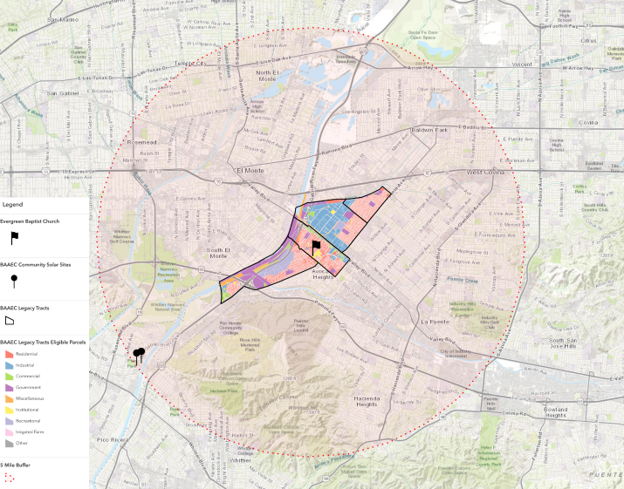
Figure 4.2.2.1 – BAAEC Community Solar Eligibility Map.
The Extra Space Storage site met the physical and locational requirements for the construction of a community solar system under the CSGT, but the company could not serve as the community sponsor of the system for the purposes of the CPA’s request for offers. The program stipulated that a local, non-commercial organization such as a school district, community-based non-profit, or municipal government needed to provide a letter of support for BAAEC Community Solar to ensure the project was in line with the priorities and desires of the people of Bassett and Avocado Heights. The Energy Coalition led this aspect of the siting and community engagement process for BAAEC Community Solar, drawing on the organization’s relationship with Bassett Unified School District and the community-based nonprofit organization tasked with outreach for Community Solar (Active SGV).
During the first half of 2021, the Energy Coalition spent weeks in regular contact with the Bassett Unified School District’s board members and the superintendent’s office, discussing with them the purpose and intention of the project. Bassett Unified School District decided to support the project based on TEC’s description of BAAEC Community Solar’s design and purpose, eventually furnishing the project with a letter of commitment. In the letter, Bassett Unified School District attested to the community’s interest in the project, citing the benefits that local renewable generation would bring to the system’s eventual subscribers. The letter also discussed the outreach, siting, and workforce development aspects of the project, in accordance with the requirements of the CPA’s 2020 CSGT RFO. Active SGV, as a community-based organization, also submitted a letter of support for the RFO application along with a detailed community outreach plan that included how the organization planned to pursue system enrollment with the help of CPA and The Energy Coalition.
Pivot’s rapid identification of willing property owners and suitable location, and TEC’s work to secure letters of commitment from Bassett Unified School District and Active SGV allowed the project partners to submit an application for BAAEC Community Solar to CPA’s 2020 CSGT RFO. Pivot and TEC’s proposal was shortlisted by the CPA several weeks after the GSGT submission deadline (March 15th, 2021).126
Pivot bid in an offtake price for BAAEC Community Solar based on its internal financial evaluation of the project. Pivot developed the estimate based on a guess as to what CPA’s internal cost cap was for new solar generation assets.127The CPA, per CPUC program requirements, kept the cost cap confidential to discourage interested developers from submitting projects with offtake prices at or just below an official cost cap (Interview w/ CPA Program Manager, Aug 2025).
CPA’s shortlisting of BAAEC Community set the PPA price128 for the project for 15 years and with no escalation. The official shortlisting also led to meetings between the CPA, Pivot, and TEC to discuss the merits and challenges of BAAEC Community Solar. These were welcome developments for BAAEC Community Solar.129 In Q2 of 2021, the CPA declared that it was pleased with the project’s application even though BAAEC Community Solar was located outside of CPA territory. Representatives from the CPA explained that although this ran counter to the CPA’s desire to locate more distributed PV generation within CPA’s service territory, it would not pose a problem for the project going forward. During Q2 of 2021, Pivot’s executive, legal, and engineering personnel became more involved in the project, and TEC began to rely fully on Pivot’s technical and legal expertise to advance BAAEC Community Solar.
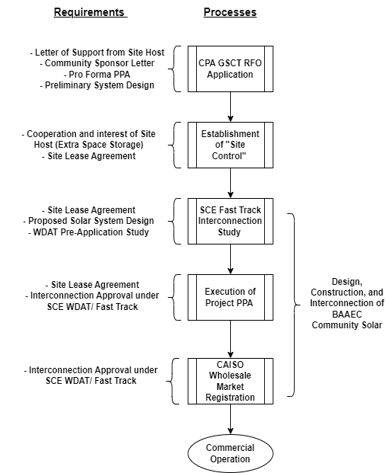
Figure 4.2.2.2 – Process Flow and Requirements for Construction & Interconnection of BAAEC Community Solar
During Q3 of 2021, Pivot and the CPA met as counterparties to discuss the terms of a PPA contract for BAAEC Community Solar. Iterating on an existing PPA contract form, the CPA and Pivot traded comments and identified a set of substantive issues that would need to be addressed for the project to move forward. First, Pivot would need to secure the interconnection of BAAEC Community Solar to Southern California Edison’s grid infrastructure under expedited review130. Second, Pivot needed to clarify with the California Independent System Operator (CAISO) whether the solar arrays on the two-building site would be aggregated into a single system for market participation, or if they would be registered individually.
For a while, BAAEC Community Solar progressed forward smoothly. The first issue to be settled was the question of how the system would be registered with CAISO. Since the proposed project was so small (~1 MW), and distributed across two separate parcels of land, the CPA and Pivot were initially unsure whether BAAEC Community Solar’s two systems should be registered separately with CAISO or aggregated as one Distributed Energy Resource Aggregation (DERA).131 Communication between Pivot, the CPA, and CAISO clarified that project arrays could be aggregated to participate in CAISO’s wholesale energy market. The CPA and Pivot also agreed to a division of ownership and operational responsibilities for BAAEC Community Solar, with Pivot Energy owning the system (through a pair of separate LLCs) and CPA taking the role of the systems’ Scheduling Coordinator (CAISO market participant and liaison).132
In August of 2021, Pivot and Extra Space Storage signed a lease for the buildings’ rooftop space.133 With “site control” legally secured, Pivot’s engineering and construction contractors were now able to access Extra Space’s buildings, assess their condition, and begin planning construction. Pivot was confident that BAAEC’s small size meant it would qualify for expedited interconnection (Fast Track) review under SCE’s Wholesale Distribution Access Tariff (WDAT), but worried that as-yet undetected problems with the site, nearby distribution infrastructure, or administrative delays at SCE would prolong the process of interconnection approval. Pivot Energy accepted these risks, and company representatives were initially confident the project would progress towards completion. During this time, Pivot’s employees and subcontractors also began refining system designs based on the orientation of the site’s buildings, and compiling cost models for both rooftop arrays.
Soon however, two interrelated problems conspired to halt progress of BAAEC Community Solar. First, Southern California Edison failed to process BAAEC Community Solar’s interconnection request in a timely manner. SCE had no procedure in place for formally notifying the project partners that BAAEC Community Solar had been approved for expedited interconnection review. Staff from Pivot Energy and The Energy Coalition needed Fast Track confirmation to proceed with PPA negotiations, and SCE’s unresponsiveness meant that TEC staff spent hours checking in with the utility’s interconnection office to get updates on their application’s progress. In interviews, staff from both organizations noted that SCE did not have the administrative capacity to review new interconnection applications within the processing times they quoted on their website, and that the pace of the interconnection review had compounding effects for the timeline of the project’s completion.134
Without proof of Fast Track approval in hand, Pivot, TEC, the CPA, were stuck in a holding pattern with respect to BAAEC Community Solar’s PPA. Eventually, interconnection delays began to endanger the project, since CPA, after receiving Pivot’s offer, would need to give the California Public Utilities Commission an advice letter 180 days from the shortlisting of the project (March 2021) for BAAEC Community Solar to progress. The delays imposed by SCE’s interconnection process made it difficult to prepare the advice letter within the allotted time. Second, inspections conducted by Pivot’s engineering contractors in Q2 of 2021 suggested that it might be necessary to structurally reinforce the existing roofs or reduce the size of the arrays to stay within the margin of safety. Luckily this was a relatively minor source of uncertainty, and the project partners were confident that the capacity solar arrays installed at the Beverly and San Gabriel sites would exceed CAISO’s minimum for wholesale market integration.135 At this stage in the project, the primary issue was getting interconnection approval, and the time pressure this exerted on the project.
However, these sources of risk were enough to cause Pivot to temporarily halt the project. In mid-Q2 2021 Pivot Energy decided to withdraw BAAEC Community Solar from consideration, explaining that the firm needed more time to evaluate the risk profile of BAAEC Community Solar and secure interconnection approval. Pivot and TEC decided to resubmit the project application during CPA’s 2022 CSGT RFO the following year.
4.2.3 – Q4 2021 – Q4 2022: PowerShare Enrollment, Re-Submission of BAAEC Community Solar, IRA Assistance, SCE Interconnection, Execution of PPA Agreement
Despite the problems encountered in Q3 of 2021, TEC, Pivot Energy, and the CPA remained committed to BAAEC Community Solar and optimistic about the project’s chances for success. The CPA communicated to the project partners that it appreciated Pivot’s candor and caution in the face of the issues with interconnection and construction. The CPA invited TEC and Pivot to re-submit the project to the 2022 Community Solar RFO, which would open in Q1 of 2022. The problems encountered during the first RFO cycle did not create dis-alignment between BAAEC partners and the CPA; all the private, nonprofit, and public actors involved remained committed to the project and its goals.
During this time of waiting, Pivot Energy, TEC, and UCLA conducted a search for alternate sites for BAAEC Community Solar using UCLA’s site selection and suitability map. Though the Extra Space Storage sites identified by Pivot Energy remained the primary focus of project efforts, TEC thought it wise to continue looking for alternative sites in case new problems with the Extra Space sites emerged. But by the end of Q2 2022, all alternative sites and site hosts identified by TEC had proven unsuitable or were uninterested in the project, and TEC and Pivot became fully committed to pursuing implementation at the Extra Space Storage sites for lack of other options. The failure to find alternative sites was not for lack of trying. TEC met with a set of local stakeholders (businesses, cities, public institutional property owners) who were initially receptive to the idea of BAAEC Community Solar, but none of these engagements went beyond initial conversations. Figure 4.2.3.1 shows TEC’s filtering of potentially suitable sites within 5 miles of the project census tracts shown in Figure 4.2.2.1.
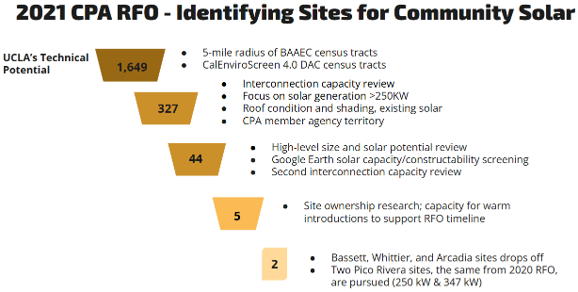
Figure 4.2.3.1 – Filtering of Alternative Sites for BAAEC Community Solar
In Q3 of 2022 the CPA submitted BAAEC Community Solar under PowerShare, and Pivot’s application for the CPA’s 2022 CSGT RFO was shortlisted by the CPA a few weeks later. This was a major success for the project, and effectively ended the search for alternative sites. TEC and Pivot had successfully rebounded from a major challenge; they found a new site and site host, secured community sponsorship for the project, and now had re-entered PPA negotiations with the CPA. Pivot’s decision to halt the project meant that 7-8 months had passed in the interim. Overall, the defection of the Church and Pivot’s decision to halt and resubmit the project delayed implementation by approximately one calendar year.
During the second go-around more critical pieces fell into place. Outreach continued to drive enrollment in CPA’s Powershare Program, the customer-facing part of the Clean Power Alliance’s Community Solar - Green Tariff program. On the project development side, technical plans and conversations continued to evolve.
In the absence of a built system, Active SGV, TEC, and the CPA were unsure about how to proceed with enrolling qualified CPA ratepayers. It was awkward to advertise a community solar system that did not yet exist, and the movement of the project site away from the project area meant that outreach staff would have to check whether potential subscribers resided within the project area and within 5 miles of the Extra Space site. Active SGV and TEC were concerned about how to target outreach geographically so as not to waste time screening ineligible participants. Without a system to which participants would be allocated, they reasoned, how should they proceed with telling ratepayers about the project, and how would the CPA track enrollments made in advance of BAAEC Community Solar’s construction?
Between Q4 2021 – Q1 2022, conversations between the CPA and TEC produced several accommodations. Regarding outreach, Active SGV would target the original project census tracts for canvassing and events, attempting to enroll as many customers as possible into CPA’s PowerShare Program. Active SGV would advertise the program (rather than the BAAEC system), as well as the 20% retail discount ratepayers would receive upon their enrollment. In turn, the CPA would, for the time being, allocate ratepayers recruited by Active SGV and TEC to other RPS-eligible generation projects.136 Once BAAEC Community Solar was completed and operational, the CPA would re-allocate enrolled customers living in the BAAEC project area to BAAEC Community Solar.137 Collaboration between Active SGV, TEC, and the CPA was fruitful. With CPA’s cooperation and resources (in the form of a small supplementary grant) Active SGV, TEC, and the CPA managed to enroll ~400 CPA ratepayers into PowerShare through their combined efforts (see Chapter 2).
On the engineering and construction side of the project, Pivot Energy’s preparation and engineering study of the Extra Space Storage properties completed during the 2021 CSGT RFO streamlined the process of re-submission for the CPA’s 2022 RFO cycle. During the interim, Pivot engineers determined that Extra Space’s roofs could indeed support the weight of the system at its original capacity: rather than being ballasted, the array could be mechanically clamped to the corrugated metal roofs of the site’s buildings
In July-August of 2022 Pivot and the CPA re-commenced negotiations of a BAAEC project PPA. As before, the execution of the PPA depended on a) approval for SCE Interconnection under Fast Track review, and b) registration of BAAEC Community Solar as a Distributed Energy Resource Aggregation (DERA) with CAISO. During the second round of project negotiations, SCE’s belated cooperation and a shift in national energy policy assisted BAAEC Community Solar towards legal completion.
In late Q2 of 2022, the Inflation Reduction Act was passed by Congress and signed into law by President Joe Biden as part of a broader legislative effort to transform and revitalize national infrastructure systems and support the growth of domestic industry. Contained within the legislation were provisions making additional investment support available for distributed renewable generation assets located in “LMI” (low-to-middle income) communities in the form of enriched federal tax equity credits and other bonuses for clean-energy projects. Measures included in the federal spending package were intended (in part) to inspire climate equity projects like BAAEC, and the timing of the bill’s passage was highly fortuitous for the BAAEC Community Solar partners. Over the course of the previous year, an inflationary macroeconomic environment, as well as supply chain and logistics issues – attributable in part to the spillover effects of the COVID-19 Pandemic – had pushed project cost estimates upwards. Fortunately for Pivot and BAAEC Community Solar, Extra Space’s buildings were located in areas that met the criteria for several of these disadvantaged community credits, which helped to defray the costs of each of BAAEC’s solar arrays.138 According to Pivot Energy’s Director of Project Origination & Development, the LMI Energy Community ITC adders, along with other IRA provisions, “worked as intended, and kept the project on track”.
In Q3 of 2022 interconnection also progressed. From Q4 2021 – Q3 2022, Southern California Edison modeled the impacts BAAEC Community Solar would have on local grid conditions, and ensured that it could, if necessary, control the system if it needed to isolate it from local circuits for the protection of customers or workers, or curtail BAAEC Community Solar’s generation. Review required Pivot to furnish SCE with single-line diagrams of BAAEC’s solar arrays, maps and renderings of the equipment installed on site, the planned location of grid interconnection junctions, as well as documentation showing compliance with SCE’s requirements for remote operation, control, and reporting requirements.
After an initial screening process, SCE approved the project for Fast Track interconnection review. Between the end of 2021 and Q3 of 2022, SCE’s grid interconnection office conducted a detailed technical review of BAAEC Community Solar’s applications materials, SCE distribution circuits, and negotiated the legal and reporting agreements for the project. While Pivot and TEC were initially relieved to have the interconnection study application accepted under Fast Track, both organizations expressed displeasure with the length of time required for approval and the manner in which SCE dealt with applicants. Both Pivot and TEC felt as though the interconnection process took too long, and that a shorter turn-around time for interconnection application would have allowed for Pivot to enter the final phases of the PPA negotiation earlier.
BAAEC Community Solar’s interconnection study and review was the single longest step in the implementation process. This was despite its being approved for a less detailed form of study. Fast Track review, like all forms of grid impact study, is a complex practice, involving the modeling of the impacts of proposed systems on existing grid infrastructure. The interconnection process required Pivot to submit engineering plans and system representations (photos, maps, renderings) to SCE, so that electrical utility (SCE) can evaluate BAAEC Community Solar’s impact on SCE’s distribution infrastructure using financial and electrical engineering models. Utilities may deny interconnection if the capital costs of interconnection exceed regulatory thresholds, but SCE determined that the investment required to interconnect the system would be minimal (due to its modest size). The interconnection process required Pivot’s engineering staff and legal personnel to remain in communication with SCE for the length of the process. Short periods of exchange between parties were bracketed by long periods of sporadic electronic communication. Staff from Pivot and TEC were frustrated by extended periods of waiting, which are often involved in interconnection processes. Despite the delays, BAAEC Community Solar was approved for interconnection to SCE’s distribution grid under SCE’s Wholesale Distribution Access Tariff in Q3 of 2022.
On December 1st of 2022, after review and approval by the CPA and CPUC, a PPA agreement was executed between the CPA and the LLCs containing BAAEC Community Solar.139 This was another major milestone for BAAEC Community Solar, and for the greater BAAEC project. Pivot Energy, having secured interconnection to the distribution grid and an offtake price, could focus its efforts on registering the system with CAISO (and constructing BAAEC Community Solar). Meanwhile, TEC, and Active SGV would continue enrolling qualified ratepayers living in and near the project area into PowerShare.
4.3 Community Solar – Post-Implementation Period (Q1 2023 – Q4 2024)
4.3.1 - Q1 2023 – Q4 2023: CAISO Market Registration, Legal and Administrative Delays, Construction of BAAEC Community Solar
Now that the project had cleared two major barriers to commercial operation (interconnection with SCE, and the execution of the PPA) Pivot could turn to the two final project tasks – registering BAAEC Community Solar with CAISO (required under the terms of the PPA) and constructing the system.
During the first round of PPA negotiations, CPA, Pivot, and SCE questioned whether it was possible, within the confines of existing regulatory framework and legal forms, to aggregate the two separate arrays on the rooftops of Extra Space Storage’s buildings. Pivot had, for purposes of legal and financial expediency, placed each system into a separate LLC, which served as the signatory to building permits, interconnection agreements, and other system-related contracts. CAISO had clarified that it was indeed possible to aggregate the Beverly and San Gabriel solar arrays, and that the Distributed Energy Resource Aggregation (DERA) generator classification would be the most appropriate generator classification for the project. The next task for BAAEC Community Solar was to register as a DERA for the purposes of selling power to the CPA. However, the formal procedure of registration (New Resource Implementation, or NRI) was new to Pivot, and CAISO, despite developing the generator classification years earlier, had never had a DERA complete registration.
In Q1 of 2023, Pivot and CAISO began the NRI process for BAAEC Community Solar. Despite having signed a PPA requiring CAISO wholesale market integration of the proposed system, Pivot Energy had little institutional experience with ISO-level market interconnection procedures and needed to ascertain which of CAISO’s requirements applied to BAAEC Community Solar. Realizing that they needed expert assistance to navigate the NRI process, Pivot contracted with private consultancy GridSME for help deciding which regulations applied in their case, and advice on how to comply with the applicable regulations. GridSME also served as the intermediary for communication between Pivot and CAISO, organizing interaction between the two parties through their web portal.
Between Q1 and Q3 of 2023, GridSME and Pivot Energy proceeded through the NRI process with CAISO. During this time, GridSME helped Pivot to identify which of CAISO’s regulations applied to a system with a capacity much smaller than most other registered generators. According to staff from Pivot, GridSME and CAISO, deciding which of the “many hundreds, perhaps thousands” of pages of regulations pertaining to activities related to wholesale market participation applied to a system of BAAEC’s size required months of study and cooperation between parties.140 In a manner similar to SCE’s review of BAAEC Community Solar, CAISO reviewed technical documentation prepared by Pivot and GridSME to assess what impacts BAAEC Community Solar would have on wholesale market dynamics, the operation of transmission infrastructure, and required the installation of separate communications and metering equipment on the system’s premises. 141 GridSME’s assistance was vital for the successful completion of NRI and market integration; without help from electrical engineers and project managers familiar with CAISO’s regulatory requirements, Pivot would have been unable to navigate the NRI process. In interviews, staff explained that most of Pivot’s community solar projects involved bilateral contracts between project-specific LLCs and electrical utilities.142 According to Pivot staff, meeting CAISO requirements posed a greater challenge than they had initially anticipated.
The NRI and registration process was time and labor intensive, involving video conferencing and the digital exchange of application materials, system data, and legal documents. However, it was not clear to all participants why wholesale market integration was necessary for a system of BAAEC Community Solar’s size (670 kW). In interviews, staff from Pivot Energy and GridSME acknowledged that the scale of the system appeared not to justify the time and energy of the NRI process. Interviewees from Pivot and GridSME maintained that the modest scale of the two systems (0.27 and 0.40 MW) meant that the electrical power they supplied would in all probability remain within local distribution circuits and would not likely flow upwards into CAISO-operated transmission infrastructure (~12 kV). According to personnel from GridSME and Pivot Energy there appeared to be no compelling need to integrate a system of BAAEC’s size into a regional wholesale market. However, interviewees from Pivot, GridSME, CAISO, and CPA all acknowledged that BAAEC demonstrated it was possible to aggregate multiple, geographically distinct PV generation assets into a single “system” for the purposes of wholesale power exchange. Irrespective of these considerations, BAAEC Community Solar’s PPA required that the system(s) participate in CAISO’s wholesale markets for the purposes of exchange with the CPA.143
At this time, BAAEC project partners were confident that the system would reach commercial operation between Q4 2023 – Q1 2024. However, several issues remained unresolved. The first concerned the aggregated nature of the system. Early in 2023, council from SCE informed Pivot Energy that SCE would need to revise the distribution services section of BAAEC Community Solar’s interconnection agreement and presented Pivot with a revised interconnection contract. By their own admission, SCE stated that it had not adequately considered (“from a legal perspective”) what it meant for the two BAAEC solar systems to be “aggregated”. At issue was the fact that BAAEC Community Solar consisted of two systems placed in separate project LLCs (a common risk-mitigation practice for solar developers).144 Belatedly, SCE realized that the distributed, aggregated system needed a single distribution services agreement with a single signatory party responsible for both systems included in BAAEC Community Solar. Early in 2023, SCE shared a new agreement with Pivot Energy, which was reviewed and revised by Pivot and SCE’s legal departments. Ultimately, however, Pivot and SCE agreed to leave the original distribution services agreement in place. Both the CPA and the Pivot expressed no intention of building another small, aggregated system like BAAEC in SCE territory.145 Both parties also hoped to avoid additional delays and the cost of signing a new distribution services agreement. By the end of 2023, the issue was considered resolved, though neither Pivot nor SCE was particularly satisfied with the outcome of the process.
The second issue concerned the identity of the scheduling coordinator for BAAEC Community Solar. During the first round of PPA negotiations (2021-22) CPA had agreed to act as the scheduling coordinator for the system (i.e., the party responsible for scheduling generation with CAISO, as well as maintaining communication with the ISO). To assist with the day-to-day management and scheduling of the system, CPA contracted Tenaska Power Services Co. to serve as the scheduling agent in late 2023.
Construction of BAAEC Community Solar proceeded in parallel with the completion of interconnection and market registration. From Q1 – Q3 of 2023, Pivot Energy drew on internal loans (i.e., transfers of capital between Pivot’s parent company and itself) to prepare the site, locate and source the physical components of the system, and secure approval from the city of Pico Rivera’s building and fire inspection offices. As of Q2 of 2023, Pivot had estimated that the project would proceed through the stages of construction planning, procurement, permitting, construction, and reach commercial operation by Q4 of 2023. County fire and building inspection processes terminated in the approval of the system(s) applications. Towards the end of this period, the actual construction of BAAEC Community Solar (installation of racking, electrical equipment, and the construction of the systems’ points of interconnection) began. By Q4 of 2023, Sunworks, Pivot’s primary EPC contractor, had completed a considerable portion of the construction work for BAAEC Community Solar, and the system had passed initial inspections from local permitting authorities.
4.3.2 - Q1 2024 – Q4 2024: Finalizing Contractual Arrangements, Financing & Construction Delays, Nearing Commercial Operation.
Despite clearing the three main hurdles to commercial operation (execution of the project PPA, SCE interconnection, CAISO NRI/ wholesale registration) and beginning construction, several issues conspired to push back the estimated dates of mechanical completion and commercial operation to Q3 2024. In Q1 of 2024, SCE had not yet completed the work necessary to connect BAAEC Community Solar to local distribution circuits. Although BAAEC needed relatively little to interconnect to nearby distribution circuits (runs of wire, 2 utility poles), SCE was slow to complete construction. In response, Pivot invoked contingency clauses in the project PPA to avoid paying for damages to CPA associated with the delays imposed by SCE’s failure to complete interconnection work in accordance with the agreed upon timeline. In Q1 of 2024, the estimated date for mechanical completion/ commercial operation was pushed back first to Q2 of 2024. During this time, Pivot Energy made the best of the delay by including BAAEC Community Solar in a new tax equity fund the company opened earlier in the year.
As Q2 of 2024 approached, Pivot’s engineering, procurement, and construction contractor for BAAEC Community Solar – SunWorks – filed for bankruptcy. SunWorks’ bankruptcy stay imposed yet another delay for the mechanical completion/ commercial operation of the system. The terms of SunWorks’ bankruptcy stay meant that Pivot could not immediately re-contract with another EPC contractor. In the meantime, Pivot prepared to contract with one of SunWorks’ subcontractors, Endelos, to complete the work SunWorks had begun and partially completed. SunWorks bankruptcy pushed back BAAEC’s commercial operation date yet again, to the middle of Q3 2024. This delay was not an “excused” delay under the terms of the project PAA. Pivot Energy paid damages to the CPA for project delivery delays stemming from SunWorks’ bankruptcy proceedings.
By Q3 of 2024, it became clear that distribution interconnection and bankruptcy delays would require amendment of the project PPA: the timeline for commercial operation was extended to the end of December of 2024. CPA was willing to grant this extension in the interest of completing the project. Late in Q3 2024, Endelos was finally onboarded as the new project EPC contractor, allowing the firm to complete the construction of the system and perform grid interoperability testing in anticipation of commercial operation.
During Q3 – Q4 of 2024, BAAEC Community Solar reached ‘mechanical completion’ in advance of the two final milestones to commercial operation: finishing CAISO’s NRI process, and the completion of municipal (county) fire inspection. CAISO’s NRI process concluded in January of 2025, and a fire permit for BAAEC Community Solar was issued by the LA County Fire Department in early February 2025. BAAEC Community Solar commenced commercial operation on the 28th of February, 2025.
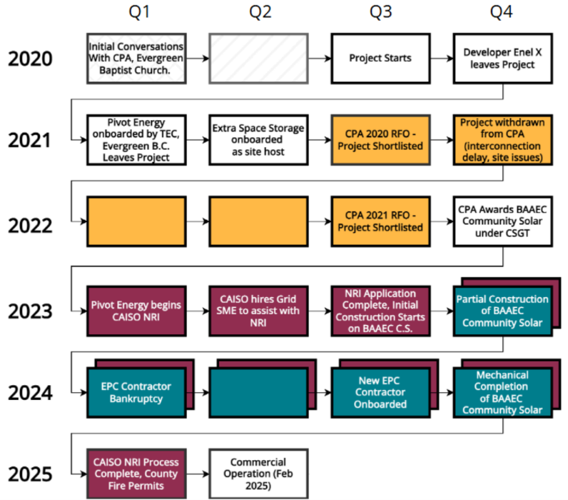
Figure 4.3.2.1 – Implementation Timeline for BAAEC Community Solar. Colors indicate Fast-Track Approval (Yellow), CAISO New Resource Implementation (Purple), and Construction of BAAEC Community Solar (Blue).
4.4 – Analysis of Project Process & Outcomes
BAAEC Community Solar followed a difficult and circuitous path to mechanical completion and commercial operation. Ultimately, however, the partners involved in the grant reached their goal: the generation of lower-cost, renewable electricity for low-income ratepayers. The project also achieved a unique technological distinction in becoming the first system of its kind (a Distributed Energy Resource Aggregation) to reach commercial operation.
BAAEC Community Solar faced numerous setbacks, including the knock-on effects of COVID-19 pandemic, the defection of the Church, the withdrawal and resubmittal of the project to CPA, and SCE’s lengthy interconnection review. Changes to the system’s design necessitated by the change in location (carport canopy to separate, aggregated rooftop arrays), and its integration into CAISO’s wholesale market also created challenges for the project, requiring Pivot to seek help from a highly specialized third-party consultancy (GridSME). BAAE Community Solar’s technical novelty (itself a response to a contingency – the defection of the Church and uncertainty about CAISO’s wholesale market regulations) complexified the assignment of roles under the project PPA and lengthened the process of review and approval. However, the presence of dedicated grant funds, enriched tax equity offerings made available under the Inflation Reduction Act, and the cooperation of Extra Space Storage and the CPA helped the project partners to weather repeated delays.
BAAEC Community Solar has so far been less successful in reaching its secondary and tertiary goals: creating a replicable and scalable model for community-scale solar in urban, disadvantaged communities, and providing financial benefits to those communities hosting community-scale systems (both site hosts and ratepayers). In the following sections, we discuss the challenges the project met, how the actors involved dealt with these challenges, and discuss what lessons can be drawn from the project regarding the future development of California’s community solar programs.
4.4.1 – Process - What does it mean to “scale”?
BAAEC Community Solar undoubtedly achieved its primary goal: the implementation of a community-scale system near Bassett and Avocado Heights providing financial benefits to local subscribers. In the months after February 2025 eligible ratepayers in the project area were re-allocated from CPA’s portfolio of DAC-GT systems to BAAEC Community Solar. With this final step, BAAEC Community Solar fulfilled its main purpose – to provide low-income ratepayers with locally generated, renewable, and lower-cost electricity. – the demonstration of a scalable and profitable approach to building more community-scale solar systems – the results of BAAEC Community Solar are mixed. This is not, however, for lack of foresight on behalf of the implementation partners. The construction of megawatt-scale, front–of-the-meter solar PV and storage systems in urban areas is an expensive and complex undertaking, even with consistent state programmatic and investment support. Policy conditions also changed considerably during the course of the project.
Under existing regulatory conditions, Building distributed energy systems connected to existing infrastructure only become operational through a set of contractual, regulatory, and permitting processes that involve a large and evolving intersectoral assemblage of organizations. As we saw, processes of public review and permitting - grid interconnection, wholesale market integration, building, electrical, and fire inspections - was arduous, and involved conforming with the requirements of the grid and the desires of the actors involved.
BAAEC Community Solar took an innovative approach to implementation, and the narrative above testifies to the individual partners’ willingness to experiment with new infrastructural arrangements, their entrepreneurial energy, and their commitment to the public good. Through careful planning and the creative use of the DERA generator classification, BAAEC Community Solar’s partner organizations achieved a notable technological first in addition to providing renewable, more affordable electricity to their system’s subscribers. BAAEC Community solar is the first project in California to register separate rooftop arrays as a single generating asset under CAISO’s DERA classification, consummating CAISO’s (and later FERC’s) desire to include novel, distributed system types within wholesale markets.
While this is an impressive achievement, does BAAEC Community Solar represent a replicable or scalable path towards further implementation? Not all actors involved agreed about BAAEC Community Solar’s scalability or replicability. Though BAAEC has succeeded where others have failed, some project partners felt that building the first DERA required too much time and labor relative to the capacity of the system to be economically attractive, and that BAAEC Community Solar did not present a scalable or profitable approach to expanding distributed, “community scale” generating capacity. Pivot, as first time CAISO registrants, found the CAISO’s New Resource Implementation process complex and time-consuming, requiring Pivot’s hiring of GridSME to advise the firm on how to comply with registration and reporting requirements. GridSME representatives reported that registering BAAEC Community Solar was challenging not only because it was their first time through the DERA registration process, but also because its size made it hard to know which rules and regulations applied. When asked about scalability and/or replicability of BAAEC’s approach to community solar, some representatives from Pivot and Grid SME said they saw little sense in replicating a distributed, aggregated system like it unless the system’s generating capacity could be increased significantly, or its PV array could be paired with battery storage. Either of these options might help justify the cost of wholesale market registration they said, but GridSME representatives hastened to add that it was highly unlikely that electricity produced by the system would backfeed beyond local distribution circuits. Capacity and storage-pairing aside, representatives from Pivot and GridSME stated that unless the NRI process was streamlined for smaller systems, or unless wholesale prices for electricity were to rise significantly, other developers and electricity retailers were not likely to find BAAEC Community Solar’s path to offtake economically feasible. Regarding contracting arrangements with CPA, Pivot staff said they would have preferred to enter into some sort of bilateral agreement with the Clean Power Alliance rather than go through the trouble of registering the system in the wholesale market, but understood that registration was necessary because the CPA, as a community choice aggregator, did not and could not be responsible for scheduling and operating BAAEC Community Solar itself. Though the CPA’s support for the project was vital for its success, the fact that CPA needed the system to be integrated into CAISO’s wholesale market and operated by a third party scheduling agent (Tenaska) also made implementation more time consuming and costly. A bilateral power purchase agreement that did not include CAISO registration would have saved the partners time and money, but the location of the project, the fact of its being aggregated, and the early support of the CPA for BAAEC made interconnection through SCE and CAISO a necessity.
Aside from the issues the partners discovered as a result of going through the wholesale registration process, interviewees also cited the flawed and overly-complicated nature of California’s existing community solar programs as another factor militating against replicability and scalability. In interviews, representatives from Pivot Energy criticized the design of the Community Solar-Green Tariff program, and what they perceived as the CPUC’s hostility to distributed generation and storage. Pivot staff members offered a critique of the CSGT program that closely paralleled those made by other developers and interest groups supportive of a more distributed, co-located approach to renewable generation and storage. Staff from Pivot Energy and other solar developers interviewed for this study said that the DAC-GT and GSGT included many requirements were not easy for developers to accommodate (such as CSGT’s community-system proximity requirement), but their biggest problem with both programs was that the electricity offtake prices they offered were too low for urban, in-basin projects, which are typically more expensive to develop than ‘greenfield’ alternatives. Pivot staff explained that the CSGT cost cap for community solar was calculated based on data from systems ranging from 20 MW to 500 kW, and that lumping BAAEC-scale systems in with larger ones resulted in an artificially low offtake price for power. This, in one staff members’ description “killed the economics” for community-scale solar and storage. Staff from Pivot Energy and representatives from other developers said that scaling (replicating) systems like BAAEC’s depended on the Public Utilities Commission updating its community solar programs to reflect the added value of distributed, in basin solar and storage. Only with fair offtake prices would developers be able to “rinse and repeat” the installation of community-scale systems interconnected to distribution-level circuits. According to Pivot and other solar industry advocates, locating generation and storage in-basin would decrease the need for additional investment in transmission infrastructure, greater infrastructural resilience overall, and was a way for the private sector to provide low-income customers and others relief from increasing electricity rates. But Pivot hastened to add that the materialization of the aforementioned benefits depended on the state “getting the policy right” vis-a-vis community solar. Only when regulators woke up to the benefits of distributed, in-basin resources, or when legislators forced the CPUC to value the electricity and other benefits of community-scale renewable systems justly and fairly would the people of California benefit from community solar and storage development.
Most readers of this study are likely aware of the fact that community solar is one flashpoint in a larger political battle over how to transform the electrical grid to meet the moment of socioecological polycrisis in which we find ourselves. What the case under consideration shows is that the primary obstacles to scaling community solar and storage are not technological, but pertain to the ways in which electrical infrastructure is constructed and operated, and how electricity is commodified in California.
4.4.2 – Process - Subscriber Benefits and Community Involvement
In terms of local benefits, BAAEC Community Solar is the reason why ~300 ratepayers in the project area receive a 20% discount on their electricity bills. This is undoubtedly a positive development from an equity perspective, but observation of BAAEC Community Solar’s outreach efforts showed that many of the PowerShare subscribers that were enrolled by Active SGV are probably not aware of the BAAEC system’s existence, could not describe how virtual allocation works, and do not know the identities of the other residents involved in BAAEC Community Solar. This situation, where customers are enrolled as passive recipients, differs considerably from community solar projects emphasizing local ownership and operational control over distributed renewable systems. In some community solar projects, local actors are involved in the engineering and financial aspects of implementation, and the construction of energy infrastructure serves as an opportunity to draw participants into communal management and ownership arrangements. However, the complexity and commercial character of BAAEC Community Solar’s specific path to offtake – through CPA’s portion of the CSGT program and wholesale market integration – did not afford local actors many opportunities to participate in the siting, design, and operation of BAAEC Community Solar. With the Church’s exit from the program and the enrollment of Extra Space Storage, BAAEC Community Solar shifted from a community-sited project whose land rent was captured by the Church to one outside the project area and owned by a national real estate trust.
Given the technical complexity and capital-intensive nature of the project, it is difficult to imagine how local or civic actors (especially those without a local municipal government) could have initiated the construction of a community solar system like BAAEC’s without the organizational capacity and resources of TEC, Active SGV, Pivot Energy, and GridSME. TEC and Active SGV were also assisted by the supportive posture and additional funding they received from the CPA. And the contractual, legal, and official negotiations concerning BAAEC Community Solar required the participation of people with various kinds of technical, financial, and community engagement expertise. Even if local actors had the land, the approval of their voters, and money to spend on community solar, their relationship with the construction and operation of the system would be as planners or owners, but as recipients of revenue streams and on-bill benefits.
The design of the CPA’s PowerShare Program and complexity of the siting, permitting, and interconnection processes for BAAEC Community Solar also made it difficult for subscribers to understand the relationship between the 20% bill discount, the power share program, and the operation of BAAEC Community Solar. Observation of outreach activities and interviews with outreach staff revealed that it was difficult for staff to communicate what BAAEC Community Solar “was”, and to explain the relationship between BAAEC Community Solar and the PowerShare bill discount. Consequently, most of the interactions between PowerShare subscribers and Active SGV staff concerned how to apply for the program and what information homeowners needed to verify their eligibility. Although the material impacts of the project on participants are far from trivial, it should be noted that PowerShare enrollees must re-certify their eligibility status every two years or risk being unenrolled. Finally, BAAEC Community Solar’s change in venue meant that rent from the system’s site lease would be captured by a corporate partner, and not a landowner within the project area (business, church, or public entity). Overall, the complexity of contracting arrangements, and the opacity of state policy, make it difficult for local actors in DACs (both public and private) to enjoy the financial benefits of their operation, despite the existence of federal direct-pay mechanisms designed for non-profit and public entities (in place at the time of the project). Any intervention that aims to increase the wellbeing of a community involves explicit and implicit determinations about who is part of that community, and how the members of that community are to benefit from the intervention. But how open was BAAEC Community Solar to the community it intended to serve?
BAAEC Community Solar is among the most successful of the scopes included in BAAEC, but its course and results reveal how state community solar programs are structured around a scalar, demographic notions of community. As summarized in the previous section, BAAEC Community Solar is an example of public, private, and nonprofit actors building a new model for distributed, front-of-the-meter generation, one potentially allowing community solar systems to scale across urban areas. This is an important achievement, but the project’s realization involved only assent from supportive local institutions (Basset Unified School District) and a non-profit headquartered in the neighboring city of El Monte (Active SGV). These entities had to serve as representatives of the communities of Bassett and Avocado Heights, standing in for the interests of residents and other local organizations or groups. Furthermore, its distributed, aggregated design only developed in response to the change in project site and the uncertainty surrounding CAISO’s capacity threshold for wholesale market integration. Although BAAEC Community is an example of a successful ‘equity’ project, its evolution reveals the extent to which existing community solar programs are tailored to the needs and capacities of private solar developers. It also shows the legal and technological complexity of grid integration procedures (siting, design, interconnection, and market registration). Thus the results of BAAEC Community Solar poses an interesting and policy-relevant question: should efforts to “scale” community solar focus on the proliferation of specific kinds of distributed solar and storage systems, or the building of a community enjoying collective ownership and management of distributed energy infrastructure?
BAAEC Community Solar shows that the CPUC’s equity-focused community solar programs are designed to engender productive partnerships between private solar developers, electricity retailers (utilities, CCAs), and entities responsible for grid operation and maintenance (IOUs, CAISO). Current regulatory and policy practice invites developers to consider disadvantaged communities as places where commercial opportunities might lie: federal and state programs prioritizing low-income and environmental justice communities for clean energy investment help to reduce the cost of building community solar in these places. We find here that the current model of encouraging community solar development does not result in a high degree of local operational control or ownership of ‘community’ systems. In practice, California’s community solar programs have resulted in a small number of financially viable community solar systems. The overriding consideration for private developers of community solar developers is whether planned systems function as capital, or, as representatives from Pivot Energy explained, whether a first project leads to more and better projects with the same or slightly different partners in the future.
For reasons mostly outside of their control, the BAAEC Community Solar project team did not have the opportunity to involve project area residents deeply in questioning the purpose of Community Solar. From the outset, BAAEC Community Solar was not a process for planning a future system driven by local representatives and shaped by local politics, but of building a fully functional prototype and “scalable model” that others could use.
4.4.3 – Process - How do private developers approach Community Solar?
As the case of BAAEC Community Solar demonstrates, the power to build out community solar in California is held by developers, utilities, CAISO, and the CPUC. These actors share responsibility for ownership and operation of distributed solar generating assets under California’s legal-regulatory regime for solar power development. To build new systems, these actors negotiate, within certain geographic and legal constraints, to determine a location, configuration, and operational constraints that govern electrical infrastructure and land use. For any particular Community Solar system (or other grid-connected DERs) there exists a series of contracts stipulating the rights, responsibilities, and liabilities of those involved in the system. Establishing the relationships among, in this case, TEC, Pivot, SCE, CAISO, GridSME, the CPA, and several specialized law firms, was highly formalized, and concerned the functioning of BAAEC Community Solar as a) a grid connected generator, b) a wholesale market participant, and c) a revenue-yielding investment. This extensive calculative and deliberative inner work of BAAEC Community Solar comprises the field that nonprofits, local governments, and private developers must navigate together to bring community solar projects to completion.
With respect to BAAEC Community Solar, parties exercising operational control over the system include the CPA, Tenaska, CAISO, and Pivot Energy. Wholesale prices for electricity are set according to a whole-grid perspective. Electricity retailers are relatively constrained with respect to the prices they will pay for power from PV solar generating arrays, though, as we saw in the case of BAAEC, PPA contracts may allow for upward or downward revision of offtake price under extenuating circumstances. As takers of electricity prices, private developers have a strong incentive to locate new solar generating assets in places where the cost of construction and operation are lowest (i.e., to minimize their up-front investment and fixed costs). The spatial search for feasible and profitable opportunities is conducted by solar developers through proprietary GIS systems, the targeted cultivation and personal and professional contacts, and the development of detailed financial models of potential system sites.
The identification of suitable sites and site hosts for community-scale solar combines a spatial search for suitable locations and a social search for willing and cooperative site hosts. It involves the identification of a location which is physically favorable for the operation of a community-scale system, and a party willing to enter a contract granting permission for construction. To find suitable sites community-scale solar developers consult a variety of digital maps and financial models to identify and assess the profitability of generation projects in particular locations, but once suitable locations have been identified, the owners of those properties must be bought under contract for projects to proceed forward.146 The establishment of “site control” depends on the voluntary participation of a “site host” – a party who rents or sells a portion of their property to the developer. As BAAEC Community Solar shows, the cooperation of a site host is an essential first step towards the construction of a system. The notion of “site suitability” combines social and geographic considerations, and is central to the business of building, owning, and operating solar PV generating assets.
On the social side, finding suitable sites depends on the receptivity of local electrical utilities and the communities they serve. From the solar developer’s perspective, the appetites of electricity retailers for distributed solar generation, and the ease with which they can navigate PPA negotiation and interconnection processes make certain territories more promising than others. Demand for distributed renewable generating capacity among electricity retailers is not uniform, and some electric service providers make better business partners than others. Similarly, local groups may support or oppose community solar projects on aesthetic, political, or economic grounds. Local opposition to solar development, or simply a lack of interest in solar PV generation as an economic proposition, affects the business environments in both urban and rural settings. To find suitable sites, solar developers search for places where the costs of securing control of a project site are either “naturally” low or are defrayed by state and utility programs providing them investment support. As we have seen, BAAEC Community Solar made use of both state funding and IRA measures, and the utilization of these benefits, when applicable, is seen as standard industry practice. Community solar developers also frequently partner with nonprofit and civic organizations to build local support for project implementation. With respect to arranging contracts and formalizing relationships for the development of community solar, the presence of structured programs offering certain financial benefits to solar developers, as well as the willingness of electricity retailers and local landowners (and other community members) to go along with solar projects are important conditions for the profitable “scaling” of a community-scale solar systems. Ultimately, community solar developers aim to “rinse and repeat” projects – to replicate successful projects in specific utility territories and with a variety of landowners.
On the geophysical side, several spatial constraints make certain areas or properties more or less attractive for for-profit, community-scale solar PV generation. Physical suitability depends on a) the cost of site preparation, b) the proximity of distribution-level grid infrastructure to the site and its utilization capacity, and c) the size of the site.
In the first instance, site preparation is generally less expensive per unit area of capacity installed in rural or greenfield locations where minimal construction work is necessary, and land ownership is often consolidated. Such sites also typically offer room for systems on the order of 10s of MWs, and consolidated ownership makes it easier for developers to negotiate land options.147 Although development costs are typically lower in rural areas, the proximity and condition of grid infrastructure is also an important factor in deciding whether a community-scale system can be profitably constructed. If the utility determines that significant investment is needed to move electricity from the site, or existing infrastructure is overutilized, developers may decide to forgo construction.
Urban areas often present smaller opportunities for system buildout (the largest rooftop system in Los Angeles County, among the largest in the world, is 16.4 MW), and the transaction costs of development are higher.148 Rooftop, front-of-the-meter systems like BAAEC Community Solar’s are frequently less than 1 MW, and the upfront costs of making use of urban, in-basin sites include the structural remediation of buildings (especially rooftops) or other physical modifications (installation of car lot ground mounts, removal of trees, burying of electrical equipment), and negotiating with multiple parties who own, occupy, and/or lease properties. Although grid infrastructure is often physically closer to urban community-scale systems, the capacity of nearby circuits and substations to accommodate the electricity feeding back to the grid may be limited by the size, age, or configuration of specific grid elements. Though lines are closer, they may also be older and more highly utilized. Together, the spatial and social aspects of suitability interact in complex ways, producing an equally complex landscape of opportunity for developers, site hosts, electricity retailers, and ratepayers. Developers evaluate the social, geographic, infrastructural, and policy aspects of each potential project, and try, if possible, to replicate successful models until they exhaust them.
4.4.4 – Factors Determining Site Suitability and Scalability
The suitability of any “site” is a function of the interest of human actors and the physical characteristics of locations. As we have seen, profit margins tend to be smaller in urban areas, where extensive subdivision of land ownership and the presence of a densely populated built environment complicates the process of upscaling community-scale solar generation. Urban sites are typically smaller and make-ready work tends to be more expensive than for ideal greenfield sites. To build larger systems in urban areas, solar developers must approach property owners with ample suitable space (rooftop or otherwise), or aggregate systems across buildings. The defection of the Evergreen Baptist Church from the project demonstrates how essential local support for community solar projects can be for their success. The Church, having decided that it was not in their interest to proceed with the project, nearly caused BAAEC Community Solar to miss the deadline for the CPA’s first CSGT RFO. Moreover, the Church rejected participation for reasons that had little to do with the financial aspects of the project: they felt as though construction would be too disruptive and would potentially oblige them to change how they controlled access to their property. Other local actors were also not capable or suitable hosts, and TEC’s sustained engagement with the local school district was necessary for the project to secure local sponsorship. The fact of Pivot’s existing business relationship with Extra Space Storage, and the location of one of its facilities within 5 miles of the eligibility area, were ultimately critical for project success given the amount of time required for SCE interconnection and CAISO’s New Resource Integration. Although the project may have been able to negotiate a site lease with another large building/ property owner in the area between the CPA’s first and second CSGT RFOs, the fact that a commercial partner needed to be sought for a “community” system speaks to the relative difficulty of interesting small businesses and institutional actors in hosting systems. Despite GSGT’s promise of credits for a certain percentage of the site host’s load, the program’s cancellation by the CPUC meant that BUSD ultimately received no financial benefits for acting as the project’s community sponsor.
BAAEC Community Solar’s distributed, aggregated approach to community-scale generation is, in this instance, an attempt to work around urban socio-spatial constraints to urban, in-basin renewable generation with a technological fix. The aggregation of separate solar PV systems into a single wholesale market registrant (a DERA) opens the door to the possibility of generators that consist of many distinct but digitally networked solar PV systems. A distributed, networked approach to community solar could allow solar developers to scale across urban space, incorporating many separate systems into a single generating “facility” for the purposes of wholesale power exchange. However, the project partner’s experience with identifying and interesting property owners other than Extra Space Storage, and the project’s experience with interconnection and market registration, suggests that this process of gathering multiple site hosts into an aggregated ‘system’ would be time and labor intensive.
However, profitability alone no longer defines what is or is not a “suitable project”. There is a growing consensus among state and industry actors that the value of community solar is not adequately accounted for, and that theories of social and environmental justice should be factored into corporate strategy and business practices. From a business perspective, however, distributed renewable systems like BAAEC Community Solar need to earn a return on investment to provide economic and environmental benefits. Pivot, GridSME, and the CPA agreed that “policy” was at the center of solving the problem of profitability, with Pivot representatives saying that the future of California’s community solar market was uncertain, “policy-dependent”. Whether the new community solar program under review by the CPUC addresses the policy critiques raised by organizations like the project partners, the Coalition for Community Solar Access, and other groups is an open question.
4.4.5 - What Form of Community do Community Solar Programs Create?
The primary means of driving renewable reinvestment in disadvantaged areas is the attachment rebate and equity benefits to official geographies of social and environmental disadvantage. The Inflation Reduction Act, as well as California’s state legislature have created maps that spatialize socioeconomic and socioenvironmental disadvantage. These geographical and categorical definitions of disadvantage are supposed to aid in guiding renewable investment towards historically disadvantaged and polluted areas. The IRA’s tax equity bonuses, and California’s “equity-focused” programs operate under the assumption that “disadvantaged” or “environmental justice” communities will benefit from renewable energy investment. As a sociotechnical demonstration, BAAEC Community Solar set out to develop an approach to community-scale solar in DACs that could generate value for participants, project partners, and lessons about how to advance a greater project of equitable energy transition. The results of the project show that satisfying all parties as possible with grant funding, community engagement, and intersectoral cooperation is indeed possible, but that without substantial policy changes, BAAEC did not represent an attractive model for commercial developers.
The DAC-GT and CSGT programs largely define “community” in terms of scale, but because they are ‘equity-focused’, they also require projects to secure official support from local and legitimate representatives of the community through structured outreach and education activities. Conforming to the requirements of the CSGT program meant finding and enrolling a set of subscribers and a local site host for the system, if possible. When it became clear that BAAEC Community Solar was going to move to Pico Rivera, TEC sought the official community sponsorship of Bassett Unified School District. BUSD gave this support willingly, but only after TEC had made formal presentations to the school board and met repeatedly with BUSD representatives about BAAEC. TEC’s conduct fulfilled the intention of the program’s community sponsorship requirements, but it is difficult to describe the kind of community that evolved in the case of BAAEC Community Solar. On the participant side, there is a shifting cohort of low-income customers near the system, on the project side, an intersectoral coalition of nonprofit, public, and private organizations running an experiment with existing policy and technology. A pool of project subscribers does enjoy bill discounts because of the system, but CPA and Pivot derive most of the benefits from BAAEC Community Solar’s operation. Overall, the course of the project suggests that enmeshment in the existing legal and physical infrastructure of the grid, while necessary for community solar projects to make business sense, narrows and constrains the roles that local actors can play in them. Even with grant funding from the CEC and CPA, the roles that local participants could play (recipient or site host) were firmly fixed by the structure of the GSGT program. Furthermore, the technical and official nature of BAAEC Community Solar’s negotiations, as well as the change in site, required TEC and Active SGV to act as representatives of the community during most of the project’s development. Whether deeper forms of local participation are possible is also an open question for future community solar program development.
4.5 - Policy Considerations & Recommendations
The following are a set of policy considerations and recommendations identified by the authors and interlocutors interviewed in the course of implementing BAAEC Community Solar.
4.5.1 - Policy Considerations
Consideration 1 - Policy Dependency and the Question of Local Power Exchange
- The consensus among solar developers and energy policy professionals interviewed for this study is that California’s community solar programs lag behind those of others. Pivot Energy and other solar developers interviewed for this study said that that the reason for this lag was regulatory: the CPUC was not interested in community-scale, in-basin solar and storage because because its leadership is aligned with the investor-owned utilities who they say envision a centralized approach to growing renewable generation and storage capacity. Regardless of whether this explanation for the CPUC’s recent decisions regarding community solar is correct, the fact remains that community-scale solar and storage is “policy-dependent”. Pivot’s decision to pursue more community scale projects in California depended on whether the state could “get the policy right”, and create a landscape of opportunity for investment more favorable than the existing one. Staff from Pivot Energy said they’d reconsider doing business in the state once the details of new Community Solar programs emerged.
- For the variety of supporters of community solar and storage in California interviewed for this study, the question was not whether to open “distribution level” circuits to megawatts of solar generation and storage capacity. When asked, many people involved with BAAEC and other similar projects were confident in the capacity of “local circuits” to support a separate local (distribution level) exchange, ahead of the bulk power systems. This separation between functionally continuous scales of electrical infrastructure would only be possible, according to policy and industry professionals, if the CPUC and investor-owned utilities create a market framework for local power exchange, or allow other actors to build and facilitate local markets
- Supporters of community solar and storage are concerned with the questions of whether the state will a) treat distribution infrastructure as a physical basis for a “local” power exchange and b) reign in the power of the utilities to shut down experimentation with new technologies. The question of how to create such a development-friendly landscape hinges, in part, on whether electricity from community scale, “co-located” systems should be compensated at a premium because of their ability to meet load locally, support the smooth functioning of the grid, and reduce the need for transmission infrastructure investment.
- Developers and other supporters of distributed generation and storage technologies argue that opening the distribution grid to community scale generation and storage assets will help us build a more flexible, renewable, and equitable electrical grid, delay investments in additional transmission infrastructure, and create opportunities for “communities” to participate in (if not benefit from) the energy transition. Whether the claims made on behalf of community solar are true, developers, at bottom, need these systems to function as investments in order for them to follow through with the process of financialization and construction.
Consideration 2: The Power Dynamics of Project Development:
- Though many community solar projects do emerge from within “communities”, many others emerge from without. Private developers, who have the organizational capacity and capital to plan, design, and finance community solar and storage systems, typically engage the community only after they are reasonably certain that one or more sites in a given set of legal and physical geographies are commercially viable. Only once developers are relatively certain that the planned system is a good investment do they attempt to engage with community representatives or begin local permitting processes.
- BAAEC Community Solar attempted to engage with local stakeholders in a manner that went beyond consultation with a group of local representatives and residents. Working with Evergreen Baptist Church, TEC would help them develop the resources they had with the assistance of the grant. The project also counted on the support of the CPA, who helped Active SGV and TEC enroll and distribute benefits to subscribers.
- But as we saw in Sections 4.3 and 4.4, it was the developer (Pivot Energy) that took charge of the project after CPA agreed to enter into PPA negotiations. Pivot drove the highly formalized and demanding process of translating a planned community solar system into a grid connected asset for the other partners and participants. To do this, Pivot Energy needed legal and regulatory expertise, the services of a highly specialized third-party construction contractor, and to negotiate local building/electrical and grid permitting procedures. The process of siting, design, and construction
- BAAEC shows just how dependent local and nonprofit actors are on the willingness of developers/ investors and utilities to build a community solar system. “Local”, municipal, public, and civic organizations can and often do bring considerable resources to bear on local projects, but such organizations are often looked to as partners in outreach, rather than in design and ownership of distributed renewable systems/ electrical infrastructure.
- Local actors, community based nonprofits, and other non-firm organizations have to partner with developers and investors to build grid-connected, front-of-the meter assets. Interconnecting a community solar system like BAAEC’s requires a carefully choreographed movement through processes of planning and execution, involving months to years of legal and administrative work that sit upstream of physical construction.
4.5.2 - Policy Recommendations
Recommendation 1 - Multiple Paths to Commercial Offtake
- Whether developers can scale or replicate community solar systems depends on the available paths to offtake. As we saw, BAAEC’s path to offtake ran through CAISO’s wholesale market. This was less of a choice, and more of an artifact of the location, identities and requirements of the organizations involved in BAAEC.
- This path was costly and time consuming. According to several interlocutors involved in the process, it would have been more cost effective to arrange a bilateral PPA between the developer and the utility and avoid wholesale market integration. When the author responded that the Clean Power Alliance required wholesale integration as part of the PPA, engineering staff from Grid SME answered that it seemed odd to include that as stipulation. GridSME engineering staff said that electricity supplied by the system would in all likelihood remain within neighboring distribution circuits, and that the size and solar-only nature of the project did not justify the time and expense of going through the NRI process.
- Wholesale market integration results in the creation of a new resource and the registration and training of a scheduling coordinator, an organization and set of persons responsible for the operation. This is a time and labor-intensive process that also involves the modeling of local and systemic risks to the lines, transformers, and other equipment at the “transmission” level. The NRI process makes BAAEC’s power exchangeable through CAISO’s network, but it also required nearly a year of coordination between Pivot Energy, GRIDSME, and CAISO. The fact that the project succeeded is a credit to the competency and creativity of its authors, but as several people otherwise supportive also observed, the NRI process wasn’t strictly necessary from a physical perspective. The energy produced locally would in all likelihood be consumed locally.
- For the Clean Power Alliance, wholesale market registration and third party operation was necessary for the project to happen. As a retailer and power procurer, CPA did not have the capacity to operate the system as a resource, and needed to rely on CAISO’s infrastructure and the services of a scheduling agent (Tenaska) familiar with them to make the project work.
- One way that policymakers could create multiple paths to offtake for community scale solar and storage systems is to create independently operated distribution level exchanges ahead of the transmission system. These systems would schedule community solar generation and storage production along with other resources using forward and spot markets in addition to bulk power procurements.
4.6 - Conclusion
BAAEC Community Solar successfully implemented a community-scale solar system near Bassett and Avocado Heights, generating financial benefits for local subscribers, particularly low-income ratepayers. In the months after February 2025, enrolled households were assigned to this community solar project, fulfilling its primary goal of providing locally sourced renewable electricity. Despite its achievements, the project’s outcomes were mixed due to the inherent complexities and expenses associated with building megawatt-scale solar PV and storage systems in urban contexts, compounded by changing policy conditions during implementation.
The regulatory landscape posed significant challenges, as the successful development and operation of distributed energy systems depend on intricate contractual, regulatory, and permitting processes. Hence, BAAEC’s innovative approach involved various partners collaborating to push new infrastructural boundaries, such as registering separate rooftop arrays under CAISO’s DERA classification. This marked a notable achievement as it aimed to include diverse distributed systems in wholesale markets. However, opinions fluctuated among partners regarding the project’s scalability and replicability. Some partners expressed concerns that the extensive efforts required for the DERA registration did not provide a sufficiently attractive economic return, given the complexities surrounding market integration.
The project faced considerable hurdles related to its registration process with CAISO, which required expert guidance and proved cumbersome, suggesting that future iterations might extend beyond simple replication unless significant enhancements were made to streamline procedures. The tensions manifested when representatives from Pivot and GridSME questioned the economic viability of scaling a distributed system like BAAEC unless its generating capacity were increased or battery storage was integrated. The necessary time and expense involved proved to be economically unattractive for potential developers unless fundamental changes were applied to state policies governing community solar.
BAAEC Community Solar shows that equity-focused programs can deliver energy cost reductions to homeowners, but the current model restricts the extent to which local subscribers and site hosts are involved with one another. Furthermore, decisions made throughout the development process often did not include local actors from participating in project management, relegating them to roles of passive recipients of benefits. These outcomes were not the fault of the project partners, but rather the product of the CPUC’s tightly structured and developer-oriented community solar programs.
Given the complexity and developer-oriented nature of the CSGT program, it was challenging for low-income communities and ratepayers to understand the full implications of BAAEC Community Solar and the reason why they were receiving on-bill benefits. Despite provisions to support disadvantaged communities, the inability of local stakeholders to exert meaningful influence highlights broader structural issues within California’s community solar programs, which fail to foster extensive operational control or ownership opportunities for residents. California is not alone in this struggle - electricity and electrical infrastructures are difficult objects around which to build open, deliberative, and community-involved institutions given the long history of hiding power lines and other infrastructural elements away from the public for their protection and that of the infrastructure itself.
The overarching findings of BAAEC Community Solar emphasize that the constraints to scaling community solar are deeply rooted in the operational and market frameworks of California’s energy infrastructure rather than purely technological limitations. Consequently, the project advocates for revising policies to reconsider the structure of community solar programs which presently limits local engagement and complicates financially sustainable development.
The project’s evolution raises important considerations regarding the future applications of community solar: whether the focus should be on proliferating specific distributed solar models or fostering community ownership and governance over energy resources. The current regulatory environment necessitates a balance between encouraging community engagement and ensuring investment viability for developers to promote further renewable energy initiatives effectively. In summary, while BAAEC serves as a noteworthy case study in community solar, it critiques the systemic barriers and challenges facing the scalability and replicability of such systems within California’s complex energy landscape, underscoring that meaningful policy changes are crucial for the justified valuation and integration of community solar into the state’s energy future.
5.0 – Resilience Center
Within the last 10 years, “climate resiliency”, “resiliency to climate impacts”, and ‘resilience’ have become important governance concepts in state, regional, and municipal efforts to protect communities and the infrastructural networks (power, water, communications, transportation) from the impacts of anthropogenic warming.149 Though the notion of “adaptation” to warming temperatures and increasingly unpredictable meteorological cycles has been part of climate policy discourse since the 1990s, the related term “resiliency” is also now widely used among actors involved in public health policy , climate & energy, urban planning, and conservation. Relative to “adaptation”, “resiliency” and “resilience” are relatively new terms, reflecting an acknowledgement that warming is:
a) progressing rapidly
b) likely to intensify in the long term, and
c) likely to disrupt and/or damage vital infrastructures
The popularity of resilience as planning concept may also be explained by the near-ubiquity of certain tools and technologies, including those that allow analysts to develop models of various risks, down-scaled climate projections, and spatial models of socio-environmental vulnerability (such as CalEnviroScreen). These techniques have been a potent addition to a growing set of other risk management and assessment technologies, including those of automated prediction and control.150, 151 Broadly speaking, these techniques and technologies augment the ability of organizations and people to visualize, spatialize, and quantify different kinds of risk.
Though risks can be managed and accounted for using various tools, techniques, and sources of data, we find ourselves in a moment where it is increasingly difficult to predict the future. Even with sophisticated, downscaled climate models, risk modelers are limited to probabilistic statements about the likelihood and magnitude of various risks. The endogenous relationship between mitigation and adaptation (i.e., that emissions abatement will limit the need for adaptive measures) makes matters even more uncertain. The owners and operators of electrical infrastructure find themselves in a particularly puzzling position, since the grid is simultaneously threatened by climate change and a source of climate risk itself.
Drought, wildfire, the exacerbation of existing air quality issues, extreme heat events, and the increasing probability of electricity service interruption all present threats to the well-being of the people of California. However, the exposure of specific populations to these hazards differs according to many factors, including the geophysical and ecological characteristics of a given area, the capacity and financial resources of local public institutions, the ability of households to adopt risk-mitigation measures, and the forms of social and financial capital that can be brought to bear by individuals and communities in times of crisis. Studies of infrastructural vulnerabilities to climate change show that local “capacities to adapt” are anything but evenly distributed. Disadvantaged communities in California are particularly vulnerable to the impacts of climate change. Not only do they often face greater exposure to hazards like high heat, but they also have fewer resources to alter and harden infrastructures (buildings, power systems, water supplies) and recover after disasters. It appears that protecting people in places where there is little capacity to undertake mitigatory measures at a municipal level will require state intervention and public expenditure. Resilience centers – building-level microgrid systems providing electrical power and its benefits (heating, cooling, water, light) – are an emerging sociotechnical solution to the problem of climate resilience in low-income, urban areas.
To direct public resources effectively, it is imperative that state and municipal actors learn more about what hazards low-income, urban communities like those in the San Gabriel Valley face, and to work with such communities to engineer solutions that are both wanted and needed. In so doing we must acknowledge that communities like Bassett and Avocado Heights suffer worse socioeconomic and health outcomes because their residents have been forced to accept and endure the risks, hazards, and costs associated with processes of uneven urbanization and economic development that they have had little control over. Physical markers of the County’s history of racist urban planning and governance practices include the freeways cutting through the area, the acquisition and subdivision of land by outside investors, the heavy metal pollution from Quemetco/Ecobatt battery recycling plant, and the air quality, land use, and congestion issues associated with logistics and transport activities.152 Because the economic and social geographies of Bassett and Avocado Heights are the products of decades of racist land use and urban development policies, any attempt to ameliorate these conditions through further infrastructural development (i.e., the building of climate resilience infrastructure) should occur through engagement with local residents and the trusted civic or public representatives thereof. In light of this history, and out of concern for the welfare of the people of Bassett and Avocado Heights, BAAEC Resilience Center partners sought to construct a prototype resilience center in the project area that met the needs and preferences of the community at large.
As a disadvantaged-category project, BAAEC sought to explore whether it was possible to provide residents of the project area with protection from high-heat and power outages though the construction and operation of a solar-storage microgrid installed in a large, publicly accessible building. This hybrid building, the BAAEC Resilience Center, was conceived of as a place of refuge for the community in times of emergency or stress, and as a place where people could have access to electrical power for portable devices and shelter from inclement conditions (e.g., high heat, power outages, etc.). From the beginning of BAAEC’s planning phase, the Resilience Center was conceived of as an “islandable” system capable of self-generation and grid-independent operation for an extended period. Following the distributive logic of Community Solar, the Resiliency Center was envisioned by the project partners as means of protecting residents who could not participate in the Advanced Homes scope. The Resilience Center was to be a publicly accessible piece of energy infrastructure providing some of the benefits of a retrofitted home. As we will see, however, finding a site host to accept the responsibility of operating it on behalf of the public proved to be an extremely challenging; the team behind the Resilience Center struggled to find a public entity willing and able to provide a home for the system and temporary shelter members of the public wishing to use it.
The course of the Resilience Center demonstrates that sociotechnical experimentation also entails risks and their management – the risk of failure, delay, underperformance, etc. Building and testing new forms of public infrastructure is also an extremely risky undertaking even when macroeconomic conditions are favorable, technologies behave as expected, and the various human actors involved understand each other’s intentions and can accommodate each other’s desires. BAAEC’s Resilience Center faced conditions that were not conducive to straightforward implementation. As we will see, the BAAEC Resilience Center project was run under especially unfavorable conditions, and had to navigate a landscape populated by people, buildings, commodity markets, contractors, and local governments that were either uninterested or had limited capacity to support the project. Delayed several times by changes in location, design, and site host, the BAAEC Resilience center was cancelled in June of 2024 owing to a confluence of factors that are recounted below. In this chapter, the progress and eventual cancellation of BAAEC’s Resiliency Center is recounted and analyzed to advance the state’s understanding of how sustainability, electrification, and climate risk management can be pursued through the construction of building-level microgrids in disadvantaged communities. After summarizing the history of the project (Q3 2020 – Q3 2024), this chapter discusses what the course of the project means for the pursuit of distributed renewable resiliency centers as a measure to mitigate specific climate risks (the vulnerability of people and electrical systems to heat stress). The Discussion and Conclusion sections also expand on what state, nonprofit, and private sector actors involved in the project said about the value of Resilience Centers like BAAEC’s, and how this sociotechnical approach to urban, disadvantaged climate resilience could be approached in the future.
5.1 - Resilience Center Project Partners & Scopes of Work
Unlike Advanced Homes, Community Solar, EV Carshare, and Prosumer Network scopes, the Resilience Center did not include extensive outreach to individual residents. The outreach work for BAAEC’s Resiliency Center instead involved a series of meetings with a variety of mostly public property owners that TEC, Pivot, and CBO thought might be willing to host the BAAEC Resilience Center. As will be explained in Section 5.2, the project partners did not identify a set of “community users” – people living in the area who would or could benefit from its capacities and benefits. This process of community outreach would have come after the construction of the system and would have involved a targeted outreach campaign undertaken in conjunction with the site host. The project partners included in the list below were involved in the planning and construction of the BAAEC Resilience Center at the time of the project’s termination:
The Energy Coalition (TEC)
For the Resiliency Center, The Energy Coalition sought to construct a solar-storage system on an existing building in one of BAAEC’s census tracts. TEC’s vision for the Resiliency Center was in keeping with the language and interpretation of legislation giving state energy and climate planning agencies (CEC, CPUC, SGC) resources to experiment with “community scale” climate resilience measures. As with the other scopes in this report, TEC was responsible for managing the project budget and timeline, recruiting public and private partners to the project, and identifying and addressing challenges as they arose. TEC was also the project partner most intimately involved in the search for suitable site hosts for the Resiliency Center, and coordinate communication between the organizations involved in the project.
Pivot Energy
Pivot Energy is a leading, national renewable energy company and independent power producer that helps businesses meet their carbon reduction and ESG goals. Pivot develops, constructs, finances, owns, and operates commercial onsite and small-scale utility solar PV generation and storage systems. Headquartered in Denver, Colorado, Pivot has been in the business of developing solar generation systems for clients across the United States since 2009. Pivot’s portfolio of ~2,000 projects include behind the meter systems, rooftop systems, ground-mounted and community solar installations (typically <10 MW). Pivot, a Certified B-Corporation, proudly follows a corporate strategy aimed at providing a positive impact on society as measured by Environmental stewardship, Social leadership, and responsible Governance factors. Pivot leverages its renewable expertise to provide a range of unique offerings that accelerate the clean energy transition. Pivot was also aligned with TEC’s desire to demonstrate the value of community solar in disadvantaged communities and provide residents with renewably generated electricity at reduced rates.153 Pivot Energy was responsible for the technical design and engineering aspects of the BAAEC Resilience Center and would have owned the solar and storage components of the Resilience Center had it been completed. Pivot is the owner-operator of several solar-storage systems like the one designed for BAACE, and its participation in the project was in keeping with the company’s equity-focused business development strategy.
Stem Energy
Stem Energy is a company that offers an array of services to optimize and manage distributed renewable systems. The company uses artificial intelligence technology to integrate distributed renewable assets into markets for electrical power and grid supportive services (demand response, frequency support, etc.). Under the proposed contracting arrangements for the Resilience Center, Stem would have been paid a fee by Pivot Energy to optimize the battery performance for the site host. In exchange, Stem would be able to earn revenue by operating the battery in markets for energy and grid services (Interview with Pivot Project Manager, 2024). In addition to DER optimization and management, Stem also acts as a consultancy for other DER project developers.
Los Angeles County Department of Recreation & Parks
LA County Parks is the county-level agency responsible for managing ~200 park properties that are as varied as the environments of LA County itself. LA Parks is one of the largest municipal parks departments in the United States and was established by an ordinance of the Board of Supervisors of Los Angeles County in 1944. LA Parks has, in recent years, become interested in sustainability and integrated urban planning as aspects of its mission to maintain and expand Parks infrastructure, but has only recently begun to construct distributed renewable systems on its properties. The Parks department also interfaces with many civic and private organizations wishing to use Parks properties for events, meetings, and other activities. LA Parks hoped to develop the Resilience Center at Bassett Park, located in the BAAEC project area, as part of the long-term process of decarbonizing its operations.
LA County Internal Services Division
LA County Internal Services Division (ISD) is the general services department of Los Angeles County. The ISD provides support to other county departments and offices with respect to “contracting, facilities, information technology, and other support services, such as energy and environmental programs management, parking, and mail service.”154 At the time of the project ISD was the County department in charge of negotiating the installation of rooftop solar PV systems grandfathered in under NEM 2.0. The County department with the most experience in the contracting and construction of DER systems, County ISD provided the bridge between TEC, Pivot, and LA County Parks, and helped to guide the project through the legal and legislative approvals necessary for implementation. County ISD also shared responsibility with LA County Parks for moving the project through the County’s process of public notification, legal review, and legislative approval for infrastructural projects like the Resilience Center.
5.2 – Pre-Implementation Period (Q3 2020 – Q4 2023)
5.2.1 – Q3 2020 – Q1 2021: Onboarding of Pivot Energy, Departure of Evergreen Baptist Church, Search for alternative Site and Site Host
Originally, the BAAEC Resiliency Center and Community Solar systems were to be located on the property of the Evergreen Baptist Church. The Church’s property is large, fenced, campus with multiple buildings and a large parking lot located near the center of the original BAAEC project area (Figure 5.2.1.1).
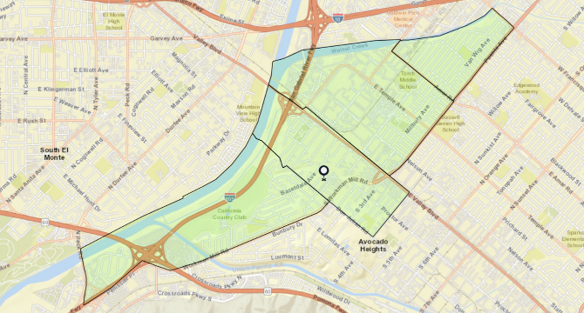
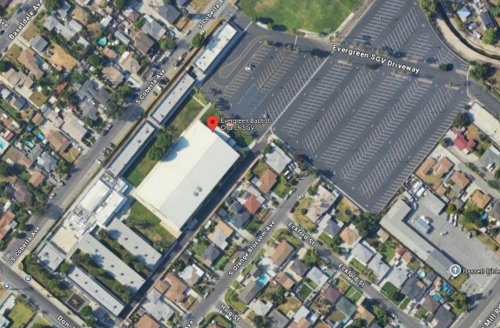
Figure 5.2.1.1 – Original Project Boundaries and Location of Evergreen Baptist Church; Satellite image of the site.
In initial conversations about the project, TEC, Enel X (the original private developer), and the Church agreed that the parking lot would host the Community Solar array, and that the Church’s sanctuary building would host the Resilience Center’s rooftop solar-storage microgrid. In Q3-Q4 of 2020, Enel X left the project: company leadership, upon learning more about the projects, decided that participation was not actually in the company’s interest and ended their involvement. The Energy Coalition and Church, however, remained aligned regarding the value of BAAEC’s Community Solar and Resilience Center, and sought out other private developers interested in the project.
In Q4 of 2020 TEC initiated a series of introductory meetings between themselves and Pivot Energy. Pivot Energy’s executive leadership liked the BAAEC projects, and TEC felt confident that Pivot Energy would be willing to see them through to completion. Based on information TEC shared with them regarding the initial project designs and implementation plans, Pivot decided to join, coming under contract in early 2021. Under Pivot’s scope of work, the company agreed to construct and maintain the solar and battery components of the Resilience Center for the Church along with the help of a battery subcontractor, Stem Energy. Although the components of the Resilience Center would be owned by Pivot Energy, Pivot would hand responsibility for operating the battery and optimizing its economic performance off to Stem Energy, with Pivot paying Stem a fee for this service. Pivot Energy also proposed a behind-the-meter power purchase agreement (BTM PPA) contract model for the project. Under a BTM PPA model, the Church would purchase electricity generated by the solar-storage microgrid, and Pivot Energy would retain ownership over the system for the duration of the contract. Pivot Energy would receive revenue from the sale of power to the Church and claim tax benefits associated with the system as its legal owner. Stem Energy would receive a fee for optimizing the economic performance of the battery on behalf of the Church.155 Initial cost models developed by Pivot and TEC estimated annual energy cost savings on the order of thousands of dollars per year.
Q3 2020 – Q1 2021 saw a series of meetings between the Church, TEC, and Pivot regarding the construction and operation of the Resilience Center and Community Solar. In these meetings, the Church raised concerns about the invasiveness of the construction process. They also were unsure whether hosting a public Resilience Center on its property might obligate them to change how they controlled access to their property. Church representatives worried that its presence might cause division among their parishioners. Church leadership also reported to TEC that they felt as though they did not have the buy-in they needed from their congregation to move forward with construction of the Resilience Center (Interview with TEC staff, 2022). The projected financial benefits of the Resilience Center and BAAEC Community Solar did not outweigh these concerns. Ultimately, the Evergreen Baptist Church decided that the Resilience Center was not in keeping with their commitments and objectives, and withdrew their support for the project, sparking a search for other suitable sites and site hosts.
5.2.2 – Q2 2021 – Q4 2022: Search for a New Site Host: Negotiations with Bassett Unified School District, LA County Parks and ISD; Selection of LA County’s Bassett Park
The Church’s exit from the project set off a search for Community Solar and Resilience Center site hosts within and outside of BAAEC’s original census tracts. Initially, TEC and Pivot hoped that both projects could be moved in tandem, minimizing the number of actors involved in the design, planning, and construction of the systems. However, over the summer of 2021 it became clear that BAAEC’s Community Solar and Resilience center would mosty likely be built on two separate sites. Pivot’s identification of Extra-Space Storage as the site host for BAAEC Community Solar (Chapter 4) drew the two scopes apart. Whereas a Community Solar system could be located on any number of private or public buildings, the Resilience Center had to be constructed on and in a publicly accessible space. Although TEC and UCLA’s geospatial analysis of the project area revealed a handful of technically feasible sites, the number of project stakeholders willing to support a piece of public climate resiliency infrastructure was even shorter. Of the large landowners in the area, TEC decided that only Bassett Unified School District and LA County Parks had properties that could reasonably serve as public Resilience Centers. Concluding that these two local stakeholders possessed the greatest capacity to aid the Resilience Center, TEC and Pivot Energy pursued negotiations with each over from Q2 2021 to Q4 2022.
At this time TEC and Active SGV also conducted a community survey to study the preferences of local residents concerning the location of the Resilience Center and the services it would offer. At tabling and public outreach events, Active SGV solicited responses from people in the project area. TEC also consulted the Community Advisory Committee (CAC; See Chapter 2) that included civic organizations, representatives from Supervisorial District Offices, and Bassett Unified School District. The results of the survey revealed a preference among respondents for a cooling-oriented center to be located on a park property.
Between Q2-Q3 2021, TEC and Pivot Energy had a series of meetings with representatives from BUSD and County Parks regarding the tandem installation of the Resilience Center and Community Solar systems. During this time however, Pivot established the identity of a willing site host and suitable location for BAAEC Community Solar, and Extra Space storage location in Pico Rivera. The movement of BAAEC Community Solar to the Extra Space Storage site meant that BUSD and LA County Parks would now only be offered participation in BAAEC’s Resilience Center scope.
TEC first approached BUSD about the Resilience Center in Q2 of 2021. Initial meetings generated alignment between TEC and BUSD regarding the Resilience Center. According to TEC, BUSD representatives felt that the Resilience Center would be a positive development for the district and found the no-cost nature of participation attractive. To begin negotiating with the school in more concrete terms, TEC and Pivot created preliminary designs and cost models for solar and storage systems on three school properties (Van Wig and Sunkist Elementary Schools, Florence Flanner School) (Figure 5.2.2.1). These models and a draft PPA were shared with BUSD members and counsel for their review.
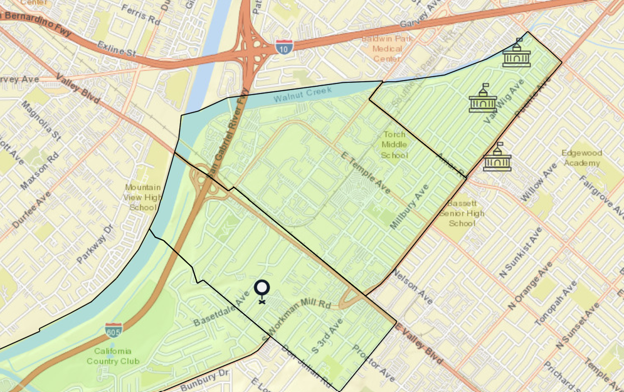
Figure 5.2.2.1 – Context Map of Church Site (circle), BUSD School Properties (building icons)
Soon though, barriers to progress began to multiply. First, TEC and Pivot learned that the Division of the State Architect, which is responsible for reviewing and permitting construction on public school properties, would have to review and approve of the project. Installation at a public school site would require Pivot to hire an independent third party to review plans and inspect construction. To work with the Division of the State Architect, Pivot Energy would also have to set aside 20% of the project’s capital cost to ensure code compliance and completion. This meant that installation on school property would come at a premium. Second, BUSD questioned whether the financial benefits of the project would materialize; some of the representatives from BUSD involved were skeptical about whether the addition of storage was strictly necessary given that most of the financial benefits would come from the solar half of the Resilience Center. Third, BUSD preferred a car-port mounted design to a rooftop design for the Resilience Center. Though a car-port design would increase the capital cost of the project and potentially decrease its generating capacity, the district preferred to leave the roofs of its buildings intact, and to adhere to planned building maintenance and obsolescence timetables maintained by the State Architect.
Despite a warm first impression, evidence of significant financial savings, and the interest of the Superintendent in the project, BUSD ultimately rejected the proposal during a Q3 2021 board meeting. Offering a rationale similar to the Church’s, BUSD explained that whatever the financial benefits of the system, the biggest problem with the project involved defining the conditions under which the Resilience Center would become a place of public refuge. The limits of these conditions were not clear to BUSD, and the district was uncomfortable with the idea of being obligated to open the school property and the Resilience Center’s building to the public under emergency conditions. What exactly it was to be – a cooling center, an emergency shelter – was also not clear to the district, and BUSD members raised concerns that a public (or semi-public) Resilience Center might attract unhoused people to the host campus. Although TEC, Pivot, and BUSD reached the point of discussing the particulars of the project’s behind-the-meter PPA agreement, the district ultimately decided that the building microgrid would was not worth the energy cost savings (~$40K per year according to Pivot and TEC’s initial financial projections) and decided to withdraw from the project.
BUSD’s rejection of BAAEC’s Resilience Center meant that efforts to find a suitable site and willing site host converged on two LA County Parks – San Angelo and Bassett Parks – located in the original project area (Figure 5.2.2.2).
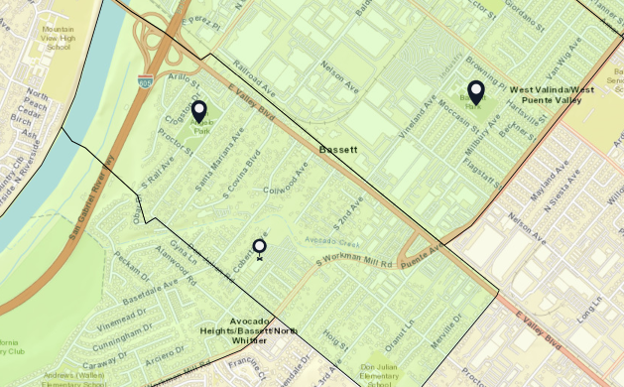
Figure 5.2.2.2 - Locations of San Angelo and Bassett Parks (pins) and Evergreen Baptist Church (circle).
During Q2-Q4 2021, TEC and Pivot approached LA County Parks and Internal Services Division staff about participating in the Resilience Center project. Initial meetings over the summer of that year progressed towards more definite plans in Q3-Q4. LA County Parks, the first department contacted by TEC and Pivot, was aligned with the purpose and mission of the project. LA County Parks believed that the project could represent a new model for emergency services provision and a stepping-stone to the construction and deployment of distributed renewable energy systems at other parks. County Parks staff also liked the fact that the Center would reduce the host park’s energy bills and felt that the project was in keeping with the County’s commitment to the electrification and decarbonization of their operations (Interview w/ Parks Section Head of Sustainability Planning, 2024). Discussions about the purpose of the project created alignment between the County and BAAEC partner organizations, and conversations eventually broached the topics of how to seek approval from the County Board of Supervisors, how the organizations involved could maximize their chances of approval, and how design and construction would proceed.
LA County Parks, who “brought in” the project to the County, would be the “benefiting department”. Parks staff would be responsible for the Resilience Center’s operation as well as any staffing requirements relating to its official (County) designation as a “cooling center”, “resilience center”, or “emergency shelter”. For the Center to be included in official listings and maps of emergency response centers, LA County Parks would need to comply with specific standards regarding staffing, operation, and readiness. LA County Parks was sure that it could meet these requirements, but the department, having never developed a solar project on its own, needed assistance in “justifying” the project’s cost, contracting arrangements, and help navigating the processes of departmental and supervisorial review. The Internal Services Division, who had previously handled solar and other DER development projects for LA County, agreed to assist by helping County Parks staff with the legal and contracting review. As a sole source procurement (i.e., a project originating outside of LA County’s official procurement channels) the Resilience Center would be subject to additional scrutiny by County legal counsel, but the partners were sure that they could win approval (Interviews with LA County Parks Section Head of Sustainability Planning & County ISD Senior Manager, 2024). With the division of labor between the two sponsoring departments set, the effort to win approval from the Board of Supervisors began in earnest.
In December of 2021, County ISD and Los Angeles Parks officially announced their intention to build BAAEC’s Resilience Center at Bassett Park. The decision to locate the center at Bassett Park was taken by LA Parks, Pivot, and TEC collectively. Together they considered Pivot’s system performance and cost modeling for the two sites and the opinions expressed by community respondents surveyed earlier. The results of the models and building inspections suggested that Bassett Park could host more solar capacity in its parking lots and on its rooftops than San Angelo Park, and that its solar-storage system would condition a larger indoor space. Pivot’s financial and energy models showed that Bassett Park was clearly the superior, and LA Parks agreed with Pivot’s interpretation. To move the project forward, County ISD would assist LA County Parks with initiating departmental and supervisorial review processes. Both Departments promised they would complete the necessary contractual review and legislative scheduling steps to ensure timely approval by the Board of Supervisors.
5.2.3– Q1 2022 – Q2 2023: Negotiations over System Design for Bassett Park; PPA Negotiations with LA County; Sole Source Memo Justification
TEC and Pivot Energy’s work securing the cooperation of LA County Parks and ISD meant that the Resilience Center could move on to the next phase of system design. Initial building inspections and more detailed renderings of the system suggested that the parking lot and rooftop space could support solar panels, and that trees could be removed to help better expose the panels to the sky. Based on the historic load of the site, including the buildings and outdoor lighting systems for two soccer fields, Pivot Energy created several different possible system configurations, which served as the basis for projected energy savings and payment schedules. Pivot presented LA County with four different options involving rooftop and car-port mounted solar panels.
Early in 2022, Pivot’s inspection of Bassett Park’s main building revealed that the building’s roof did not have sufficient load bearing capacity and would have to be replaced or upgraded to support rooftop panels. Given the expense of replacing Bassett Park’s roof, and the costs of (and possible public objection to) tree removal, the project members settled on a carport-only design that did not include tree removal as a compromise (Figure 5.2.3.1). Pivot determined that BAACE’s Resilience Center was to consist of a ~103 kW AC solar array connected to a 125 kWh/ 469 kWh battery (sized to provide 4 hours of full building load). Pivot emphasized that although the park’s field lights were not included in the load calculations for the building-integrated Resilience Center, the battery would be able to offset the cost of lighting the field during the evening and peak demand hours.
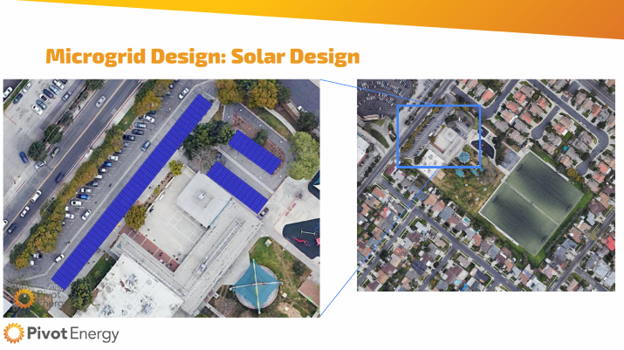
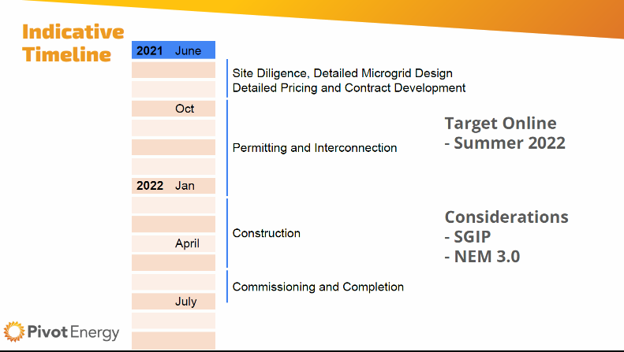
Figure 5.2.3.1 - Pivot’s Rendering of BAAEC Resilience Center’s Carport Arrays; Initial Timeline for Implementation.
Although Parks, ISD, TEC, and Pivot Energy were aligned with respect to the design and potential benefits of the project, there remained differences of opinion regarding the placement of the system’s switchgear. The placement of the switchgear, a cell network-enabled switch for isolating the Resilience Center from the connecting distribution circuit, became a point of contention between Parks, TEC, and Pivot Energy. To minimize the cost of construction, Pivot had located the switchgear next to a wall of the Recreation Center facing the playground. LA County Parks, aware that people typically rested or sat against this wall to watch their children on the playground, wanted the switchgear moved to a parking lot median and surrounded by traffic bollards. Pivot and TEC, aware of the additional cost incurred by moving the switchgear and its conduits, and sensitive to any cost increases, proposed leaving it where it was initially sited and suggested a mural as a beautification measure for the cabinet. These suggestions did not assuage the concerns of Parks’ staff or change their opinions regarding the placement of the switchgear. Though the switchgear issue remained outstanding at the end of 2022, designs for the project continued to mature. Pivot Energy and TEC felt confident enough at this stage to reach out to a battery vendor (BayWar.e.) and purchase a battery in advance to avoid COVID-related procurement delays and hedge against future price increases.
Pivot issued a draft PPA agreement to the County in April of 2022, officially initiating the process of internal County review. Parks and ISD began their departmental review efforts, and ISD prepared to draft a sole source notification memo. Sole source procurement memos and public notification periods are legally required for all capital projects originating outside of the County’s official procurement channels, and the Departments involved had to prepare a detailed justification for circumventing the County’s competitive procurement processes. To advance the project, County ISD and Parks would complete their own internal review processes, County ISD would prepare the sole source justifications, and County Parks would handle all other administrative responsibilities as the benefiting department.
Initial review of the BTM PPA occurred between Q2-Q3 2022. During this time County ISD and Parks worked to get departmental-level approval for the Center, which proved to be more difficult and time consuming than initially anticipated. By Q3 2022, further delays seemed inevitable: neither ISD nor LA County Parks could provide an estimate of when their internal reviews would be complete. Regarding the timeline for Board approval, County ISD estimated it would take an “absolute minimum” of 3 months to proceed from departmental-level legal and contracting approval to the Board’s legislative schedule (Interview with County ISD Manager, 2024). When asked about the timeline for the Resilience Center’s approval, ISD said that because of the Resilience Center’s status as a sole source project, additional review would be required, possibly extending the timeline for implementation of the Resilience Center (Interview with County ISD Manager, 2024). In an October 2022 call with other AEC projects, TEC acknowledged that there had been delays but expressed pleasure that the County was enthusiastic about the project. During this call, TEC tentatively estimated that the Center would be operational by Summer of 2023.
TEC and Pivot also took steps to facilitate the process of PPA approval. In Q2 of 2022 Pivot and TEC submitted a NEM 2.0 interconnection application to SCE for the Bassett Park Resilience Center (as it was now called) and applied for SGIP Equity funds for the system’s battery through SoCal Gas. From a financial perspective, “locking in” the NEM 2.0 rate structure and securing the SGIP incentive for the project were essential to keep the PPA price low and ensure that the system was of value to all parties. TEC and Pivot were sensitive to project price increases – the contributions from the grant, a more customer-favorable NEM rate, and the SGIP Equity rebate were all necessary conditions for a solar-storage system to make financial sense for the County and Pivot Energy.156 The PPA had to show savings for the County; TEC and Pivot feared that it would be difficult to keep the County engaged in the project without SGIP and a more favorable NEM rate.
In Q1 of 2023 SCE granted interconnection under NEM 2.0, and SoCal Gas approved Pivot and TEC’s application for SGIP funding. However necessary for the financial health of the Resilience center, these two milestones created a critical time window for project implementation (Table 5.2.3.2). If the County did not approve the project within the time window, the project would lose its SGIP reservation, be interconnected under NEM 3.0, and the Resilience Center would no longer be financially viable for either party.
| Investment Support Mechanism | Date Approved | Time Constraint | Extension? | Consequence of Expiration |
|---|---|---|---|---|
| NEM 2.0 Rate Structure | March 2023 | Project Completion by March 2026 | No | Interconnected under NEM 3.0 – Reduced Bill Savings for LA Parks |
| SGIP Equity Funding | February 2023 | October 2023 – Proof of Milestone Project Completion by August 2024 to claim rebate | Project developers may apply for three 6-month extensions of either constraint with justification. | Resilience Center no longer viable for LAC or Pivot Energy |
Table 5.2.3.2 – Time Constraints for NEM 2.0 and SGIP
Reliance on NEM 2.0 and SGIP meant that the project would need to be operational by Q1 of 2026 at the very latest. As of Q1 of 2023, however, there was still ample time for the County to act: the execution of the PPA, the first milestone towards claiming SGIP funding for the Resilience Center, could potentially be delayed until June 2024. Pivot and TEC were confident that they would receive the first extension and planned to use it if the County was unable to respect the October 2023 PPA milestone deadline. Given the slow pace of the County review process, Pivot and TEC also prepared to request the two additional SGIP extensions. Though both organizations were confident that the first extension would be granted, they also knew that additional justification would be required for the next two extensions. However, TEC and Pivot could not establish what criteria SGIP program administrators would apply to second and third rebate extension requests. The lack of clarity regarding the subsequent extensions led TEC and Pivot to try to engage with County staff on a more regular basis to shepherd along their internal review efforts.
In Q2 of 2023 TEC and Pivot Energy delivered a modified PPA which included the NEM 2.0 rate structure and SGIP Equity rebate funding to LA County Parks and ISD for their review. In the same quarter, County Parks and ISD began their review of the updated PPA and requested that TEC begin assembling the information needed to prepare a sole source justification memo for the project.
5.3 - Post-Implementation Period (Q3 2023 – Q3 2024)
In Q2 of 2023, approval of NEM 2.0 interconnection and SGIP Equity reservation for the Resilience Center’s battery set in motion the final stage of the project. To be financially viable, the Resilience Center’s PPA needed to be approved by County ISD, LA County Parks, and the Board of Supervisors by October 15th, 2023, or, failing that, March of 2024 (i.e., with one extension of the SGIP PPA milestone). After review and approval by ISD and Parks departmental counsel and leadership, the Resilience Center’s PPA would be put on the Board’s legislative agenda. From the point of departmental approval, it would take an additional 2-3 months to reach a Board vote (Interview with County ISD Manager, 2024). Even if the PPA was approved by the County by March 2024, this would leave the project with only a few months to reach commercial operation. Given that their first contact with the County occurred almost a year prior, TEC and Pivot were concerned about the viability of the project and tried to recruit allies within the County to help move the Resilience Center forward.
5.3.1 – Q3 2023 – Q2 2024: Navigating County Legal and Contracting Processes, First SGIP Milestone Deadline Extension
August Q3 of 2023, TEC provided the information ISD had requested about the BAAEC project ( its history, funding sources, and intentions) for the sole source memo. At this point, the Resilience Center PPA was progressing through legal, contracting, and executive review processes in each department, but not quickly enough to meet the October SGIP PPA milestone deadline.
During much of the second half of 2023 Pivot and TEC were in the uncomfortable position of having to wait for the proposal to progress through the parallel internal review processes of County ISD and LA Parks. From Pivot and TEC’s perspectives, the lack of visibility into what was occurring at the County was concerning. If the County could not respect the SGIP and NEM 2.0 deadlines, the project would almost certainly become financially infeasible. Staff from both organizations remained in regular contact with the County to monitor progress and provide them with whatever support they needed. Because it had been nearly a year since initial conversations with the County, in Q3 of 2023 Pivot and TEC staff also attempted to “re-engage”, and “create some buzz” about the project by reaching out to a broader group of county staff. Attempting to generate institutional momentum – “to find champions” – for the Resilience Center, TEC engaged the 1st District Supervisor’s office and staff from both the Board of Supervisors and LA County’s Sustainability Office to lend political support to the project. However, the recruitment of additional contacts within the County did not hasten progress. In Q3 of 2023, TEC told staff at LA County Parks and ISD about the financial impacts of missing the October SGIP deadline, and re-engaged Parks on the question of the switchgear’s placement. These efforts, however necessary to keep the project alive, did not significantly alter the pace of the County’s review, and did not assuage the concerns of some County staff members involved.
BAAEC’s status as a project originating outside of the County proved to be more problematic than initially expected. The most contentious issue was TEC’s selection of the developer, Pivot, and the fact that this contractor, who was not chosen by the County, would be contracting directly with LA County Parks. Traditionally, projects like the Resilience Center would be competitively bid according to standard procurement procedures. From the perspective of some LA County Parks staff, TEC’s vetting of Pivot for the purposes of the CEC-funded BAAEC project would not meet the procurement contract standards of LA County. One senior LA County Parks staff member was skeptical that the County could justify the sole source procurement, even if TEC provided proof that the Energy Commission had approved Pivot Energy as private partner for the BAAEC project. These developments placed a great deal of pressure on TEC and Pivot Energy: In addition to advancing the argument that the Resilience Center was in the interest of the County, and engaging in the process of securing sole source approval, TEC and Pivot Energy also had to coordinate communication between the two departments while not knowing what was really happening inside either department. TEC and Pivot’s contact with the County was limited to a set of 4-5 ISD and Parks staff members, and their other County contacts did not have either the ability or political capital to influence the inner workings of ISD or County Parks.
At LA County Parks, the biggest point of contention between BAAEC partners and LA County Parks remained its sole source status. To address these issues, in August of 2023 Pivot’s project lead and TEC’s executive leadership met with LA County Parks and ISD to discuss the issue. In this meeting, TEC provided documentation of the CEC’s approval of Pivot’s contract with The Energy Coalition. The conversation resulted in all parties being aligned around finishing contract reviews “by next March” (Pivot-TEC Working Meeting – 11/21/23). County ISD then began preparing a sole source memo, and LA County Parks began reviewing the draft PPA. Given the pace of progress, Pivot decided in September of Q3 2023 to request an extension of the SGIP funding deadline. County ISD, LA County Parks, and Pivot would work to secure departmental approval during the remainder of 2023 so that the PPA could be approved by the Board of Supervisors in early 2024.
In Q4 of 2023, with departmental approval by Parks and ISD progressing, TEC and Pivot strategized about how to construct the Resilience Center without requesting another extension of SGIP. Though the first extension was granted with minimal justification, the second and third would require Pivot and TEC to produce more detailed explanations of the barriers delaying the project as well as a timeline for reaching approval and construction. Because it was not clear how SoCal Gas would evaluate these requests, TEC and Pivot wanted to win board approval and begin construction by Q3 of 2024. The project partners tentatively planned to open the Resilience Center to the public in Q1 of 2025.
5.3.1 – Q1 2024 – Q3 2024: Pivot Energy Exits the Project; Search for New Owner-Operator; Departmental Approval from County ISD and Parks Department; Official Cancellation
By January of 2024, TEC and Pivot Energy still had not received word from County ISD or Parks regarding departmental-level approval of the Resilience Center. With the SGIP PPA deadline extension of March 19th, 2024 drawing closer, it seemed likely that another extension would be required. Unsure whether SoCal Gas was willing to grant another extension, Pivot and TEC once again attempted to drive support for the project through calls, emails, meetings, and offers to help with whatever was needed. TEC and Pivot revisited the financial model of the Resilience Center and updated the projected costs and benefits. Between 2021 and 2023, external factors including inflation changed the business environment for developers of renewable systems, raising prices for labor and increasing lead times for certain technological components.
In February of 2024, Pivot Energy announced to TEC that it would withdraw from the Resilience Center scope. Anticipating further delays in the County’s approval of the PPA, and concerned about resolving the outstanding design and financing questions before the end of 2024, Pivot energy was uncertain about the Resilience Center’s ability to capture the SGIP funding and meet the NEM 2.0 deadline ( and thereby remaining financially viable). In an interview with Pivot’s project lead in Q3 of 2024, the lead said uncertainty around the criteria SGIP administrators at SoCal Gas would apply in reviewing second and third requests for deadline extensions was a key consideration in ending the firm’s involvement with BAAEC’s Resilience Center. With Pivot’s exit, another owner-operator would have to be identified and contracted by the County for the project to advance.
Although Pivot decided to walk away from the project in February of 2024, the official cancellation would not happen until April 2024. In March 2024, TEC attempted to interest two other potential owner-operators – BayWar.e. and Forefront Energy – in the BAAEC Resilience Center. Upon learning that BayWar.e., a large multi-national renewable energy developer (and the battery vendor for the project), might be interested in owning and operating the system, TEC drew up a financing plan and attempted to contact the company about the opportunity. Communications with BayWar.e. progressed too slowly for the purposes of saving the Resilience Center. TEC also attempted to interest Forefront Energy, a nationwide developer of commercial and industrial storage projects that County ISD had previously contracted to install and operate distributed renewable systems on other County properties. Forefront also refused participation, citing concerns about the timeline of the project, the possible loss of SGIP funds, and the NEM 2.0 timeline. At the time of Pivot’s exit, County ISD and Parks staff were still working towards departmental approval and were disappointed to learn that the Bassett Park Resilience Center was now unlikely to materialize. County staff said they were surprised that Pivot had walked away from the project “just as they were ready” to begin cooperating in earnest.
In April of 2024, TEC met with the CEC to discuss the cancellation of the project. The CEC agreed with TEC’s assessment that the Resilience Center was no longer viable and agreed to a budget amendment repurposing the remaining funds for additional Advanced Home retrofits, including an expanded list of electrification measures (see Chapter 3).
5.4 – Analysis of Project Course & Outcomes
One of the purposes of publicly funded sociotechnical experiments like BAAEC is to formulate and test solutions to socio-environmental problems. The results of these experiments not only provide information about the effectiveness of specific sociotechnical changes (such as whole-home electrification), they also afford opportunities for public, private, nonprofit, and civic actors to refine, expand, or perhaps even redefine emerging governance concepts like climate resilience. As mentioned in the Introduction to this chapter, climate resilience is a concept that, despite its growing popularity, does not have a fixed definition, and has a relatively short history of use in the field of urban planning. In lieu of a general or universal approach to building climate resilience in urban areas, the authors of policy interventions and sociotechnical experiments use the concept to build infrastructures, buildings, and systems of emergency response that help communities/ places/ populations recover rapidly from disaster, or function near-normally despite frequent disruptions.
The meaning of resilience is not pre-defined, but it is constructed with and through concrete interventions in urban space. The definitional haziness and place-specific nature of resilience is the primary reason why projects like BAAEC’s Resilience Center should engage with community representatives in discussion of what resilience has been taken to mean in the past, and what it could be made to mean within the context of a specific project. Without the participation of local actors, outside efforts to engender resilience may seriously misapprehend local desires and needs or squander opportunities to include historically marginalized communities in governing energy transitions. Through meaningful forms of engagement, efforts to build climate resilience in disadvantaged communities may yield sociotechnical arrangements that are valuable and protective to local people. Without engagement, the builders of these systems can only rely on what they think resilience is or should be. Project staff and participants may also, of the course of such a project, develop conceptions of resilience that go beyond the ability of a place or population to weather adverse conditions or bounce back from disaster. Sociotechnical experiments like BAAEC’s Resilience Center are opportunities to test emerging technologies of climate response as well as new ideas about how people living in cities should govern themselves.
Because BAAEC’s Resilience Center scope was cancelled prior to reaching implementation, we cannot know how the local public and its representatives (nearby residents, park users, the County, etc.) would have reacted to its assembly and operation. We also cannot know whether local people would have perceived the system as a positive and useful development, whether County Parks would have been open to further experimentation with the system, or whether Pivot or Stem Energy would have been involved in discussions with the County, park users, and nearby residents about how to make ‘best use’ of the Resilience Center. Be that as it may, BAAEC’s truncated experiment with the building a microgrid resilience center does reveal several important threads worthy of further analysis and attention from private, public, nonprofit, and civic actors involved in climate adaptation. Each of these are identified and discussed in the following sub-sections:
5.4.1 – Public Accessibility & What Constitutes an Emergency?
From the beginning, BAAEC’s Resilience Center was conceived of as a public place of refuge. The Resilience Center’s solar-storage microgrid was a technological means of providing residents who could not participate in the Advanced Homes scope with some of the climate resiliency benefits afforded by Advanced Homes’ systems. As mentioned in the Introduction, the notion of a large, public alternative to small, private systems parallels the relationship between the Advanced Homes and Community Solar. Community Solar provided a way for residents who do not own their homes, or whose homes were not suitable for retrofit to benefit from the construction of distributed renewable capacity. The Resilience Center attempts to do much the same with the resilience benefits of solar and battery storage, to turn a public or semi-public building into a larger version of domestic indoor space that would be open to everyone and anyone. As we have seen, however, finding a place to build an emergency home away from home was much more difficult and politically sensitive than originally anticipated. Although the Center eventually found a site and site host in Bassett Park and the County Parks Department, County Parks staff, TEC, and Pivot Energy were still in the process of determining exactly what kind of services the Resilience Center would provide, and under what conditions it would be opened to the public, when Pivot Energy decided to withdraw from the project.
The search for a suitable site and site host was the single greatest challenge that the project partners faced. BAAEC’s Resilience Center moved between three sites during its course: from a privately-owned Church to a public school to a county park. As the record shows, the two movements of the Resilience Center were motivated by very similar concerns about how public accessibility would be controlled, and the list of criteria that would transform the Church Sanctuary or school building into a place of public refuge. Despite being supportive of BAAEC’s mission, BUSD and the Evergreen Baptist Church were both very concerned about how the presence of the system might change their relationship with the community, and how it might obligate them to open their private and semi-public properties to the public in the event of an emergency. This is because the conditions under which the Resilience Center building would become temporarily public were not provided to the site hosts, and neither of the first two site hosts felt that they could develop suitable public access criteria unilaterally. The responsibilities the site hosts had to the public and thus the boundary between public and private uses of the Resilience Center could not be established precisely and would be negotiated after the microgrid had been installed. The Church and BUSD both cited uncertainties about public access in their explanations for leaving the project. The Church’s and BUSD’s organizational definitions of community did not completely align with the project’s, and neither site host found the financial benefits of installation sufficient compensation for the risks and responsibilities they would have assumed as the hosts of a public Resilience Center. The Resilience Center promised to change the composition of their communities, and neither site host was willing to affect these changes for the purposes of BAAEC.
TEC and Pivot Energy found a more willing and capable partner in the LA County Parks Department. Serving the public of the county, the Parks Department was not especially concerned with delimiting or changing public accessibility to the project site: Bassett Park is not fenced or gated and is maintained for the benefit and enjoyment of anyone who decides to visit. Although the County’s fully public orientation and site was a much better fit for the Resilience Center, the question of how it would serve the public, and in what capacities it would serve them, were not resolved prior to cancellation of the project in the first half of 2024. According to County Parks staff involved in the project, the County had explained to TEC and Pivot that it would not refer to BAAEC’s Resilience Center a “resilience” center in public communications until it had met the County’s official criteria to be designated one (Interview w/ LA County Parks Department Staff – October 2024). The staff member explained that certain staffing, safety, and operational readiness standards had to be met by BAAEC’s Resilience Center to be officially designated and included in official maps of emergency response infrastructure (shelters, cooling centers, etc.). The involvement of the County Parks department solved the problem of what community the Center was to serve (i.e., the general public), but how the Resilience Center was to serve them was still a point of discussion at the time of the project’s cancellation. Because the project was cancelled, it is impossible to know how the issues of official designation and the definition of the Resilience Center’s service capacities would have been resolved by the County, TEC, and Pivot Energy. Air conditioning, the provision of electrical power, lighting, and internet access were considered as potential components of the ‘resilience’ the microgrid was to provide, but a final set of amenities or services was never developed. At the end of the project, what the Resilience Center was going to be (an emergency shelter, a cooling center, etc.) was indeterminate, but LA County Parks felt as though Bassett Park was the proper place for a Resilience Center given LA County’s status as the municipal government for Bassett and Avocado Heights and the characteristics of the Bassett Park site.
The movement between sites and site hosts illustrates some of the social and physical complexities of urban spaces. The Resilience Center’s evolution shows how “communities” contain many distinct types of community, the political nature of ‘public accessibility’, and the overlapping and intersecting legal and regulatory geographies that shape land use and infrastructural systems. Arising from human attachments to places, modes of urban governance (building codes, land use regulations, legal liability frameworks), and geographically specific histories of urbanization, this complexity is often described as a barrier to the rapid deployment of distributed renewable systems in energy transition discourses. From a business or state-developmental perspective the social, regulatory, and physical complexities of urban spaces do make the installation of distributed energy systems more difficult and expensive, but as the course of the project shows, these difficulties may be attenuated if the purpose of the infrastructure is carefully matched to the profiles of potential sites and site hosts. Resilience centers intended to protect all persons from climate-intensified heatwaves or other forms of disaster should ideally be located on properties that are fully public – i.e., that are owned and/or operated by entities such as local or regional governments for the benefit of all persons in their jurisdictions. As we learned, the location of public resiliency centers on privately owned or semi-public sites requires that these site hosts accept legal and financial responsibility for their operation. The results of this experiment suggest that the financial benefits of microgrid operation (energy cost savings) are also unlikely to incent private or semi-public organizations to embrace new roles as providers of quasi-public emergency services. The obligations of churches, schools, and other, similar entities to their specific communities – parishioners, students, etc. - will take precedence over new and open-ended commitments to climate resilience for the general public. To encourage non- or semi-public site hosts to accept roles as providers of ‘climate resilience’, the conditions under which their properties become publicly accessible, and the responsibilities their members have to the public must be very clearly delimited.
5.4.2 - Remote vs. Local Control – Operational Dependence on Algorithms and Telecommunications Infrastructure
On the whole, the BAAEC project is predicated on the idea that collaboration between the state, private sector, and local actors is necessary to accelerate the rate of the energy transition and ensure that it is just and equitable. In the BAAEC project and the energy transition more generally, technology plays a mediating role between the private sector and disadvantaged communities: new sociotechnical arrangements are being engineered to embody broader political commitments to environmental and energy justice, attract the interest of private capital, and displace current fossil-powered modes of urban residential life. Technology is called on to perform certain concrete tasks (generating, storing, and distributing electricity) in addition to creating equitable, productive, and potentially restorative relations between people and their environments. The Resilience Center is an example of a technological object called on to perform in both capacities – it is not simply a microgrid; it is also a means of building a safer and more just society.
The process of engineering social relations through technological transformation is central to the project of a just and equitable energy transition. Distributed renewable systems like the Resilience Center are supposed to improve the social and environmental conditions in disadvantaged communities, and the state, through projects like BAAEC and others, has sought to encourage the community-oriented and community-engaged development of such systems. This process of equitable sociotechnical change is very hard and sometimes puzzling work because it opposes very powerful social and economic forces that create sociospatial differentiation, racial, class, and gender distinction along with other forms of sociocultural difference that give familiar shape to our current globalized, ‘modern’ reality. Among the factors militating against the movement for a more sustainable and equitable world are the asymmetries of knowledge and power that exist between large, highly specialized, for-profit firms, publics without the power or resources to affect change on their own, and those of relative privilege who devote their working lives to helping improve conditions for those suffering and deserving publics. Community engagement involving those who the project is for and those who the project is by is the essential first step in the process to finding a path toward improvement. But even in cases where carefully structured, long-term engagement with community representatives occurs, power and/or knowledge asymmetries between private, state, nonprofit, and ‘community’ actors may subtly influence the process of design and implementation, producing arrangements that favor the interests of actors with greater capacities to shape the outcomes of the engagement process. The domination or co-optation of community engaged design processes is not always or necessarily overt; it may sometimes be unconscious or accidental.
The design and implementation of the Resilience Center is not an instance where the project partners took advantage of their relative position of power to construct a system that benefited their interests. TEC and Pivot Energy sought voluntary participation from local partners and did not pressure them to participate if they decided it was against their interests. Furthermore, Pivot Energy and TEC honored LA County Park’s desire for a car-canopy design that would not require the removal of trees or the remediation of the Bassett Park building, and were reluctant, but willing, to re-locate the switchgear. However, there is one aspect of the project that was not addressed throughout the course of implementation: the ability of local actors to gain operational control of the system at the Bassett Park site.
Pivot Energy designed a solar-storage microgrid for Bassett Park that would function with minimal control input from its owner-operator. This is standard design practice for microgrid installations, and it relieves the site host and the developer of responsibility for day-to-day operational control of the Resilience Center. The system, when operating in its capacity as a behind-the-meter generation and storage asset, would function largely independently, with the occasional truing-up from Stem Energy’s proprietary AI tools. In the event of an outage, the microgrid controller installed at Bassett Park was programmed to fall back into an islanded operational mode wherein stored electricity would be made available to Bassett Park’s electrical system, allowing the building approximately 4 hours of full load. This automated, algorithmically managed arrangement was favorable to Pivot Energy in that it minimized their operation & maintenance costs. Likewise, Stem Energy would not need to train or hire staff members to operate or manage the microgrid’s battery. However, interviews with Pivot Energy revealed that the system’s closed, automated nature, and the remote distribution of responsibility for its operation would make it difficult, if not almost impossible, for local people or County workers to access the system and control it from Bassett Park. While Pivot Energy stressed that the algorithmic control logic of the system was robust enough to allow for the smooth transition between normal, economic modes of operation and ‘resilience’ or emergency modes, the fact that people who might potentially depend (for a limited time) on its services could effectively be locked out of its management is a significant and potentially troublesome issue. If people need or want to use the Resilience Center in a situation where communication infrastructure is not functioning, or if the Center itself is malfunctioning, it would be impossible for people seeking shelter at the center to configure its operation according to their immediate needs. Additionally, it is also conceivable that Pivot, Stem Energy, or Los Angeles County Parks would not be able to make a remote connection to the system for the purposes of controlling its operation.
The remote control and operation of such assets, and the economic benefits they provide to private developers and site hosts, need to be weighed against the ability of communities to have ownership of new infrastructural objects like resilience centers and for them to rely on them in times of distress. This potential concern illustrates exactly why it is necessary to experiment with new sociotechnical arrangements and to construct concrete examples with the participation of community representatives and groups of potential users. Unfortunately, the cancellation of the Resilience Center meant that the project did not delve further into these issues and explore the capacity for local control and operation. The results of the Resilience Center scope suggests that the dependency of future resilience centers on remote forms of digital and algorithmic control, and the implications for local operation, need to be explored in further depth.
5.4.3 – Community Outreach – What Might Resilience Mean?
Resilience is a relatively new governmental concept, descending from the notion of climate adaptation and finding widespread acceptance among policymakers, researchers, and urban planners. Less attention has been paid to the co-construction of the concept with community representatives. As we have mentioned several times, What exactly resilience is unclear – there is no universal, formal definition. In the context of the Resilience Center, the project partners agreed that it should emerge from engagement with the community, reflecting preferences of local people. This meant that the meaning of resilience needed to be at least partially discovered through the process of community engagement.
Active SGV made a concerted effort to discover community preferences concerning BAAEC’s Resilience Center through a survey questionnaire. Residents were asked about their preferences concerning the location of the Resilience Center and the services the Center would offer. As mentioned previously, the survey revealed a preference among respondents for a cooling-oriented center located at a County park. But the survey was administered after the Evergreen Baptist Church left the project. Residents were asked about their preferences only once the original plan for the center fell through and another site had to be found. The survey also presented a limited set of options for its design and location; the fundamental design of the system was effectively chosen by the project for the community.
The Los Angeles County Parks Department also first encountered the Resilience Center as a technological ready-made: they had the option of accepting or refusing participation, and as we have seen, had limited but not insignificant agency to specify how the system would be configured to fit the Bassett Park site. The Parks Department’s enthusiasm for the project is also suggestive of a shared understanding of the meaning of ‘resilience’ between TEC, Pivot Energy, and the Parks Department. It was a thing that would afford protection or relief from inclement conditions for the general public. However, it is not at all clear from the results of the survey that people living near the park or in the project area shared this understanding.
Although County Parks, TEC, and Pivot Energy agreed with respect to a general definition of what urban climate resilience is, or should be, the specific definition of “resilience center” was never firmly established between these parties. At the end of the project timeline these actors had not come to a consensus regarding what would be needed for the Resilience Center to officially bear that designation. As the interviewee from the County Parks Department mentioned, parks and other public properties attract many different and sometimes competing proposals to change, improve, or otherwise alter them. The fact that the County Parks Department decided to join the BAAEC project and spent months working to achieve departmental approval for the project suggests a general alignment regarding what the term could mean, but the Department’s reticence to advertise the Resilience Center as such in its official communications suggests that a precise definition needed to be agreed upon before the Center was opened to the public.
Overall, BAAEC’s Resilience Center scope indicates that ‘climate resilience’ is still contested term, and that the proposal of specific technological solutions for climate resilience – such as solar-storage microgrids installed in publicly accessible buildings – has powerful framing effects, narrowing the definition of resilience from general to concrete. Thus, the proposal of specific, technological measures can limit the scope of community and public/ municipal deliberation regarding what resilience could or should mean within a specific socio-geographic context.
5.5 – Policy Considerations and Recommendations
Because BAAEC’s microgrid resilience center did not reach implementation, the case offers more policy considerations than concrete recommendations about how to deploy the technology to increase resilience or protect populations from climate impacts. That said, cases in which the actors involved in a technological undertaking become dis-aligned during the process of implementation or fail to realize their differences through the planning and construction process can be as instructive than “successful” implementations. Section 5.5.1 summarizes the implications of this project for the future development of resilience infrastructure. Section 5.5.2 contains a short list of more concrete recommendations for future implementers of public-facing microgrid infrastructures.
5.5.1 - Policy Considerations
Consideration 1 - Which Public are We Serving, and How Should We Serve Them?
- Project partners struggled to find a home for the Resilience Center in the early years of the project. This was not because the center was a financially unattractive offering, but because the community institutions that TEC and Pivot Energy approached served other groups ahead of the general public. The Church worried about how their congregation would react and how they would need to control entry to their property, and Bassett Unified School District brought up similar concerns when they said they were worried that the presence of a public center might attract unhoused people to their campus. In each instance, the host organizations were not willing to accept new obligations to the general public in exchange for lower energy costs.
- Getting a local or regional government to invest in building microgrid resilience centers may involve very long periods of negotiation between parties about how to permit and approve the project. In this instance, we observed how difficult it was for Pivot and TEC to maintain engagement with LA County, and the trials of legitimation they had to go through to get the County to accept a proposal that originated “from outside”. Also evident in this instance is the fact that government and private sector actors have their own time tables and processes for getting internal consent to proceed with projects. Public, democratic decision making is intricate and highly formalized, involving many actors who must interpret rules, abide by certain norms, and adhere to procedures to produce an answer. By contrast, private decision making processes are often much less formalized and their procedures for determining courses of action, since they have . Differences in work culture and organizational purpose influence how public and private actors relate to time. Private developers eager to sustain and grow their firms cannot wait years and expend hundreds of hours of labor time developing relatively small projects. Public sector organizations have to abide by budgetary constraints, and it might take several years for a department to negotiate contracts with solar developers for a run of projects on its properties. There is no easy way to bridge these differences between renewable energy system developers and public sector site hosts, but batching design and construction of multiple systems is one way to keep private developers engaged in the process of building public resilience centers.
- How microgrid resilience centers will serve the public is another point of contention between private vendors of technology and public site hosts. The benefits and potential uses of Pivot’s system were clear to TEC and Pivot Energy. But the County needed the system to meet certain criteria to be officially designated as a resilience center. This last step in the process of commissioning public infrastructure is underappreciated by private sector developers, who figure it is perfunctory, or simply a formality, when in fact calling a building microgrid a resilience center or an emergency shelter carries with it certain staffing, operational readiness, and other requirements that may make the technology more or less attractive to public sector clients.
Consideration 2 - Working towards a Definition of Resilience through Community Engagement
- In the introduction to this chapter, we mentioned the imperative to involve the residents and representatives of disadvantaged communities in the process of creating new forms of public infrastructure designed or intended to increase their resilience to projected climate impacts. BAAEC did the right thing by approaching organizations like the Church and the School District, since a microgrid would also help to benefit these host organizations financially when it was not being used to provide relief from extreme weather or as a place of shelter during a disaster. When these sites fell through, BAAEC partners honored the preferences of the people who had responded to their Resilience Center survey by moving the center to a park.
- While these are positive examples of how to engage with a putative infrastructural publics, the Resilience Center scope also shows how the pre-determination of the technological forms by implementers can frame and limit community engagement in the planning of new infrastructures. Site hosts had limited say over how the Center’s microgrid would be sized and configured, and residents were given the ability to rank their preferences regarding the system’s primary purpose (cooling-focused, backup power focused, etc.) and location (a park, a school, a community center, etc.).
- Resilience is a flexible term. The question of whether microgrids can provide protection from certain kinds of environmental hazards or disaster events cannot be answered without input from the communities resilience centers are supposed to serve. Residents, civic groups, and local governments will have ideas of what resilience to climate change means, the vulnerabilities they perceive and identify, and how they would go about addressing these through forms of sociotechnical change. They also might disagree about how to address these vulnerabilities. Deeper engagement with communities about the meaning of resilience - perhaps apart from consideration of any specific technological solution - might produce more and more interesting results than projects which bring specific “pre-baked” technological forms to bear on the problem. However, this kind of open-ended public engagement activity requires time and resources that are in chronically short supply.
Consideration 3 - Assembling a Resilience Center Public
- BAAEC’s Resilience Center was conceived as a publicly accessible alternative to the retrofitted single-family home. Ideally, resilience centers afford renters and homeowners some of the resilience benefits that homeowners with solar and storage systems enjoy. Because of the cancellation of the project the partners never had the chance to experiment with gathering local people in the building to see how the system performed, observe their reactions, or gather their input. Who exactly would have gone to the center, why, and what help they would have received cannot be determined because it was never built. It is also not apparent how local people would have been made aware of existence.
- The question of who the public will be for these centers should be the subject of careful consideration. Making these technologies into public infrastructures must involve some sort of public engagement and education because their outward appearance suggests very little about what they are or do. When extreme heat, outages, or other crisis conditions prevail, people must know that public resources like the Resilience Center exist and must be able to physically access them. They should also arrive with some sense of what they will find in terms of help/ energy services/ space heating or cooling/ etc.
5.5.2 - Policy Recommendations
Recommendation 1 - Outreach and Education to Support Resilience Center Development
- Local Governments, state-level organizations, and municipal utilities all have designs on developing public resilience centers like the one attempted in this study. The authors and implementers of these projects doubtlessly have plans and budgets for outreach and education since the public must be made aware of their existence, purposes, and capabilities. With these budgets, implementers and local nonprofit partners should take many different avenues to making the public aware of the centers, and they should make a special effort to physically demonstrate its functioning and visualize the relationships between the technologies installed on and in the buildings. Residents should know about the capabilities and limitations of these devices, and be made aware of the fact that microgrids are typically not designed to operate off grid indefinitely. Outreach and educational activities should also identify who exactly is responsible for maintaining the systems and who they should contact if there are problems with the infrastructure.
Recommendation 2 - Open Resilience Center Microgrids to Non-Expert Operators
- Operational responsibility for BAAEC’s Resilience Center’s solar and battery systems would eventually sit with Pivot Energy and Stem Energy, respectively. However, both companies planned to use algorithmic control logics to manage the microgrid during normal and ‘resilience’ modes of operation. Sensors onboard the microgrid would detect if and when the (macro)grid went down, and automatically switch the system over to an islanded mode of operation. Stem Energy would use artificial intelligence to true-up the performance of the battery, and to determine when economic dispatch of the battery was appropriate and profitable. These relations, made possible by digital communications networks, software tools, sensors certainly make life easier for the developers of microgrids, but they also may create vulnerabilities for people who may find themselves depending on this infrastructure. The users of a resilience center may decide they want the system to do something other than what it is programmed to do automatically, might need to modify how it is exporting power to the building, or they might want to see the state of the system so they can decide how to best use the generation and storage capacity they have on hand. For these reasons, we suggest that these systems have some sort of interface built into them so that nonexpert, local persons can access them and safely modify their operations. We believe it would be a good idea to apply the same sort of user-centered design principles employed in the development of medical technologies like publicly accessible defibrillators and smart epinephrine injection cartridges, which include clear, visual representations of what the technologies do, prompts and procedures for users to follow, and sometimes spoken instructions in several languages. We understand that this is a tall order, but because resilience center microgrids are supposed to be for the public, we believe that opening them to non-expert operation - making them viewable and manipulable- is imperative to making them things people feel they can rely upon.
5.6 – Conclusion
The construction of new infrastructure and the development of practices and ideas relating to its management is a notoriously risky and difficult task. States (or state institutions) typically fund and carefully supervise the building of machines designed to serve public, infrastructural functions and require participants to adhere to ethical and practical principles. This is true in BAAEC’s case and is reflected in the small number of state or public utility funded programs to develop microgrids on public or semi-public properties in California as a means of promoting climate resilience in poor or disadvantaged communities.
Although the Resilience Center did not reach implementation, the course of the project demonstrates several lessons for the development of public-facing climate resiliency infrastructure in DAC communities. BAAEC’s Resilience Center shows the importance of locating distributed energy resources designed to serve the public in publicly accessible places. Second, it is essential to consider how open distributed renewable systems like the Resilience Center are to local, non-expert operation and control. Third, it is necessary to consider the framing effects of specific technological objects like microgrids, and how they can shape public and community discourses over the meaning of resilience.
In the context of the project, the addition of island-able solar-storage microgrids to public properties in disadvantaged communities became a way of building a particular conception of resilience into the urban-infrastructural fabric.
6.0 – Prosumer Network
This chapter covers the evolution of the Prosumer Network – BAAEC’s most experimental scope - through its conceptualization and implementation between the years of 2020-2025. As mentioned in Chapter 4 and the Introduction, the Prosumer Network scope depended on the success of Advanced Homes for its implementation. The solar-storage systems and optional electrification measures installed in each of the participant’s homes, and energy consumption data collected from homeowners themselves, were to serve as the basis for the Prosumer Network’s digital simulation of a transactive energy exchange. The project partners involved in the Prosumer Network hoped to use the data collected from Advanced Home participants and their devices to explore whether and how distribution-level electricity exchange might improve the management and performance of a more decentralized, more renewable urban energy community
An emerging framework for coordinating generation, distribution, and consumption of electrical power, proponents of transactive energy exchange envision the reconfiguration of the relations between the actors connected through existing electrical infrastructure. In the last several decades, transactive energy networks, involving heterogeneous assemblages of distributed energy resources, existing infrastructural objects (poles, wires, telecommunications systems, buildings, etc.), computational technologies, and differently situated human actors, have emerged as alternatives and/or compliments to existing modalities of electrical service provision. Thanks to multiple parallel research and development efforts across the globe, “transactive energy” now encompasses a growing family of related frameworks and system designs.
Peer-to-peer (P2P) exchange is one of the most popular transactive energy frameworks. Consisting of a rapidly developing set of approaches for the integration of groups of ‘prosumers’ (households with the ability to generate, store, and/or export power) into local markets for electricity and grid services, P2P helped to inspire and shape the Prosumer Network scope. P2P refers to a diverse set of sociotechnical systems and “next-generation management techniques” encouraging “active participation in energy market[s]”.157 The term P2P is applied to many different configurations and designs that involve the visualization, monitoring, and remote control of distributed renewable systems.158 What distinguishes P2P from other transactive energy frameworks and traditional, centralized forms of grid operation is its emphasis on the active and calculative participation of human and technological actors, who buy and sell electricity along the grid-edge. P2P prizes the absence of centrality, the use of algorithmic forms of control, and the internal discovery of energy prices at the most “local” levels of the grid. In theoretical descriptions, P2P-type exchanges consist of horizontal markets where prosumers exchange power with each other through electrical infrastructure ahead of the bulk power system.159 Peer-to-peer markets are made through the digital exchange of information between devices, homeowners, infrastructural elements, and market facilitators. For the framework’s developers and champions, digital currency platforms, internet-of-things integrations, digital communications infrastructures, and distributed energy technologies hold out promise for more ecologically responsible, sustainable, and dynamically responsive (“smart”) urban infrastructural fabrics.
Experimentation with “real-world” P2P exchange, however, has been limited by the affordances of existing and emerging technologies, the physical characteristics of existing electrical grids, and the extensive and tightly enforced regimes of infrastructural management and operation that pervade them.160 P2P approaches are novel and potentially effective ways of realizing intensive efficiency gains from the rapidly growing number of smaller-scale distributed energy systems and network-enabled appliances that have begun populating built environments around the world, but testing and refining P2P methods and systems requires that the limits on experimentation with the approach are relaxed or pushed back. As the Prosumer Network case shows, interest in the re-localization of energy governance, and circulation of frameworks like P2P have encouraged business development and policy advocacy seeking just this kind of relaxation on the limits to experimentation. However, such relaxation remains contested and provisional: proponents of P2P and other transactive energy frameworks seek to displace operational agencies away from established “centers of calculation” (like RTOs and utilities) peripherally - towards the edges of the grid.161 Rightly or wrongly, existing managers and owners of the grid are wary of such a re-spatialization of control and are keen to limit the devolution of agency downward and outward.
Enthusiasm and support for P2P has engendered a variety of pilot projects, but many of these experiments with decentralized and transactive electricity exchange are closer to microgrids or existing wholesale markets with respect to their structure and function. Many of these pilots make use of centralized, non-price control signals or other non-market techniques of achieving energy balance, and their designs attest to their status as mostly takers rather than makers of prices.162 The primary reason for this stopping short of actual market development is that across sociopolitical contexts P2P researchers have found that their efforts are frustrated by the limitations of existing law and regulatory code: creating horizontal markets that function autonomously is a fairly radical proposal, and one that entails considerable risk, since electricity is a vital infrastructural service. The grid, already extensively governed by many powerful actors, must be governed differently if transactive exchanges are to be built and tested more extensively.
For reasons discussed later in this chapter, electrical utilities in California are not especially eager to grant private developers of distributed energy networks much agency or independence in emerging markets for grid services. Recent decisions by the Public Utilities Commission and the Governor’s Office indicate that electrical utilities are unenthusiastic about sharing operational control over distribution-level infrastructure with new kinds of electric service providers. Governor Newsom’s 2025 veto of a trio of bills supporting the development of virtual power plants, as well as the CPUC’s decisions to alter NEM rate structures (minimize value of grid export) and the SGIP program (cap battery size incentives) index political opposition to the re-spatialization of operational authority and ownership of distribution-level infrastructure. Utilities and regulators in California have mostly envisioned DERs as mere compliments to existing infrastructure, able to provide demand response to existing electrical service providers, but little else. To the Prosumer Network partners and other supporters of a more renewable, more decentralized approach to energy transition this view significantly undersells the value of DERs and limits their ability to drive the decarbonization of urban residential areas.
Because of the practical limits on P2P research and development, research into different kinds of P2P architectures is often computational in nature: researchers use “real-world” telemetry and energy consumption data (or digitally constructed simulacra) to create and parameterize models of market behavior between market agents, and to examine the optimization of performance of distributed renewable systems at different scales. In the Prosumer Network’s case, these were optimization of the home relative to grid conditions, and the simulation of a local (home to home) market for power supplied and/or stored by each of the Advanced Homes. However, getting the data in the form and quantity required for “realistic” assessments is difficult because it requires the cooperation of electric service providers and device manufacturers as well as consistency in the implementation of data exchange protocols. Because granular energy consumption data is often difficult to collect, researchers frequently fall back on standard assumptions about energy consumption and technological performance. Most frequently, models of energy consumption behavior, the performance of distributed assets, and the tolerances of electrical infrastructure are adjusted or “calibrated” with data collected from devices, people, and infrastructure. In the context of the Prosumer Network, partners wanted enough real-world data where it counted to show the value of a “whole home” approach to residential decarbonization and local, transactive exchange.
Obtaining the “real-world” data needed to answer the Prosumer Network’s questions about the ways distributed renewable technology might be managed more efficiently (and at a more “granular” spatial and temporal scales) was difficult. The proliferation of network-enabled devices, cellular communications infrastructure, and distributed computing technology have made decentralized, market-aware control of energy systems increasingly feasible, but the Prosumer Network found that collecting relevant data and assembling a capable set of partners involved a constant and evolving external search for organizations and suitable technologies.
Collecting ‘granular’ household and device data for market simulations involves connecting to network-enabled devices within a sprawling matrix of rules and interests. The partners found that collecting energy consumption data in situ involved extended political163 and physical negotiations, and that they often had to compromise or concede to forces beyond their control. While many distributed renewable technologies and smart appliances afford data collection and remote control, manufacturers of distributed energy technologies and network-enabled appliances consider the information they generate to be their property. The Advanced Homes, however, provided a rare opening to assemble a group of project partners capable of undertaking an ambitious in silico experiment with P2P exchange, as originally proposed in the outset of the grant.
From the perspective of the CEC and Prosumer Network Partners, Advanced Homes was more than a test bed and data source for P2P simulation; it was a place to examine the socio-economic affordances of distributed renewable systems and the ability of new sociotechnical assemblages (i.e., groupings of machines and humans) to yield benefits for individual (household) users, disadvantaged communities, and the owner/operators of electrical infrastructure. In keeping with the mission of BAAEC, the Prosumer Network experiment would advance California’s project of a “just and equitable” energy transition by finding scalable technological solutions that benefit low-income homeowners and emerging sectors of industry (climate and finance technology, renewable device manufacturers, building trades, etc.). Using telemetry data collected from participants’ homes to simulate home-level optimization (home-grid interaction) and local, transactive energy exchange, the Prosumer Network’s simulations would:
- Measure the financial and energy use impacts associated with the introduction and operation of “flexible” (controllable) loads (such as water heaters, space heaters, etc.) and distributed renewable systems (solar, storage, control software) installed in low-income homes.
- Show how local exchange could benefit homeowners, grid operators, and putative facilitators of local energy markets.
- Demonstrate to regulatory and scientific publics (the state, industry, etc.) the benefits of distribution-level, dynamic, and peer-to-peer markets for power.
The difficulties encountered during the Advanced Homes implementation, as well as business challenges faced by the external partners involved in the Prosumer Network, required considerable creativity and adaptability to ensure that goals and objectives of the scope were met. The sections that follow detail the course of implementation, challenges, and successes of the Prosumer Network. The final sections of this chapter outline the lessons the scope offers for the development of more thoroughly instrumented, digitally networked, and visible grid architecture, as well as some of the governance problems presented by the creation of distribution-level markets for power and grid services.
6.1 – Prosumer Network Partners & Scopes of Work
The Prosumer Network did not involve as much outreach, design, or engineering work as other aspects of the project. This was because the Prosumer Network leveraged the Advanced Homes and their occupant-participants, a set of computing devices, sensors, and human agents to collect digital telemetry from devices and ‘disaggregated’ household consumption data to explore (via computer simulation) a set of operational and commercial potentialities offered by the proliferation of DERs. Unlike the other scopes which sought to create certain actual beneficial effects for certain actors, the Prosumer Network was more exploratory and experimental.
The Prosumer Network would collect various forms of data from homeowners and their devices to simulate their behavior in hypothetical markets for power exchange. The challenges the project partners encountered required them to improvise, and, in several instances, to abandon the pursuit of some of the Prosumer Networks more ambitious objectives. The composition of the project team also changed over time; partner organizations came and went in response to external and internal changes to the scope and the problems the partners encountered in attempting to collect the data they needed to run simulations. How relationships between project partners originated and terminated will be discussed in Sections 6.2 and 6.3. Assembling the partners to set up and run a series of simulations involved finding and interesting actors (companies, people) with a specific set of technical competencies which, because of the novel and experimental nature of the scope, could not be firmly established before the project started. Nobody had – at least to the knowledge of the partners – successfully set up and run a market simulation based on real-world data. But TEC and their primary subcontractor, Community Electricity, were socially and institutionally situated to find the expertise and resources they needed to answer their research questions. But as is often the case with “basic” research practice, the search for collaborators, resources, and data itself poses significant challenges. These aspects of the research process were certainly the case for the Prosumer Network partners, causing them to modify their experimental designs and objectives.
Through simulations, the Prosumer Network partners sought evidence that a grid-edge flexibility and dynamic scheduling of home loads, smart electrified appliances, and solar-storage systems could (and would) return value to homeowners as well as the commercial actors involved in building and maintaining retrofitted homes. Smart appliances and DER systems like those installed in Advanced Homes would give homeowners (and potentially facilitators of local peer-to-peer exchanges) greater control over the way they produced and used electricity. The partners also wanted to show that complementary technologies of visibility (mobile apps showing home performance/ grid conditions) and management (home energy management software) would allow homeowners and their devices to act as calculative agents (prosumers) in putative local markets for power exchange and grid support. Partners anticipated providing participants with digital representations of their homes, grid conditions, electricity rates, and financial performance of their solar-storage systems. In addition to measuring home-level financial benefits to demonstrate the potential of these new sociotechnical assemblages could make responsive and active agents in the operation of new types of local, community-scale grid operation, the partners also wanted to demonstrate how a P2P type exchange could be integrated into existing grid infrastructure, and whether the homes and devices included in their network could be made to provide value in the form of grid-supportive services in existing, utility or RTO facilitated power markets. The “smartening” and instrumentation of homes could allow facilitators of community-scale energy markets to make devices (and homeowners) sensitive to the conditions on the wider grid via a variety of signals, and leverage them in aggregate to provide grid services to utilities or other electric service providers. Accordingly, the Prosumer Network partners wished to answer the question of whether it was possible to create a new class of hyperlocal energy service provider (a “community micro-utilities”), and whether this new class of electric service provider represented a viable business model. Overall, the simulations the Prosumer Network partners proposed concerned operational and financial affordances of a more flexible, more instrumented, and more decentralized grid.
As the account in the next section of this chapter shows, the project partners were largely correct in their assumption that all the necessary pieces for simulations existed. TEC and others were able to find capable and willing subcontractors, suitable hardware and software, and they had a set of prosumer homes that would provide them real-world data. But as will be discussed in the following sections, getting all of the information, hardware, and software in order to run simulations proved to be extremely challenging, causing the partners to scale back their ambitions over the course of implementation. Ultimately, however, appropriate partners were engaged, and simulations performed.
The project partners listed below are those that had the longest and most consequential engagement with the project during its course. Other partners are named and identified in the scope of the narrative.
The Energy Coalition
As the grant awardee and the organization most responsible for the origination and conceptualization of the Prosumer Network, TEC was responsible for assembling the project partners and coordinating their work. In addition to its role as project lead and administrator, TEC staff brought a wealth of knowledge about California’s energy policy regime and existing energy regulatory code. Staff from the organization also articulated (and re-articulated) the research questions the Prosumer Network was to answer. At different points in the project, TEC was responsible, along with Community Electricity, for identifying and drawing in other organizations and people to augment or complement the technical capacities of the project team, coordinating with the people and organizations involved in Advanced Homes, and managing relationships with the manufacturers of the devices installed as part of Advanced Homes’ retrofits.
Community Electricity
Community Electricity (CE) is a private “community micro-utility” company. The primary subcontractor for the project, CE helped to find others through its member’s extensive relationships with climate tech firms in Latin America, Europe, and the US. Community Electricity designs, funds and develops products, services and programs specifically to accelerate the development of Virtual Power Plants as the main component of a new real estate model to create local, intelligent and clean electricity capacity to decarbonize our cities.164 The company, whose employees are in the US and South America (Colombia, Argentina), focuses on the decarbonization of the “low-income” housing markets, and emphasizes energy equity as part of its company mission statement. CE, along with its parent company, Glu Energy, offers a range of distributed renewable devices and building-level management services, including software (dashboards, sensors, etc.) and hardware (current-transform sensors, batteries, etc.).165 CE and Glu Energy provided expertise, hardware (data collection nodes), and software (a participant-facing mobile application) to the Prosumer Network.
eGEO
eGEO is a private firm that designs and sells network-enabled current transform sensors, smart meters, and software for displaying and analyzing energy consumption data. Founded in 2014 in Bogotá, Colombia, eGEO develops products and services at the intersection of internet-of-things, building energy efficiency and monitoring, and data aggregation and analysis.166 eGEO supplied data collection hardware for the Prosumer Network and helped build much of the project’s information technology infrastructure.
Space AI
Space AI is a private vendor of small, modular digital communications devices for networked control and data collection and a complementary “distributed network” protocol.167, 168 The company, founded in 2018 and headquartered in Florida, has partnered with NASA and other national space agencies to launch ‘cubestat’ devices as part of a wider effort to create a space-based digital communication network that can operate independently of terrestrial telecommunications infrastructures (Interview w/ Space AI CEO, 2023). Like CE, Space AI’s staff is international, with employees in Argentina and the US. Space AI’s role in the Prosumer Network was to provide a set of nodes that would collect and store device-level telemetry data and send commands to devices installed in homes.
Splight169
Splight is an artificial intelligence (AI) software company founded in 2021 by a group of colleagues from the US and Latin America working in the utility sector. Splight’s incorporation, according to their website, was inspired by their collective frustration with the issues of grid congestion, the curtailment of clean energy, and the adverse impact of long interconnection queues on the deployment of renewable generation and storage. An early-stage start-up, Splight designs AI software tools to better manage and coordinate the functioning of a more renewable, more decentralized grid architecture. The company has multiple partnerships with utilities, firms, and nonprofits in Latin America, Europe, and the US.
Vermont Energy Investment Corporation (VEIC)170
VEIC was founded in 1986 by Beth Sachs and the late Blair Hamilton. As a nonprofit organization, the company sought to reduce the economic and environmental costs of energy use. By the end of the company’s first decade, VEIC had begun offering consultancy services in 18 states and 6 foreign countries.
In Vermont, VEIC introduced the idea that energy efficiency should be a matter of state law, with a single third-party program administrator regulated like the electric utilities. In 1999, the Vermont General Assembly granted VEIC status as the state’s “energy efficiency utility”. In 2008 VEIC administration services, becoming the implementer of energy efficiency programs in the District of Columbia and in Ohio. VEIC supports energy efficiency programs in Wisconsin and Hawaii and has developed a community solar program model that enables employers to offer benefits to participating staff. The nonprofit also works with local governments, utilities, state energy offices, transit agencies, non-profits, businesses, and more to advance electrification and decarbonization efforts across the country, including low-income and disenfranchised communities. VEIC provided technical and scientific support to the Prosumer Network scope in the form of home energy models and estimates of device-level impacts on home energy performance.
Distributed Energy Exchange Company (Dexco)171
Dexco is the “exclusive North American representative of Distro energy technology in US energy markets”.172 Distro, founded in the Netherlands, is a company that implements local “distributed energy platforms” and optimizes their performance through the deployment of proprietary AI software “agents” to control supply and demand for power. In 2020, Distro’s local dynamic pricing platform successfully linked “32 commercial energy consumers” at the Port of Rotterdams’ BlockLab Innovation Hub into a local market for power. The first “blockchain-based” demonstration of this scale, the project was funded by S\&P Global Platts and other partners. Dexco provided computational expertise and data processing capabilities to the Prosumer Network for the local market simulation.173
6.2 - Prosumer Network - Pre-Implementation Period (Q3 2020 – Q3 2023)
As with the other BAAEC scopes, assembly of the Prosumer Network began prior to the official start of the project in Q3 2020. During the interregnum between the completion of Phase I of the project and the opening of the CEC’s Phase II request for offers, leadership from TEC and Community Electricity met formally (organization to organization) and informally (person to person) to discuss what policy-relevant questions the Bassett Avocado Heights Advanced Energy Community should try to answer, how the project could best demonstrate the value of low-income decarbonization to the state and other interested parties, and what kinds of private partner organizations would (or should) be involved in BAAEC for it to reach its goals (i.e., to benefit participants/ partners, produce simulation results). Before these project meetings, TEC and CE agreed that the scaling low-income, residential decarbonization efforts hinged on demonstrating that low-income retrofits and new models for the operation of existing electrical infrastructure in California represented a host of investment opportunities for the range of private-sector actors that would have to be involved. Consequently, the partners decided to advertise participation to contractors as an opportunity to gain experience, knowledge, and reputational enhancement.
In addition to showing that residential decarbonization improved the material conditions (economic and environmental) of people living in disadvantaged communities (eventualities guaranteed by the no-cost nature of the project, and the sequencing of the solar and storage install prior to load electrification), the partners involved in planning the Prosumer Network wanted to show that additional performance improvements (i.e., the more economical use of devices, the scripting of homeowner interaction with devices, the more efficient use of existing distribution-level infrastructure) constituted an ‘investable’ pursuit, and that the data collected for the project would be a source of value to partners in and of itself. Information about the value and usage of data – telemetry and behavioral – would also help the partners intervene in existing policy debates about the instrumentation and governance of electrical infrastructure and energy transition.
During these meetings, representatives from CE and TEC discussed how the functional integration of household appliances, occupants, and distributed renewable devices could be accomplished, and how intensive efficiencies (i.e. savings/ superior performance from the optimization of installed technology) might be attained at scale through approaches to grid services and transactive energy like P2P. There was also the question of how functionally integrated, digitally instrumented (“smart”) homes could best generate and store power, and how prosumers might be able to satisfy supply and demand for power locally as part of a local, community-scale network. Local-device level control and market making abilities would allow commercial actors like CE (“a community micro-utility”) to sell grid services, demand response, and examine the benefits of local exchange.174 The Prosumer Network would be a step towards demonstrating that local flexibility and distributed renewable generation and storage could help meet demand locally and how associated (grid forming) inverter based resources could support grid stability at scale. Several different simulation scenarios were discussed, and the partners continued meeting as the official start of the program approached.
The Prosumer Network’s potential to resolve policy disputes regarding the smartening of residential homes and electrical infrastructure, as well as the commercial opportunities to be revealed by the Prosumer Network were central themes in planning conversations. These reflections were motivated in part by the equity-focus of BAAEC. The project’s interventions needed to relieve economic and environmental forms of stress, and they needed to give homeowners more control over their homes and DER systems (individually, and relative to the grid). As discussed in Chapter 3, benefits in the form of bill savings and resilience to service interruption were engineered into Advanced Homes retrofits to ensure that Advanced Homes participants realized net cost savings. The question that remained in the minds of Advanced Homes and Prosumer Network partners was how to scale (expand throughput) and accelerate the process of retrofitting homes so as to build commercial momentum and attract future capital investment. Both the Advanced Homes’ VPP175 and the Prosumer Network anticipated interaction with emerging markets for demand response and grid-supportive services as the way to attract sufficient private-sector investment and accelerate transition.
Catalyzing the proliferation of decarbonized, networked, and “advanced” residential urban communities in low-income areas hinged on making both the grid and the “low-income segments” of the housing market more ‘visible’ through data collection. Advanced Homes would provide the material substrate for the Prosumer Network’s research, and the Prosumer Network’s simulation results would show that existing players in the residential decarbonization space had unwisely (and unfairly) passed these areas over as places, having previously determined it was not profitable (“too hard”) to do business in DACs. Demonstrating the value of climate retrofits in places that were “hard to reach” and suffering from severe forms of environmental disadvantage would put the cleantech sector in a position to do unmitigated good. More immediately, representatives from CE saw commercial potential in a “community micro utility” model of private, downscaled grid operation, and felt as though the knowledge acquired through the Prosumer Network would garner legitimacy for a more decentralized approach to grid management. CE and TEC came to the position that BAAEC’s Advanced Homes provided an opportunity to show that emerging modalities of management (decentralized, peer-to-peer transactive energy exchange) could serve a common good, and, subsequently, that the time was right for such an experiment given the proliferation and development of distributed renewable technology, and the commercial availability of smart appliances.
Through 2019-2020, CE, TEC, and UCLA’s California Center for Sustainable Communities (CCSC) developed ideas about how the Prosumer Network and the BAAEC project would collect the ‘real-world’ data for the simulations. In the project narrative prepared for the Phase II RFO, the Prosumer Network is described as a series of market simulations incorporating data collected from devices installed in homes and participant-homeowners themselves. Getting the data out of the homes remained a distant but important concern. In practical terms, this meant installing and configuring software, getting permission to collect homeowner data, ensuring connection and transmission, and collating all data into a usable format. There were many possible routes to collection, and the project would find partners to collect the necessary data. To help manage the collection of this data, CE drew on its existing relationship with firms and technology entrepreneurs in Latin America to recruit Space AI.
Space AI, a vendor of distributed computing devices and “edge-computing” technologies, was brought under subcontract through Community Electricity as a partner to the Prosumer Network scope. Space AI would be responsible for the collection of real-world telemetry data at the household level. By installing one of its proprietary nodes in each home, Space AI would be able to collect household-level telemetry data from devices and users and potentially push control signals to these same actors. These nodes communicate on a private satellite network, solving WiFi connectivity issues, as well as adding cybersecurity layers of commercial quality. On the user-facing side, Glu Energy (an affiliate of Community Electricity), would provide participants with the Glu Energy mobile application. The app would allow users to see their home’s electrical and financial performance and would give CE and Glu Energy an opening for scripted interaction with homeowners. Project partners anticipated asking participant-users of the Glu Energy application about their willingness to be compensated in exchange for load-modifying behavioral actions (delaying or scheduling certain domestic activities, forgoing increases in energy consumption), and their preferences regarding the operation of their home energy systems, with no or minimal observable impacts to their daily needs. However, since no actual electricity or money would be exchanged because of these interactions, conversations about the application and what kind of interaction it would afford remained animated yet speculative. A shadow bill and simulated energy interventions was considered as an alternative.
6.2.1 – Q3 2020 – Q4 2021- Project Kick-off, COVID-19 Delays, Assembling Partners, Refining Questions.
By the official start of the BAAEC project in Q3 of 2020, the Prosumer Network had solidified theoretically, but the COVID-19 pandemic was changing almost everything in the short-term. During the project’s first quarterly meeting in 2020, the project lead acknowledged that in-person outreach was on pause, but digital outreach would continue, along with implementation planning work. Without any Advanced Homes participants, the Prosumer Network partners and UCLA CCSC, held virtual meetings to discuss how telemetry and “load-disaggregated” home consumption data would be collected using Space AI’s cubestat nodes and other smart devices installed in Advanced Homes. The partners met to discuss how data acquisition would occur, the chain of digital custody, cybersecurity, and how the data could be used to produce project deliverables.
Because partners were uncertain about when participants (homeowners with completed retrofits) would show up, conversations during these early meetings mostly pertained to the considerations and details of getting data from people and things involved in Advanced Homes, as well as how price signals might be algorithmically incorporated in the management of retrofitted, networked homes. Space AI was confident that its cubestats were up to the task. They said their devices could be configured to serve as a household level repository for data. This information could then be transmitted to another secure server where project partners (TEC, CE, and UCLA) could easily view and access it. Space AI assured the rest of the project partners that it would be relatively easy to establish communication between the devices installed in the home once they knew the identities of each. Though it appeared that the Prosumer Network would collect enough data to perform GHG and economic impact calculations for Advanced Homes, the partners were also uncertain how difficult it was going to be to “actually get” the data they needed, and what other data sources might be used to backstop the quantitative evaluation of Advanced Homes’ performance and the market simulations. Conversations about data sharing, collection, and analysis dominated the meetings held during the first two quarters of the Prosumer Network. Because of the pandemic, Advanced Homes was stuck in a holding pattern, and without more information about homes and participants, the amount of work to be done was limited. Thus, Prosumer Network partners “planned to plan”; they thought about technical details, discussed recent developments energy, housing, and climate policy, and expressed desire to hit the ground running once homeowners began volunteering for retrofits.
At the Q1 2021 Quarterly Meeting, TEC discussed the maturation of Advanced Homes as an offering and noted that they were in communication with a set of interested residents. Only a small number of residents had decided to participate in the retrofit project to date, and TEC and Day One acknowledged that finding interested and eligible homeowners was proving challenging due to both the pandemic and the indifference or ineligibility of many of the people contacted. Without the ability to start building anything in the immediate future, Prosumer Network meetings decreased in frequency.
Rather than waiting and using project hours to have open-ended discussions, the partners often went “outside” of BAAEC, finding connections with other firms, meeting with subject matter experts, and researching a range of relevant topics. One topic of common interest to representatives of TEC and CE was cryptocurrency technology, and how these technologies might act as the “virtual layer” within P2P exchange networks.176 For the partners, especially CE, cryptocurrency platforms (“blockchains”) held a wealth of intriguing affordances if combined cleverly with other devices. These included tracking and verifying performance of distributed energy resources, remote operation and monitoring, and algorithmic forms of generation scheduling, dispatch, and demand response. A blockchain layer promises the owner/operators of these networks financial independence, the ability to tokenize energy services and renewable energy credits, and to create a verifiable record of market settlement. Cryptocurrency platforms promised to make truly decentralized energy exchange possible, and CE, eager to realize the commercial potential of this technology, retained staff knowledgeable about cryptocurrency, but no ‘technical’ capacity to integrate a ‘cryptocurrency layer’ into simulations.
CE was convinced that this expertise could be acquired through partnership with one or more early-phase companies positioned at the intersection of electrical engineering and networked computing. CE mentioned that many other individuals and organizations active in this space thought a distributed ledger platform was the natural choice for the virtual layer of any P2P energy market. To learn more about this application of cryptocurrency platforms and find ‘technically’ capable partners, TEC and CE began to contact a variety of private firms and nonprofit organizations involved in their development and use. As of 2021, partners had contacted Forsee Power, an electric mobility company from the UK, and The Energy Web Foundation, among others.177 Work “outside” the project, making contact with private, public, and nonprofit entities to learn more and find technical collaborators, would remain a significant part of the Prosumer Network from this point forward.
Meanwhile, Advanced Homes project challenges and data collection remained the other topics of conversation. In 2021 check-in meetings, UCLA and TEC discussed further the particulars of data collection and analysis. During these meetings, it was also agreed that the presence of a Virtual Power Plant and a Prosumer Network in the same project offered an apparent contradiction. The partners realized that Sonnen’s virtual power plant pilot would compete with the Prosumer Network for data access and, theoretically, control over the battery, solar inverter, or any of the other devices and appliances which Sonnen and the Advanced Homes partners hoped to “flex” (control remotely in response to price and non-price signals from the grid) as part of a Virtual Power Plant demonstration. These interventions were aiming for the same sort of participation in emerging markets for grid services as the Prosumer Network. Partners acknowledged the similarity between the two parallel efforts to instrument homes and optimize their energy performance but rejected the framing of “competition” between the two scopes of the project. Instead, the partners thought of the Prosumer Network as a kind of “Virtual Power Plant 2.0”, one that explored operational modalities that were just outside the realm of practical possibility in the Advanced Homes (BAAEC-UCLA Check-In Meeting, March 2021). The Prosumer Network partners argued that Sonnen and other battery companies operating home batteries as grid-facing devices were missing out on possible revenue opportunities by confining themselves to just the battery. The team was also dissatisfied with the proposed VPP revenue split between Sonnen and the residents. A whole home approach would also “put power into the hands of the residents” by giving them greater awareness of their power consumption and generation, and the ability to act with the greatest degree of price rationality in response to electricity price changes occurring in real-time (BAAEC-UCLA Check-in, March 2021).
Partners acknowledged however, that giving homeowners the power to interact with the devices (in the home) and respond to the changing conditions of the grid in more rational and flexible ways also required “a lot of sophistication on the part of the consumer”. The partners hypothesized that many people in the project area would lack the knowledge and inclination to participate in the hour-to-hour or minute-to-minute optimization of their relationship to electrical power, and would therefore be unmotivated to acquire such knowledge due to the economically (for the participant) inconsequential nature of interaction through Glu App. To contend with this, TEC set to work developing a description and set of talking points with Day One and TEC outreach staff for residents interested in the Prosumer Network.
The partners also debated what kind of interaction the Glu App should afford, and whether it was possible or advisable to “gamify” the application to encourage interaction. “Competitive gamification”, “dashboards” displaying financial information (total and marginal savings) for participants, and individualized prompts asking users about their willingness to accept compensation for operational changes were all considered as avenues for eliciting interaction and attention. Competition and price-rationality were not the only modes of interactivity considered; partners also acknowledged the potential role of “non-monetary and altruistic” motivations for participating in simulations and agreed that if they really wanted to elicit participation they should not “assume what kind of incentives people might find more or most motivating.” (UCLA-TEC Check-in, July 2021). Questions about user participation led to others about market design and the information that participants would receive, and then to others about how homeowners would be enrolled. The community-based organization involved in Advanced Homes (Day One) was struggling to describe the contents and benefits of the Advanced Homes retrofit package and reported that they felt “ill-prepared” to explain or offer the Prosumer Network (UCLA-TEC Check In, July 2021). With no participants yet enrolled in Advanced Homes, questions about how participants should interact with Glu application, or what kinds of interaction or inducements they would find most motivating, were often tabled within working meetings.
At these points, conversation frequently turned to the boundary between a demonstration of “business viability” and policy research – the partners considered whether and where business-mindedness or self-interest fit into a project such as theirs. They felt conflicted about establishing the identity of the Prosumer Network as either one or the other given the hybrid nature of BAAEC itself (environmental and energy justice/ decarbonization/ industrial development). On one hand, demonstrating the commercial viability of one or more pieces of the Prosumer Network could attract additional investor interest in community-level transactive energy exchange. Partners agreed that getting the interest of financial backers willing to scale the offering was one form of advancement, but they were conflicted about the purely commercial pursuit of a more flexible grid. BAAEC’s equity framing presented “sets of contradictory pieces”. The partners agreed that experimentation could not be attempted for commercial reasons only, and that their interventions would need to generate real savings for homeowners over and above what they would save through Advanced Homes participation. Partners did not want the community or individual homeowners to feel “as if they had been used”, and agreed that giving people the means and knowledge to interact in new markets for power was essential if they were to act in their own best interests relative to the grid or transactive exchange networks. Their partners also questioned whether community micro-utilities consisting of tens to potentially hundreds of homes would provide enough “load to sell” in existing wholesale markets for demand response.178 TEC questioned whether and how value would be returned to customers through the sale of their demand flexibility and the economic dispatch of their devices, and how revenue from operation would be shared between community micro-utilities and the prosumer homes would be allocated (UCLA-TEC Check-In, July 2021). Without the ability to advance the concrete aspects of their experiment, these questions remained live but unresolved.
For the Prosumer Network, the answer to the question of how to include homeowners and their preferences in the simulations was the Glu mobile application. The user-facing application would act as the portal for project interaction with prosumers. This portion of the project would be managed by Glu Energy, who would adapt an existing mobile application for the purposes of the project. At this time, staff of CE, in remote collaboration with Glu Energy (based in Argentina and Colombia), began adapting a version of the existing Glu application for the BAAEC project, providing mock-ups of the user interfaces, and creating user-experience videos explaining how the application works in English and Spanish.
In preparing to “onboard” Advanced Homes participants, Space AI reported that it was finishing the nodes for the project, and that the company would begin electrical testing and software integration activities.179 Space AI, in addition to being compensated for project labor, sought to use BAAEC, the Advanced Homes, and the Prosumer Network as a business development opportunity. Representatives from Space AI were interested in decarbonization as a use case for their distributed approach to computing, which, they explained, arose from their interest in creating a digital network protocol for earth and space (“similar to the internet, but for space too”) in a physical network that would store and transmit information using “the entirety of the radiofrequency band” (Interview w/ Space AI, June 2021). Using their “supercomputer for the [ISO] Cubesat Standard”, Space AI hoped that the Prosumer Network project would demonstrate the versatility and capabilities of its products, and provide an entrée into Californian energy and North American digital ecosystems (Interview w/ Space AI, June 2021).180 As of Q3 of 2021, Space AI had not shipped any of the nodes to the Prosumer Network partners, had no assurance of UL certification, was not attending regular zoom check-ins, but remained in periodic electronic communication with the partners.
By Q3 of 2021, the first few Advanced Homes participants had made it through program eligibility screens and were in the process of receiving rooftop solar from Grid Alternatives. At this time, it was also becoming clear that Sonnen was not the right partner for the project. Its battery storage solutions were too expensive, and the company could not be moved to share their modeling assumptions or accept a no-cost criterion for participation (See Chapter 3). Without an alternative private partner, TEC and UCLA discussed the possibility of reverting to plug-in battery banks as a battery storage offering. These kinds of devices did not afford the same “level of service” as home-integrated battery systems of the kind Sonnen promised to install. Unconnected to the grid, their capacity could not be put to work around them in response to changing “grid conditions” or mobilized to meet local demand for power (within the home, within the community). Other battery providers approached by TEC provided batteries and cloud-monitoring software, but this software lacked the ability to flex batteries in response to real-time energy arbitrage and grid services signals.181 As of Q4 2021, negotiations with Sonnen had ended, and the full-time search for a battery partner resumed. The struggle to respond to these changes also placed the planning of Prosumer Network on temporary hold; without a battery offering, it was impossible to say exactly what data would be available for P2P simulations.
By Q4 of 2021, Space AI communicated that they were preparing to send a pair of cubestat nodes for TEC to install on test homes (owned by staff from the BAAEC partner organizations), which would enable them to explore the functionalities of the nodes firsthand. These devices would make it possible to collect “granular” and “device level” streams of data, which would allow for the precise demonstration of the value of grid decentralization and flexibility, including, potentially, “gram-level” GHG impacts (Q1 2022 All Partners Meeting).
Early in 2022, the Prosumer Network engaged with several other potential partners in Europe, through the International Energy Agency Users Technology Programme - Global Observatory on Peer-to-Peer Networks. These stakeholders were engaged in similar activities as the project team, testing new concepts in prosumer networks, albeit, under various regulatory directives. Some partners were interested in parameterizing and running simulations in cooperation with the project. Q1 2022, however, was also a time of waiting – negotiations with Swell Energy (the battery provider and replacement for Sonnen) were a necessary precondition for battery installs, which would need to be completed ahead of installation of the Prosumer Network nodes. With no completed retrofits in sight, the Prosumer Network partners continued their work “outside”, getting advice, attending conferences, and studying energy policy and the grid.
6.2.2 – Q1 2022 – Q4 2022 – Planning for Implementation Intensifies, Problems with Space AI, Partnership with eGEO, Conversations with External Collaborators.
In meetings between TEC and UCLA, partners discussed the common questions facing Advanced Homes and the Prosumer Network. These discussions returned to similar questions discussed previously, about business vs. research, competition between VPP and P2P, and the role of the state in regulating its energy transition. TEC offered that the scopes were a response to the question of how to better derive value from distributed renewable resources. TEC reasoned that if people could be included in such networks at low or no-cost, this would help drive residential decarbonization. They wanted these systems to return money to the community, individually or collectively, and allow them to participate in the energy transition. VPP and P2P were ideas that afforded real-world experimentation towards this end, and that currently established offerings were limited by the risky and fragmented nature of transmission-distribution interface opportunities as well as exclusionary grid markets for distribution system services and compensation mechanisms in California. They noted that existing, commodified approaches to home energy retrofits were similarly “by nature, exclusionary”, and that the BAAEC approach was to seek “incremental improvement” through pragmatic and ethical experimentation (UCLA-TEC Check In, April 2022). Aware of these unresolved tensions, and without any nodes to install, or data to collect, the Prosumer Network and Advanced Homes partners agreed to proceed cautiously.
During this period, Prosumer Network Partners TEC and CE began holding weekly/bi-weekly meetings to plan implementation and fully enlist external partners to support the simulations. CE and TEC met with Ampere Energy, a provider of home and community energy management systems headquartered in Spain.182 Ampere, who was developing algorithmic management software for distributed renewable systems, was interested in the project, but had no US-certified home energy management system. Project partners however, liked Ampere’s approach to local energy management, which included devices and software. TEC and CE were interested in Amperes’ machine learning and price prediction algorithms, and whether they were interested in running simulations with the Advanced Homes data.
CE meanwhile, had cultivated contacts with Rootstock (then RSK) to inquire about the Prosumer Network’s experimentation with a “bitcoin layer” for resolving smart contracts and creating “[simulated] token equivalents” to Renewable Energy Credits based on the emissions performance of the Advanced Homes.183 Scopes of work were prepared for Ampere and RSK.
The Prosumer Network partners were juggling many separate lines of communication and inquiry, and delays in getting the nodes were starting to raise questions about the reliability and interest of Space AI as a partner. By May of 2022, some partners had seen the nodes on camera, but they were not yet shipped. Clarification on the technical components of the nodes was dearly wanted by TEC and CE.
Through its contacts in Latin America, CE brought on eGEO as an alternative data collection partner. eGEO, a small Colombian firm specializing in “the development of internet-of-things systems applied to energy”, had been contacted by CE early in 2022.184 Initial conversations revealed that eGEO was communicative, knowledgeable, and had connections that were potentially valuable for furthering the project. Personnel had previously worked for Algorand Technologies, and Prosumer Network partners hoped eGEO could help the team to create a blockchain layer for the simulations using Algorand’s platform185. In meetings with the project partners, eGEO made it clear that the company knew something about the engineering challenges that low-income residential decarbonization presented, which set the Prosumer Network partners at ease. Pleased with eGEO’s seriousness, and the capabilities of their staff and technologies, TEC and CE explained that the Prosumer Network was demonstrating a business case for a distributed approach to residential decarbonization, and that succeeding in this venture meant finding ways of growing a network of interconnected and retrofitted homes in urban, disadvantaged communities. However, the Prosumer Network team also cautioned that this process was expensive and difficult, and that private-sector players would have to take advantage of the full range of revenue sources the grid offered (demand response, grid-supportive services, time-variable retail rates, building resilience services) if they hoped to succeed in advancing a whole home approach to residential decarbonization in low-income communities (TEC-CE Meeting, June 2022).
eGEO also presented a hardware solution for the Prosumer Network. The company had developed a network-enabled current-transformer (CT) sensor that could be installed on the Advanced Home’s main service panels to capture household load at the “circuit-level”. Partnership with eGEO and Algorand promised to put the telemetry data collection and cryptocurrency pieces of the project in place, but the home energy management (prosumer-facing) aspect of the project still needed firming up if simulations were to include all a behavioral component as well. It was not immediately obvious how the data collected from eGEO’s nodes would be re-displayed in the user-facing application. The partners debated whether Ampere’s home energy management platform could do the job better than Glu’s. Questions also remained about what form this app would take, what it would show participants, and how they would be made aware that it was a simulation.
With eGEO onboarded as a sub-contractor by Q3 of 2022, TEC’s Prosumer Network, Advanced Homes, and CE’s staff met together to figure out how the CT sensors (and potentially the nodes) would be installed along with all the other retrofit and decarbonization measures. The topic of outreach and education of participants also re-emerged, along with the question of what kind of mobile application would be best for the project. At this time, ideas about the app came to include a community-wide comparison of energy saving behaviors, mediated by a leaderboard on the application. Participants could compete in teams to optimize their energy usage, and learn from each other through the application, and win prizes (gift cards, lunch) for their efforts. CE and eGEO collaborated to help Glu adapt the existing app for BAAEC (TEC-CE Meeting, July 2022). CE, eGEO, and Glu agreed that they would seek outside software engineering expertise to adapt the existing Glu application for the Prosumer Network.
Space AI, who was now one of two data collection partners for the project, returned to Check-in Calls in July of 2022. The nodes had not yet been shipped, and the other partners now involved in the project counseled them on how to achieve UL Certification as quickly as possible. eGEO asked them a series of pointed questions about how they would configure APIs for the various devices in the home, how they intended to connect wirelessly, and how they intended to capture other plug loads, such as air conditioning, since these would affect the results of the simulations, and needed to be included as part of load data collection. Space AI had no definitive answers, but repeated that they had successfully launched their satellites, leading eGEO to counter with puzzlement, and questions arose about “lines of sight” between the night sky and the nodes being necessary for the transmission of project data. At this point, TEC and CE began treating eGEO as the primary data collection partners and planned to secure its CT sensors as a hedge against Space AI’s unpredictable behavior and unrealistic approach to the project.
By the end of Q3 of 2022, the Prosumer Network had a clearer division of labor and a technological plan for P2P network simulations. eGEO and Algorand would provide CT sensors (soon reaching UL Certification) and a blockchain platform for the project. CE would manage the development of the user-facing application, and Ampere would lend the project its home energy management software and help bootstrap simulation modeling. Though BAAEC had found what they believed to be suitable partners for the simulation, user-facing application, and data gathering portions of the Prosumer Network, they soon discovered that they faced a new series of questions about the affordances of state policy.
To be scalable and sustainable, distributed renewable technologies had to return value to their owners in terms of efficiency gains for themselves and/or “the grid”. The regulatory environment the partners discovered seemed to discourage operational independence of prosumers and the formation of local, peer-to-peer style energy exchanges. Policy discourse was dominated by the search for additional value “at scale”, which meant making thousands of homes and their devices sensitive to changes in grid conditions through the transmission of electronic price signals. Under current regulatory conditions, solar-storage systems and home energy management software were oriented around time-of-use arbitrage and demand response. The Prosumer Network partners felt that these roles sold the technology short, and that more could be done with them. They observed that existing markets for demand response and grid services were oriented around facilitating the smooth functioning of grid infrastructure and providing a limited range of financial and resilience benefits to customers. The Prosumer Network partners hoped that their simulations would show that it was possible to deviate from this grid-centered course of market development and allow residential DERs and electrified homes to serve as the basis for new and potentially valuable modalities of local power exchange.
Q4 of 2022 opened with more discussion about outside collaboration. In check-in meetings, CE was enthusiastic about the ability of the blockchain platform to create energy credits and emissions tokens, which represented yet another promising way of returning value to the owners and users of its assets. Using emissions intensity data from Watt Carbon, the project would be able to evaluate Advanced Homes’ emissions impacts and include these in an accounting for project benefits. Algorand’s platform would create a record of emissions savings in terms of tons of carbon, and the CT sensor would serve as “a stake” for digital tokens tethered to the platform and its systems (CE-TEC Check-In, Q4 2022). There was also a discussion about whom to hire for home inspections and CT installations. Partners agreed that a contractor from the community was preferred. Contact was made with Enso, a firm offering comprehensive home energy inspections. Conversations with Ampere were ongoing, and the project still needed help to set up simulations, but partners remained hopeful that the company would join the Prosumer Network.
By September of 2022, eGEO and programmers in Colombia were now hard at work adopting the mobile version of BAAEC simulation app. The Glu Application would serve as the basis for a new, BAAAEC-specific application. Progress had also been made on the hardware front; eGEO would also soon ship the first of several of these sensors to TEC for testing on one of their own homes. To collect the fullest body of data, the Prosumer partners would have to wait until Advanced Homes construction was mostly complete to install the CT sensors.
By the end 2022, CE developed a version of Glu mobile application that would display a dashboard of performance indicators, and allow for some level of interaction with homeowners themselves. eGEO and Space AI would collect all household data for a year post-Advanced Homes implementation, and then proceed with the simulations, if not earlier.
The app, however, couldn’t display anything reflecting actual home energy consumption dynamics until the sensors were in place and collecting data. eGEO assured the prosumer network partners that its CT sensors were in production and testing and promised to give the project test units as soon as they had received UL certification and had shipped from China. Collecting data was essential for the project, eGEO was not confident in Space AI’s ability to satisfy the demands of the Prosumer Network. By offering their hardware, eGEO had taken a step to “engineer out” Space AI’s role as the collector and manager of the project’s data repository.
Going into the new year, eGEO would capture disaggregated household load and help integrate the necessary APIs to simulate market conditions, including CEC’s MIDAS or CalFUSE for dynamic prices, WattCarbon, for GHG-intensity of power. It was hoped that CE’s user-facing application would provide an opening to ask homeowners about their willingness to “flex” certain energy-intensive end-uses of electricity, such as HPWHs and other appliances. Space AI’s node would now serve only as a relay between household devices and eGEO’s database, and they would not receive funding to collect and store project data independently. At this point (late in Q4 of 2022), the partners were now openly discussing whether to end their engagement with Space AI.
Also at this time, questions about competition between existing VPP offerings and the Prosumer Network resurfaced again. In the Quarterly Meeting held that October, the issue of competition was addressed differently. The Prosumer Network was to explore the potential of a whole home approach to scheduling load, generation, and storage that might outperform existing VPP model offerings. VPP offerings in California were limited to the economic dispatch of some predefined portion of home battery capacity. In addition, VPP offerings also included provisions that limited the flexing of other loads and devices in homes. From the perspective of the Prosumer Network partners, VPP offerings limited to just the battery neglected important sources of value. The whole home approach, by contrast, could make use of multiple smart appliances and home energy management software to render superior outcomes for both homeowners and the grid.
The Prosumer Network was now about showing how distributed renewable systems could achieve superior performance and sensitivity to existing demand-response programs, and that the ability to “flex” domestic loads and systems constituted possibilities for more efficient management of renewably and locally generated electricity, enabled by a corresponding and complementary dynamic movement of load in time and space. The simulation of these complementary dynamics (generation, storage, consumption) would ideally include the homeowners in the decision loop by allowing them the ability to define household optimization criteria (i.e., bill minimization, GHG emissions reduction, protection of “critical” energy end-uses). The user-facing application could also display tradeoffs to users and inquire about their willingness to accept payment for grid-facing (or community-facing) use of their home and its solar-storage system to satisfy demand outside the home, ease congestion supra-locally, or provide other grid services.
As more Advanced Homes leads entered the contracting phase of the retrofit process, the space of technological possibility for the Prosumer Network became smaller. Advanced Homes had to rely on Grid Alternatives and Swell Energy as implementation partners, and would have to find a way of working with the specific devices they brought with them. Grid Alternatives practiced pooling various brands of solar panel and electrical equipment for DAC-SASH installs. In California, GRID used two different kinds of smart inverters, and did not maintain access to manufacturer APIs, or collect generation data from homeowners after install was completed.
Advanced Homes project partners were also considering installing a smart panel from manufacturer Span.186 Span’s smart panel would collect disaggregated, circuit-level load data, and would also, to an unknown degree, provide forward control over the panel, battery, or other devices in the home. Advanced Homes project partners eventually decided against the Span panel’s inclusion, since it was considerably more expensive than other (non-smart) panels, and retrofits were already proving to be more expensive than anticipated. The Prosumer Network partners, having committed to the eGEO sensor as their vehicle for gathering consumption data, planned to attach the CT sensors to whatever panel Grid Alternatives installed. However, this situation left the partners without a key time series required for the simulations.
While Grid’s disinterest in and non-collection of household solar generation data was frustrating for the Prosumer Network and Advanced Homes partners, Swell Energy’s Tesla batteries (specifically the ‘control’ gateway included along with electrochemical cells) promised a possible solution to the problem of getting actual performance data from each home. With back-end access to each of the batteries they installed, Swell could potentially provide a comprehensive panel of household telemetry data to BAAEC for the purposes of project evaluation, measurement, and verification. Swell eventually agreed to share 15-min household performance time series data with the project for the purposes of UCLA’s quantitative evaluation of Advanced Homes. The Prosumer Network partners realized that this information would also help to solve their data collection problems, providing the system state data (generation, battery charge, discharge events, etc.) needed to train price prediction models, simulate local, peer-to-peer exchange, and examine the potential of prosumer networks to participate as an aggregated entity in markets for power and grid services. While Swell was willing to share telemetry data for an official accounting of performance, partners were unsure whether Swell would be willing to let the Prosumer Network use this data, since it would amount to giving away proprietary data to a set of actors who were potential competitors.
By this time, ambitions of granular household data capture had been scaled back. Grid did not collect information, and Swell was still in talks with UCLA and TEC about how telemetry data would be securely transferred and used for analysis. Space AI, who was supposed to provide a solution to the problem of telemetry data collection and centralization, had also been distant from the project. Representatives from eGEO, after learning more about the Space AI node, became convinced the node did not really exist as a finished product at all, and doubted whether Space AI would ever be of any assistance in solving practical data collection problems. eGEO noted that Space AI’s cubestat nodes were long on hardware (“they had eSIM cards to bypass WiFi if necessary”) and short on the software integration (“you’re getting a computer with Windows, and nothing else”) (CE-TEC Check-In, Q4 2022). While TEC and CE hoped that Space AI would begin participating constructively, eGEO was suspicious, and stated that they intended to wrest control of responsibility for data collection, transmission, and storage from Space AI for the good of the project.
While back-end negotiations continued, the user application took on a more definite shape towards the end of 2022. The partners had built a dashboard and mockup of the mobile application user-view, and TEC was pleased with CE’s progress and professionalism. By the end of Q4 2022, the Prosumer Network partners planned to launch the app as soon as Advanced Homes had reached completion. They also planned to offer cash incentives of a few hundred dollars to get homeowners to download the app and begin using it. With Advanced Homes progressing, soon enough they would be able to collect data, set up and run simulations, and produce results about the value of home retrofits and peer-to-peer energy exchange.
Towards the end of 2022, the Prosumer Network once again changed forms. Talks with Ampere regarding the use of their home energy management software and proprietary management algorithms had stalled. The company had become unresponsive after repeated attempts to interest them in participation. During this time, however, CE and TEC continued to search for partners within, and contact had been made with Splight, a climate tech startup interested in applying artificial intelligence software to the management of grid infrastructure. Splight Energy, then based in Santiago, Chile, was brought onboard through CE to develop simulation models for the Prosumer Network. Splight, eager for opportunities to test its software and expand into the new markets, asked for much less than Ampere in terms of compensation, and was happy to be participating in a CEC-sponsored technical demonstration that could yield new lines of business for the firm. Splight assured the Prosumer Network partners that they would be able to perform whole home optimizations as well as home–grid interactions. Splight’s addition to the Prosumer Network was a welcome development, since by this time Ampere appeared to be unwilling or unable to participate.
The year 2022 ended with the resolution of the tension between Space AI, TEC, CE, and eGEO. On December 22nd, 2022, all the partners met to discuss the process for collecting and transmitting household telemetry data. The meeting started with TEC’s observation that the project was ready to receive the first nodes, and a question about when the final product would be available. Space AI demurred, stating that the nodes would be built to spec for the project. eGEO, suspicious of Space AI’s claims of project readiness, asked them about the integration data, and the protocol they would use to transmit it. Space AI replied that they had access to any data pathway the project wished to use. It was at this point that TEC and CE stated that eGEO had been a more reliable partner than Space AI, and that eGEO had backed up their claims with hardware, and a willingness to work through the process of installation and data sharing with other partners. TEC and CE said that because of the firm’s spotty attendance at meetings and long lags in communication, they had no choice but to give eGEO control over the data collection and instrumentation of the homes.
In this meeting, eGEO stated their theory of the situation, and proposed to connect to Space AI’s nodes (if they could provide them) as part of subsidiary experiments with data relay but would not share a copy of the project data with them. Space AI protested, but given their inability to do what eGEO was doing for the Prosumer Network, they had only to accept their demotion. CE and TEC said they were supportive of eGEO’s plan, stating that “the software architecture is locked in”. The matter of hardware was also now finally settled with eGEO leading the data integration via its software, and the partners ultimately justified their partial exclusion of Space AI on ethical grounds. In addition to the practical issues with the company’s node cited by eGEO, Space AI’s conduct indicated to the partners that the firm wished to use their participation in the project solely as an opportunity to further their own business agenda. The partners decided that Space AI would not receive access to the project’s database, could only be trusted to transmit data from household devices, and would not receive a copy of the project’s data for their own use. Space AI remained in sporadic contact with the project, mostly through CE.
6.2.3 – Q1 2023 – Q4 2023 – Splight Begins Planning Simulations, Hardware Procurement Issues, Advanced Homes Advances, Conference on P2P,
Towards the end of 2022, Splight began to join Prosumer Network Zoom meetings to discuss what the project would simulate in more definite detail. The Prosumer Network partners and Splight shared an interest in the intensive management of energy systems, and how efficiency could be gained through technologies of control, digital visibility, and internal price discovery, but the particulars of how data would be collected, cleaned, and used to train models were open questions. Splight and the other project partners agreed that accomplishing these tasks was going to be challenging, but Splight was willing to work through these challenges to learn more about a use-case (residential decarbonization) and business environment (California) which might present opportunities for the firm’s growth and expansion.187
Early in January 2023, with the first wave of Advanced Homes participants nearing the construction phase of implementation, attention turned back to eGEO’s sensor. The company was working on getting UL Certification and needed to schedule the construction and shipment of sensors from device manufacturers in China. The company had to complete payment for the certification, production, and shipping of the sensors, and considered how to finance and schedule delivery. The first CT sensor would be installed on one of TEC’s homes for initial testing.
Now that Advanced Homes had taken on more definite technical form, it was also possible for eGEO, CE, and TEC to target device-level APIs as supplemental sources of data for simulations. Rather than getting access to data wirelessly and locally, as Space AI had proposed to do, eGEO would collect only high-resolution, circuit-level, demand data from the sensors placed on prosumer’s main service panel and service drop. As of Q1 2023, Advanced Homes included the SolarEdge or Enphase inverters installed by Grid Alternatives, the Swell-installed Tesla Power Wall gateways, and WiFi-enabled Rheem heat-pump water heaters. Data streams from these devices could be combined with emissions data from WattTime, dynamic price data from the CEC’s MIDAS API, as well as eGEO’s circuit-level load data to generate simulations of local-local and local-grid exchange of power and grid services.188 eGEO would see to it that each of these APIs were queried correctly, but partners worried about how much API access would cost. Going back to homeowners, collecting their logins for their heat pump water heater app and their solar and storage systems, and requesting access to historical telemetry data on an individual basis was deemed impracticable. More research and problem solving was in order.
Early on in 2023, the Prosumer Network partners had a series of more formal meetings with Splight and their leadership. The Prosumer Network partners described the simulations they desired to undertake. Table 6.2.3.1 describes the scales, objectives, and envisioned results of the simulations:
Table 6.2.3.1 – Prosumer Network Simulation Conceptualization (Q1 2023)
| Scales of System Simulation | Objectives | Useful Results |
|---|---|---|
| Home/ Grid-Supportive | Minimize energy costs Minimize GHG emissions | Pre-Post energy consumption baselines for homes. Price forecasting model for comprehensive home energy management systems. Added financial benefits of whole-home approach vs VPP. |
| Transactive Energy Community | Balance load and generation across multiple simulated homes Transact energy and grid services in hypothetical local markets. | Show how prosumers could benefit from participation in local energy exchanges. Prove out model for community micro-utility. Learn more about the value of “local” energy management. |
Splight was measured but enthusiastic about the project. Splight had only previously performed optimizations at the first level that the Prosumer Network proposed. Splight had created a marginal price forecasting model for individual battery systems, which would be modified and extended to the homes. They anticipated that getting to this level would be a challenge, given the many data sources involved (Table 6.2.3.2). They also needed time to clean and align these data for training and simulation.
Table 6.2.3.2 – Prosumer Network Data Sources
| Data Type | Source |
|---|---|
| Prosumer Network App user data | Prosumer Network Application |
| 15-Minute Circuit-level home load data | eGEO CT Sensor, Green Button Connect database, UtilityAPI historic and daily updated interval data |
| Dynamic Price Forecast | MIDAS API |
| Carbon Intensity of Electricity | WattTime API |
| Battery Inverter Telemetry | Swell Energy (Tesla Gateway), eGEO CT sensor, or device manufacturer API |
| Solar PV Inverter Telemetry | Enphase or Solar Edge API (Grid Alternatives), or CT |
| Rheem HPWH telemetry | CTA 2045 data, or CT, or Rheem API |
CE and TEC acknowledged that this would involve quite a bit of work, but Splight was willing to pursue the project as data became available. Splight also had many questions about the blockchain elements of the project, and whether the project intended to optimize performance at the home level or find some sort of minimum viable scale of exchange between prosumers that would minimize the need for “grid-supplied” energy.
In the meantime, project partners worked again “outside” the project to find support in the community with other, similar projects of energy development. In February of 2023, TEC and CE helped to host the GO-P2P Conference in Santa Monica. This conference brought together a “Global community to share best practices on peer-to-peer models” and involved presentations from an international array of local energy projects. Presenters discussed how existing systems were “almost there” with respect to policy and acknowledged the frustration of being confined to “legal sandboxes” that limited the space for experimentation.
The conference was attended by a range of experts and practitioners, contractors, start-up firms, as well as software engineers and utility representatives. Technical primers on blockchain integration were presented alongside case studies of specific projects from the EU, Latin America, and the US. Later in the day, the conversation shifted to the economics of distributed systems, and the ways that existing regulatory landscapes might be changed through political organizing, policy advocacy, and commercial demonstration. Demonstrating the value and reliability of transactive networks
In Q1 of 2023, as the Prosumer Network was still working out the “how” of data collection, TEC staff sought to develop models of home energy consumption based on a set of measured home characteristics. The software used by Enso, SnuggPro, had limitations in the usable outputs in terms of granularity of meter data, hourly end-use outputs, and the inability to leverage time-differentiated retail energy tariffs. To assist with the modeling of demand and generation at the household level, staff from TEC contacted VEIC. Representatives from VEIC liked both the commercial and ethical dimensions of the project, and agreed to help. VEIC’s simulations would provide a “physics-based” forecast of home energy performance using information gleaned from inspections and a set of standard but alterable assumptions. VEIC would also integrate MIDAS tariff schedules, and their models would output 5-min to hourly consumption and end use data. VEIC’s home model runs would serve as a backstop for the Prosumer Network, providing data for the building and testing of a local market simulation, and estimates of cost and energy savings from the set of retrofit measures. Splight and eGEO could use this data to set up a market simulation. TEC contracted Enso to inspect the Prosumer Network homes and would transfer this information to VEIC for the purposes of parameterizing home energy models.
During Q1 2023, the first few Advanced Homes participants opted-in to the Prosumer Network. They agreed to have a CT sensor installed on their properties and consented to the collection of data for Prosumer Network’s simulation. This was progress, but there was also uncertainty on the physical side - sensors had now gotten UL certification and were manufactured, but they needed to be shipped from China. The process of shipping was delayed by COVD-related global disruptions in logistics networks. Enso and electrical contractors also needed training on how to perform inspections and install the sensors.
On the simulation side, there were problems with Splight’s partnership. CE was confident they could find what the Prosumer Network needed elsewhere. Other companies were offering machine learning and “digital ledger” technologies and it might be easier to partner with a firm that has a product already. eGEO agreed, but suggested that once the data started moving, the analysis could happen quickly (CE-TEC Meeting, February 2023).
Splight continued to join calls with CE and TEC to discuss the dual-scale optimizations that they would undertake. Splight’s price prediction and response algorithm would be the black boxes through which optimization was to be achieved at the home and community levels, but TEC hoped to understand the methods involved. During these calls Splight and the other partners considered possible optimization criteria, but could not proceed towards analysis without any data.
Without real data available soon, TEC turned to VEIC to help them create home energy models that could credibly represent the dynamics of generation and consumption of the Advanced Homes. VEIC would use a physics-based (EnergyPlus and OpenStudio) home energy model calibrated according to Enso’s inspection results. VEIC would run and refine these models, and TEC would give the results to Splight for the development and testing of its optimization algorithms. Although supportive of this idea, CE stressed the importance of knowing the value of household efficiency through real-world data was paramount in demonstrating the commercial viability of P2P-type exchange (CE-TEC Meeting, March 2023).
Meanwhile, eGEO could have sensors to the project by the end of April, but the question of Slight’s partnership was not resolved. CE advocated again for partnership with a larger organization, such as Cleanwatts or Powerledger. TEC resisted CE’s calls to partner with either of these more established firms, arguing that their participation would mean losing an unacceptable degree of creative control over the project. TEC insisted that while partnership with one of these firms might be the straightest pathway to completing their scope, allowing others to take over would deprive them of the opportunity to learn from the process of implementation and formulate their own conclusions about its results. TEC and CE eventually agreed to continue pursuing partnership with Splight rather than sharing the project with other potential private partners.
In Q1 of 2023, VEIC, TEC and Splight met to discuss the transfer of modeled data. TEC explained that the common threads emerging within energy and climate industry spaces spoke to the relevance of their experiment. In this meeting, partners discussed the time step and boundaries for modeling battery behavior. Splight cautioned that its assessment of different factors affecting home performance could land on one or more variables outside of the project’s control (i.e., not the behavior of one of the included devices), and CE worried that falling back on partially modeled data would undercut the commercial significance of its results. VEIC promised to provide simulation runs that were sufficiently “spiky”, leavened with stochastic events and periodic changes to provide a suitable degree of verisimilitude.
By Q3 2023, time was of the essence. With a little more than two years remaining in the project, the partners needed to start collecting the rest of the device data streams, or they would have used VEIC’s models as the basis for market simulations. With approximately 11 homes enrolled in the Prosumer Network, and only a small amount of CT sensor data collected, TEC, CE, and eGEO redoubled their efforts to collect actual performance data from devices installed in the Advanced Homes.
The Prosumer Network was in the process of separating the “nice to haves” from the “must haves”. The inclusion of Advanced Homes’ appliances in the Prosumer Network simulations appeared to be a way of increasing the power and relevance of the demonstration itself. Each homeowner that opted for a HPWH received a Rheem 50- or 65-gallon water heater. It was known to TEC that these water heaters were manufactured with a “CTA-2045 ecoport” network card onboard. However, upon further discussions with Rheem’s technical and sales staff, TEC learned that there were batches of HPWHs sold that did not have the network card electrically wired to the devices’ main circuitry. This disconnection explained the difficulties TEC staff encountered when they attempted to connect to the Rheem HPWHs installed at one of the staff member’s homes. Data could not be uploaded to eGEO’s database directly from these devices, and Rheem was not willing to offer free API access or enter into a data sharing agreement with BAAEC. The loss of this data represented, for the partners, a lost opportunity for industry. “Someone” TEC noted, “deserves the revenue from flexing the water heater” (TEC -CE Check-in: June 2023).
The disconnected cards were also emblematic of what the partners saw as an under-valuing of a more local, more networked approach to the operation and governance of electrical systems. Distributed renewable systems, households, and electrical infrastructure could be reassembled to produce more just, more sustainable, and more responsive networks of devices that could operate semi-independently of bulk power systems. Realizing this change meant extending operational control to the entire home, and Rheem’s oversight was symptomatic of the kind of disinterest the partners saw themselves as correcting. The water heater’s disconnected card symbolized the yet unrealized and underappreciated value that dynamically flexible DER systems and appliances could provide. The ability to flex other energy intensive end-uses presented similar rewards, and if TEC could demonstrate that user-involved demand response was possible, it would potentially attract greater business interest (and political support) for a “whole home” approach to residential decarbonization.
In Q3 of 2023, TEC received the first of the eGEO sensors and installed them on a staff member’s house for pre-installation testing. Advanced Homes also progressed; about 10 participants were in the process of getting batteries. Once these were installed, the eGEO CT sensor could follow. With more leads now nearing battery installation, TEC also began sending out Enso’s inspectors and general installation contractors.
Towards the end of 2023, while the data collection side of the project was maturing, CE and TEC were unable to elicit Splight’s participation in transferring data between their servers and undertook efforts to reconnect with the company. VEIC had created predictions of home energy performance and provided some of these results to TEC. TEC has also begun collecting Green Button/ Utility API data from homeowners as a supplemental record of home energy consumption for the (Advanced Homes) pre-implementation period.
At this point, after much conversation and study, the partners reasoned that their project consisted of two objectives. The first was to demonstrate that the instrumentation of homes and the collection of local grid condition data was possible. This data would show the hitherto underappreciated commercial affordances of “grid services” and local power exchange, and that these affordances could be known or inferred though the relatively minimal instrumentation of homes and service drops. One enlightening datapoint from the CTs was the fine granularity of voltage at the service entrance of the homes. WIthout data access from the utility distribution company (i.e. SCE), the CTs provided insight to the ‘grid health’ in the form of the most practical grid service - voltage regulation. In some cases, Prosumer Network partners measured voltages that were below ANSI standards for power quality, leaving reason for optimism in the opportunity for some form of compensable grid services.189 The second objective was simulating a local, P2P-style exchange that had benefits for households and a putative community micro-utility. From CE’s perspective, the more data that was collected from the community, the better, since these other energy end-uses (EVs, electrified appliances) were sources of volatility in local markets for power and would reveal how DERs and software could help manage the distribution-level of the grid more efficiently.
6.3 - Prosumer Network - Implementation Period (Q3 2023 – Q3 2025) – Changes in Partnership, Dexco Runs Simulations
Towards the end of Q3 2023, data collection from homes began in earnest. Enso, the firm tasked with home inspections for the Prosumer Network, was slotted between the other partners working through the pipeline of participants. Contractors started installing eGEO CT sensors on homes where homeowners had consented to be part of the Prosumer Network.
After consulting with Advanced Homes outreach staff about the “ask” for the Prosumer Network, TEC and other Prosumer Network partners decided that it was probably best for the project to abandon the effort to attempt to “flex” the water heater remotely (or solely in-silico) in response to an triggering price signal interpreted by the prosumer app users. While the app did offer a way to interact with users, outreach staff countered that the benefit of this sort of interaction to the homeowner was hard to determine. It was difficult to explain what benefits the ability to alter consumption patterns in time offered homeowners. TEC outreach staff believed there “was no clear ask” and wanted to be respectful of their time. Prosumer Network partners abided by the advice of outreach staff, deciding that a behavioral, interactive component was “nice to have” but not a “had to have”. CE completed most of the work for the application and released it to the Google Play and Apple stores, but it was never advertised to homeowners as part of the offering.
Meanwhile, the first set of eGEO CT sensors were being installed along with Advanced Homes’ batteries and heat pump water heaters. The coordination of sensor installations was complicated by several factors. Many main service panel boxes were not large enough to accommodate the eGEO sensor node, requiring contractors to install it in a separate, weatherproof box attached to an outside wall. The CT sensors also had firmware bugs, and needed updates from eGEO. eGEO installed firmware updates prior to installation. Additionally, the solar/storage CTs took primacy when there were space constraints, and when the main circuit conduit did not have sufficient length, the eGEO CTs were not installed. Furthermore, in homes that had main panel upgrades and also used the existing main panel as a subpanel, there were circuit breakers located across both panels. Since the eGEO node/CTs are physically connected with a wire, it was infeasible to monitor all end-use circuits of interest in cases where the new main panel and subpanel either contained end-use circuits or were simply far apart. The primary objective of delivering a constructable retrofit clashed with the secondary objectives of conducting a Prosumer simulation with the associated in-field hardware.
In addition to the problems of enrolling homeowners and installing sensors between 2023-24, there were also problems getting access to external data sources. TEC and CE had hoped to partner with the supplier of its water heaters, but Rheem was not cooperative. The manufacturer considered the data they collected to be proprietary and was not interested in partnership. The partners found that its water heaters contained network cards that were not connected to device power supply, foreclosing on plans to “flex” the water heater. Solar generation data from the homes was also elusive. Grid Alternatives, who installed smart inverters along with solar panels, used two different brands of inverter, and did not maintain access to the inverter APIs beyond the end of DAC-SASH installs. Getting actual solar generation data would mean going to each participant, accessing their information with their personal login, and downloading it. This was rejected as impractical, since it would require going back to homeowners and walking them through the process.
The partners found that while it was theoretically possible to purchase API access for batteries, water heaters, and solar inverters, API access was costly at scale, and partners were not sure whether the database tools each separate API afforded would let them collect the kind and volume of data they wanted. Though the installed eGEO sensors were working to collect disaggregated load data from the Prosumer Network homes, this was information about load and power harmonics only - and inconsistent in the whole-home and end-use circuits covered (due to the heterogeneity of the actual homes and their electrical equipment). Real-world records of battery discharge and generation profile for the homes were necessary compliments for the simulation. If these could not be collected, VEIC’s and Enso’s partially modeled alternatives would have to suffice for the Prosumer Network to produce results. And where whole-home circuits were not monitored, Utility API data was elevated to a priority to start collecting as an additional back-up layer of data.
eGEO’s sensors worked, but establishing and maintaining this connection demanded the attention and cooperation of professional services workers who had been part of the Advanced Homes. Installing the CT sensors and getting them connected to the internet meant giving detailed instructions and troubleshooting installs. The actual installation of the sensors was time consuming and required repeated interaction with contractors and devices. However, the 15-min panel-level data coming to eGEO from the sensors was a significant achievement for the Prosumer Network. This data also contained 1 second intervals of the load and harmonics for voltage and frequency - which is an indirect way to measure information about the grid - but only to the extent related to power quality.
Without a way to collect the full range of required data, the home energy models developed by VEIC and TEC were substituted as a proxy for actual home and device level telemetry data. VEIC’s EnergyPlus OpenStudio HPXML modeling workflow was parameterized using cloud computing capabilities of the DOE/NREL Parametric Analysis Tool. The results of Enso’s inspection the Advanced Homes would also help ensure that modeled homes reflected conditions on the ground to the extent possible.
Without a complete panel of real-world data, and facing extended delays due to issues, Splight eventually ended its engagement with the Prosumer Network due to competing strategic priorities. VEIC, eGEO, and the other partners remained committed to seeing implementation through. Due to grant funding limitations and the shuffling of personnel at CE, the frequency and duration of Prosumer Network meetings diminished throughout the year, putting the simulation side of the project on hiatus. Sensors continued to be installed on homes, and data moved from CT sensors to eGEO’s administrative dashboard. But without the ability to run its desired simulations, the Prosumer Network could not show the value that individual users would derive from home-level optimizations and local market interactions.
During 2024, TEC continued outside work on behalf of the Prosumer Network, looking for a partner who could use the Utility API consumption data and the results of home energy models to carry off a local market simulation. In late 2024-early 2025, a series of introductions and a visit by TEC representatives to the Port of Rotterdam led to partnership with Dexco, the North American representative of Distro Energy. Distro, whose machine learning capabilities had been essential for the piloting of a local commercial energy market at the Port, liked the project, and agreed to run simulations using the data TEC and other partners had collected. As a partner, Dexco could offer what others had been unable to provide: expertise in simulating market behavior, predicting prices, and ordering/recording transactions with a blockchain platform.
In early 2025, TEC and Dexco agreed to a simulation of a local, day-ahead market for power for Advanced Homes. Dexco used Green Button/ Utility API data collected from the homeowners, records of the interventions installed in each home, for a simulation of a local market for electricity. VEIC’s household model outputs were not used. Given Dexco’s experience, their recommendation was to use the best available ‘real’ data and data that would be used for price settlements in an actual market scenario - which pointed to the utility meter. For price data, Dexco and TEC collected time-series of Avoided Cost Calculator prices, the newly adopted net billing tariff (NBT) with the DAC adder, and locational marginal price (LMP) prices for the nearest node (Walnut), and the TOU-D-Prime tariff schedule. Trading was to occur between the ceiling of the TOU-D-Prime rate for grid electricity consumption, and the floor of LMP (wholesale) day-ahead nodal prices.190
Dexco’s simulation used a machine learning algorithm to predict household demand across time. The exchange of power between prosumers consisted of a double-auction mechanism to match bids for demand with local (cohort-provided) supply. When the local market could not meet all of the demand, prosumers consumed electricity from the grid at the applicable rate. Over the remainder of 2025 Dexco and TEC undertook a market simulation using Distro’s expertise and software.
In Q3 of 2025, the results of these simulations were reported. The instrumentation of homes with CT sensors indicated ways that solar PV-storage systems could support voltage (Volt-VAR tolerances) at the distribution level, and that the Advanced Homes’ devices, namely inverter-based resources, could be leveraged to provide this kind of support. The simulations of a local energy exchange also indicated that most homeowners in the Advanced Homes cohort would likely save money through participation in a local power exchange.191
6.4 – Post-Implementation Questions: P2P and Infrastructural Governance
6.4.1 – Downscaling Market Devices
Enabling the co-location of supply and demand for electricity, distributed renewable technologies (in assemblage with others) have “made the grid contestable” - creating openings for independent power authority.192 The historical separation between supply and demand for power - so essential for the development of various utility and retailer business models - has been rendered increasingly artificial and anachronistic. But from the outset of the project, the partners understood that changing established modes of infrastructural operation and governance required more than just the growth of renewable capacity and the penetration of smart appliances in homes.
In imagining transactive, semi-autonomous markets for electricity, the Prosumer Network drew upon a body of governmental theory and practice originally developed to commodify electricity and facilitate the matching of supply and demand at higher voltages and larger spatial scales as they designed their simulations. Because electricity must be produced and consumed in nearly exact proportions at every instant, would-be local market operators find themselves facing very similar problem spaces to regional transmission operators: how to balance supply and demand of electricity through carefully structured transactions, how to make agents sensitive to market prices and grid conditions, and how to price electricity to reflect its “true” value. For supporters of distributed, transactive approach to the re-configuration of the grid, blockchain, networked devices, the internet, and various algorithmic forms of decision making are to serve as the technological basis for transactive exchanges that discover prices internally and ahead of the bulk power system.
As a bounded, in silico experiment, the Prosumer Network did not answer the question of how the technologies it studied would allow a putative community micro-utility to balance supply and demand ahead of the bulk power system. Presumably, retail vendors of bulk power and owners of infrastructure (namely existing utilities) will still need to coordinate with local power retailers/ market facilitators (i.e. community micro-utility) to maintain safe and predictable interoperation between higher-voltage markets and those governing local transactive networks. Given the sizing and siting limitations that legal and administrative geographies currently impose on prosumer homes, actually existing local markets will still need to be backstopped by some supplier of last resort. However, the partners did discover that it was possible to create relations that anticipated the development of local exchanges that would operate ahead (and semi-independent) of the bulk power system.
6.4.2 – The Power of Prosumers in Local Transactive Exchanges
As we have seen, the partners and funders of the Prosumer Network did not want to use homeowners as test subjects for the commercial development of new devices and services. The partners wanted to give homeowners control over, and knowledge of their systems through mobile applications, market dashboards, and machine learning algorithms. Including homeowners “in the loop” would help them act rationally in the face of changing grid conditions (congestion, outages, power quality problems etc.) and give them insight into how well their home was performing energetically and financially. Sophisticated and grid-aware home energy management systems would make it so that homeowners could mostly “set and forget” their energy use preferences and rely on the software to handle decisions about how to schedule domestic loads and operate their solar-storage systems. Without home energy management software, dynamic, “whole-home” flexibility would involve hour-to-hour monitoring of grid conditions and the conscious, physical switching of load and battery dispatch. Without the sensory and calculative enhancements of software, low-income homeowners would be confined to a lower level of service, would have little insight into how their homes are performing, and limited knowledge of what actions they could take to respond to supra-local changes in infrastructural conditions.
More than a few times, Prosumer Network partners discussed whether these new relations with electricity markets and devices were an expansion or contraction of agency with respect to electricity. While these technologies could engender local control in the form of home-level optimization, they also made remote monitoring and control possible. To survive financially, community-micro utilities would have to sell power services from the homes in their network, calling on batteries, water heaters, and people to respond to changing conditions of the grid. Aggregated at a community-scale, homes and their distributed energy systems could be orchestrated to produce supra-local effects that are valuable for larger, incumbent players such as investor-owned utilities. But creating these effects depends on the ability of community micro-utilities to “flex” homes in response to remote conditions and events that homeowners. The only way to do this fairly, so it seems, is to compensate homeowner-prosumers for the inconvenience of having their home and community-level systems temporarily commandeered.
The partners identified, but never fully answered, questions about how the interactions between new classes of ‘community’ energy service providers and homeowners would be governed in distribution-level market spaces. CE and TEC’s conceptualization of a “community micro-utility” was predicated on the commercial potential of selling demand response and other services back to a utility or transmission-level market. Like VPPs, a “whole-home” approach to decarbonization would make it possible for private operators to buy and sell in higher-voltage markets for demand response, grid support, and potentially export power. From a commercial perspective, the value of additional in-home flexibility was obvious, since it would allow community micro-utilities to take advantage of loads as well as generation and storage resources. The question of whether and how homeowners would benefit in demand response programs or other actions that used their home systems for infrastructural support remained hazy.
Ultimately, the partners did not resolve the question of what the balance of decision-making power between community micro-utilities or participants should be, or how community-micro utilities would decide between the benefits of maintaining operational independence or responding to macro-level changes in grid conditions.
6.4.2 – A Partnership to Change Energy Policy
A community of “whole-home” prosumers financially linked by a virtual accounting and market management platform is not something that California’s building or electrical code currently allows. While California does allow for the interconnection of microgrids, the next closest solution for local electrical autonomy, these systems lack internal price discovery mechanisms that supporters of decentralized and/or P2P networks desire. Creating a blockchain-based, algorithmically guided platform would be a way of repurposing certain elements of an infrastructural system that is aging, stressed by the increasing volatility of energy supply and demand, and vulnerable to the effects of climate change. But as the project partners concurred, creating such a system would be tantamount to re-inventing the utility itself.
The partners found that many other people were coming to similar conclusions, but getting the conditions right for a simulation based on real-world data outstripped the capabilities of the partners. Getting sensors and networked devices to talk to each other and assembling all of the data needed for simulations was both exacting and labor intensive. Many actors were uncooperative. These struggles competed for time with other tasks. Communicating the intentions and objectives of the project to outside collaborators required months of research and the progressive refinement of a pitch for partnership. Once partnerships were secured, even work went into bringing them up to speed on residential decarbonization in its legal and administrative dimensions.
The Prosumer Network, in attempting to simulate local power exchange, sought to put the technical pieces together in a demonstration of commercial potential and community benefit. This commercial potential was to consist of: (a) visualizing and recording the dynamics of homes and grid infrastructure through data it collected and “generated” (based on a series of in situ inspections and “physics-based” home energy models) and (b) showing that local market clearance of supply and demand for power resulted in projected savings for homeowners. On the first count, the Prosumer Network showed positive results – voltage sags detected by the project’s CT sensors demonstrated an opportunity for inverter-based devices to potentially support line voltage. Dexco’s simulation showed that if in-cohort exchange was to happen ahead of any purchase of grid-supplied power, the cohort’s average annual bill savings would be about 9% less than in the baseline scenario.193 While the Prosumer Network did not include the household and market-level simulations the partners initially hoped to undertake, the results of the scope do suggest that local power exchanges could help reduce the cost of generating and distributing electrical power and support the functioning of existing infrastructure, and defer investment in additional distribution and/or transmission capacity (lines, poles, and other equipment).
6.7 – Policy Considerations & Recommendations
Since the Prosumer Network was a simulation of local, peer-to-peer electricity exchange (a means of organizing power generation, distribution, and exchange not currently allowed by law), it is difficult to develop considerations and recommendations that are forward-looking. Major changes would need to occur for the CPUC and utilities to allow community micro-utilities or others to create transactive networks ahead of the bulk power system. As discussed in other chapters, utilities would most likely also have to make physical alterations to existing distribution infrastructure to facilitate the bi-directional or multi-directional flow of power. Manufacturers of devices would need to establish control and interoperability standards.
6.7.1 – Policy Considerations
Consideration 1 – What is “the local grid”?
- The Prosumer Network, along with Community Solar and Advanced Homes, raises the question of what “local” means in terms of grid space. Though the grid is highly instrumented, closely monitored, and tightly controlled, the nature of electromagnetism makes it impossible to say whether this or that consumer received power from this or that source. It is only possible to speak of provenance in terms of “grid mix” (the relative contribution of different generators by type and time). The fact that electrons cannot be tagged and tracked through power lines means that exchange depends on a dynamic matching of supply of and demand for electricity that occurs with respect to some bounded group of known producers/consumers, but the exact extent of this boundary cannot be firmly established.
- Furthermore, balancing a grid using market mechanisms is easier at larger spatial scales, since predicting aggregate demand over a large area and many consumers has the effect of reducing the amount of information needed for accurate prediction of demand and thus scheduling of supply. Doing the same at smaller scales means that market and physical infrastructure must be more sensitive and responsive.
- Theoretically, it is possible to accomplish the kind of dynamic, market-facilitated balancing achieved at higher-voltage levels of the grid behind substations using renewable generation and storage devices. The engineers and scientists interviewed for this study agreed that building distribution-level exchanges was possible, but their responses revealed little consensus about where the “local grid” (the portion balanced by a local market-maker or utility) ended and the “grid” began (though substations were mentioned as a natural point of interface). Future experiments with peer-to-peer or transactive exchange will need to determine where the boundaries of the local grid lie to establish a division or sharing of formal governance responsibilities between the entities on either side of the boundary between local and non-local.
Consideration 2 – Where does optimization happen? Whose criteria are deemed optimal?
- The partner organizations involved in the Prosumer Network intended to give homeowners, putative community micro-utilities, and incumbent electric service providers greater operational freedom. But their attempt to set up and run their simulations uncovered important and related questions that complicated their elaboration of a final and fixed experimental design. These questions are 1) at what scales should the optimization of systems occur? and b) can optimization happen independently at different scales simultaneously?
- Initially, the partners envisioned optimization at the home and community levels Prosumer-homeowners would be given the technological means to control their electrified and retrofitted homes to minimize cost and maximize efficiency. However, the optimization of the home, if granted precedence over the balancing of the local grid/ exchange, would mean that a community micro-utility might find itself without the power or flexibility to balance demand locally, or to make decisions that were in their best interest as a going commercial concern. Later, having reflected on the need for community micro-utilities to generate income via participation in existing, wholesale markets for demand response, it became clear that homeowner-prosumers would need to cede control (and the ability to optimize) to community micro-utilities if they were to answer to bids for demand response or other grid services.
- In an apparent contradiction, creating more flexible, controllable, and optimizable homes also may grant actors responsible for grid management the ability to override or supersede the prerogatives of prosumers in favor of remote events and conditions (or their own bottom lines). As homes are instrumented and equipped with devices that allow for the dynamic optimization of performance, they are also made more responsive to conditions external to them. It appears that optimization can occur at multiple scales simultaneously, but only under certain conditions, and if a rank-order of precedence is clearly established ahead of time.
Consideration 3 – Breaking out of “the regulatory sandbox”?
- Supporters of decentralized transactive energy exchange (including the partners) saw (and still see) the real-world demonstration of their approach’s power to rationalize and improve infrastructural performance as the means to break out of the regulatory sandbox to which their experiments have been confined. Demonstration is a powerful method of persuasion and is one of the foundations of modern and contemporary cultures of scientific research. But demonstration as a method of persuasion also has its limits. Effective demonstration requires an audience that sees the ends and design of experiments as valid.
- This situation does not pertain with respect to supporters of transactive energy networks and incumbent electric service providers (and their regulators), who see the ends of these experiments as invalid and undesirable. Incumbent utilities in California are not willing to accept the creation of a new class of electric service provider (micro-utilities), nor are they willing to facilitate future experiments that would move distribution-level markets closer to reality. Supporters – lacking the political power or authority to change how infrastructure is governed – are stuck in a position where even successful demonstration does not move them closer to a prototype that could slot-in to existing grid operations. If regulators and politicians are interested in seeing what a local transactive network could do for homeowners, industry, and the grid, they will need to provide more support and leeway for future experiments with the idea.
- For supporters, one possible way out of this dilemma is to depart for political contexts where incumbent owners/managers of grid infrastructure are amenable to experimentation. If California policymakers are unwilling to consider funding or clearing additional legal and regulatory obstacles to prototyping experiments, researchers, engineers, and investors will instead seek out locations where favorable conditions predominate.
6.7.1 – Policy Recommendations
Recommendation 1 – Establish common device standards and communication protocols for devices integrated into distributed transactive energy networks.
Creating the mesh of devices, people, and infrastructures necessary for a local transactive energy network is easier if the actors involved must abide by certain standards for interoperability. Forcing device manufacturers to develop or adhere to an open standard for interoperability cuts against the tendency of firms to create closed information ecosystems and encourages the gradual integration of a diversity of devices and technologies into transactive energy networks.
Recommendation 2 – Create a level informational playing field for supporters of renewable, transactive, and local power exchange.
One of the most effective ways that incumbent utilities discourage the assembly of local control or management infrastructure is by withholding information about the lines, wires, transformers, and other elements in their networks. As desire for more local, more participatory, and more flexible involvement in energy infrastructures grows, their insistence on limiting access to information about their networks frustrates well-intentioned and potentially valuable experiments with different ways of using the grid we already have. Although their arguments about the physical security of their networks are fair and warranted, this increasingly appears as a legalistic canard for keeping people and organizations interested in changing our relationship with electricity for the better. More generative experiments with distributed renewable generation, storage, and distribution of power are impossible to conduct if experimenters cannot be allowed to know how infrastructure is functioning. Actors like the partners involved in the Prosumer Network cannot be expected or encouraged to independently instrument the grid according to their own desires: this would be an invitation to chaos. Thus, it is imperative that the state gainsay these arguments and aim at creating a level informational playing field for legitimate and responsible parties to understand how things work, and how they might be improved or altered in the light of our highly problematic relationship to electrical power.
6.7 – Conclusion
This chapter documents the development of the Prosumer Network, an experimental project by BAAEC, between 2020-2025. The implementation of the network relied greatly on the success of Advanced Homes, where solar-storage systems and energy data from homeowners were integral to creating a digital simulation of transactive energy exchange. The aim was to explore how decentralized electricity exchange could enhance management and performance within urban energy communities.
Transactive energy exchange was presented as a flexible framework that reorganizes generation, distribution, and consumption of electricity among a network of varied energy resources and actors. It integrates technologies such as peer-to-peer (P2P) exchange systems, which involve “prosumers”—households that can generate and trade power within local markets. P2P emphasizes local, decentralized exchanges that leverage algorithmic pricing and active involvement from households in energy markets.
However, the emergence of P2P exchange encounters challenges due to existing grid management practices, regulatory restrictions, and the traditional roles of utilities, which often resist shifting control away from established central bodies. Despite these hurdles, enthusiasm for P2P has sparked pilot projects, albeit leaning towards models reminiscent of microgrids rather than fully independent markets.
The chapter elaborates on California’s resistance to relinquishing control over distribution infrastructure, revealing regulatory apprehension towards new operational models that challenge established practices. It highlights the Prosumer Network’s ambition to demonstrate the viability of decentralized energy management and its potential benefits for underserved communities. Using data from Advanced Homes, the Prosumer Network aimed to evaluate how various flexible loads and renewable systems could operationalize local energy markets. This involved the collection of real-world data, faced with complexities around data ownership, protocols, and technological limitations.
The Prosumer Network’s simulations of local, transactive exchange of electricity relied on measurements of existing home energy usage behavior, home interactions with grid infrastructure, and telemetry data collected from several different devices and sources. Challenges like COVID-19 delayed initial participant engagement, prompting partners to adapt their approaches to data collection and project planning. The chapter illustrates the partners’ efforts, from assembling a suitable team and negotiating with technology vendors to dealing with bureaucratic inertia and pivoting strategies—eventually revealing that successful P2P systems would require substantial cooperative effort among utilities, homeowners, and technology providers. The narrative underscores the broader implications for energy governance, advocating for a more equitable and inclusive energy transition that addresses social disparities while innovating technological infrastructure.
7.0 – Conclusions
This section summarizes the main, policy-relevant findings of each of the chapters included in the Bassett-Avocado Heights Advanced Energy Community case study.
Outreach, Education, & Enrollment
Outreach, education, and enrollment are central to endeavors that aim to solve local, social problems via technological means. Power and knowledge asymmetries between the partners (those doing the project) and the community (the people who the project is for) make miscommunication about needs, desires, and intentions between the two sides likely unless there is some sort of structured interaction between representatives of the community and the partners about the purposes of the project itself. In BAAEC and other developmental energy communities around the world, responsibility for structuring interaction between implementers and ‘the community’ often falls to nonprofit organizations.
With the global turn towards ‘communities’ as places where answers about how to sustainably re-configure forms of modern life might be found, nonprofit organizations have found themselves called upon to perform specialized, communicative, and non-technical forms of labor in service of the energy transition. Able to speak the language of management but socially and physically connected to the communities they serve, they are akin to civic organizations but distinct from them because they are professionalized and developmentally oriented. They put local people in contact with extra local actors and bring external resources to bear on local problems. However, because their labor is nontechnical it is sometimes not considered “expert”. More than occasionally, this perception translates into shoestring budgets and demands from funders and grant officers to do more with less, while other forms of more highly valorized work, such as engineering or policy consultation, are compensated at a premium. As this case and others show, the knowledge, capabilities, and labor of these groups is vital for non-local organizations looking to build energy systems that serve them.
2.1 - The Choice of Technology Frames Outreach and Engagement
Distributed renewable technologies frame the kind and content of interaction that outreach staff have with community members. Individuated offerings like Advanced Homes and Community Solar format participation as an individual or household-level activity. The partners involved in the project, especially TEC and the community based organizations wanted to engender a level of community involvement and support for BAAEC, but because the technologies they offered to residents involved them agreeing to participate in a home retrofit process, or signing up for a bill discount associated with a remote front-of-the meter system located somewhere nearby, there was little for members of the community to do. Community-level involvement is easier to engender when the technological intervention in question is somehow collectively owned and operated. But in a sociogeographic context where space is divided into individual properties that cannot share grid-connected distributed renewable systems, there is little opportunity for DERs to bring people together into new relations. Without other options, BAAEC attacked the problem of building community with existing technologies and programs, found that their outreach budget needed to go towards finding those residents who were eligible and interested in participation. With a different kind of technological device, they could have approached residents about becoming part of a local organization that manages it. However, because they relied on technologies and programs fitted to the existing property ownership regime and suitable for interconnection to the grid, any effort to create a community-wide engagement would reduce to a drive for more individual enrollments.
2.2 – Communication & Building Trust Between Partners and Participants
At the beginning of the project, outreach staff from Active SGV and Day One both said that BAAEC was their first foray into energy as an issue area. Staff from both organizations said that moving into this area involved quite a bit of learning about the “business” of climate tech, the landscape of decarbonization policy, the capabilities and orientations of the other project partners involved, and what the technologies they were offering actually did. This process of learning about the project of residential decarbonization and the governance of energy infrastructure was necessary for them to effectively translate the offerings into plain English and Spanish, and for staff members to deliver a confident and fluid pitch to residents who were interested. But this process took months, and as we saw, at some points outreach staff struggled to understand what exactly was being offered, why, how BAAEC’s technological interventions would deliver benefits, and what the likely magnitude of these benefits would be. These questions were more acute in Advanced Homes, since the technical details of the offering were somewhat more fluid than Community Solar’s early in the project. Non-technical community outreach organizations need to know what they are offering in order to publicize it effectively and ethically. Since honesty and forthrightness about the upsides and risks of offerings like Advanced Homes are important aspects of building trust with residents, outreach staff need to be equipped with all of the information they need before heading out to try to enroll people in an initiative like one or more of BAAEC’s scopes. Transfer of information between organizations does not happen effectively by osmosis, and outreach workers who cannot answer specific questions about the performance of technologies and the risks that residential retrofits involve cannot come across as credible and knowledgeable. Time, resources, and structured communications between partners are necessary to equip outreach staff with the information needed to do their work well.
2.3 - The Gender Politics of Community Engagement Work
Community engagement work and community organizing are often not thought of as “expert” forms of labor like computer programming, electrical engineering, or financial management. However, these forms of work have their own bodies of theory and genealogies of research and practice, and doing engagement work effectively requires that individuals learn and acquire skills in a manner that parallels other kinds of professionalized work. The perception that anyone can do community organizing or engagement effectively if they try has led to a situation in which community engagement is often “feminized” - deemed less important, less complicated, less consequential than other forms of work (Tulli-Shah et al, 2024). The feminization of community engagement work has very tangible effects on the people who do it - they are expected to be satisfied with small budgets, donate uncompensated time and emotional labor, and accept low pay and precarity as simply the conditions of doing this kind of work. Feminization is a problem across the “third sector”, and its dynamics are intensified in periods of fiscal restraint and economic downturn. The BAAEC project did compensate its nonprofit partners appropriately and found additional grants (connected to the stove and water heater) to extend their engagement with it. However, the CBOs also found it necessary to scrap their plans for educational programming to pay interns and other junior staff to assist them over the course of outreach. These junior staff members aided with in-person and media outreach, but they cycled in and out of the project as funding was available. It is also unknown whether these junior staff members were able to leverage their experience with the project to land jobs at other organizations once their grant funding was depleted, as was the case with some other people involved in engineering the Advanced Homes and Community Solar offerings. Without community engagement projects there would be no participants, and without participants there is no energy community or findings. Thus, community engagement work should be recognized as the kind of specialized and professional labor that it is. When people burn out or cannot be retained by their organizations, expertise leaves the field, making it harder for developers, firms, implementers, and other kinds of actors who need the engagement of communities to find people to properly and ethically structure interaction between them and representatives of communities. For every positive example like BAAEC, there are others where developers consider community engagement to be perfunctory or simply a cost of doing business.
2.4 - Create Flexible Eligibility Requirements for Decarbonization Retrofit Programs
Low-income energy efficiency and climate retrofitting programs are tied to geographies of disadvantage to define certain populations of people as deserving of assistance so as to direct the resources of the state (and by extension, industry) to them. The ‘targeting’ of specific ‘communities’ for improvement is useful and has a long history, but it also can create problems for communities and the organizations tasked with carrying out the work of improvement. Time and resources may be eaten up verifying the eligibility or deserving status of people, thresholds for participation do not map onto social or geographic distinctions that local populations acknowledge, and eligibility criteria themselves may be at cross purposes to one another (as was the case with DAC-SASH). Furthermore, policymakers frequently act to limit the scope of welfare programs to protect state budgets; creating criteria of deservingness that are highly restrictive is a time-honored technique for limiting spending on social programs and ignoring poverty. California’s residential decarbonization programs do not ignore poverty, but the sociospatial bounding of the problem results in a very long list of eligibility criteria applying to people and buildings. As we saw, the filtering down of people who were interested and eligible required contact with thousands of residents whose identities needed to be verified. More flexible geographic and demographic eligibility requirements would allow outreach staff to turn fewer people away and would have spared them the effort of figuring out exactly where everyone lived and what their incomes were. Rather than finding needles in bounded haystacks, outreach organizations working for projects like BAAEC could adopt a first-come-first serve approach.
Advanced Homes
Most homeowners in disadvantaged communities do not have the savings to voluntarily contract for solar, storage, and energy efficiency retrofits. Homes in DAC communities tend to be older, less energy efficient, and in need of some rehabilitation prior to retrofit. As we saw, upgrading existing homes for free involves significant partner investment and homeowner-participant engagement. Scaling home decarbonization in disadvantaged places would require either more public resources or the “unlocking” of the value in solar-storage systems’ demand flexibility and grid support. BAAEC’s results suggest that unless the state either provides more resources for the comprehensive retrofitting of residential buildings and infrastructure in DAC communities, or manages to create a market for demand response and grid services that developers of distributed generation and storage systems find attractive, progress towards decarbonization is DAC communities will lag behind others where individual residents and local governments have resources to devote to climate mitigation and adaptation programs. Digital market devices and comprehensive home retrofits can help homeowners save money by rationalizing building energy use relative to a set of constraints imposed by the individual and the dynamics/condition of supra-local electrical infrastructure. However, relations between software, devices, and the grid form a unique kind of energy citizenship defined by household-level pricing logic and technological augmentation of the homeowner’s senses (the making visible of systems, energy prices, and their historical performance). In Advanced Homes, algorithmically aided control was anticipated to reduce cognitive strain and liberate homeowners from system operation. BAAEC’s Advanced Homes gives us a picture of the emerging rules of interaction between small domestic and huge infrastructure systems. An individualized approach to residential decarbonization and energy transition takes advantage of property relations’ stability, but it does not encourage local governance bodies, place-based relationships with electrical infrastructure, or fully political forms of agency relative to the energy transition. BAAEC Advanced Homes showed that it was indeed possible to advance this particular approach to decarbonization, but that conditions for a self-reinforcing, private sector-led process of retrofitting and electrification were frustrated by factors that were outside of the partner’s control.
3.1 - Tension between Green Growth and a Developmental Approach to Residential Decarbonization in DACs
Creating an accessible and safe implementation model for low-income residential decarbonization in California is challenging because the programs and policies developed to encourage residential decarbonization have been subject to frequent revision. If residential export tariffs and system sizing criteria are subject to rapid change or drastic revision, it is nearly impossible for implementers (regardless of sectoral identity) to guarantee that solar-storage systems and electrification measures will result in energy cost reductions for low-income households. The change from NEM 2.0 to 3.0 was an especially disruptive example, but others, including to community solar and SGIP programs, also make serving low-income customers harder. The developmental approach to building community through energy technology requires that distributed renewable technologies benefit local community members first and foremost. State actions that reduce these benefits in the service of other objectives, such as incentivizing battery installation or aligning net metering tariffs with grid-wide changes in the price of delivering power, makes a developmental approach to residential decarbonization - one intended to improve sociomaterial conditions in disadvantaged communities - much harder for implementers, as well as less attractive to homeowners and private firms alike. Related to the stability of residential decarbonization programs and policies is whether and how these measures prioritize individual vs. systemic (grid) benefits. The question of whether domestic-solar storage systems are infrastructure or appliances is answered has far-reaching implications for how distributed energy resources are engineered, and how their interactions with people and infrastructure are governed. Engineering systems to benefit the grid subordinates the prerogatives of users/ owners of DERs to those of the owners/ managers of grid infrastructure. Alternatively, engineering domestic-solar storage systems so as to maximize customers’ benefit means reducing the systems’ sensitivity to grid conditions, and allowing users to make decisions about whether to dispatch their systems for the benefit of owners/ managers of grid infrastructure. Clarifying who (or what) should come first in the rank order of design and operation of DERs will help decision makers avoid a situation where these trade-offs are either unacknowledged or are papered over by parties with undue faith in the capacity of domestic DER systems to satisfy all demands simultaneously.
3.3 - Pricing Electricity at the Center vs. Pricing Electricity at the Edge
Recently, supporters of a distributed renewable future have been squaring off against those who are committed to a more centralized approach to electrical service provision in regulatory proceedings, the legislature, the press, and in many other venues where the future of the grid is being debated. Utilities, their supporters, and the CPUC have consistently ignored or rejected arguments that electricity from distributed renewable sources at the edges of the grid should be priced to reflect avoided investment in transmission and distribution infrastructure (since these sources are located nearer demand). Given the age, expense, and vulnerabilities of high-voltage transmission infrastructure, there are legitimate reasons to consider paying producers who co-locate supply with demand more for the electricity they produce. Co-location of supply and demand may help reduce the material intensity of the energy transition (by reducing the need for high voltage transmission lines), help to preserve open land, and - depending on how distributed generation is built out - result in a more resilient electrical infrastructure. Whether these benefits materialize depends on how and whether these benefits are monetized, and how they are folded into electricity prices.
3.4 - Individual vs. Community Participation in Residential Decarbonization
Including disadvantaged communities in the energy transition is not simply a matter of engineering free home retrofit offerings that are guaranteed to provide some set of benefits and then making these offerings available to everyone geographically and demographically qualified. ‘Free-ness’ on its own is not a very powerful inducement to take up the offer, and a purely economic case for participation in a retrofit program will attract some but not all who are qualified. Additionally, individual participation is not merely an on-the-margin, economic calculation. Homeowners do not tote up the costs and benefits in dollar terms and make their decision based on net present value. Participants have to trust that these programs will deliver what they promise, and they are much more likely to follow through with retrofits if people and organizations can explain why the offer is being made, answer their questions about the nature of process and likely outcomes, the risks of participation, and if participants know they get help if problems crop up during the process. This mode of engagement cannot be done on the cheap - it requires staff, organizational capacity, and time. Sustained, personal engagement with individual participants was the key to getting and keeping homeowners involved. Texting, calling, and electronic forms of outreach yielded a very small number of contacts with local homeowners. There is also the question of how to translate individual participation into community participation, or how to create a collective form of engagement out of individual participation in energy community projects. Translating enthusiasm for or satisfaction with individual retrofits into a sort of local social movement for residential decarbonization is likely to be difficult; “local championship” did not occur spontaneously in BAAEC’s case, and it is reasonable to assume that local organizers or evangelists for the energy transition would need resources to initiate or sustain such efforts. Community or collective participation is also difficult to achieve when the technological systems being offered are tailored to fit with existing regimes of private property ownership, and designed to serve the needs of individual homes. Without some type of collective vision or purpose, community participation will consist of raising awareness of retrofit offerings and their benefits, or of pitching individual offerings to eligible property owners. One potentially effective way of engendering a sense of purpose at a community level is the engineering of locally (if not collectively) owned and managed distributed energy systems, enrolling individuals as members of a larger body with a range of functions and responsibilities.
3.5 - Intersectoral Collaboration for DAC Residential Decarbonization
BAAEC attempted to build a retrofit model that would benefit homeowners and any private sector actors involved. Their specific approach to the problem of underinvestment in low-income residential decarbonization took advantage of the DAC-SASH program, SGIP, and a third-party ownership contracting arrangements developed by Grid Alternatives and Sunrun. However, the weakest links in the process of retrofitting were the private battery firms that TEC and Grid involved in Advanced Homes. The results of the project indicate that unlocking private investment or making way for the participation of cleantech firms in low-income residential decarbonization is not the silver bullet that supporters of the approach of “attracting” private sector participation have made it out to be. Private capital is often impatient, their attention may be divided across many projects, and, and they are subject to a host of pressures that nonprofit or public organizations are not. Fostering partnership between sectors is time-consuming and labor intensive, organizational cultures and work styles differ, and the stability of public-private, or nonprofit-private partnerships are sensitive to changes in state spending patterns, investor sentiment, and the outcomes of policymaking processes. How to create the kind of durable and stable organizational forms that can work with residents and communities, improve the conditions of buildings and infrastructure in disadvantaged areas, and decarbonize buildings? Multi-sided, intersectoral partnerships like BAAEC need to find and enroll private sector actors that are aligned with the goals of equity and social justice and are willing to accept modest returns over longer timescales. Alternatively, it is possible to allow nonprofits involved in retrofitting to earn modest returns on their activities to help extend their reach and sustain their efforts.
3.6 - The Unknown and Unrealized Promises of Virtual Power Plants for Low-Income Homeowners
Virtual power plants promise a number of things: more efficient use of distributed energy resources, revenues for the makers and users, GHG emissions reductions, and a smarter, more flexible electrical grid. BAAEC’s attempt to create a VPP using the solar-storage systems revealed that making these new technological forms serve all of these ends simultaneously is not possible at all times in all places. How to make these devices serve the interests of low-income customers was a question that outstripped the capacities of the partners and the authors of this report. Although they might eventually prove to be powerful and useful devices, VPPs are also private networks of great technical complexity, and they are owned and operated by private firms whose interests might diverge from those of their customers and regulators at some time in the future. We should consider more comprehensively how VPPs can serve low-income electricity consumers, especially the trade-offs between economic dispatch and household resilience, and the trade-offs between legal/contract terminology and the need for transparency and clear communication to participants.
3.7 - Residential Decarbonization and Environmental Justice
California’s political economy of energy transition anticipates the development of a broad and deep domestic cleantech and energy services sector: Lithium extraction, the “onshoring” of industrial capacity, recycling and recovery, technological research & development etc. Two important aspects of the state’s strategy are providing economic support for the growth of these activities and opening existing energy infrastructures to a progressive re-configuration/ decarbonization consonant with the state’s climate goals, which have recently come to include equity and environmental justice. Historically, low-income, minority communities have borne the brunt of industrial development because they lacked the political power to push back, were knowingly deceived, or were excluded from decision-making processes. Similarly, members of “disadvantaged communities” have (and are) also marked as cheap and disposable workforces for these same projects. We may think at certain times that these dynamics are a thing of the past, but they are reproduced in the present. We would do well to remember this history in the headlong rush to solve socioecological problems through the further expansion of industrial capacity and technological retrofitting. The production of renewable energy technologies is not costless, and the cumulative effects of activities like waste processing cannot be known in advance. That said, many of these issues are beyond the scope of the project analyzed in this study, but they should not be minimized or ignored if the state is to take sustainability (urban or otherwise) seriously.
3.8 - Create No-Cost and Low-Cost Options for Residential Retrofits
The income thresholds that define “low-income” household status crudely characterize people living in a multitude of different situations, facing different pressures. Some homeowners will not be able to pay anything for retrofits because they are trying to meet their basic needs, or because they subsist on a fixed income. If they are to receive retrofits, there can be no expectation that they will return even a portion of the capital cost over time, in some cases due to the fact that they aren’t currently using all the energy they need to keep their home at a safe temperature. Others with greater incomes may be able to pay something towards retrofits, and, as our study shows, might even feel that a low monthly payment for retrofits and the benefits they provide is a fair exchange. Therefore, we find that the state should consider creating a graduated set of retrofit models, from no-cost to low-cost, for those meeting certain criteria. We would also recommend that the determination of whether people are assigned to a no-cost or low-cost category not be exclusively programmatic. The composition and incomes of households change over time, and it can be very hard to judge whether the members of a household are “truly poor” based on income data or demographic criteria alone. Instead of relying on sharp thresholds for eligibility, it might be better for local, trusted outreach staff, who see and speak with low-income homeowners, determine who should pay something or nothing towards their retrofits. Whether low-income homeowners benefit from decarbonization retrofits depends on the terms of the contracts embedding them in electrical and financial relations. Making retrofits “safe” for people who are in economically precarious situations or living on fixed incomes means making the terms of contracting arrangements transparent, comprehensible, and predictable in the long term regardless of whether they are paying anything towards the capital cost of their systems.
3.9 - Valuing Local Generation and Storage of Electricity
The fate of private sector-led, market-based approaches to decarbonizing low-income homes rests on whether the savings from the operation of solar-storage systems are large enough to induce firms to engage in retrofitting. We have observed how policy changes that occurred during Advanced Homes actually diminished the savings realized by customers and private sector firms participating in low-income residential decarbonization, undercutting the very political-economic approach endorsed by the state. One way of increasing the amount of savings (that is, the value) produced by decarbonization retrofits is to change how we value electricity from distributed renewable energy systems. Local generation and storage of electricity does have certain advantages over long-distance, bulk transmission of electrical power, and it is possible to measure the magnitude of these benefits and fold them into dynamic or static calculations of the dollar value of electricity. A re-valuation including the full spectrum of benefits afforded by local generation and storage would help to attract private capital to the end of residential decarbonization and stabilize the business environment for interested and capable firms.
3.10 - Develop Organizational Capacity for Low-Income Retrofits with Public Funds
Private sector firms will not engage in the work of low-income residential decarbonization if they are not confident that they will be able to realize a return on investment. Nonprofit organizations do not have to earn a return on investment, but they can only fund their operations through grants, special arrangements to implement public programs (like DAC-SASH), or the receipt of funds from philanthropic donors, large and small. Though defenders of an energy transition led by private capital are convinced that the state should play as small a role as possible so as to minimize deficit spending and let private industry innovate, the comprehensive transformation of poor and ‘middle-class’ communities will not happen without some form of public support. As we saw, many people are distrustful of free home retrofit offers, and community-based organizations needed to spend time legitimizing and differentiating Advanced Homes to enroll participants. These processes occurred through a combination of public and one-on-one interactions over time that could not be scripted; honesty, repeated conversations, staff availability, and the fulfillment of promises helped to enroll and retain homeowner-participants. The CPUC’s uneven and at times limited support for residential solar programs is precisely the opposite of what is needed to encourage more low-income homeowners to electrify and decarbonize. Advertising free offerings at a distance is not enough to get low-income and DAC communities involved in the energy transition, and more distant and less personal forms of outreach are less effective if they are not paired with in-person outreach.
3.11 - Create Organizations Capable of Doing the “Hard Work” of DAC Residential Decarbonization
Developers of domestic solar and storage systems have largely avoided “low-income” market segments because it is easier to do business in areas where households have savings and housing stock is newer (or better maintained). We have addressed several ways that policymakers might better attract private investment in low-income decarbonization efforts, but even if retrofits are made more attractive to developers, many will still prefer to do business in places where work is easier. Thus, the hard work (high-risk, lower-reward) of low-income retrofitting falls to nonprofit organizations like Grid Alternatives, who rely on a mix of public and philanthropic dollars to provide no-cost retrofits to homeowners. However, models like Grid’s are difficult to scale, and their ability to endure when budgets are tight, or when philanthropic giving dries up. One way of transcending the issues with private and nonprofit models of retrofitting is to create hybrid organizations that can earn modest returns while receiving state funding and philanthropic gifts.
3.12 - Fund Research into VPPs Development in DAC/ Low-Income Communities
The evolution and eventual abandonment of the BAAEC Advanced Homes VPP pilot shows that while virtual power plants promise to generate various forms of value for their owners, households, and the managers of the grid, their promise is still partially unrealized. Representatives from the private battery firms involved in BAAEC could not unequivocally state that VPPS were a good solution to the problems of energy cost burden and said that further experimentation and technological development was necessary to answer the question of whether they could be in the future. Therefore, we recommend that the state provides additional funding for research into virtual power plants as potential solutions to the problems of energy cost burden and others facing low-income and DAC communities. As with solar and storage, organizations doing work with vulnerable people and households need to be sure that the technological interventions they are offering as solutions will actually have tangible (or even perceptible) benefits.
3.13 - Fund Research into the Impacts of Renewable Energy Development on DAC Communities
Uneven development and the racialized, gendered differential valuation of persons and places are at the core of the dynamics that create “environmental justice” or “disadvantaged communities”. Politically and morally speaking, California’s prioritization these communities for sustainable re-development is a step in the right direction, but we must still be cognizant of the fact that the onshoring or ‘domestic’ development of cleantech industry, as well as throughgoing reconfiguration of infrastructures and the built environment will incur environmental costs and create new geographies of risk. Currently, EPIC 5’s priorities do not include anything related to the recycling of lithium-ion batteries or the management/ disposal of other technological devices. Also absent from these priorities is research into the other end of the commodity production chain, such as the effects of lithium mining on communities in the state. We recommend that the state remedy these omissions by including funding for research into the birth, life, and death of renewable energy commodities to identify the ways that their expanded production, use, and disposal may impact people living near (and involved in) these activities.
Community Solar
4.1 - Policy Dependency and the Question of Local Power Exchange
The consensus among solar developers and energy policy professionals interviewed for this study is that California’s community solar programs lag behind those of others. Pivot Energy and other solar developers interviewed for this study said that that the reason for this lag was regulatory: the CPUC was not interested in community-scale, in-basin solar and storage because its leadership is aligned with the investor-owned utilities who they say envision a centralized approach to growing renewable generation and storage capacity. Regardless of whether this explanation for the CPUC’s recent decisions regarding community solar is correct, the fact remains that community-scale solar and storage is “policy-dependent”. Pivot’s decision to pursue more community scale projects in California depended on whether the state could “get the policy right” and create a landscape of opportunity for investment more favorable than the existing one. Staff from Pivot Energy said they’d reconsider doing business in the state once the details of new Community Solar programs emerged. For the variety of supporters of community solar and storage in California interviewed for this study, the question was not whether to open “distribution level” circuits to megawatts of solar generation and storage capacity. When asked, many people involved with BAAEC and other similar projects were confident in the capacity of “local circuits” to support a separate local (distribution level) exchange, ahead of the bulk power systems. This separation between functionally continuous scales of electrical infrastructure would only be possible, according to policy and industry professionals, if the CPUC and investor-owned utilities create a market framework for local power exchange, or allow other actors to build and facilitate local markets. Supporters of community solar and storage are concerned with the questions of whether the state will a) treat distribution infrastructure as a physical basis for a “local” power exchange and b) reign in the power of the utilities to shut down experimentation with new technologies. The question of how to create such a development-friendly landscape hinges, in part, on whether electricity from community scale, “co-located” systems should be compensated at a premium because of their ability to meet load locally, support the smooth functioning of the grid, and reduce the need for transmission infrastructure investment. Developers and other supporters of distributed generation and storage technologies argue that opening the distribution grid to community scale generation and storage assets will help us build a more flexible, renewable, and equitable electrical grid, delay investments in additional transmission infrastructure, and create opportunities for “communities” to participate in (if not benefit from) the energy transition. Whether the claims made on behalf of community solar are true, developers, at bottom, need these systems to function as investments in order for them to follow through with the process of financialization and construction.
4.2 - The Power Dynamics of Project Development
Though many community solar projects do emerge from within “communities”, many others emerge from without. Private developers, who have the organizational capacity and capital to plan, design, and finance community solar and storage systems, typically engage the community only after they are reasonably certain that one or more sites in a given set of legal and physical geographies are commercially viable. Only once developers are relatively certain that the planned system is a good investment do they attempt to engage with community representatives or begin local permitting processes. BAAEC Community Solar attempted to engage with local stakeholders in a manner that went beyond consultation with a group of local representatives and residents. Working with Evergreen Baptist Church, TEC would help them develop the resources they had with the assistance of the grant. The project also counted on the support of the CPA, who helped Active SGV and TEC enroll and distribute benefits to subscribers. But the Community Solar narrative shows that after the Church’s exit, Pivot Energy stepped in to locate an alternative site host (Extra Space Storage) and handle negotiations with the CPA. Pivot drove the highly formalized and demanding process of translating a planned community solar system into a grid connected asset for the other partners and participants. To do this, Pivot Energy needed legal and regulatory expertise, the services of a highly specialized third-party construction contractor, and to negotiate local building/electrical and grid permitting procedures. BAAEC shows just how dependent local and nonprofit actors are on the willingness of developers/ investors and utilities to build a community solar system. “Local”, municipal, public, and civic organizations can and often do bring considerable resources to bear on local projects, but such organizations are often looked to as partners in outreach, rather than in design and ownership of distributed renewable systems/ electrical infrastructure. Local actors, community-based nonprofits, and other non-firm organizations have to partner with developers and investors to build grid-connected, front-of-the meter assets. Interconnecting a community solar system like BAAEC’s requires a carefully choreographed movement through processes of planning and execution, involving months to years of legal and administrative work that sit upstream of physical construction.
4.3 - Multiple Paths to Commercial Offtake
Whether developers can scale or replicate community solar systems depends on the available paths to offtake. BAAEC’s path to offtake ran through CAISO’s wholesale market. This was less of a choice, and more of an artifact of the location, identities and requirements of the organizations involved in BAAEC. This path was costly and time consuming. According to several interlocutors involved in the process, it would have been more cost effective to arrange a bilateral PPA between the developer and the utility and avoid wholesale market integration. When the author responded that the Clean Power Alliance required wholesale integration as part of the PPA, engineering staff from Grid SME answered that it seemed odd to include that as stipulation. GridSME engineering staff said that electricity supplied by the system would likely remain within neighboring distribution circuits, and that the size and solar-only nature of the project did not justify the time and expense of going through the NRI process. Wholesale market integration results in the creation of a new resource and the registration and training of a scheduling coordinator, an organization and set of people responsible for the operation. This is a time and labor-intensive process that also involves the modeling of local and systemic risks to the lines, transformers, and other equipment at the “transmission” level. The NRI process makes BAAEC’s power exchangeable through CAISO’s network, but it also required nearly a year of coordination between Pivot Energy, GRIDSME, and CAISO. The fact that the project succeeded is a credit to the competency and creativity of its authors, but as several people otherwise supportive also observed, the NRI process wasn’t strictly necessary from a physical perspective. The energy produced locally would likely be consumed locally.
For the Clean Power Alliance, wholesale market registration and third-party operation was necessary for the project to happen. As a retailer and power procurer, CPA did not have the capacity to operate the system as a resource and needed to rely on CAISO’s infrastructure and the services of a scheduling agent (Tenaska) familiar with them to make the project work. One way that policymakers could create multiple paths to offtake for community scale solar and storage systems is to create independently operated distribution level exchanges ahead of the transmission system. These systems would schedule community solar generation and storage production along with other resources using forward and spot markets in addition to bulk power procurements.
4.4 - Community Solar Subscriber Benefits and Community Involvement
In terms of local benefits, BAAEC Community Solar is the reason why ~300 ratepayers in the project area receive a 20% discount on their electricity bills. This is undoubtedly a positive development from an equity perspective, but observation of BAAEC Community Solar’s outreach efforts showed that many of the PowerShare subscribers that were enrolled by Active SGV are probably not aware of the BAAEC system’s existence, could not describe how virtual allocation works, and do not know the identities of the other residents involved in BAAEC Community Solar. This situation, where customers are enrolled as passive recipients, differs considerably from community solar projects emphasizing local ownership and operational control over distributed renewable systems. In some community solar projects, local actors are involved in the engineering and financial aspects of implementation, and the construction of energy infrastructure serves as an opportunity to draw participants into communal management and ownership arrangements. However, the complexity and commercial character of BAAEC Community Solar’s specific path to offtake – through CPA’s portion of the CSGT program and wholesale market integration – did not afford local actors many opportunities to participate in the siting, design, and operation of BAAEC Community Solar. With the Church’s exit from the program and the enrollment of Extra Space Storage, BAAEC Community Solar shifted from a community-sited project whose land rent was captured by the Church to one outside the project area and owned by a national real estate trust.
Given the technical complexity and capital-intensive nature of the project, it is difficult to imagine how local or civic actors (especially those without a local municipal government) could have initiated the construction of a community solar system like BAAEC’s without the organizational capacity and resources of TEC, Active SGV, Pivot Energy, and GridSME. TEC and Active SGV were also assisted by the supportive posture and additional funding they received from the CPA. And the contractual, legal, and official negotiations concerning BAAEC Community Solar required the participation of people with various kinds of technical, financial, and community engagement expertise. Even if local actors had the land, the approval of their voters, and money to spend on community solar, their relationship with the construction and operation of the system would be as planners or owners, but as recipients of revenue streams and on-bill benefits.
The design of the CPA’s PowerShare Program and complexity of the siting, permitting, and interconnection processes for BAAEC Community Solar also made it difficult for subscribers to understand the relationship between the 20% bill discount, the power share program, and the operation of BAAEC Community Solar. Observation of outreach activities and interviews with outreach staff revealed that it was difficult for staff to communicate what BAAEC Community Solar “was”, and to explain the relationship between BAAEC Community Solar and the PowerShare bill discount. Consequently, most of the interactions between PowerShare subscribers and Active SGV staff concerned how to apply for the program and what information homeowners needed to verify their eligibility. Although the material impacts of the project on participants are far from trivial, it should be noted that PowerShare enrollees must re-certify their eligibility status every two years or risk being unenrolled. Finally, BAAEC Community Solar’s change in venue meant that rent from the system’s site lease would be captured by a corporate partner, and not a landowner within the project area (business, church, or public entity). Overall, the complexity of contracting arrangements, and the opacity of state policy, make it difficult for local actors in DACs (both public and private) to enjoy the financial benefits of their operation, despite the existence of federal direct-pay mechanisms designed for non-profit and public entities (in place at the time of the project). Any intervention that aims to increase the wellbeing of a community involves explicit and implicit determinations about who is part of that community, and how the members of that community are to benefit from the intervention. But how open was BAAEC Community Solar to the community it intended to serve?
BAAEC Community Solar is among the most successful of the scopes included in BAAEC, but its course and results reveal how state community solar programs are structured around a scalar, demographic notions of community. As summarized in the previous section, BAAEC Community Solar is an example of public, private, and nonprofit actors building a new model for distributed, front-of-the-meter generation, one potentially allowing community solar systems to scale across urban areas. This is an important achievement, but the project’s realization involved only assent from supportive local institutions (Basset Unified School District) and a non-profit headquartered in the neighboring city of El Monte (Active SGV). These entities had to serve as representatives of the communities of Bassett and Avocado Heights, standing in for the interests of residents and other local organizations or groups. Furthermore, its distributed, aggregated design only developed in response to the change in project site and the uncertainty surrounding CAISO’s capacity threshold for wholesale market integration. Although BAAEC Community is an example of a successful ‘equity’ project, its evolution reveals the extent to which existing community solar programs are tailored to the needs and capacities of private solar developers. It also shows the legal and technological complexity of grid integration procedures (siting, design, interconnection, and market registration). Thus, the results of BAAEC Community Solar poses an interesting and policy-relevant question: should efforts to “scale” community solar focus on the proliferation of specific kinds of distributed solar and storage systems, or the building of a community enjoying collective ownership and management of distributed energy infrastructure?
BAAEC Community Solar shows that the CPUC’s equity-focused community solar programs are designed to engender productive partnerships between private solar developers, electricity retailers (utilities, CCAs), and entities responsible for grid operation and maintenance (IOUs, CAISO). Current regulatory and policy practice invites developers to consider disadvantaged communities as places where commercial opportunities might lie: federal and state programs prioritizing low-income and environmental justice communities for clean energy investment help to reduce the cost of building community solar in these places. We find here that the current model of encouraging community solar development does not result in a high degree of local operational control or ownership of ‘community’ systems. In practice, California’s community solar programs have resulted in a small number of financially viable community solar systems. The overriding consideration for private developers of community solar developers is whether planned systems function as capital, or, as representatives from Pivot Energy explained, whether a first project leads to more and better projects with the same or slightly different partners in the future.
For reasons mostly outside of their control, the BAAEC Community Solar project team did not have the opportunity to involve project area residents deeply in questioning the purpose of Community Solar. From the outset, BAAEC Community Solar was not a process for planning a future system driven by local representatives and shaped by local politics, but of building a fully functional prototype and “scalable model” that others could use.
Resilience Center
Because BAAEC’s microgrid resilience center did not reach implementation, the case offers more in the way of questions than concrete recommendations about how to deploy the technology to increase resilience or protect populations from climate impacts. That said, cases in which the actors involved in a technological undertaking become dis-aligned during the process of implementation or fail to realize their differences through the planning and construction process can be as instructive than “successful” implementations.
5.1 - Which Public are We Serving, and How Should We Serve Them?
Project partners struggled to find a home for the Resilience Center in the early years of the project. This was not because the center was a financially unattractive offering, but because the community institutions that TEC and Pivot Energy approached served other groups ahead of the general public. The Church worried about how their congregation would react and how they would need to control entry to their property, and Bassett Unified School District brought up similar concerns when they said they were worried that the presence of a public center might attract unhoused people to their campus. In each instance, the host organizations were not willing to accept new obligations to the general public in exchange for lower energy costs. Getting a local or regional government to invest in building microgrid resilience centers may involve very long periods of negotiation between parties about how to permit and approve the project. In this instance, we observed how difficult it was for Pivot and TEC to maintain engagement with LA County, and the trials of legitimation they had to go through to get the County to accept a proposal that originated “from outside”. Also evident in this instance is the fact that government and private sector actors have their own timetables and processes for getting internal consent to proceed with projects. Public and democratic decision making is intricate and highly formalized, involving many actors who must interpret rules, abide by certain norms, and adhere to procedures to produce an answer. By contrast, private decision-making processes are often much less formalized and their procedures for determining courses of action. Differences in work culture and organizational purpose influence how public and private actors relate to time. Private developers eager to sustain and grow their firms cannot wait years and expend hundreds of hours of labor time developing relatively small projects. Public sector organizations have to abide by budgetary constraints, and it might take several years for a department to negotiate contracts with solar developers for a run of projects on its properties. There is no easy way to bridge these differences between renewable energy system developers and public sector site hosts, but batching design and construction of multiple systems is one way to keep private developers engaged in the process of building public resilience centers.
How microgrid resilience centers will serve the public is another point of contention between private vendors of technology and public site hosts. The benefits and potential uses of Pivot’s system were clear to TEC and Pivot Energy. But the County needed the system to meet certain criteria to be officially designated as a resilience center. This last step in the process of commissioning public infrastructure is underappreciated by private sector developers, who figure it is perfunctory, or simply a formality, when in fact calling a building microgrid a resilience center or an emergency shelter carries with it certain staffing, operational readiness, and other requirements that may make the technology more or less attractive to public sector clients.
5.2 - Working towards a Definition of Resilience through Community Engagement
Policymakers, nonprofit organizations, and firms wish to involve the residents and representatives of disadvantaged communities in the process of creating new forms of public infrastructure designed or intended to increase their resilience to projected climate impacts. BAAEC did the right thing by approaching organizations like the Church and the School District, since a microgrid would also help to benefit these host organizations financially when it was not being used to provide relief from extreme weather or as a place of shelter during a disaster. When these sites fell through, BAAEC partners honored the preferences of the people who had responded to their Resilience Center survey by moving the center to a park.
BAAEC’s Resilience Center is a positive example of how to engage communities in the creation of new kinds of energy and public safety infrastructure, but the Resilience Center scope also shows how the pre-determination of the technological forms by implementers can frame and limit community engagement in the planning of said infrastructures. Site hosts had limited say over how the Center’s microgrid would be sized and configured, and residents were given the ability to rank their preferences regarding the system’s primary purpose (cooling-focused, backup power focused, etc.) and location (a park, a school, a community center, etc.). Resilience is a flexible term. Microgrids have become more common, but the energy services and operational independence they can provide come at a cost premium and depend on commodified technological objects that laypersons cannot easily interact with. Residents, civic groups, and governments may also have divergent ideas of what resilience to climate change means, the vulnerabilities they perceive and identify, and how they would go about addressing these through forms of sociotechnical change. Deeper engagement with communities about the meaning of resilience - perhaps apart from consideration of any technological solutions - might produce more interesting results than projects which bring specific “pre-baked” technological forms to bear on the problem. However, this kind of open-ended public engagement activity requires time and resources that are in chronically short supply.
5.3 - Assembling a Resilience Center Public
BAAEC’s Resilience Center was conceived as a publicly accessible alternative to the retrofitted single-family home. Ideally, resilience centers afford renters and homeowners some of the resilience benefits that homeowners with solar and storage systems enjoyed. Because of the cancellation of the project the partners never had the chance to experiment with gathering local people in the building to see how the system performed, observe their reactions, or gather their input. Who exactly would have gone to the center, why, and what help they would have received cannot be determined because it was never built. It is also not apparent how local people would have been made aware of existence. The question of who the public will be for these centers should be the subject of careful consideration. Making these technologies into public infrastructures must involve some sort of public engagement and education because their outward appearance suggests very little about what they are or do. When extreme heat, outages, or other crisis conditions prevail, people must know that public resources like the Resilience Center exist, and must be able to physically access them. They should also arrive with some sense of what they will find in terms of help/ energy services/ space heating or cooling/ etc.
5.4 - Outreach and Education to Support Resilience Center Development
Local Governments, state-level organizations, and municipal utilities all have designs on developing public resilience centers like the one attempted in this study. The authors and implementers of these projects doubtlessly have plans and budgets for outreach and education since the public must be made aware of their existence, purposes, and capabilities. With these budgets, implementers and local nonprofit partners should take many different avenues to make the public aware of the centers, and they should make a special effort to physically demonstrate its functioning and visualize the relationships between the technologies installed on and in the buildings. Residents should know about the capabilities and limitations of these devices and be made aware of the fact that microgrids are typically not designed to operate off grid indefinitely. Outreach and educational activities should also identify who exactly is responsible for maintaining the systems and who they should contact if there are problems with the infrastructure.
5.5 - Open Resilience Center Microgrids to Non-Expert Operators
Operational responsibility for BAAEC’s Resilience Center’s solar and battery systems would eventually sit with Pivot Energy and Stem Energy, respectively. However, both of these companies planned to use algorithmic control logics to manage the microgrid during normal and ‘resilience’ modes of operation. Sensors onboard the microgrid would detect if and when the (macro)grid went down, and automatically switch the system over to an islanded mode of operation. Stem Energy would use artificial intelligence to true-up the performance of the battery, and to determine when economic dispatch of the battery was appropriate and profitable. These relations made possible by digital communications networks, software tools, and sensors certainly make life easier for the developers of microgrids, but they also may create vulnerabilities for people who may find themselves depending on this infrastructure. The users of a resilience center may decide they want the system to do something other than what it is programmed to do automatically, might need to modify how it is exporting power to the building, or they might want to see the state of the system so they can decide how to best use the generation and storage capacity they have on hand. For these reasons, we suggest that these systems have some sort of interface built into them so that nonexpert, local people can access them and safely modify their operations. We believe it would be a good idea to apply the same sort of user-centered design principles employed in the development of medical technologies like publicly accessible defibrillators and smart epinephrine injection cartridges, which include clear, visual representations of what the technologies do, prompts and procedures for users to follow, and sometimes spoken instructions in several languages. We understand that this is a tall order, but because resilience center microgrids are supposed to be for the public, we believe that opening them to non-expert operation - making them viewable and manipulable- is imperative to making them things people feel they can rely upon.
Prosumer Network
Since the Prosumer Network was a simulation of local, peer-to-peer electricity exchange (a means of organizing power generation, distribution, and exchange not currently allowed by law), it is difficult to develop considerations and recommendations that are forward-looking. Major changes would need to occur for the CPUC and utilities to allow community micro-utilities or others to create transactive networks ahead of the bulk power system. As discussed in other chapters, utilities would most likely also have to make physical alterations to existing distribution infrastructure to facilitate the bi-directional or multi-directional flow of power. Manufacturers of devices would need to establish control and interoperability standards.
6.1 – What is “the local grid”?
The Prosumer Network, along with Community Solar and Advanced Homes, raises the question of what “local” means in terms of grid space. Though the grid is highly instrumented, closely monitored, and tightly controlled, the nature of electromagnetism makes it impossible to say whether this or that consumer received power from this or that source. Electrons are identical to one another and power transmission happens at near the speed of light. These facts mean that it is only possible to speak about electricity’s provenance in terms of “generation mix” (the relative contribution of different generators by type and across time). The fact that electrons cannot be tagged and tracked through power lines means that exchange depends on a dynamic matching of supply of and demand for electricity that occurs with respect to some bounded group of known producers/consumers across discrete time scales (spot, hourly, daily, seasonally). This temporal balancing easiest to do at greater spatial scales, since predicting aggregate demand over a large area and many consumers has the effect of reducing the amount of information needed for the accurate prediction of supply. Theoretically, it is possible to accomplish the kind of dynamic, market-facilitated balancing achieved at higher-voltage levels of the grid behind substations using renewable generation and storage devices. The engineers and scientists interviewed for this study agreed that building distribution-level exchanges was possible, but their responses revealed little consensus about where the “local grid” (the portion balanced by a local market-maker or utility) ended and the “grid” began (though substations and lines of different voltages were mentioned as a natural points of interface and demarcation, respectively). Future experiments with peer-to-peer or transactive exchange will need to determine where the boundaries of the local grid lie to establish a division or sharing of formal governance responsibilities between the entities on either side of the boundary between local and non-local.
6.2 – Where does optimization happen? Whose criteria are deemed optimal?
The partner organizations involved in the Prosumer Network intended to give homeowners, putative community micro-utilities, and incumbent electric service providers greater operational freedom. But their attempt to set up and run their simulations uncovered two important and related questions that complicated their elaboration of a final and fixed experimental design. These questions are 1) at what scales should the optimization of systems occur? and b) can optimization happen independently at different scales simultaneously? Initially, the partners envisioned optimization at the home and community levels. Prosumer-homeowners would be given the technological means to control their electrified and retrofitted homes to minimize cost and maximize efficiency. However, the optimization of the home, if granted precedence over the balancing of the local grid/ exchange, would mean that a community micro-utility might find itself without the power or flexibility to balance demand locally, or to make decisions that were in their best interest as a going commercial concern. Later, having reflected on the need for community micro-utilities to generate income via participation in existing, wholesale markets for demand response, it became clear that homeowner-prosumers would need to cede control (and the ability to optimize) to community micro-utilities if they were to answer to bids for demand response or other grid services. In an apparent contradiction, creating more flexible, controllable, and optimizable homes also may grant actors responsible for grid management the ability to override or supersede the prerogatives of prosumers in favor of remote events and conditions (or their own bottom lines). As homes are instrumented and equipped with devices that allow for the dynamic optimization of performance, they are also made more responsive to conditions external to them. It appears that optimization can occur at multiple scales simultaneously, but only under certain conditions, and if a rank-order of precedence is clearly established ahead of time.
6.3 – Breaking out of “the regulatory sandbox”?
Supporters of decentralized transactive energy exchange (including the partners) saw (and still see) the real-world demonstration of their approach’s power to rationalize and improve infrastructural performance as the means to break out of the regulatory sandbox to which their experiments have been confined. Demonstration is a powerful method of persuasion and is one of the foundations of modern and contemporary cultures of scientific research. But demonstration as a method of persuasion also has its limits. Effective demonstration requires an audience that sees the ends and design of experiments as valid. This situation does not pertain with respect to supporters of transactive energy networks and incumbent electric service providers (and their regulators), who see the ends of these experiments as invalid and undesirable. Incumbent utilities in California are not willing to accept the creation of a new class of electric service provider (micro-utilities), nor are they willing to facilitate future experiments that would move distribution-level markets closer to reality. Supporters – lacking the political power or authority to change how infrastructure is governed – are stuck in a position where even successful demonstration does not garner them the kind of power or support required for the movement from in silico to in situ experiments.
6.4 – Establish common device standards and communication protocols for devices integrated into distributed transactive energy networks.
Creating the mesh of devices, people, and infrastructures necessary for a local transactive energy network is easier if the actors involved must abide by certain standards for interoperability. Forcing device manufacturers to develop or adhere to an open standard for interoperability cuts against the tendency of firms to create closed information ecosystems and encourages the gradual integration of a diversity of devices and technologies into transactive energy networks.
6.5 – Create a level informational playing field for supporters of renewable, transactive, and local power exchange.
One of the most effective ways that incumbent utilities discourage the assembly of local control or management infrastructure is by withholding information about the lines, wires, transformers, and other elements in their networks. As desire for more local, more participatory, and more flexible involvement in energy infrastructures grows, their insistence on limiting access to information about their networks frustrates well-intentioned and potentially valuable experiments with different ways of using the grid we already have. Although their arguments about the physical security of their networks are fair and warranted, this increasingly appears as a legalistic canard for keeping at bay the people and organizations interested in changing our relationship with electricity for the better. More generative experiments with distributed renewable generation, storage, and distribution of power are impossible to conduct if experimenters cannot be allowed to know how infrastructure is actually functioning. Actors like the partners involved in the Prosumer Network cannot be expected or encouraged to independently instrument the grid according to their own desires: this would be a violation of existing law and invitation to chaos. Thus, it is imperative that the state gainsay these arguments and aim at creating a level informational playing field for legitimate and responsible parties to understand how things work, and how they might be improved or altered in the light of our highly problematic relationship to electrical power.
General Conclusions
The following are general conclusions and recommendations that emerged from the study of the project and interviews (collective and individual) with project partners and participants. Analysis of interviews, field notes, policy and program documentation, press stories, and structured, extended reflection on the course and outcomes of the project with participants, and other actors involved in BAAEC yield five general conclusions regarding California’s effort to equitably decarbonize cities and the grid:
Equitable access to clean energy is necessary for residential decarbonization to advance, but structuring participation in markets for electricity needs further development.
The participation of local homeowners, ratepayers, and other actors was essential for BAAEC’s success. Through sustained, one-on-one interaction and other forms of community outreach and engagement, the partners won the trust of local institutions and individual homeowners and met their enrollment goals. Contrary to their initial expectations about the willingness of residents to accept free home retrofit packages, outreach staff from the core nonprofit partners found that they needed to explain why the project was free to ally the concerns about a possible “catch”. As information drawn from interviews with outreach staff and participants show, securing the trust of individual participants involved repeated and frank conversations about the benefits, costs, and demonstration of the public bona fides of the BAAEC project with residents. How the outreach partners (TEC, Day One, Active San Gabriel Valley, and Grid Alternatives) enrolled and maintained the engagement of individual participants are recounted in Chapter 2 and 3 of this study.
The successes of BAAEC’s outreach and enrollment efforts exposed to the partners another problematic aspect of material participation in the state’s energy transition: the formatting of homeowner and ratepayer action in markets for electricity. Because electricity and the markets in which it is exchanged are not visible to individual ratepayers, the BAAEC partners needed to equip Advanced Homes participants with technologies that made market conditions visible (by displaying the behavior of their batteries and smart inverters), their devices controllable (allowing them to adjust their battery settings and energy consumption behaviors), as well as automatable (applications and devices were configured to respond automatically to residential time-of-use tariff structures to minimize cost).
The BAAEC partners were successful in structuring said relationships between homeowners, DERs, and the grid (such that homeowners systems performed as expected) but the experience of building these relationships between people, things, and infrastructure provoked questions about how deeply individual homeowners should be involved in home-grid interactions, and whether a more price-dynamic and thoroughly automated mode of interaction between them would be superior in terms of performance.
The results of the project suggest that existing technologies could be assembled in ways that yield more efficient use of home and community-scale DER systems, existing infrastructure, and create opportunities for homeowners to interact. However, the partners also found that their ability to create such assemblages was severely limited by existing structures and practices of grid governance, as well as the political power of incumbent utilities that perceive experimentation with DERs and market participation as complicating their existing operations and cost recovery activities. The question of how deeply to involve home or property in markets for electricity depends on i) the ability of low-income homeowners to access low to no-cost pathways to home DER installation and electrification, ii) the ability of implementers to make DERs and the grid visible objects with which customers interact and iii) whether grid governance structures allow implementers to experiment with new sociotechnical relations in pursuit of new modes of human-DER-grid interaction.
Distributed energy resources (DERs) need new tariff structures and market infrastructure to scale.
The nonprofit and private sector partners involved in BAAEC’s scopes intended to create model distributed renewable systems that would prove valuable and beneficial to members of the community, and be able to stand on their own economically. The partners found that while it was possible to configure their interventions so as to benefit participants, existing policy and regulation neglected the ways in which DERs (alone and in assemblage with others) can provide benefits (e.g. reliability, bill savings, resilience) to participants and owner/operators of electrical infrastructure.
By the end of the project in 2025-26, the partners involved in the Advanced Homes and Prosumer Network scopes of BAAEC found that the market infrastructure (rules, digital infrastructure, infrastructural boundaries) they believed would structure and support home and community-scale electrification had not materialized. For solar, batteries, and dynamic loads to function in coordination with one another (and with transmission-level infrastructure), ‘market spaces’, rules, and communications protocols are necessary to facilitate functioning and provide market entrants (whether they be firms, devices, or homes) with some sort of script for market participation and reasonably firm assessments of benefits, costs, and risk of doing so. But the lack of a robust framework for assessing costs, benefits, and risks, in addition to the absence of distribution-level markets for power, demand response, and grid support made the implementation of the Advanced Homes and Community Solar system more difficult than they would have otherwise been. Without these infrastructural layers (long promised and anticipated by project partners and other players involved in residential decarbonization), owners and operators of distributed energy resources (including owners and occupants of retrofitted homes) are unable to act in the ways that the partners (as well as many others outside the project) anticipated. They lacked market spaces for interaction, and their devices were locked into relatively simple time-of-use rate structures designed around grid-wide supply and demand dynamics.
Involving DER manufacturers, system installers, and their investors in the decarbonization in DACs (and non-DAC communities) in this way requires that the state to create tariffs and market infrastructures that allow owner-operators to take full advantages of their capacities to generate power, support grid functioning and compensates them adequately for the forms of value they can generate. Chapters 3 and 6 of the case study show that the private and nonprofit sectors cannot accomplish this alone and need the cooperation and material support of the state to create this infrastructure. However, policy shifts and discursive movements that occurred during the project indicate that incumbent utilities and their regulators are not keen on this developmental direction.
Existing infrastructure must accommodate residential decarbonization and community-scale DER development.
One of the main selling points for a more-distributed approach to residential decarbonization and energy transition is that DERs will help reduce or defer investment in expensive high-voltage transmission infrastructure: by co-locating supply and demand, it is possible to relieve stress on the bulk power system and defer investment in new transmission lines and utility-scale generation and storage. Though the results of BAAEC, notably those of the Prosumer Network, suggest that the facilitation of local markets relying on distribution-level DERs could save ratepayers and electric utilities money, creating these kinds of local exchanges (which allow for energy exchange ahead of the bulk power system) are time and resource intensive infrastructure projects in their own right. In addition to the costs associated with getting permission and legal authority to build such local markets, the results of Advanced Homes and the Prosumer Network show that getting all of the technical and administrative pieces in place will involve some sort of material re-configuration of distribution-level infrastructure, buildings, and other infrastructural systems.
Eliciting and sustaining private sector involvement in low-income residential decarbonization is a necessary but challenging aspect of residential decarbonization.
A stable feature of decarbonization policy discourse in California is the idea that public sector actors need to devise or discover innovative and effective ways of eliciting and sustaining private sector involvement (and investment) in the retrofitting of infrastructures, neighborhoods, cities, and buildings. According to this logic of attraction, it is the responsibility of public (and also nonprofit) entities to create social and market conditions conducive to green forms of industrial development and commercial activity (such as home retrofitting, EV sales, etc.). The BAAEC partners took the problem of how to structure public/nonprofit - private partnership head-on with the sociotechnical interventions they made in the project area. The results of the Advanced Homes, Community Solar, and Resilience Center scopes show that intersectoral partnership, though absolutely necessary for the kind of change the core nonprofit partners hoped to see, is often fraught with tensions and difficulties. The scope narratives in this study (especially Advanced Homes) testify to the nonprofit partners’ struggles to identify, interest, and work with private sector actors that had the resources and expertise necessary to move the project from plan to concrete reality. State programs and incentives intended to encourage public-private collaboration were in some instances insufficient to ensure the collaboration of private sector actors, and some defected from the project because they did not want to do the difficult and risky work that retrofitting or building DACs entailed (see Chapter 3 for more details). In other scopes (notably Community Solar) programs structuring public-private partnership worked mostly as intended. On the whole, the core nonprofit partners found that private sector participation was neither easy to elicit nor the panacea that some policy advocates and thinkers consider it to be.
Co-development of renewable energy infrastructures with local communities is possible but challenging.
When DERs like home solar-storage systems are designed to serve as appliances and infrastructure for individual property owners, the attention of those owners is directed towards devices that make the operation of their home systems visible and manipulable, and relieve homeowners and/or ratepayers of responsibility for optimizing their systems relative to grid conditions or time-of-use tariff structures. Participation made easy through mobile applications and artificial intelligence does have its advantages, but the partners learned that participation made easy also makes eliciting the kind of communal involvement the partners envisioned at the outset of the project very difficult. Technology formats human interaction with electricity and energy infrastructure, and the creation of shared or communally owned and operated infrastructure had to contend with limitations of policy, existing and commodified energy technologies, and time.
The CPA determined that Pivot prices were under this CPUC required price cap. Additionally, “Pivot project prices were evaluated against historical offer prices for rooftop and small-scale ground-mounted solar from CPA’s 2020 Power Share RFO and 2019 Distributed Track RFO and were found to be competitive for this type of Project” – 12.01.2022 CPA Board Approval Packet.
-
Disadvantaged communities refer to census tracts designated as disadvantaged by CalEnviroScreen. The CEC’s Advanced Energy Community’s GFO relied on CalEnviroScreen’s definition of disadvantage for community and project selection purposes. ↩
-
Here ‘infrastructure’ is taken to mean any set of social and material relations involved in the provision of a specific type of service. ↩
-
https://www.energy.ca.gov/sites/default/files/2019-12/GFO-15-312_NOPA_ada.pdf ↩
-
Ibid. ↩
-
https://www.energy.ca.gov/sites/default/files/2019-10/GFO-15-312_Phase_II_Groups_7_and_8_NOPA.pdf/ ↩
-
Federico, F., Pincetl, S., Stokes, E., Fournier, E., Porse, E., Chuang, Y., Delmas, M., Williams, R., Perkins, C., Costa, M., & Diaz, D. (2019). Accelerating Advanced Energy Community Deployment Around Existing Buildings in Disadvantaged Communities California Energy Commission Project Manager. January 2019. ↩
-
Scavo, J., Korosec, S., Guerrero, E., Pennington, B., & Doughman, P. (2016). Low-Income Barriers Study, Part A: Overcoming Barriers to Energy Efficiency and Renewables for Low-Income Customers and Small Business Contracting Opportunities in Disadvantaged Communities. Report prepared for the California Energy Commission. ↩
-
Full explanations of the EM\&V and Case Study methodologies are contained in the BAAEC Study Methodology Report. ↩
-
Federico, F., Pincetl, S., Stokes, E., Fournier, E., Porse, E., Chuang, Y., Delmas, M., Williams, R., Perkins, C., Costa, M., & Diaz, D. (2019). Accelerating Advanced Energy Community Deployment Around Existing Buildings in Disadvantaged Communities California Energy Commission Project Manager. January 2019. ↩
-
Ibid. ↩
-
Ibid. ↩
-
For the purposes of BAAEC Phase I’s analysis of community-wide zero-net electricity status the community was defined as all the buildings receiving DER systems or other retrofit measures, rather than all buildings within the geographical extent of the community (defined by the census tracts in Figure 1.1.0). ↩
-
Federico, F., Pincetl, S., Stokes, E., Fournier, E., Porse, E., Chuang, Y., Delmas, M., Williams, R., Perkins, C., Costa, M., & Diaz, D. (2019). Accelerating Advanced Energy Community Deployment Around Existing Buildings in Disadvantaged Communities California Energy Commission Project Manager. January 2019. ↩
-
https://www.energy.ca.gov/sites/default/files/2019-10/GFO-15-312_Phase_II_Groups_7_and_8_NOPA.pdf ↩
-
In several instances, subcontractors either left or joined the BAAEC Project. Scope-specific chapters address the reasons for these changes. ↩
-
https://gridalternatives.org/what-we-do/energy-for-all/single-family-solar ↩
-
https://www.cpuc.ca.gov/industries-and-topics/electrical-energy/demand-side-management/solar-in-disadvantaged-communities/the-community-solar-green-tariff-csgt-program ↩
-
Scavo, J., Korosec, S., Guerrero, E., Pennington, B., & Doughman, P. (2016, Dec). Low-Income Barriers Study, Part A: Overcoming Barriers to Energy Efficiency and Renewables for Low-Income Customers and Small Business Contracting Opportunities in Disadvantaged Communities. California Energy Commission. https://www.energyefficiencyforall.org/resources/low-income-barriers-study-part-a/ ↩
-
Sun, K., Kusumah, P., Zhang, W., Wei, M., & Hong, T. (2022, July). Exploring Decarbonization and Clean Energy Pathways for Disadvantaged Communities in California. In 5th International Conference on Building Energy and Environment. ↩
-
Fournier, E. D., Federico, F., Cudd, R., Pincetl, S., Ricklefs, A., Costa, M., … & Garcia-Gonzales, D. (2022). Net GHG emissions and air quality outcomes from different residential building electrification pathways within a California disadvantaged community. Sustainable Cities and Society, 86, 104128. ↩
-
According to BAAEC Phase I statistics calculated from the 2016 American Community Survey, 80.4% of households in the project area were classified as “Limited English Speaking”, and 81.4% of residents were of “Hispanic or Latino Origin”. Spanish was the only other language into which project materials were translated for the BAAEC project. ↩
-
Day One, Active San Gabriel Valley. (2021, June). Bassett Avocado Heights Advanced Energy Community Outreach Plan – Final Draft. ↩
-
Ibid. ↩
-
California Alternative Rates for Energy (CARE) applies a 30-35% discount on electricity bills and a 20% discount on gas bills for low-income households. Family Electric Rate Assistance Program (FERA) applies an 18% discount on electricity bills for households with slightly higher incomes than those qualifying for CARE. Proof of income and household occupancy are required for CARE or FERA program applications. https://www.cpuc.ca.gov/industries-and-topics/electrical-energy/electric-costs/care-fera-program ↩
-
Household-level data for the project area was classified using the Faraday platform: (https://faraday.ai/) ↩
-
Day One employees tasked with translating original English materials into colloquial, non-technical Spanish found that they sometimes needed to confer with Spanish-speaking family members in order to appropriately capture the meanings of certain words or phrases. “Clean” was one such word, since its direct translation into Spanish did not capture the environmental connotation that the word carries in vernacular English. A Day One staff member gave the example of how the direct translation (“limpio/a”) did not carry the right connotation since it would be used, she said, to describe the condition of an object, not to characterize a process or its effect on “the environment”. Direct translations of English terms into “technically correct” Spanish were also modified and adjusted by Day One in producing Spanish-language to avoid redundancies and distinguish the various scopes of the project from one another. ↩
-
The Clean Power Alliance is the community choice aggregator for unincorporated Los Angeles County. BAAEC Community Solar participants were to be subscribed to the BAAEC Community Solar system under the CPUC’s Community Solar – Green Tariff (CSGT) program. The virtual allocation of PowerShare enrollees to the BAAEC Community Solar system would occur after the Community Solar System had been built and commissioned. ↩
-
All subsequent meetings of the CAC were held on Zoom. Attendance at CAC meetings varied from the full roster shown in Appendix 2A. Over the course of the project, project attendance varied, with most meetings including 3-5 members from the CAC. These meetings were necessary for the project to meet with “grassroots” organizations in the project area, and to learn about how BAAEC could help support their goals and improve the lives of local residents. CAC members provided input on where to look for Advanced Homes participants, and generally approved of the project’s goals to develop a community solar system, retrofit homes, and find local mobility solutions for residents. However, the input from the CAC remained confined to the level of periodic, virtual consultation for most of the project. Though convening the CAC was an essential step engaging “the community”, the process did not significantly alter plans for Community Solar or Advanced Homes implementation. ↩
-
The CPA’s PowerShare Tariff, set-up under CPUC’s Disadvantaged Communities – Green Tariff (DAC-GT) Program, was intended to offer 100% renewable electricity to a subset of the approximately 6500 eligible ratepayers in CPA territory (unincorporated areas of LA County). Participants in BAAEC Community Solar would be enrolled under PowerShare and allocated to the BAAEC project at a later date. ↩
-
Under CARE, a 4-person household earning $60,000 or less per year is eligible for a 30-35% discount on their electricity bill, and a 20% discount on their gas bill. For a 4-person household earning between $60,001 - $75,000 per year, FERA provides a 20% discount on electric bills. CARE/FERA enrollment is recertified on a biannual basis. ↩
-
Census tracts within the top quartile of all CalEnviroScreen tracts. ↩
-
The 5-mile radius criterion for the virtual allocation of CPA PowerShare enrollees to community solar systems is a requirement of the CPUC’s Community Solar – Green Tariff program. The restriction is intended to encourage the co-location of renewable generation and electricity consumption. ↩
-
Changes to NEM and SGIP also made it more difficult to model the financial performance of home retrofits. See Chapter 3 - Advanced Homes for more information. ↩
-
Sonnen, the original Advanced Homes Battery Partner, left BAAEC in February 2021: See Chapter 3 for more details. ↩
-
Despite the fact that DAC-SASH guarantees a 50% bill reduction with solar installation, the BAAEC team was not sure what average bill savings would be for Advanced Home participants, since Advanced Homes also included battery storage systems, and later came to include end-use electrification measures (HPWH, induction stove). Also, because it was becoming increasingly clear that each Advanced Home was going to be different, TEC and GRID eventually began describing DER/ electrification as energy cost reduction measures that offered other co-benefits (resilience, air quality, energy efficiency, carbon abatement). ↩
-
Trust is built over time and through repeated interaction. Engendering partnership between organizations that have different specializations, capacities, and politics requires time and effort. Collaboration between Day One, Active SGV, TEC, and GRID Alternatives formed the core of the BAAEC project, and establishing divisions of labor between them. ↩
-
“CPA’s Power Share Tariff (“PowerShare”) provides eligible customers residing in disadvantaged communities with a 20% bill discount for 100 percent renewable electricity from qualified renewable generating facilities in disadvantaged communities. PowerShare is the CPA branded name for the CPUC-approved Community Solar Green Tariff (CSGT) and the DAC-Green Tariff (DAC-GT) programs. Community solar systems (“capacity”) are procured by CPA to serve those customers’ electricity needs under a competitive grant funding program administered by the California Public Utilities Commission. Under BAAEC Community Solar, the household electricity consumption of approximately 250 CPA customers enrolled in the BAAEC area was to be offset by the renewable power generated by the BAAEC Community Solar System under the CSGT (Chapter 4). Household income eligibility requirements for PowerShare are the same as for CARE/FERA. The 20% bill discount is in addition to existing CARE/FERA discounts: https://d2hgu8srlfn9ex.cloudfront.net/uploads/2020/12/Power-Share-Tariff-for-web.pdf ↩
-
Marketing materials for the Induction Stove grant cite the dangers of indoor air pollution, and the contribution of gas stoves to it, as reasons residents should consider switching to an electrified range. ↩
-
Chapter 3 discusses DAC-SASH enrollment and rooftop solar PV installation. ↩
-
DAC-SASH does not include funding for roof repairs. All funding for BAAEC Advanced Homes roof repairs came from the BAAEC grant (Chapter 3). ↩
-
The presence of unpermitted structures (or a history of unpermitted repair) poses a challenge to efforts to decarbonize residential buildings. Additions, repairs, and the construction of accessory buildings is not always conducted through building inspection offices, and it is not clear how ↩
-
Several different Advanced Homes expanded geographies (developed by UCLA CCSC using SB 535 DAC census tracts) were considered by TEC prior to making a final decision (Appendix 2B). ↩
-
At in-person events, Day One would use an iPad or smart phone to check the geographic eligibility of interested residents by searching their addresses. Residents living outside the project area were often frustrated to learn that they did not qualify for Advanced Homes despite living in “the area”. The artificial and abstract nature of the eligibility boundaries (their non-correspondence with administrative or natural geographic boundaries) often seemed arbitrary to area residents. ↩
-
The process of eligibility verification for Advanced Homes is detailed in Chapter 3. ↩
-
Because of their reliable attendance at community events, area residents began referring to Day One’s outreach staff (two female staff members of Day One) as the “solar girls”. During Q2-Q3 2022, Day One staff stated that the organization had finally “re-introduced” themselves in the Bassett-Avocado Heights community, and that they and the BAAEC project had achieved a sufficient degree of social/ public visibility. By Q3 2022, Day One had also gotten approval from BUSD and the 1st District County Supervisor to use their logos and seals on BAAEC materials and direct mailers. According to Day One, advertising the public origins of the BAAEC project and its partnerships with local public institutions helped legitimize BAAEC, and allay the suspicions of area residents wary of “free” solar offerings. ↩
-
See Chapter 3 - Advanced Homes for more information on Faraday data and its use for outreach. ↩
-
DAC-SASH program guidelines forbade GRID Alternatives from advertising BAAEC Advanced Homes in direct mailers; program funds could not be spent to promote programs other than DAC-SASH. GRID promised instead to refer DAC-SASH leads in the expanded project area to BAAEC Advanced Homes after contact with interested homeowners. ↩
-
Lists of homeowners sent mailers by SCE were constructed and maintained exclusively by SCE, and not shared with GRID Alternatives or The Energy Coalition. ↩
-
Since SCE customer information databases contained personally identifying information, the addresses and household characteristics used by SCE to predict the eligibility of area homeowners were not available to GRID Alternatives or the BAAEC team. ↩
-
See Chapter 3 – Advanced Homes for additional details on process. ↩
-
Having completed their work for Community Solar OEE, Active SGV transitioned to the BAAEC’s Mobility scope (Chapter 7). ↩
-
GRID Alternatives and Swell Energy were known to one another prior to the BAAEC Project, having worked together on other grant-backed low-income energy projects in California. For the Advanced Homes, Swell designed and installed home battery systems based on the technical specifications of each home solar PV array and household consumption data obtained by GRID Alternatives for solar installation under DAC-SASH. ↩
-
See Chapter 4 - Community Solar for a discussion of the accounting of BAAEC Community Solar’s costs and benefits for various actors involved. ↩
-
It is not known how many leads were turned away due to unpermitted structures. Additional study of informal construction, its prevalence, and its implications for equitable climate retrofitting is needed. ↩
-
Bhattacharyya, J. (2004). Theorizing community development. Community Development, 34(2), 5-34. See also: MacQueen, K. M., McLellan, E., et al. (2001). What is community? An evidence-based definition for participatory public health. American journal of public health, 91(12), 1929-1938.; See also: Lyon, L., & Driskell, R. (2011). The community in urban society. Waveland Press.; For a review of energy community development, see: Klein, S. J., & Coffey, S. (2016). Building a sustainable energy future, one community at a time. Renewable and Sustainable Energy Reviews, 60, 867-880, and: Bauwens, T., Schraven, D., Drewing, E., Radtke, J., Holstenkamp, L., Gotchev, B., & Yildiz, Ö. (2022). Conceptualizing community in energy systems: A systematic review of 183 definitions. Renewable and Sustainable Energy Reviews, 156(November 2021). https://doi.org/10.1016/j.rser.2021.111999 ↩
-
Bassett and Avocado Heights are two named, census-designated places in the San Gabriel Valley region of Los Angeles County. Having never been incorporated as charter cities, The LA County Board of Supervisors serves as the municipal government for Bassett and Avocado Heights. According to project partner organizations, Bassett and Avocado Heights were appropriate locations for Advanced Homes because of the dense concentration of industrial land use and transportation infrastructure. Accordingly, Bassett and Avocado Heights are in a region where many census tracts score within the top quartile of socio-environmentally disadvantaged census tracts statewide. The disadvantaged status of the two areas was essential both to meet the requirements of the CEC’s GFO and to leverage the state and federal programs encouraging the development of renewable energy infrastructure. The policy reasoning behind these programs involves the lowering of investment barriers for homeowners and firms looking to experiment with distributed renewable technology. This problematization renders homeowners subjects deserving of care, and care, in this instance, takes the form of means-tested rate relief programs, incentives targeted to industry, and experiments with different sociotechnical models for urban-infrastructural renewal and re-development. ↩
-
Problematization refers to the process by which objects, relations, or situations that were once considered to be unremarkable, mundane, or unproblematic come to be perceived and constructed as problematic through organized study and reflection. It refers to types of analytical, reflective, and deliberative activity that name, conceptualize, and transform things or processes into ‘problems’ so as to create and render solutions to them. See: https://link.springer.com/rwe/10.1007/978-3-030-90434-0_106-1- ↩
-
The contracts were legal in the sense that they were prepared and reviewed by licensed attorneys and signed by representatives from each of the partner organizations and TEC itself. These contracts were necessary for partner organizations to receive grant money, and for the parties involved to define boundaries between organizations for the purposes of distributing responsibility for the risks and financial costs of the project’s interventions. However, TEC did not treat its subcontract agreements as instruments to coerce subcontractor participation in BAAEC, but rather as the legal vehicles for intersectoral experimentation with renewable, and equitable sociotechnical arrangements (Interview w/ TEC Director of Innovation, 2023). ↩
-
The Warren-Alquist State Energy Resources Conservation and Development Act, SB 1477. (2018). https://legiscan.com/CA/text/SB1477/id/1809546 ↩
-
The Warren-Alquist State Energy Resources Conservation and Development Act, AB 3232. (2018). https://legiscan.com/CA/text/AB3232/id/1790156 ↩
-
https://www.cpuc.ca.gov/about-cpuc/divisions/energy-division/building-decarbonization ↩
-
The California Energy Commission is the primary energy policy and planning agency for the state. In addition to its core activities, the CEC also funds climate mitigation-related research and development programs through competitive grant-funding opportunities. ↩
-
https://www.energy.ca.gov/publications/2021/california-building-decarbonization-assessment ↩
-
CEC. California Building Decarbonization Assessment - Final Commission Report, Chapter 5: Pathways to Decarbonizing Buildings. (see: https://www.energy.ca.gov/publications/2021/california-building-decarbonization-assessment) ↩
-
The California Air Resources Board (CARB) is entrusted with the development of California’s state-level emissions reduction plan (the AB32 Climate Change Scoping Plan). CARB’s Scoping Plan, which contains the integrated, multi-sectoral greenhouse gas emissions abatement strategy for the state, is updated on a 5-year basis. ↩
-
CEC. California Building Decarbonization Fact Sheet. (https://www.energy.ca.gov/sites/default/files/2021-08/AB3232_Building_Decarbonization_Assessment_Factsheet_ADA.pdf) ↩
-
“Crowding-in” is an inversion of the economic concept of “crowding-out”, wherein public spending is thought to displace private investment that would have taken place in its absence. Crowding-in refers to the idea that public spending can stimulate aggregate demand, and that governments, though the application of policy tools like tax credits and incentives, can help to coax formations private capital to invest in the development of goods and services (such and low-cost domestic DER systems) that are “missing” or undersupplied. See: https://ideas.repec.org/a/mof/journl/ppr007e.html ↩
-
Grid Alternatives was founded in 2001 by Ericka Mackie and Tim Sears, both engineers by training, who decided to leave the private sector and develop solar systems for low-income property owners following a “barn-raising” and “triple-bottom-line” approach (see: https://Gridalternatives.org/sites/default/files/Grid-Alternatives-Speaker-Bios.pdf). Since its founding, Grid Alternatives has been committed to providing low-income Californians with access to rooftop solar PV and workforce development programs for socioeconomically disadvantaged and formerly incarcerated people. In 2019, the CPUC designated Grid Alternatives as the “implementer” of the Disadvantaged Community – Single-family Affordable Solar Homes (DAC-SASH). This decision was enormously consequential for Grid and the BAAEC Project, since it allocated state cap-and-trade funds to an ongoing, no-cost, equity-focused rooftop PV program that could serve as a template (and anchor) for the BAAEC project. Building and maintaining a fruitful partnership with Grid was top-of-mind for TEC or Day One, who needed Grid Alternative’s financing, labor, and procurement capabilities to make BAAEC’s material interventions work. ↩
-
See the “BAAEC Workforce Development & Training Memo” for a detailed description of activities and results. ↩
-
Sonnen was founded in 2010 by Christoph Ostermann and Torsten Stiefenhofer. Sonnen is a German multinational battery manufacturer, software developer, and virtual power plant operator. The company bears the name of the location of its first community-scale renewable energy project, the village of Sonnen, Bavaria. In 2018 Sonnen was acquired by Shell Energy for ~$500 million. The company specializes in the manufacture and sale of battery systems as well as construction and operation of virtual power plants - networked arrays of small-scale, dispatchable batteries that may be operated as a single entity for the purposes of providing Grid services to owner/managers of electrical infrastructure. The firm has operations in Germany, the US, and Australia. Though Shell attempted to sell the company in 2023, it remains a wholly owned subsidiary as of 2025. ↩
-
In these meetings, Sonnen and TEC agreed that 80% of installed battery capacity could be cycled by Sonnen as part of VPP operation, and the remaining 20% of capacity would be held on reserve for domestic self-consumption in the case of an outage. Sonnen also agreed that 20% would be a minimum reserve, and said that, if Grid services events could be predicted in advance, its batteries could be reprogrammed to hold a higher reserve minimum than 20% (Interview w/ Sonnen VPP Project Manager, 2021). ↩
-
Representatives from Sonnen mentioned other VPP pilot programs underway in other locations in the US, but did not offer extensive details on the nature of these pilots during interviews and project meetings. As of this writing, Sonnen continues to pursue virtual power plant pilots in California, Texas, and Puerto Rico. ↩
-
Low-income homeowners often cannot make full use of the tax credits associated with the installation of rooftop solar arrays because of their relatively small tax burdens. Because of this, the Grid-Sunrun TPO model approved by the CPUC granted these tax credits to Sunrun as compensation for their participation in expanding and diversifying DAC-SASH offerings. In turn, Sunrun provides maintenance services and guarantees a minimum solar production. ↩
-
Sunova and AutoGrid’s project proposed to integrate 6MW of battery storage into CAISO’s wholesale market and operate these assets on behalf of CPA. AutoGrid, as the Scheduling Coordinator, would be responsible for dispatching its assets, maintaining 24/7 communication with CAISO, and satisfying reporting requirements. ↩
-
https://www.cpuc.ca.gov/-/media/cpuc-website/divisions/energy-division/documents/solar-in-disadvantaged-communities/dac-sash-evaluation-report-final.pdf ↩
-
Swell Energy Inc. was founded in 2014 by Suleman Kahn, Andrew Meyer, and Matthew Rising. Headquartered in Santa Monica, Swell Energy combined battery installation, financing, and operation services for residential customers, and sought to operate the batteries it installed in markets for Grid services in California, Hawaii, and New York. In 2019, Swell Energy and Grid Alternatives collaborated on residential solar and storage retrofits in San Diego County, and staff at the organizations had maintained relationships built during these projects. Grid’s BAAEC coordinator had met representatives from Swell during these projects and introduced TEC to Swell on his own initiative. ↩
-
GSFA was established in 1993 as a California Joint Powers Authority and recognized public entity under the Government Code of the State of California (under and by virtue of Articles 1-4 of Chapter 5 of Division 7 of Title 1 of the Government Code of the State of California). ↩
-
Grid Alternatives, as a state-funded nonprofit, enjoyed an exception to state prevailing wage requirements for labor contracting, but did not want to integrate a more expensive panel if the only thing the ~$10,000 smart panel purchased was a record of household, circuit-level production and consumption data. TEC wanted this data for its program evaluation and Prosumer Network scope (see Chapter 6), but eventually concluded that completing as many retrofits as possible (and thus maximizing the number of benefiting participants) superseded competing desires for additional telemetry data. ↩
-
During an Interview in 2023, a Day One staff member, when asked about the reason for the success of the mailing campaign, explained that many households in the project area were intergenerational, and their choice of settings for in-person outreach and engagement (the school district, parks events, farmer’s markets) had put them in contact with younger adults, many of whom were not homeowners or did not live in the area. The success of the mailer revealed to the project partners that their choice of outreach setting put them in touch with the adult children of homeowners, but not the homeowners themselves, who tended to be older and did not frequent the settings the partners had chosen for in-person outreach and appearances. ↩
-
Company description from Business Wire (2023): “Perl Street is unlocking the growth of clean and distributed infrastructure by enabling any company to become an asset manager, including non-profits like TEC. Perl Street’s financial asset management software significantly reduces soft costs and overheads, improving the unit economics of assets such as batteries, electric vehicle charging stations, smart HVAC systems, and more. Perl Street has already helped many companies develop and finance projects, and receive over $250M+ in debt financing offers from some of the world’s most reputable institutions”. See: https://www.businesswire.com/news/home/20230718972529/en/Perl-Street-and-The-Energy-Coalition-Secure-Battery-Storage-Incentive-Financing-to-Enable-Deployment-in-Low-Income-Households ↩
-
For TEC to receive SGIP incentive payments, TEC and Swell needed to install the batteries, and to collect and submit the necessary documentation and SCE and SoCal Gas program administrators. The “float” period between install and completion (receipt of payments) averaged 10.25 months. ↩
-
https://www.cpuc.ca.gov/-/media/cpuc-website/files/uploadedfiles/cpucwebsite/content/news_room/newsupdates/2020/sgip-factsheet-124020.pdf ↩
-
SGIP Handbook ↩
-
From the lender’s website: “Urban US Capital, LLC (“UUC”) is an institutionally backed credit fund that invests in early and growth stage companies requiring Capex financing to scale. Investment structures are asset-backed and tailored to the needs of the business and its customers…Loans start at $1 million and increase to $25 million and increase over multiple verticals, structures, and asset types.” ↩
-
Interview w/ TEC Director of Innovation ↩
-
https://eecoordinator.info/wp-content/uploads/2024/01/BAAEC-Electrification-Poster-2023_Final2.pdf ↩
-
LA County Fire included requirements and inspections of lithium-ion battery storage systems in 2022, adopting spacing, location, and safety requirements, as well as in-person inspections from either county or city fire departments. See: https://fire.lacounty.gov/wp-content/uploads/2023/09/LACoFD-Guide-for-ESS-PV-and-Disconnects-Rev-3-2023-09-01-w-Appendices-SECURED.pdf ↩
-
https://www.cpuc.ca.gov/-/media/cpuc-website/divisions/energy-division/documents/solar-in-disadvantaged-communities/dac-sash-evaluation-report-final.pdf ↩
-
Evergreen Economics (2023, April). Process and Load Impact Evaluation of the Disadvantaged Communities-Single-Family Affordable Solar Housing Program (DAC-SASH). Prepared for the California Public Utilities Commission. ↩
-
TEC had obtained data about Grid conditions (“coincident peak”) from CPA for the Sub-Load Aggregation Geographies corresponding to the project area. ↩
-
In an interview after Swell’s bankruptcy, Perl Street representatives explained that the primary design consideration for such loan agreement was the protection of the principal investments of the entities party to it: “everyone should mostly be able to get their principal back”. From Perl Street’s perspective, the disruption of Swell’s rapid and unexpected exit was proof that it was possible to make safe and robust debt vehicles for investment in low-income decarbonization retrofits. ↩
-
Walker, G., & Devine-Wright, P. (2008). Community renewable energy: What should it mean?. Energy policy, 36(2), 497-500. ↩
-
Rossetto, N., Verde, S. F., & Bauwens, T. (2022). A taxonomy of energy communities in liberalized energy systems. In Energy communities (pp. 3-23). Academic Press. ↩
-
Walker, G., & Devine-Wright, P. (2008). Community renewable energy: What should it mean?. Energy policy, 36(2), 497-500. ↩
-
Longhurst, B. (1991). Raymond Williams and local cultures. Environment and Planning A, 23(2), 229-238. ↩
-
The project areas’ (community’s) boundaries were re-drawn halfway through Advanced Homes to make enrollment easier and create a larger pool of eligible homeowners. This re-definition was relatively trivial in terms of time and energy and was highly beneficial for the project. ↩
-
The literature on the problems with and failures of community development initiatives is extensive and a review is beyond the scope of this report, but for a summary of common reasons for failure, see: McConnell, C., & Lachapelle, P. (2024). The seven deadly sins of community development. Community Development, 55(3), 325-336. ↩
-
The entity that would normally perform this function is a city-level government (city council, mayor, or city manager). Because Bassett and Avocado Heights are not incorporated as cities, they have no unitary, legitimate public representative body other than the Los Angeles County Board of Supervisors. ↩
-
Conversations with La Estrecha project partners and stakeholders. See also: https://publica.fraunhofer.de/entities/publication/d5e8e4ea-813e-40d1-ade4-c60b535906b6 ↩
-
Conversation w/ Ecoblock project staff. ↩
-
BAAEC’s Prosumer Network anticipated active community participation in the local exchange of renewably-generated electricity between homes ahead of the grid. Local, transactive exchange is one way of localizing involvement in the provision of electricity and socializing people with each other through technology, but the political affordances of something like the Prosumer Network have yet to be fully explored due to the extensively regulated nature of the grid in California. See Chapter 6 for more information on the Prosumer Network ↩
-
Day One was so present in the community that residents took to affectionately calling them “the solar girls”. ↩
-
The fact that utility bills were not always under the homeowner’s name, and the presence of several incomes at a single address were issues that required administrative workarounds. Assigning official identity to program participants is a well-documented issue with means-tested welfare programs. Such programs assume that the owner, occupant, primary breadwinner, and ratepayer at a particular address are the same person, and privilege a “sole breadwinner” household structure over multigenerational or other household compositions. The presence of multiple income-earning adults in a single household can disqualify otherwise deserving and interested applicants. ↩
-
Based on the information collected for this study and BAAEC’s outreach and enrollment deliverables, we cannot say definitely whether in-person outreach failed to generate enough leads because the people in these settings were uninterested and/or unqualified (that is, not homeowners), or whether something about the settings themselves discouraged or prevented consideration of participation (interviews with non-participants were not collected as part of the outreach scope). Interviews with Outreach staff and participants suggest that the former is a more plausible explanation than the latter, since several homeowners were enrolled in-person in a variety of settings. ↩
-
We hypothesize that the available settings for outreach were not especially fruitful places for encountering local homeowners, but more research would be needed to characterize the demographics of homeowners and determine where they might best be encountered publicly. Furthermore, such detailed demographic information was not available to the project team ahead of Advanced Homes outreach, and obtaining it would have required time, labor, and financial resources in excess of the outreach budgets for all three organizations involved in finding and enrolling participants. ↩
-
“Building an/the airplane while flying it” was invoked by Grid and TEC staff to describe the character of the project they had engaged in. The ability of the core project partners to react to unexpected changes (COVID, inflation, NEM 3.0, Swell’s bankruptcy) and work through retrofits “case-by-case” speaks to the core partners’ shared commitment to finding ways to benefit disadvantaged communities through decarbonization retrofits. ↩
-
In 2025 Sunrun cut ties with Grid Alternatives in response to the re-election of Donald Trump, fearing that association with the social justice-oriented Grid would harm its brand. ↩
-
See the Advanced Homes section of the BAAEC Evaluation, Measurement, & Verification Report for the full analysis and results. ↩
-
https://docs.cpuc.ca.gov/PublishedDocs/Efile/G000/M604/K023/604023805.PDF ↩
-
A recent study by the Federal Reserve found that only 67% of American households had enough savings on hand to cover emergency expenses on the order of hundreds of dollars. https://www.federalreserve.gov/consumerscommunities/sheddataviz/unexpectedexpenses.html ↩
-
Although the participation of the CPA was essential for the project to advance to implementation, several other factors were also crucial for project success. ↩
-
The enrollment of BAAEC project area residents in the Community Solar scope is described and analyzed in Chapter 2.0 – Outreach, Education, and Enrollment (OEE) ↩
-
Interview with Pivot staff (April 2024) ↩
-
Commercial and residential customers were mass enrolled into CPA, but given the option of opting out and continuing with SCE service contracts if they so desired. ↩
-
Interview with TEC staff (Feb 2021). TEC, UCLA, and the CPA limited communication to formal channels after the beginning of the BAAEC project to protect the integrity of the competitive RFO process. ↩
-
Interview with TEC staff (Feb 2021) ↩
-
As a CCA incorporated in SCE service territory, the CPA was allocated a portion of SCE’s CSGT program capacity cap (3.37MW of SCE’s 18 MW capacity cap) based on an official count of potentially eligible ratepayers in CPA territory. Funding for the program comes from cap-and-trade revenues. Additionally, the CPUC reimburses CPA on program costs, including above-market procurement costs, the 20% customer bill discount, and CPA’s program implementation costs. ↩
-
Walker, G., & Devine-Wright, P. (2008). Community renewable energy: What should it mean? Energy Policy, 36(2), 497–500. https://doi.org/10.1016/j.enpol.2007.10.019 ↩
-
Van Der Schoor, T., & Scholtens, B. (2015). Power to the people: Local community initiatives and the transition to sustainable energy. Renewable and Sustainable Energy Reviews, 43, 666–675. https://doi.org/10.1016/J.RSER.2014.10.089 ↩
-
Peters, M., Fudge, S., High-Pippert, A., Carragher, V., & Hoffman, S. M. (2018). Community solar initiatives in the United States of America: Comparisons with-and lessons for-the UK and other European countries. https://doi.org/10.1016/j.enpol.2018.06.022 ↩
-
Hess, D. J., & Lee, D. (2020). Energy decentralization in California and New York: Conflicts in the politics of shared solar and community choice. Renewable and Sustainable Energy Reviews, 121, 109716. https://doi.org/10.1016/j.rser.2020.109716 ↩
-
On the retail side, BAAEC-area residents eligible for CPA’s PowerShare program were to be enrolled in the program by Active SGV as part of the Community Solar Scope. Residents meeting the program’s eligibility requirements and completing the customer application for PowerShare would be granted a 20% discount on their electricity bill at the end of their current billing cycle, and would be virtually allocated to the BAAEC Community Solar system once it was operational. See Chapter 2 for a description of CSGT program, household eligibility criteria, and program reference geographies. ↩
-
BAAEC Community Solar was also the only proposal submitted under the CPA’s CSGT 2020 RFO. ↩
-
“The NEM DAC Decision…states ‘we believe there should be an auction clearing price cap so that any potential market power would be mitigated . . . To limit non-participating ratepayer exposure, utilities should limit contract awards to Community Solar Green Tariff program projects whose bid price is at or below the higher of 200 percent of the maximum executed contract price in either the Renewable Auction Mechanism’s as-available peaking category or the Green Tariff program.’” See: RESOLUTION E-4999 May 30, 2019 - https://docs.cpuc.ca.gov/PublishedDocs/Published/G000/M297/K211/297211380.PDF ↩
-
CPA is entitled to energy and renewable energy credits (RECs) products from the projects. Projects were valued for the revenue from energy sales in the market against the PPA payments, and there is no Resource Adequacy or Ancillary services value. ↩
-
TEC had no advance notice of the award because ↩
-
FastTrack refers to review for interconnection under WDAT by Southern California Edison. Although criteria vary across IOUs, all involve comparisons between the peak loads experienced by local grid circuits (“grid congestion”) and the generating capacity of proposed DER systems. ↩
-
“Distributed Energy Resource Providers (DERPs) are market participants who aggregate eligible DERs in order to participate on the DERs’ behalf in the wholesale market.” (see: https://www.sce.com/partners/partnerships/derp) ↩
-
Because the CPA is a community-choice aggregator (a regional electricity retailer), it does not manage the operations of generating assets or regulate the condition of the local distribution circuits. To overcome this lack of functionality, CPA prefers to contract for generation asset management and scheduling work to be done by third parties with energy trading experience and credentials. In Community Solar’s case, the “scheduling agent” is Tenaska, a large fossil gas firm with an energy trading desk. ↩
-
Developer demonstration of site control is necessary for SCE to consider reviewing the interconnection requests associated with community solar systems. ↩
-
Staff members from TEC and Pivot also said that SCE employees freely admitted that their office did not have the staff or resources to process requests in 30-90 days. ↩
-
As of 2021, CAISO’s 500 kW floor for wholesale market entry was still in effect. CAISO has since revised its DERP capacity threshold to 100 kW in accordance with FERC Order 2222. Initial PPA negotiations took place during the period during the transition between the 500kW and 100kW floors for market participation. Because the two independent systems were to be aggregated, it was not clear to Pivot Energy or The Energy Coalition whether each system would have to meet or exceed the new 100 kW limit, or if the combined capacity of the two systems had to meet or exceed 500 kW. This uncertainty was a key factor in Pivot and TEC’s decision to pursue a distributed, aggregated design for BAAEC Community Solar. ↩
-
The cross-allocation of enrolled customers from one RPS-eligible project is allowed under the language of the CPUC program authorizing the DAC-GT and CSGT community solar. ↩
-
DAC-GT is nearly identical in terms of qualification requirements and benefits to CSGT, but does not include a geographic definition of “community” for the purposes of enrolling and virtual allocation of benefits to ratepayers. (See: https://www.cpuc.ca.gov/industries-and-topics/electrical-energy/demand-side-management/customer-generation/solar-in-disadvantaged-communities) ↩
-
Pivot Energy uses separate LLCs to set up solar generation and storage projects. Tax credits associated with solar generating assets are diverted to separate company-controlled funds. See: https://www.cesa.org/wp-content/uploads/Low-Income-Communities-Bonus-Energy-Investment-Credit-Program-FAQs.pdf ↩
-
In keeping with Pivot’s legal and accounting practices, each system was incorporated as a separate company, and the CPA signed PPA agreements for the Beverly and San Gabriel systems. ↩
-
Interviews with Pivot Energy engineering staff, CAISO account manager, and a project coordinator from GridSME ↩
-
CAISO requires a physical connection to generators integrated into its wholesale market to control dispatch and curtail generation. Pivot was initially unaware that such a connection was necessary for wholesale market integration. For generators of this size, SCE relies on a designated band of the cell spectrum as well as on-site, frequency-sensing equipment to curtail or shut off systems if necessary. ↩
-
Interviews with Pivot contracting, sales, and engineering staff ↩
-
Interconnection through CAISO was a requirement of CPA’s RFO for the 2021 and 2022 CSGT RFO. This was based on CPA’s interpretation of the CPUC’s program requirements for CSGT. Requiring CAISO wholesale market integration is one way that the CPA differs from a traditional utility. Utilities often prefer bilateral contracting arrangements with developers of community solar arrays. In CPA’s case, CAISO wholesale integration makes it possible to contract with third-party firms who are familiar with CAISO’s reporting and scheduling requirements to take care of day-to-day operation. CCAs in California typically do not manage generation assets and do not own distribution infrastructure. ↩
-
Interviews with Pivot Energy sales, business development, and project construction staff and GridSME staff ↩
-
The uncertainty around the implementation of AB 2316 and the CPUC’s reorganization of state community solar programs were also mentioned as reasons for skepticism about the profitability of BAAEC-like systems. ↩
-
In practice, landowners of various kinds (private, corporate, institutional, public) often solicit firms to see about development possibilities. Overall, however, solar developers are more geographically flexible than individual property owners; many developers have projects distributed across the United States, and search nationally for investment opportunities and business partners. ↩
-
According to Pivot and GridSME, bigger solar systems are typically “better” in the sense that they achieve certain cost economies of scale for developers. Generally, projects in the 10-50 MW range offer a more attractive investment than smaller systems (100kW – 5MW). ↩
-
González, J. E., Ramamurthy, P., Bornstein, R. D., Chen, F., Bou-Zeid, E. R., Ghandehari, M., … & Niyogi, D. (2021). Urban climate and resiliency: A synthesis report of state of the art and future research directions. Urban Climate, 38, 100858. ↩
-
Orlove, B. (2022). The concept of adaptation. Annual Review of Environment and Resources, 47(1), 535-581. ↩
-
Kim, D., & Lim, U. (2016). Urban resilience in climate change adaptation: A conceptual framework. Sustainability, 8(4), 405. ↩
-
Interviews with OEE organization staff, leadership of local environmental groups. See also: De Lara, J. (2018). Inland shift: Race, space, and capital in Southern California. Univ of California Press. ↩
-
Interview with Pivot staff (April 2024) ↩
-
Stem Energy would also retain the right to operate the battery in markets for grid services while respecting a reserve capacity limit set in the project PPA. ↩
-
LA County also has requirements for allowable cost overruns. If the capital cost of a sole source procurement project grows by more than 20%, this is grounds to terminate the project. ↩
-
Tushar, W., Saha, T. K., Yuen, C., Smith, D., & Poor, H. V. (2020). Peer-to-peer trading in electricity networks: An overview. IEEE transactions on smart grid, 11(4), 3185-3200. ↩
-
Ibid. ↩
-
Ibid. ↩
-
Khan, S., Amin, U., & Abu-Siada, A. (2024). P2P energy trading of EVs using blockchain technology in centralized and decentralized networks: A review. Energies, 17(9), 2135. ↩
-
“A center of calculation is a site where the accumulation, synthesis, and analysis of observations may generate greater understanding. The concept derives from Bruno Latour’s sociology of science, in which he stresses the importance of material forms—notebooks, specimens, diagrams—being assembled to make decisions, determinations, and judgments about the world. Centres are also sites where new standards and techniques are devised, which can then be further circulated.” Electrical grids contain numerous, interrelated centers of calculation and decision-making. (See: https://www.oxfordreference.com/display/10.1093/acref/9780199599868.001.0001/acref-9780199599868-e-194_) ↩
-
Khan, S., Amin, U., & Abu-Siada, A. (2024). P2P energy trading of EVs using blockchain technology in centralized and decentralized networks: A review. Energies, 17(9), 2135. ↩
-
The project was political in two senses. Partners posed and debated questions about what the project should do, what its purpose should be, and how the benefits of participation would be distributed among them. Partners had to figure out how to rely on one another to accomplish their shared goals. In the second sense, the prosumer partners as a whole saw themselves as involved in part of a global project of policy advocacy to reform and improve existing modalities of grid governance. ↩
-
Ibid. ↩
-
https://patents.google.com/patent/US10742313B1/en?oq=patent+US+10%2c742%2c313+B1 ↩
-
https://press.spglobal.com/2020-10-05-Worlds-First-High-Frequency-Decentralized-Energy-Market-Helps-Drive-Port-of-Rotterdams-Energy-Transition ↩
-
“Grid services” refers to a set of interactions between devices and infrastructure that facilitate the stability and functioning of infrastructure. A variety of terms and definitions are in use across different contexts. Generally speaking, grid services can be broken down into several distinct categories: Energy service (scheduled production or consumption of power), Reserve service (commitments to produce or consume power in a certain location, at a certain time, under specific circumstances), Regulation service (Continuously providing an increase or decrease in real power from an electrical location over a specified scheduled period against a predefined real-power basepoint), Frequency response service (near-instantaneous response to frequency changes involving generation or consumption of power), Voltage response service (voltage support (raising or lowering) within a specified upper and lower voltage range for a committed period), and Blackstart service (energize or remain available without grid electrical supply to energize part of the electric system over a committed period). See: https://www.pnnl.gov/main/publications/external/technical_reports/PNNL-34483.pdf ↩
-
Advanced Homes’s VPP Pilot was to explore the potential of emerging commercial technologies (solar-storage systems, home energy management software, networked devices) operating in utility-made markets for grid services. Assembly of devices, owner/operators within these emerging market spaces could help drive equitable decarbonization in low-income communities. Advanced Homes (Chapter 3) covers how the VPP pilot developed alongside Advanced Homes, and how it was eventually terminated due to the bankruptcy of one of the private battery partners. ↩
-
P2P networks consist of a physical layer (most often electrical infrastructure) and a “virtual layer” mediating access between market participants. “The virtual layer essentially provides a secured connection for participants to decide on their energy trading parameters. It ensures that all participants have equal access to a virtual platform, in which transfer of all kinds of information takes place, buy and sell orders are created, an appropriate market mechanism is used to match the buy and sell orders, and finally, financial transactions are carried out upon successful matching of the orders” (Tushar et al, 2020). ↩
-
From the EWF Foundation Website (https://recs.org/member/ewf/): “Energy Web is a global, member-driven nonprofit accelerating the low-carbon, customer-centric energy transition by unleashing the potential of open-source, digital technologies. The Energy Web Decentralized Operating System (EW-DOS) enables any energy asset, owned by any customer, to participate in any energy market. The Energy Web Chain — the world’s first enterprise-grade, public blockchain tailored to the energy sector — anchors the EW-DOS tech stack. The Energy Web ecosystem comprises leading utilities, grid operators, renewable energy developers, corporate energy buyers, IoT / telecom leaders, and others.” The members of the EWF Foundation are also the founders of Energy Web, a private software company: https://www.energyweb.org/ ↩
-
CAISO’s capacity threshold for wholesale market participation is 100 kW. Each home received a 3-5 kW solar array, and 13.5 -27 kW of battery storage (one or two batteries). Solar panels were wired to charge the batteries, and the batteries were located between the circuits in the home and the grid. Control of these systems across homes allows developers of VPPs and community micro-utilities to use these devices to act as suppliers of grid services in existing wholesale (transmission-scale) markets. Participation would need to be on the order of hundreds or thousands of homes for putative community micro-utilities to act as vendors of demand response services to utilities through CAISO’s wholesale exchanges. ↩
-
During Q2 of 2021, Space AI also launched two cubestats into orbit as the first elements in a proprietary communications network that would include the surface of the earth and orbital space. ↩
-
ISO Standard 17770 – 2017; See: https://www.iso.org/standard/60496.html ↩
-
Hygge Energy (https://www.hygge.energy/) ↩
-
Company biography from Climate Base: “Smart batteries store the excess energy generated by the solar panels during the day so that you can use it 24 hours a day. Our specific software, which is equipped with artificial intelligence, is capable of self-management, predicting solar production, analyzing the prices in the electricity market and the user’s consumption patterns to achieve maximum savings and energy independence and ensure your comfort.” https://ampere-energy.com/ ↩
-
Rootstock (RSK) blockchain is a “second layer virtual machine” created to increase bitcoin transaction rates and allow for the creation of “smart contracts”. rBTC (Real Bitcoin) is the native cryptocurrency of the Rootstock (RSK) blockchain. It is pegged 1:1 to Bitcoin (BTC), meaning that each rBTC is backed by an equivalent amount of BTC. rBTC is used to pay transaction fees, execute smart contracts, and interact with decentralized applications (dApps) within the Rootstock ecosystem. (www.rootstock.io). ↩
-
Algorand is a blockchain platform built to provide an efficient, scalable, and sustainable way for large numbers of users to write to the “first layer” of the blockchain. Algorand Technologies was founded by Silvio Micali, a cryptographer, cybersecurity expert and professor of computer science at Massachusetts Institute of Technology. From Algorand’s website: The Algorand blockchain pioneered the Pure Proof-of-Stake (PPoS) consensus mechanism. Unlike other proof-of-stake (PoS) approaches where a user must stake (essentially, lock up) their tokens, on Algorand the user maintains control of their Algo at all times, since the tokens remain in the user’s wallet whilst securing the network as part of consensus. By utilizing sophisticated cryptography, including Verifiable Random Functions (VRF) and cryptographic sortition, PPoS ensures fairness, prevents collusion, and maintains high security. The network can tolerate malicious actors, and avoid forks and double-spending, as long as a supermajority of the stake (over 2/3) is held by honest participants. This lightweight method to achieve consensus means Algorand validators do not need to constantly compete, and therefore compute, for block creation. Running an Algorand node is more efficient than other PoS blockchains, which translates to lower energy consumption throughout the network. The Algorand consensus, based on a lightweight cryptographic sortition, is designed to have minimal node hardware requirements when compared to other kinds of PoS blockchain (like Solana). This is the practical way in which Algorand does not trade sustainability with decentralization. (https://www.algorand.co/) ↩
-
Splight’s participation in the project was uncompensated, but CE noted that participation in a CEC-funded project was a significant source of social capital and a valuable business development opportunity for a Latin American firm looking to break into North American markets for climate tech/ IoT. Association with the state and the California Energy Commissions was legitimizing in the eyes of potential investors and customers, helping them gain a foothold in new markets. ↩
-
The Market Informed Demand Automation Server (MIDAS) is a relational database of time-varying rates hosted by the California Energy Commission (CEC). The database is populated by electric Load Serving Entities (LSEs) and other data source entities that register with the MIDAS system. The MIDAS database supports entry and retrieval of electric price schedules, California Flex Alert signals and marginal greenhouse gas (GHG) emissions. The database is publicly accessible in a standard machine-readable format through an application programming interface (API) that supports both XML and JSON responses to queries (https://midasapi.energy.ca.gov/). ↩
-
American National Standards Institute C84.1 - 2020. ↩
-
Description and results of the Prosumer Network’s day-ahead, cohort-level simulation and grid-household power harmonics monitoring can be found in TEC’s Prosumer Network Report: BAAEC ↩
-
Ibid. ↩
-
Interview w/ former CAISO employee, April 2024 ↩
-
See “Prosumer Network Report: BAAEC” for additional details, assumptions, and figures. ↩